The Most Powerful Porsche SUV Ever Made Is Fully Electric And Starts At £86,200


Porsche has pulled the covers off the Cayenne Coupe Electric, and the numbers speak for themselves. At the top of the range, the Turbo model produces 1,139 horsepower and 1,500 Nm of torque, making it the most powerful production SUV Porsche has ever built. It covers 0 to 60 mph in 2.4 seconds and tops out at 162 mph. And it does all of this without burning a single drop of fuel.
The Cayenne Coupe Electric arrives in three variants, all fully electric, all built on an 800-volt architecture, and all sold alongside the existing petrol and plug-in hybrid Cayenne Coupes. It is the clearest signal yet that Porsche sees electric power not as a compromise but as the performance benchmark for its SUV range.
What It Costs
The entry point is the Cayenne Coupe Electric at £86,200 in the UK or $113,800 in the United States. That buys a 435 horsepower electric SUV coupe with all-wheel drive, a panoramic glass roof, and the Sport Chrono package fitted as standard.
Step up to the Cayenne S Coupe Electric at £103,100 (US $131,200) and power rises to 657 horsepower with 1,079 Nm of torque, dropping the 0 to 60 time to 3.6 seconds. At this level, buyers can also option electro-hydraulic Active Ride suspension and Porsche Torque Vectoring Plus.
The range-topping Cayenne Turbo Coupe Electric commands £133,300 (US $168,000) and delivers the full 1,139 horsepower. It is not just the fastest Cayenne ever made. It is one of the fastest production SUVs available from any manufacturer at any price point, regardless of what powers it.
Each Coupe model sits roughly £4,000 above its equivalent Cayenne Electric SUV, which reflects the additional engineering involved in the sloping roofline and bespoke windscreen rather than a simple aesthetic premium.
The 911 Silhouette On An SUV Body
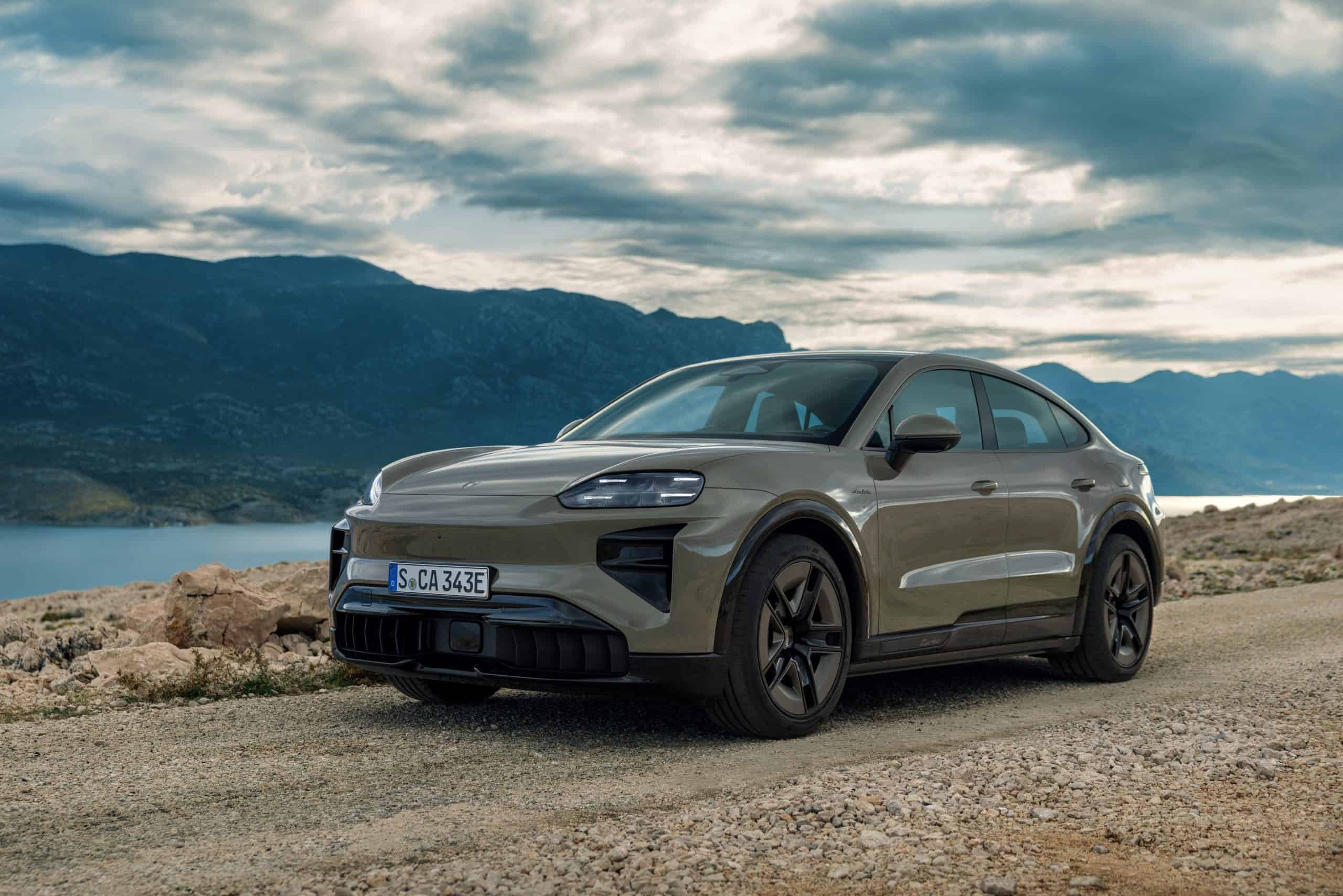
Porsche describes the Coupe’s design language as derived from the 911’s flyline, and the family resemblance is unmistakable. The roofline sits 24 millimetres lower than the standard Cayenne Electric SUV, sweeping rearward over broad shoulders before meeting a flush rear window that emphasises the car’s width.
An adaptive rear spoiler integrates cleanly into the bodywork, deploying automatically at speed to manage downforce. High-gloss black window surrounds and precisely drawn body lines give the Coupe a more planted, more aggressive stance than its SUV sibling. Where the standard Cayenne Electric prioritises presence and practicality, the Coupe trades a fraction of headroom for something altogether more dramatic.
The lower roofline also brings a tangible aerodynamic benefit. The Cayenne Coupe Electric achieves a drag coefficient of just 0.23, compared to 0.25 for the SUV. That may sound like a marginal difference on paper, but at motorway speeds it contributes to measurably better energy efficiency and, by extension, real-world range. Porsche’s Active Aerodynamics system adds cooling-air flaps and, on the Turbo model, active side aeroblades that further reduce drag when conditions allow.

800-Volt Charging And What It Means In Practice
All three Cayenne Coupe Electric models share a 113 kWh battery pack and Porsche’s 800-volt electrical architecture. When connected to a compatible DC rapid charger capable of delivering at least 400 kW, the battery can charge from 10 to 80 per cent in less than 16 minutes under ideal conditions. That is among the fastest charging times available in any production vehicle today.
For day-to-day charging, a NACS port sits within the driver-side rear fender for DC fast charging, while a J1772 AC port on the passenger side handles Level 2 home and workplace charging. A CCS adapter comes included as standard for chargers that have not yet transitioned to the NACS connector.
What this means for the typical owner is that long-distance travel in the Cayenne Coupe Electric involves coffee-stop charging sessions rather than extended waits. The 800-volt system is not just faster than the 400-volt architecture used by most competitors; it also generates less heat during charging, which helps maintain battery health over the long term.
Performance Across The Range
Even the entry-level Cayenne Coupe Electric is no slouch. Its 435 horsepower and 834 Nm of torque deliver a 0 to 60 time of 4.5 seconds with launch control engaged, and a top speed of 143 mph. That puts it comfortably ahead of most petrol-powered SUVs in its price bracket and within striking distance of performance cars from a generation ago.
The S model occupies the middle ground with 657 horsepower and 1,079 Nm of torque. Its 3.6-second sprint to 60 mph and 155 mph top speed place it in direct competition with vehicles like the BMW iX M60 and Mercedes EQE SUV AMG, though the Porsche undercuts both on charging speed.
And then there is the Turbo. Its 1,139 horsepower and 1,500 Nm of torque are figures that would have seemed absurd in a production SUV even five years ago. The 2.4-second 0 to 60 time matches or beats most supercars. The 162 mph top speed is limited electronically. All of this from a vehicle that can tow up to 3,500 kg and carry a family of five.
All three models ride on Porsche’s adaptive two-chamber, two-valve air suspension, which adjusts damping and ride height continuously based on driving conditions. Rear-axle steering is available as an option across the range, tightening the turning circle at low speeds and improving stability at higher velocities. The Turbo and S models can additionally be specified with electro-hydraulic Active Ride suspension, which uses individual motors at each wheel to virtually eliminate body roll.
Practical Enough For Daily Use
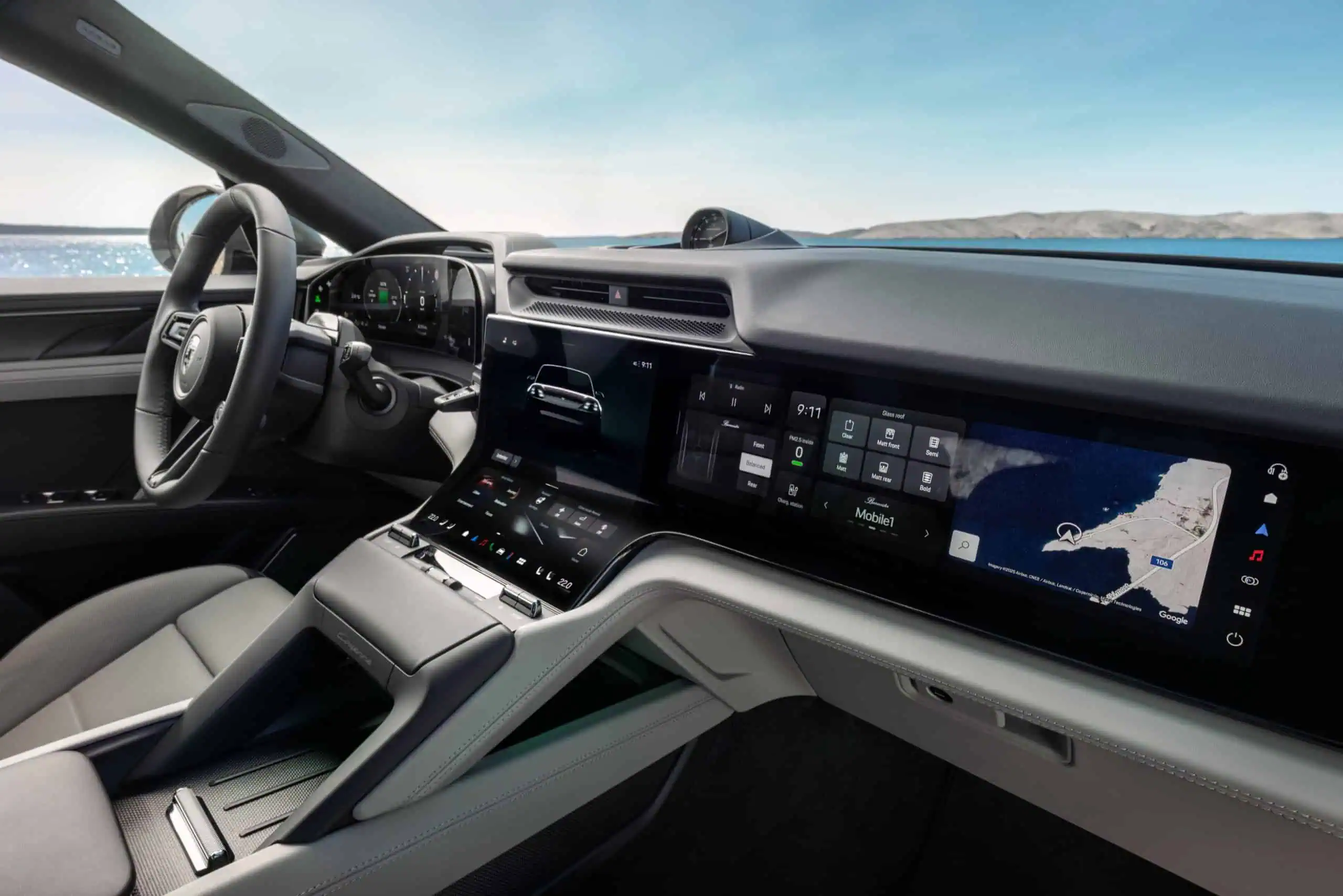
Despite the sloping roofline, Porsche has worked to ensure the Coupe remains a usable daily vehicle. The rear seats are available in either a two-seat or a two-plus-one configuration, with electric adjustment and fold-flat functionality operated by a button in the luggage compartment. The cargo area cover stows beneath the load floor when not in use, and a front luggage compartment provides additional storage.
Towing capacity stands at 3,500 kg, identical to the SUV, and an optional Off-Road Package improves the approach angle for drivers who occasionally venture beyond tarmac. The Coupe may look like it prioritises style over substance, but the engineering beneath the surface tells a different story.
For buyers who want to go further still, the optional Lightweight Sport Package shaves up to 17.6 kg from the kerb weight through a carbon fibre roof, carbon interior inserts, 22-inch lightweight wheels, and motorsport-inspired Pepita fabric seat centres. A Race-Tex headliner and carbon trim panels complete the transformation.
Where This Leaves The Cayenne Range
The arrival of the Coupe Electric means Porsche now offers the Cayenne in three powertrains and two body styles, all sold simultaneously. Buyers can choose petrol, plug-in hybrid, or fully electric, and in either SUV or Coupe form. It is a strategy that acknowledges the reality of the current market: not every buyer is ready to go fully electric, and forcing the issue risks losing customers to competitors who still offer a choice.
The Coupe body style has proven increasingly popular since its introduction in 2019, and in the United States it now accounts for 40 per cent of all Cayenne sales. Porsche clearly expects the electric version to follow the same trajectory, particularly given that the performance figures of the Turbo Coupe make it the undisputed flagship of the entire Cayenne line-up.
Deliveries are expected to begin in the second half of 2026. Orders are open now through Porsche dealers in both the UK and the US.
Sources
Porsche UK Cayenne Coupe Electric Porsche UK Cayenne Turbo Coupe Electric

Leave a Comment
More in News

These Councils Rejected 99 Percent of Drivers’ Pothole Compensation Claims Last Year

Only 13 Percent of Stolen Cars Are Ever Recovered by Police, DVLA Data Reveals
Every Driver Risks a £1,000 Fine When Councils Fail to Cut Back Hedges
Teenage Drivers in London Now Pay £2,928 for Car Insurance, Quotezone Reveals

What Your Tyre Pressure Warning Light Actually Means (and How to Reset It)
Trending on Motoring Chronicle

Ferrari Stop Mat Armstrong From Rebuilding His 296 GTB

Why Does Your Car Shake While Driving?

Every New Audi Now Includes Free Maintenance as 2027 Prices Start at $44,400
GM Recalls New Silverado and Sierra EVs Over a Battery Fire Risk and Cracked Wheels