How Audi Plans to Revive the A2 Nameplate as a Premium Electric Compact


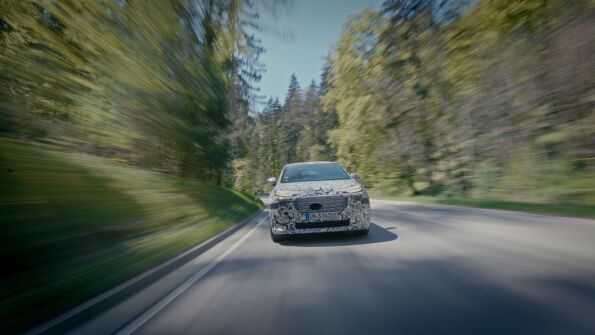
Audi has confirmed the return of one of its most-missed nameplates. The Audi A2 e-tron, due to premiere this autumn, will be the brand’s smallest and most affordable electric car when it lands in showrooms, and Ingolstadt has just begun the public-facing test programme that will define how it drives. For anyone who owned, lusted after, or simply remembers the original aluminium-bodied A2 of the early 2000s, the headline is simple: the badge is coming back, this time on a fully electric compact built for the cost-of-driving era rather than the cost-of-petrol one.
The car was officially announced at the Audi Annual Media Conference by CEO Gernot Doellner, who positioned the A2 e-tron as the brand’s next big step on the road to a fully electric line-up. Production will be at Ingolstadt, the historic home of Audi, and the company is using the launch to underline its commitment to keeping high-volume manufacturing in Germany. That choice of plant is significant because it sends a signal that Audi is not outsourcing its entry-level EV to a low-cost subsidiary, the way some rivals have done.
What we know so far
The prototype shown to media is still wearing camouflage, and Audi has held back the full specification sheet until autumn. What the company has confirmed is that the A2 e-tron will be a fully electric compact aimed at broadening access to premium electric mobility, which is corporate-speak for opening up the brand to buyers who would otherwise be looking at a Renault 5 E-Tech, a Citroen e-C3, a Vauxhall Frontera Electric, or the upcoming BYD Dolphin Surf. None of those rivals carry a premium badge, and Audi clearly senses an opening at the top of the small EV segment as Mini focuses on the Cooper and Aceman and Volvo concentrates on the larger EX30.
Audi has been deliberate about the testing it has put on show. The validation programme is split across three sites. In Lapland, the A2 e-tron is being driven on icy lakes and frozen tracks at a secret site in northern Sweden, where engineers are tuning thermal management, battery behaviour in extreme cold, and the interplay of drive, brakes, and suspension. In Ingolstadt, the same prototype is spending days in Audi Technical Development’s wind tunnel, which can blow at up to 300km/h and includes a rolling road good for 235km/h, to refine aerodynamics, aeroacoustics, and thermal stability. And in Bavaria’s Altmuhl Valley, the car is being put through real-world road tests on broken surfaces, inclines, and tight bends to validate the suspension tune and the assistance systems.
Why the A2 name carries weight
The original A2, sold between 1999 and 2005, was an aluminium-bodied four-door supermini that prioritised efficiency in a way no Audi has done since. It was light, it was unusually clever, and the 1.2 TDI version posted real-world fuel economy figures the modern hybrid market still struggles to match. The car was also a sales flop, undercut by the conventional cheapness of the A3 and dismissed at the time as a science project. Two decades on, the conditions have flipped. Light, aerodynamic, premium small cars are exactly what the market needs to make electric ownership work for buyers on driveways without garages or wallets that can absorb a £50,000 SUV.
Audi has not confirmed prices, but the segment it is targeting gives a fair indication. The Renault 5 E-Tech starts at around £23,000 in the UK, the Citroen e-C3 at around £22,000, and the BMW iX1, the closest premium-badged small EV currently on sale, sits above £40,000. A premium-priced A2 e-tron is likely to land somewhere in the high £20,000s to low £30,000s, depending on battery size and trim. That would slot in below the Q4 e-tron, which today starts at around £44,000, and would give Audi its first proper city EV since the original A2 left the line.
What it tells us about Audi’s wider plan
The A2 e-tron is the latest piece in a model push that Audi says has produced more than 20 new cars in 2024 and 2025. The company now claims the youngest model portfolio in its competitive set, stretching from the new compact A2 e-tron at the bottom to the full-size A8 successor and the Q9 SUV at the top. The strategy is twofold. First, replace ageing combustion models with electric and plug-in hybrid alternatives at every price point. Second, make sure no buyer leaves the brand simply because Audi does not have a small enough car for their budget.
For UK buyers, the timing is useful. The Vehicle Excise Duty changes in April 2025 ended the EV exemption, and from April 2026 the Expensive Car Supplement, which adds £410 a year for five years to any car listed above £40,000, is biting harder than it has in years. A properly premium small EV priced below that threshold would dodge the supplement entirely while still wearing the four rings, and that is a tempting proposition for company-car drivers and private buyers alike.
The autumn premiere will reveal the parts the camouflage is still hiding: the final shape of the front end, the battery options, the WLTP range claim, and most importantly the on-sale date and price. Until then, what Audi has revealed is the most important commitment, which is that the A2 e-tron will be built in Germany at the brand’s home plant, and that it will not be a softened, hand-me-down platform pulled from somewhere else in the Volkswagen Group catalogue. For a car wearing a name as loaded as A2, that is the right place to start. The full reveal is expected before the end of the year.

Leave a Comment
More in News

Leicestershire Council Took £900,127 in Parking Penalties as Notices Issued Rise 9.3 Percent

How the DVLA’s Digital Driving Licence Will Work for Every UK Driver in 2026

Autotrader Shows Used Petrol Cars Cost £14,625 as 17 Months of Price Rises End

Catalytic Converter Thefts Are Rising Again and Could Cost Every Van Owner over £1,000

How California’s New Robotaxi Law Could Fine Waymo and Tesla $10,000
Trending on Motoring Chronicle
What the New AI Cameras Can See Inside Your Car and What the Fine Is If They Catch You
What the New £500 EV Charger Grant Means for the 8 Million UK Drivers Without a Driveway

Vanquish at 25 – three generations of flagship performance and engineering excellence

GMC Prices 2027 Sierra 1500 From $51,295 With New V8 Power