2027 Toyota C-HR EV Arrives From $37,080 With Standard AWD and 338 Horsepower

Pricing and Availability
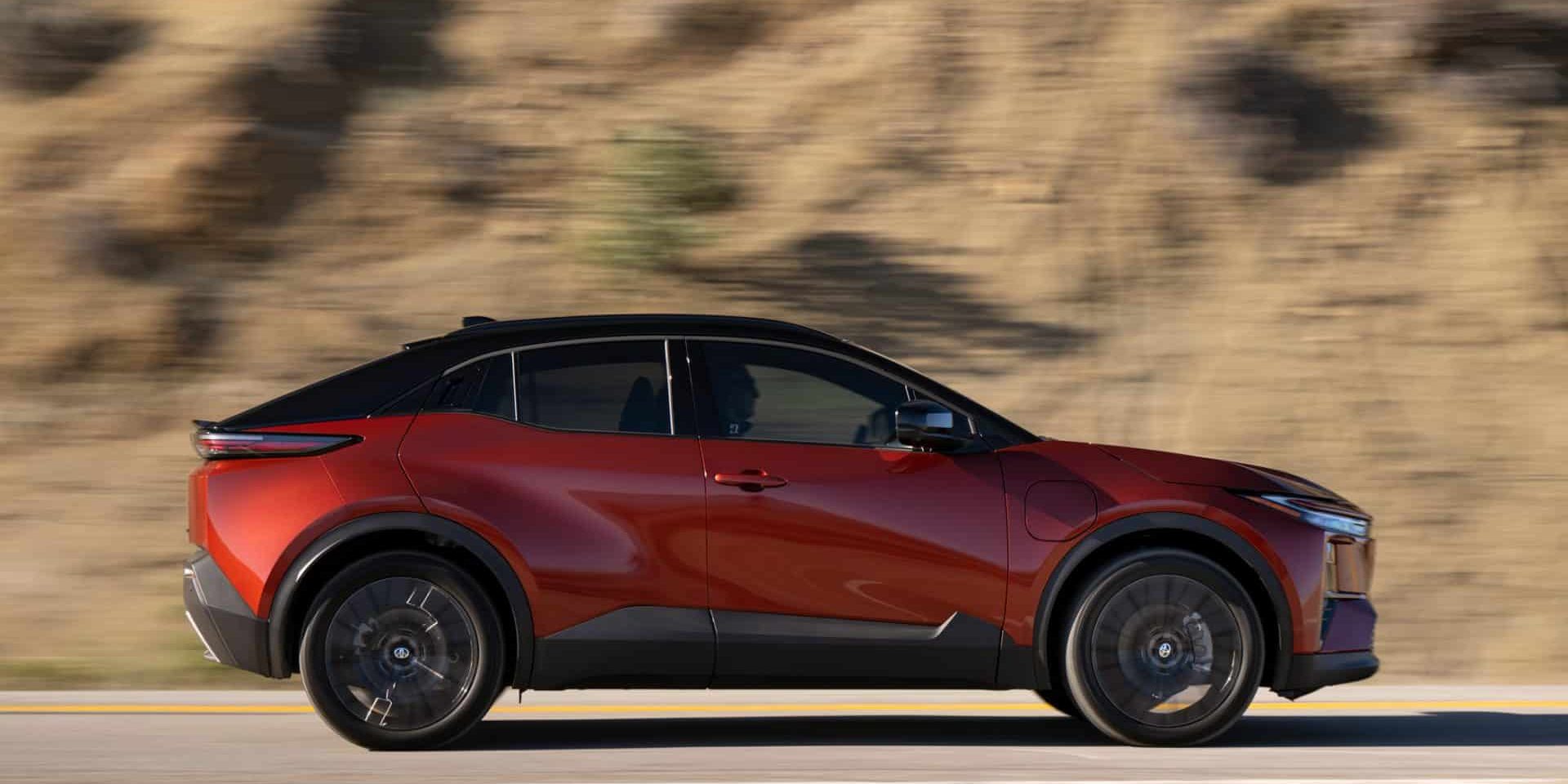
Toyota has set pricing for the 2027 C-HR BEV, its compact electric SUV, with a base Manufacturer’s Suggested Retail Price of $37,080 for the SE grade before the dealer processing and handling fee. The C-HR grades are expected to reach dealerships in September, giving shoppers a fully electric option in a segment still dominated by gas-powered small crossovers.
The C-HR BEV enters its second year on sale largely unchanged from the outgoing model, riding on the same dedicated e-TNGA battery platform Toyota uses for the bZ and bZ Woodland. Standard all-wheel drive comes from twin electric motors front and rear, splitting output as 198 lb-ft up front and 125 lb-ft at the rear axle for a combined 338 total system horsepower and a manufacturer-estimated 0-60 mph time of 4.9 seconds.
Toyota mounts the battery pack underfloor and adds a cross-brace structure for rigidity, lowering the car’s center of gravity compared to a conventional gas-powered SUV. Engineers retuned the spring and damper rates specifically for the C-HR BEV rather than carrying over settings from the hybrid version, aiming the chassis at drivers who want a small SUV that handles more like a hatchback.
Range and Charging
A 74.7-kWh battery pack powers the C-HR. Buyers who pick the SE grade with its 18-inch wheels get a manufacturer-estimated range of 287 miles, while the XSE grade’s 20-inch wheels drop that figure to 273 miles. Toyota rates both numbers under ideal conditions; real-world range shifts with speed, temperature and driving style.
Toyota switched the C-HR to a North American Charging Standard (NACS) port, so owners plug directly into Tesla Supercharger stations and other NACS-equipped networks without an adapter. DC fast charging takes the battery from 10 to 80 percent in around 30 minutes under ideal conditions, and an 11-kW onboard charger handles Level 2 AC top-ups at home. Plug & Charge lets the car authenticate and bill automatically at supported stations, skipping the usual app or card tap.
A battery preconditioning system heats or cools the pack ahead of a fast-charging stop, either through a manual setting or automatically when a driver with an active Drive Connect subscription sets a charging station as their route destination. That step can shave meaningful minutes off a charging session, most of all in cold weather when battery chemistry slows down.
Interior and Technology
Inside, Toyota fits a 14-inch touchscreen, soft-touch materials and customizable ambient lighting. Dual-zone climate control extends to rear seat vents, and two wireless smartphone chargers sit alongside USB-C ports front and rear. The XSE grade adds a panoramic fixed glass roof with a power sunshade.
Toyota drops the physical key in favor of a digital key stored on the owner’s phone. The Toyota app lets drivers check charging status, start or stop a charging session remotely, locate nearby stations and manage other vehicle functions, though the remote features require an active Remote Connect subscription after the initial trial period.
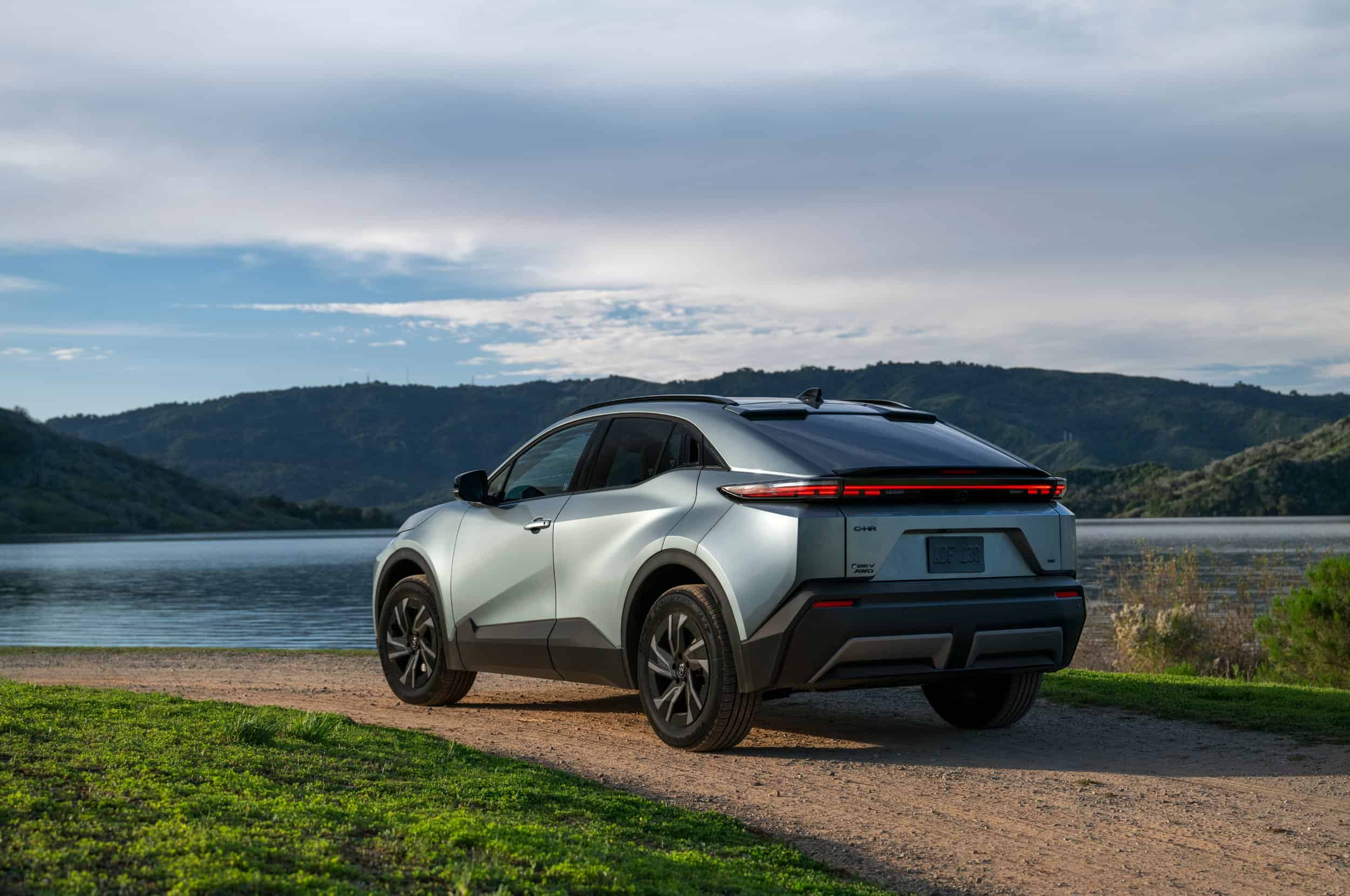
Practicality holds up even with the coupe-like roofline: folding the 60/40 split rear seats flat opens up 59.5 cubic feet of cargo space, competitive with small SUVs that sacrifice styling for boxier shapes.
Standard Safety Features
Every 2027 C-HR grade comes with Toyota Safety Sense 3.0 as standard equipment. The suite bundles a pre-collision system with pedestrian detection, full-speed range dynamic radar cruise control, lane departure alert with steering assist, lane tracing assist, road sign assist, automatic high beams and proactive driving assist. Toyota adds a blind spot monitor with rear cross-traffic alert, a safe exit alert that warns rear passengers of approaching cyclists or traffic before they open a door, and the Toyota Star Safety System.
Toyota backs the C-HR with its standard 36-month/36,000-mile basic warranty, plus the extended coverage that typically applies to the battery and electric drive components on its BEV lineup.
Where It Sits in the Lineup
The C-HR traces back to a compact BEV concept Toyota first showed in 2022, and its coupe styling sets it apart from the more conventionally shaped bZ. With standard AWD, a sub-5-second 0-60 time and pricing starting under $38,000, the C-HR gives Toyota a sportier, more style-focused entry point into electric SUVs than the bZ Woodland, which leans into off-road capability instead.
How It Compares
The Chevrolet Equinox EV undercuts the C-HR on price, starting at $34,995, but Chevrolet reserves all-wheel drive for higher trims rather than fitting it as standard. Hyundai’s Kona Electric starts even lower, around $34,470, though it comes as front-wheel drive only and without the C-HR’s dual-motor output. Kia’s Niro EV sits above the C-HR at roughly $39,700 to start, with an estimated 253-mile range that falls short of the C-HR’s SE-grade figure.
Against that field, the C-HR’s combination of standard AWD, 338 horsepower and a 287-mile range at $37,080 lands as one of the stronger value propositions in the segment for drivers who want all-weather traction without stepping up to a pricier trim or a different model altogether.

Leave a Comment
More in News
How to Restore Cloudy Headlights Before They Fail Your MOT

What Your Engine Management Light Actually Means (and Whether You Can Keep Driving)

Drivers With 6 Penalty Points Pay 58 Percent More for Car Insurance, Confused.com Finds
RAC Data Shows 5.6 Million Drivers Will Hit the Roads This Half Term Weekend
Why Learners Paid Up to £500 for a £62 Driving Test Before DVSA’s Crackdown
Trending on Motoring Chronicle
Tesla Sued and Federally Probed After a Model 3 Killed a Woman Inside Her Home
Vibrant in Violette – a hue from Bentley’s past
Is the Lamborghini Veneno a V12?

Two Illegal Tyres Can Cost New Drivers Their Licence, TyreSafe Warns