
Why the New Electric Mercedes-AMG GT 4-Door Coupe Bins the V8 for 1,169hp
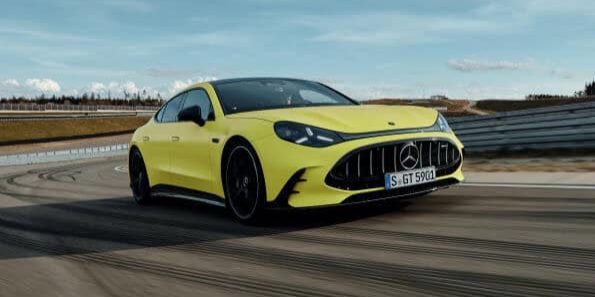
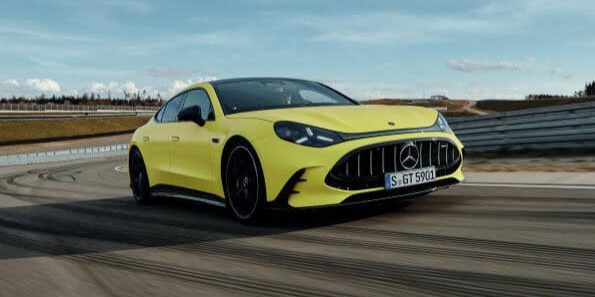
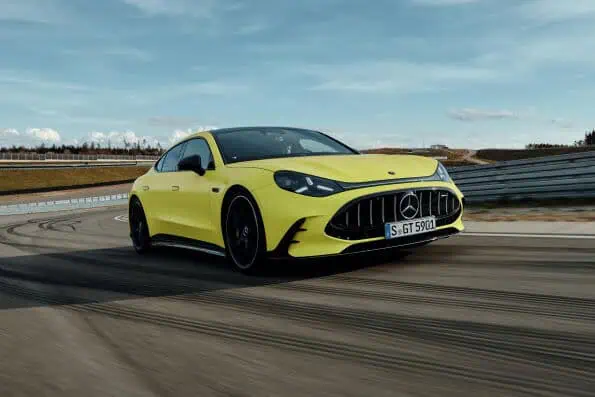
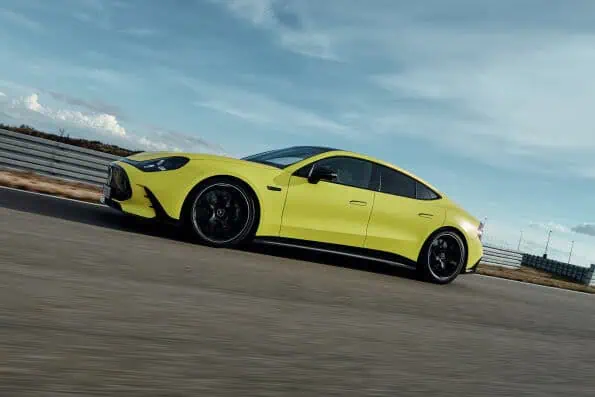
Mercedes-AMG has just shown the world its second-generation GT 4-Door Coupe, and the engine bay where a thunderous twin-turbo V8 once lived is now occupied by three electric motors producing a combined 1,169hp. If you bought into the first AMG GT 4-Door because of the way it shook your ribcage at full throttle, the next chapter will demand a rethink. If you cared about how quickly it shrank a horizon, you are about to get treated very, very well.
This is the first model built on AMG.EA, the bespoke electric platform that Affalterbach has been promising for years. Production starts at Sindelfingen in summer 2026, the same Mercedes plant that has been spitting out S-Classes for decades, and the four-door will reach UK driveways before the end of the year. The headline figures will look familiar to anyone tracking the Lucid Air Sapphire or Porsche Taycan Turbo GT: 860kW peak power, 0-100km/h in 2.1 seconds with rollout subtracted, a 300km/h top speed in cars optioned with the Driver’s Package. The fact that this is the first AMG sports saloon designed from a blank sheet to be electric is the bigger story.
Three motors, one of them properly new
The drivetrain is where AMG is trying hardest to convince the V8 faithful. Two of the three motors live on the rear axle and are described as axial-flux units, the same compact, high-torque architecture Yasa builds in Oxford and that Ferrari has chosen for its first EV. The third, conventional radial-flux motor sits up front and only fires up when the rear axle needs help with traction or the driver asks for the full 1,169hp launch mode. A clever Disconnect Unit lets it physically decouple from the front wheels during steady cruising, killing drag losses and stretching range when you are not in the mood to scare passengers.
The pair of axial-flux motors at the rear will spin to more than 13,000rpm, the front motor goes to 15,000rpm, and torque can be vectored between them in milliseconds. AMG claims the variable torque distribution can make the car feel as if it has a shorter or longer wheelbase depending on the situation. That sounds like marketing, until you remember that variable wheelbase feel is exactly what the brand has been chasing with rear-axle steering and active anti-roll bars for the last five years.
An 800-volt battery borrowed from Formula 1
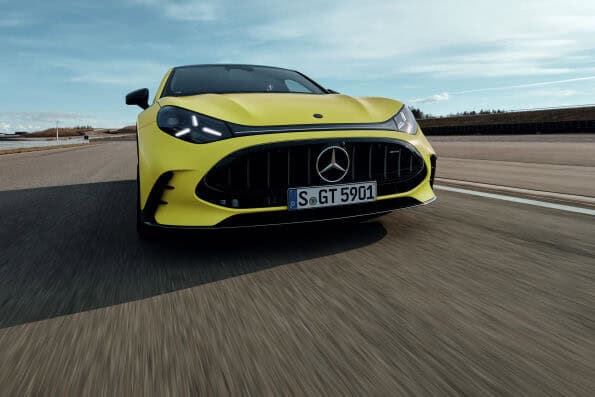
The bit of this car that should make Porsche and Audi nervous is the high-voltage system. Mercedes-AMG has developed a brand-new 800-volt pack using directly cooled cylindrical cells, which is the same approach the company uses in its Formula 1 power unit and in the AMG ONE hypercar. Net capacity is 106kWh, and DC charging tops out at 600kW. That number on its own is meaningless because no public charger in the UK can deliver it today. The real-world number that does matter is this: 10 to 80 per cent in 11 minutes when you find the right hardware, and 460km of WLTP range added in a single 10-minute stop.
For context, a Porsche Taycan on its 800V architecture peaks at 320kW and adds roughly 250km in 10 minutes on its best day. Lucid claims around 320km. AMG is effectively saying it can shave a road trip’s charging time in half once the infrastructure catches up. The other useful trick is what AMG calls Boost duration, which it pegs at 63 seconds. In plain English: the cooling system can keep the battery at peak power for over a minute without thermal throttling, which is the engineering problem that ruins repeat 0-60 runs in most fast EVs.
Capacity-wise, 106kWh sits in the middle of the modern luxury EV pack. A BMW i5 M60 has 81kWh. A Lucid Air Sapphire stretches to 118kWh. The AMG.EA pack is heavier than the platform’s lightest possible spec because the cells themselves are engineered for sustained high discharge rather than maximum density. Kerb weight is 2,460kg. That is, by any honest measure, a heavy car. AMG has tried to disguise it with active rear-wheel steering, semi-active anti-roll bars, triple-chamber air springs, and a body that pulls a 0.22 drag coefficient.
Active aero and a chassis that thinks faster than you do
The chassis spec sheet is where you start to see how the platform has been built for the GT 4-Door rather than retrofitted from a saloon. AMG ACTIVE RIDE CONTROL handles the suspension with hydraulic anti-roll stabilisation in place of mechanical bars. An 8.2-litre pressure reservoir lets the car raise or lower itself at speed to balance range against ride height, and the system can pre-load suspension corner-by-corner before the driver loads the steering. The active AEROKINETICS package gets two new venturi flow elements and a rear diffuser that change shape with speed and yaw rate to keep the back planted.
There is also an AMG RACE ENGINEER mode, which is the software layer AMG hopes will replace the soundtrack that combustion gave for free. It lets the driver tune throttle response, traction allowance, and cornering balance in granular steps, and the company is selling it on the basis that customers who do track days can dial in the car the way Lewis Hamilton’s race engineer dials in a 2026 power unit. Whether amateurs will use it remains an open question. The Active Sound Generator that simulates a V8 will be standard, which is either heretical or essential depending on which AMG owner you ask.
What it means for buyers
Mercedes has not published UK pricing yet, and history suggests it will arrive close to launch in late 2026. The old GT 63 S E Performance, the plug-in hybrid V8 version, listed at around £180,000 before options, and an AMG.EA flagship with this kind of charging tech is unlikely to sit below that. Anyone cross-shopping should look at the Porsche Taycan Turbo GT, the Lucid Air Sapphire if and when Lucid commits to right-hand drive, and the BMW i7 M70 for buyers who care about cabin space over lap times.
The bigger question this car raises is whether AMG’s brand promise survives the switch. Affalterbach has spent decades selling the hand-built V8 as the emotional core of the brand, and that engine is now finished. Ola Kallenius, Chairman of the Board of Management of Mercedes-Benz Group AG, was unsurprisingly upbeat in the launch material: “The new Mercedes-AMG GT 4-Door Coupe is one of the most exciting cars I’ve experienced in recent years. It pushes performance to new limits and delivers the emotion our fans expect, now in the electric era.”
The honest answer is that we will not know whether the emotion holds up until UK road testers get a turn behind the wheel later this year. What is already clear is that AMG is not trying to make a faster Taycan or a cheaper Lucid. It is trying to make the first AMG that justifies its badge without a piston, and the technical groundwork is more ambitious than anything else in the segment right now. If you have been waiting for a luxury EV that takes charging speed and repeatable performance as seriously as it takes acceleration, the new GT 4-Door is the first one that puts every number on the table.

Leave a Comment
More in News

How to Free a Frozen Handbrake (and What a New Cable Costs)

What Winter Tyres Actually Do for UK Drivers (and Whether You Need Them)

Renewing Car Insurance on the Day Cover Ends Costs Drivers £331 More, MoneySupermarket Shows

Every Driver Faces £500 Seatbelt Fines as AI Cameras Flag 19,145 Possible Offences

How to Remove Moisture From Inside Your Headlight Before It Costs You £500
Trending on Motoring Chronicle

Why Flood-Damaged Cars From the Northeast Floods Are Headed to a Used Lot Near You
Bugatti Type 35: the race where it all began exactly 100 years ago [Photo Gallery]
Ram Expands America’s Best Full-size Truck and Van Limited Powertrain Warranty

FCA Sets a September 30 Deadline for Your Car Finance Redress Answer
