
Public EV Charging Costs 42 Cents a kWh, 32 in Kansas and 55 in Hawaii
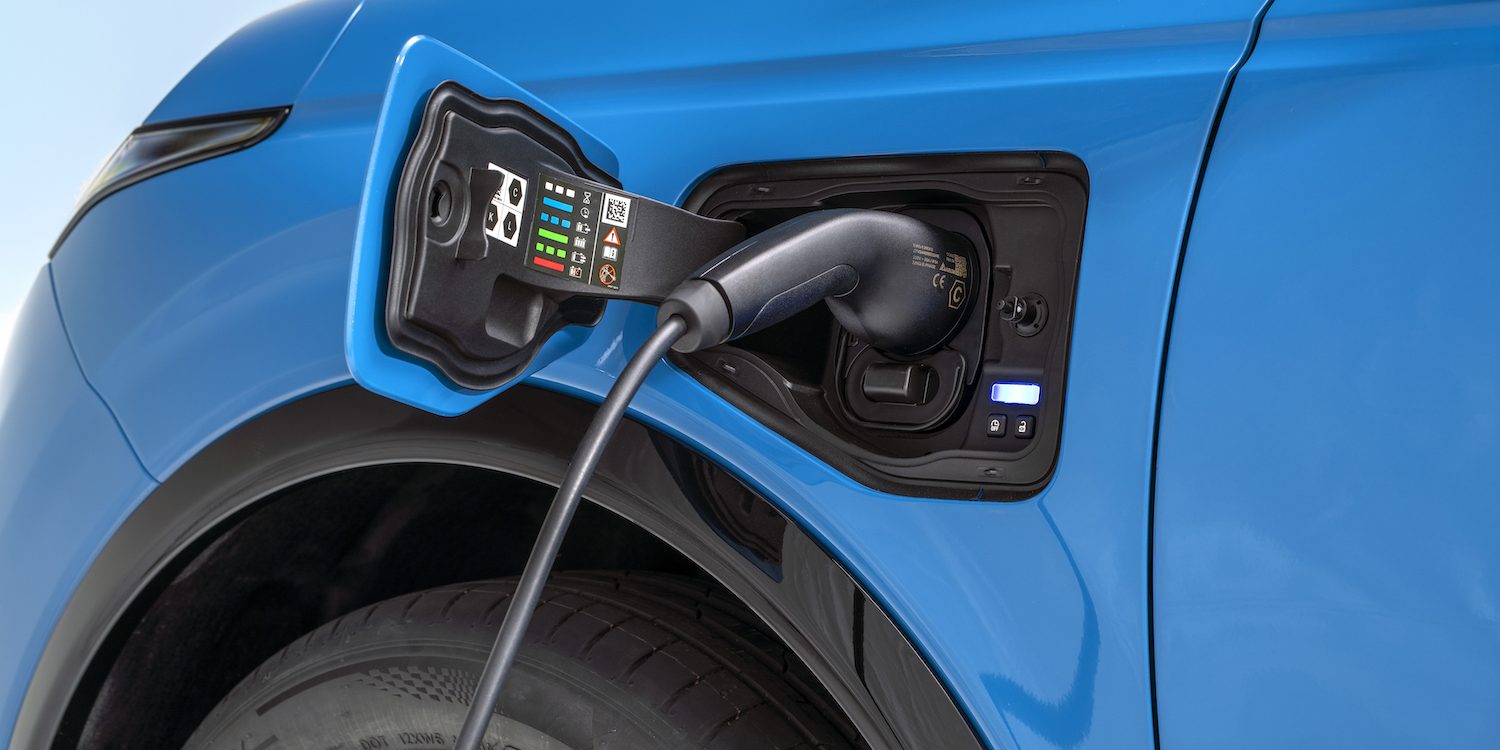
- AAA puts the national average price of public EV charging at 42.1 cents per kilowatt hour as of Nov. 14, unchanged over the past week at 42 cents.
- State averages run from 32.3 cents in Kansas to 55.2 cents in Hawaii, so a 60 kWh top-up costs $19.38 in one and $33.12 in the other.
- Federal data put the average home electricity price at 18.16 cents per kWh in August, so the same 60 kWh costs $10.90 at home against $25.26 at a public station.
A 60 kWh Top-Up Costs $13.74 More in Hawaii Than in Kansas
AAA’s daily EV charging table, priced as of Nov. 14, sets the national average for public charging at $0.421 per kilowatt hour (kWh). The figure covers all commercial and public charging: Level 1, Level 2 and Level 3 DC fast chargers together. AAA’s Nov. 12 fuel report called the average unchanged over the past week at 42 cents, a steady line while gasoline’s slide from its October record pulled the national gas average under $4 a gallon, a level last seen in July.
Put that rate on a 60 kWh top-up, a round size used here to make the rates concrete (battery sizes differ from car to car). At the national average the bill is $25.26. In Kansas, which holds the lowest state average in AAA’s table at $0.323, the same 60 kWh costs $19.38. In Hawaii, the highest at $0.552, it costs $33.12. The spread between the two states is 22.9 cents per kWh, or $13.74 on one top-up.
Home charging usually costs far less. The US Energy Information Administration (EIA) puts the average residential electricity price at 18.16 cents per kWh for August 2026, a preliminary estimate that EIA says rests on a cutoff model sample. The 60 kWh fill costs $10.90 at that rate. A driver who charges publicly at the national average pays 2.3 times the home price, about 24 cents more on every kWh and $14.36 more on that 60 kWh fill.
Six cheap states, six expensive ones and the small print on charger counts
AAA’s table lists 50 states and the District of Columbia. The six lowest state averages on Nov. 14 were Kansas at 32.3 cents (861 chargers), Missouri at 33.1 cents (2,142), Iowa at 33.8 cents (972), Maryland at 34.9 cents (3,573), Utah at 35.0 cents (1,379) and Nebraska at 36.3 cents (202). The six highest were Hawaii at 55.2 cents (273 chargers), West Virginia at 52.9 cents (294), Louisiana at 50.2 cents (213), New Hampshire at 48.1 cents (343), California at 47.8 cents (27,336) and Alaska at 45.4 cents (95).
Read the expensive end with the charger counts beside it. Five of those six states have between 95 and 343 chargers in the table, so the state average rests on a small network and can move when a few stations reprice. Nebraska’s 202 chargers put the same caution on the cheap end. California is the exception on the expensive list: its 47.8 cents is the average across 27,336 chargers, the most of any state in the table.
The states with the biggest networks do not share one price. California, New York (21,944 chargers), Florida (9,054), Massachusetts (7,231) and Texas (6,838) hold the five largest counts in the table. Their averages are 47.8, 40.6, 41.6, 39.7 and 43.4 cents. California costs 8.1 cents more per kWh than Massachusetts, which adds up to $4.86 on a 60 kWh fill. Elsewhere, Illinois sits at 43.3 cents, Ohio at 43.0, Pennsylvania at 42.5, Georgia at 40.9, Michigan at 40.7, Colorado at 39.4 and Washington at 39.1.
AAA’s page says historical EV charging price data is not available, so a comparison with a year ago cannot be made for public charging. A state average also blends slow and fast chargers in one number, so the station you plug into can price above or below your state’s figure.
Where home charging saves the most, and where it barely helps
EIA’s table gives a home electricity price for every state, which lets the public and residential rates be laid side by side. The US residential price rose from 17.57 cents in August 2025 (a final figure) to 18.16 cents in August 2026, a 3.4 percent increase. The two datasets cover different dates, AAA’s a Nov. 14 snapshot and EIA’s an August monthly average, and neither dataset explains why a state sits where it does. The pairing still shows how wide the home advantage runs.
Louisiana shows the widest gap among the states with a public price above 50 cents. Public charging there averages 50.2 cents against a home price of 12.87 cents, 3.9 times higher, and a 60 kWh fill costs $30.12 publicly against $7.72 at home, a difference of $22.40. West Virginia pairs 52.9 cents public with 16.31 cents at home, 3.2 times higher and $21.95 on a 60 kWh fill. Kansas, the cheapest public state, still charges 2.1 times its 15.47 cent home price, which leaves a $10.10 gap on 60 kWh. California’s gap is 1.6 times (47.8 cents public, 29.75 cents at home), or $10.83.
Hawaii reverses the pattern. Its home price is 47.18 cents per kWh, up from 38.53 cents a year earlier, a 22.5 percent rise, and the 55.2 cent public average is only 1.2 times that. Charging at home in Hawaii costs $28.31 for 60 kWh, which is $4.81 less than the public price and $19.03 more than the same fill at a Kansas home. A Hawaii driver gains little from the garage plug. A Louisiana or West Virginia driver gains the most of the states checked here.
What winter adds to the bill
AAA’s study, released May 1, tested three EVs and three hybrids on a chassis dynamometer at 20, 75 and 95 degrees Fahrenheit, with the cabin set at 72 degrees. The cost work used national average fuel and electricity prices from March 27, 2026, not the $3.8406 that regular gasoline averaged on Nov. 14, so the dollar gaps move when prices move.
At 20 degrees, the EVs showed a 35.6 percent drop in MPGe (miles per gallon of gasoline equivalent) and a 39.0 percent decrease in calculated driving range. Operating cost rose $32.11 per 1,000 miles on home electricity rates and $76.93 per 1,000 miles on public charging. Set against the hybrids, the cold-weather EV bill per 1,000 miles came to $36.19 under the hybrid figure with home electricity and $86.26 over it with public chargers. At 95 degrees the EVs came out $46.11 per 1,000 miles cheaper than the hybrids on home electricity and $41.00 more expensive on public chargers. The same results got a fuller write-up in AAA’s cold-weather charging test.
AAA summed up the results this way:
“EVs are efficient in moderate temperatures but lose significant range in the cold,” said Greg Brannon, director of automotive engineering and research at AAA. “We expected this from our previous research, but were surprised by the 23% reduction in fuel economy for the hybrids in cold temperatures. Drivers should consider climate, energy costs, and driving patterns when choosing a vehicle that best fits their lifestyle.”
A driver who relies on public chargers in a high-price state, such as New Hampshire at 48.1 cents, takes the winter cost increase on top of the state’s rate. The same AAA release puts public charging stations at roughly 80,000 nationwide, up from about 55,000 in 2022, so more plugs are arriving, and the price per kWh is still set station by station.
How to check your number and cut the bill
Start with your state’s row in AAA’s EV charging table, then find your home price on your electricity bill and run the same 60 kWh sum: multiply each price in dollars per kWh by the kWh you add. The gap between the two lines is what a month of public charging costs you above home charging. AAA’s TripTik Travel planner shows current gas and electric charging prices along a route, which helps on a trip that crosses a cheap state and an expensive one. A route through Missouri at 33.1 cents and into Louisiana at 50.2 cents is a 17.1 cent swing per kWh.
Before a session starts, check the per-kWh price shown on the network’s screen or app, as the state average is a blend of every charger in the state. AAA recommends home charging to manage seasonal cost swings against frequent public charging, preconditioning the cabin while the car is plugged in, and avoiding unnecessary fast charging in cold weather. Its Your Driving Costs calculator estimates ownership and operating costs with local climate, driving habits and EV public charging prices from AAA’s own data.
Keep the gasoline side of the sum current too. Regular averaged $3.8406 a gallon on Nov. 14. AAA said on Nov. 12 that the month was still the most expensive November on record, and the record November gas prices leave the home-charging saving as the number to protect in a monthly budget, with the public price the one to watch if you rely on stations away from home.
Want more car content? Add us as a preferred source on Google to your favourites list for the best automotive news and analysis on the internet.
If you enjoyed this article, be sure to follow us on Microsoft Start.
Sources
- AAA Fuel Prices: EV Charging Prices
- AAA Fuel Prices: For the First Time Since July, National Average Drops Below $4
- EIA: Electric Power Monthly, Table 5.6.A Average Price of Electricity to Ultimate Customers by End-Use Sector, by State
- AAA Newsroom: AAA Study Reveals Temperature Impacts on EV and Hybrid Efficiencies and Costs
Reviewed by Preetam Gadekar

Leave a Comment
More in News

Florida Police Say Over Half of 139 Dealer Cars Had Mileage Gaps

Texas man takes video of U-Haul before driving the rental truck off the lot. They stick him with a $900 charge anyway
What the MOT Actually Fails on Brake Pads and Discs (and What You Pay)

FMCSA Revokes 133 Logging Devices and Gives Two Different Deadlines

How to Check Tyre Tread Depth (and Why 3mm Beats 1.6mm in Winter)
Trending on Motoring Chronicle

Is the Toyota Land Cruiser Worth the Price? What Buyers Need to Know for 2027
Why Nearly £200,000 Worth of Fuel Is Being Stolen From UK Forecourts Every Day

Ford Recalls 30,123 F-150 and Super Duty Trucks Over Tailgate Cables

How Long Does It Take to Get Your Tires Changed?
