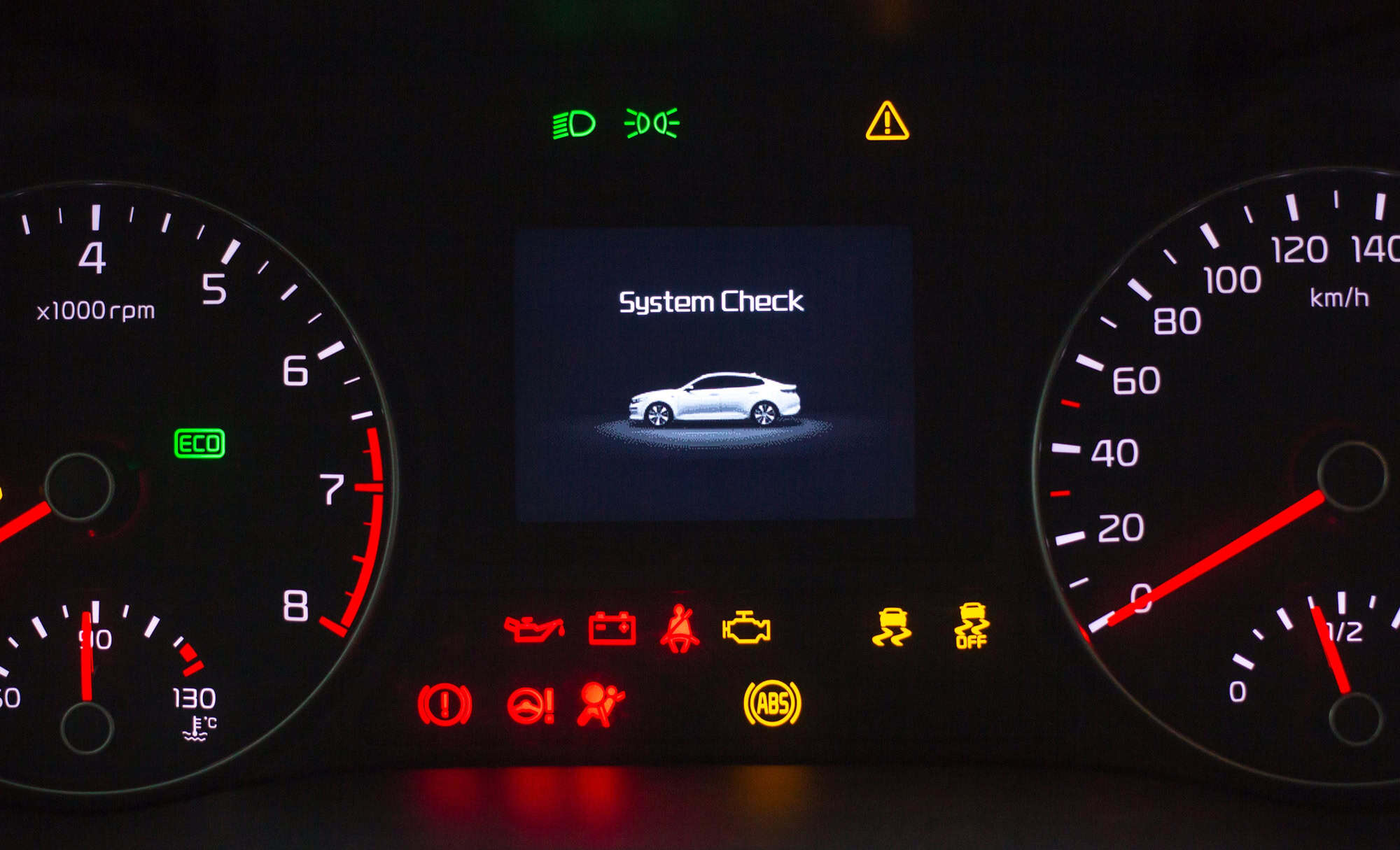
AAA Test Finds Public EV Charging Costs $86 More Than a Hybrid in Cold


- AAA puts the national average for public EV charging at 42 cents per kWh, up one cent in a week, with state averages running from 31.8 cents in Kansas to 55.2 cents in Hawaii.
- In AAA’s lab tests at 20 degrees Fahrenheit, an EV charged at public stations cost $86.26 more per 1,000 miles than a hybrid, while an EV charged on home power cost $36.19 less.
- Charging at home, warming the car while it is still plugged in and checking your state’s rate before you plug in are the moves that shrink the winter bill.
Winter Turns the Price on the Charger Into the Whole Argument
Public EV charging averages 42 cents per kilowatt hour, a cent more than a week ago, and AAA’s daily table puts the exact figure at $0.421. That number covers every kind of public plug: Level 1, Level 2 and DC fast charging. At that price, a driver who depends on public chargers pays a premium all year, and cold weather raises the premium.
AAA’s engineers measured it. They ran three EVs and three hybrids through a laboratory test cell at 20 degrees Fahrenheit, with the cabin held at 72 degrees, and priced the energy used. Per 1,000 miles, the EVs on public chargers cost $86.26 more than the hybrids. The same EVs on home electricity cost $36.19 less. The plug location decides which side of the ledger a winter driver lands on.
One timing point belongs up front. AAA priced its test using national fuel and electricity averages from March 27, 2026, so the $86.26 is a measured yardstick from spring prices, and the 42 cents is today’s rate. The gap on today’s prices will differ, so the sections below put current rates into the arithmetic and treat the lab figure as the direction of travel.
What a Mile and a Full Charge Cost at 42 Cents
Start with home power as the baseline. The U.S. Energy Information Administration reports an average residential electricity price of 18.16 cents per kWh for August 2026, up from 17.57 cents a year earlier, a rise of 3.4 percent. A public charge at 42 cents costs about 2.3 times that. The two figures come from different months and different bodies, so read the ratio as a guide, not a lab result.
The U.S. Department of Energy’s Alternative Fuels Data Center gives the method for turning a price into a cost per mile: multiply the price per kWh by the kWh the car burns per mile. Its example EV uses 27 kWh per 100 miles, or 0.27 kWh a mile. At 42 cents that is $0.1134 a mile, about 11.3 cents. At the 18.16 cent home rate it is $0.0490, about 4.9 cents. Over 1,000 miles the public charger bill is $113.40 and the home bill is $49.03.
Set those against gasoline. AAA’s national average for a gallon of regular stood at $4.1003 on November 5, down from $4.2258 a week earlier and up from $3.0790 a year ago. A gasoline car that gets 30 miles to the gallon, an assumption for this illustration, spends 13.7 cents a mile at that price. A hybrid that gets 50 miles to the gallon, another assumption, spends 8.2 cents. On those inputs, public charging beats the 30 mpg car by a little over two cents a mile and loses to the 50 mpg hybrid by about three. Home charging beats both. The most recent gas coverage from the site, including how gas fell 23 cents in a month, shows how quickly the gasoline side of this sum changes.
A full battery makes the gap concrete. The Department of Energy uses a 54 kWh battery, good for 200 miles, as its example. Filling it from empty costs $22.68 at 42 cents and $9.81 at the 18.16 cent home rate. The Department’s own example, at 10.7 cents per kWh, lands at about $6.
Kansas Pays 31.8 Cents and Hawaii Pays 55.2
The national average hides a wide spread. AAA’s state table runs from $0.318 per kWh in Kansas to $0.552 in Hawaii, a gap of 23.4 cents. The same 54 kWh fill costs $17.17 in Kansas and $29.81 in Hawaii, a difference of $12.64 for the same electricity.
The cheapest public charging sits in Kansas, which leads at $0.318 across 828 chargers, followed by Missouri at $0.332, Iowa at $0.337, Maryland at $0.351 and Utah at $0.355. At the other end, Hawaii costs $0.552 across 274 chargers, West Virginia $0.529 across 292, Louisiana $0.503 across 215 and New Hampshire $0.479 across 345. California, with 27,281 chargers, the most in AAA’s table, averages $0.477, which prices a 54 kWh fill at $25.76.
Set each state’s public price against its home rate and the spread shifts by region. Louisiana households paid 12.87 cents per kWh in August, EIA data shows, so the state’s 50.3 cent public price is about 3.9 times the home rate, the widest ratio of the 50 states and the District of Columbia in AAA’s table. Kansas runs about 2.1 times (15.47 cents at home). California runs about 1.6 times, with home power at 29.75 cents. Hawaii sits at about 1.2 times, the narrowest, with home power at 47.18 cents, up from 38.53 cents a year earlier. An EV owner in Louisiana has the most to gain by charging at home. A Hawaii driver gains least.
AAA’s page carries one caution of its own: historical EV price data is not available, so the one-cent weekly rise is the only movement on record.
What AAA Measured at 20 Degrees and at 95
AAA published its temperature study on May 1, 2026, as a follow-up to work from 2019. Its engineers teamed with a Southern California auto club research center and drove the vehicles on rollers in a test cell held at 20, 75 and 95 degrees Fahrenheit.
In the cold, hybrids lost 22.8 percent of their fuel economy. EVs lost 35.6 percent of their MPGe, the miles per gallon of gasoline equivalent, and 39.0 percent of their calculated driving range. Operating costs rose $28.44 per 1,000 miles for the hybrids and $32.11 for EVs charged at home, but $76.93 for EVs charged on public stations. The comparison that frames this story follows from those numbers: at 20 degrees, EVs cost $36.19 less per 1,000 miles than hybrids on home electricity and $86.26 more on public chargers.
“EVs are efficient in moderate temperatures but lose significant range in the cold,” said Greg Brannon, AAA’s director of automotive engineering and research. “We expected this from our previous research, but were surprised by the 23% reduction in fuel economy for the hybrids in cold temperatures. Drivers should consider climate, energy costs, and driving patterns when choosing a vehicle that best fits their lifestyle.”
Heat hurts too, with a smaller bill. At 95 degrees hybrids lost 12.0 percent of fuel economy, and EVs lost 10.4 percent of MPGe and 8.5 percent of range. Operating costs climbed $13.02 per 1,000 miles for hybrids, $6.78 for EVs on home power and $16.25 for EVs on public charging. The gap at 95 degrees: EVs ran $46.11 cheaper per 1,000 miles at home rates and $41.00 more expensive at public rates.
Apply the cold-weather percentages to the earlier illustration and the shape matches. A 35.6 percent drop in EV efficiency lifts the example car from 27 to about 42 kWh per 100 miles. At 42 cents that is 17.6 cents a mile on a public charger and 7.6 cents on home power. A 50 mpg hybrid that loses 22.8 percent drops to 38.6 mpg and spends 10.6 cents a mile at $4.10 gas. The public charger costs about 7 cents a mile more, roughly $70 per 1,000 miles, in the same direction as AAA’s measured $86.26. Home charging still wins by about 3 cents a mile. The numbers shift with each car and each rate, and your state’s rate decides where you land in that range.
Hybrids have the buyers’ attention. AAA’s annual survey, taken March 19 to 23, 2026 among 1,088 U.S. adults with a margin of error of plus or minus 4 percent, found 35 percent say they are very likely or likely to buy a hybrid next. AAA counts roughly 80,000 public charging stations nationwide, up from about 55,000 in 2022, yet buyers still hold back.
Five Moves That Cut the Winter Bill
Charge at home when you can. The Department of Energy says most EV drivers charge overnight at home on Level 1 or Level 2 equipment. A Level 1 cordset ships with the car and needs no installation if a dedicated-circuit outlet sits near where you park, which many EV owners find enough to meet their daily range. A Level 2 unit suits longer commutes and bigger batteries, and state and utility incentives can offset the equipment cost. Some utilities offer time of use rates for home charging, so ask yours. At 18.16 cents, the average home kWh costs less than half of a public one, and the home charging costs against gas comparison on this site, from July, puts home charging at 5 to 6 cents a mile.
Heat the car while it is plugged in. AAA recommends preconditioning the cabin while the car is still connected to the charger, and using targeted comfort features such as seat and steering wheel heat. It also lists keeping tires properly inflated.
Cut speed and fast charging in extreme cold. AAA advises EV drivers to avoid sustained high speeds in extreme temperatures and to plan charging sessions that minimize unnecessary fast charging in cold weather.
Apartment dwellers face a different sum. The Department of Energy notes that charging in multifamily housing requires extra considerations and can look more like public charging than a single family garage does. If your building has no plug, you pay public rates, and the state table above tells you what that means where you live. Compare the chargers near you against your state’s average before you commit to one network.
Run your own numbers before you buy or commute. AAA’s Your Driving Costs calculator builds an ownership and operating estimate from local climate, your driving habits and its own public charging price data. The Department of Energy runs a Vehicle Cost Calculator for comparing individual models. Enter your state’s rate from the AAA table and your own mileage, then compare against the record pump prices that October brought to gas stations.
The winter rule is short. In AAA’s cold-weather test, public chargers were the costly side of EV ownership and home power the cheap side. Know which one you are paying for.
Reviewed by Preetam Gadekar
Sources
- AAA Fuel Prices: EV Charging Prices
- AAA Newsroom: AAA Study Reveals Temperature Impacts on EV and Hybrid Efficiencies and Costs
- U.S. Energy Information Administration: Electric Power Monthly, Table 5.6.A
- U.S. Department of Energy Alternative Fuels Data Center: Charging Electric Vehicles at Home
Want more car content? Add us as a preferred source on Google to your favourites list for the best automotive news and analysis on the internet.
If you enjoyed this article, be sure to follow us on Microsoft Start.

Leave a Comment
More in News

Colorado Drivers Face $100 Fine on I-70 If Tires Fail Traction Law
NHTSA Offers $1.5 Million for States to Flag Open Recalls at Registration
EV Drivers Pay 82p a kWh at Rapid Chargers, Up 8 Percent, Zapmap Shows
Kia EV2 Named 2027 Car of the Year With £3,750 Grant on Long Range Models

What a £1,000 Fine Means for Drivers Who Flash Headlights to Warn of Cameras
Trending on Motoring Chronicle
Millions of UK Drivers Face a Record £4,900 Car Insurance Claim, ABI Reveals

Ford Recalls 158,664 Mustangs, Broncos and Explorers Over Sudden Power Loss

DVLA Data Reveals Police Recovered Fewer Than Half of Britain’s 55,000 Stolen Cars

2027 Honda Passport TrailSport Gains Nearly 1.4 Inches of Ground Clearance