Gasoline Is Up 37.4% in a Year, New Cars Up 0.7%, Used Cars Down 3.3%

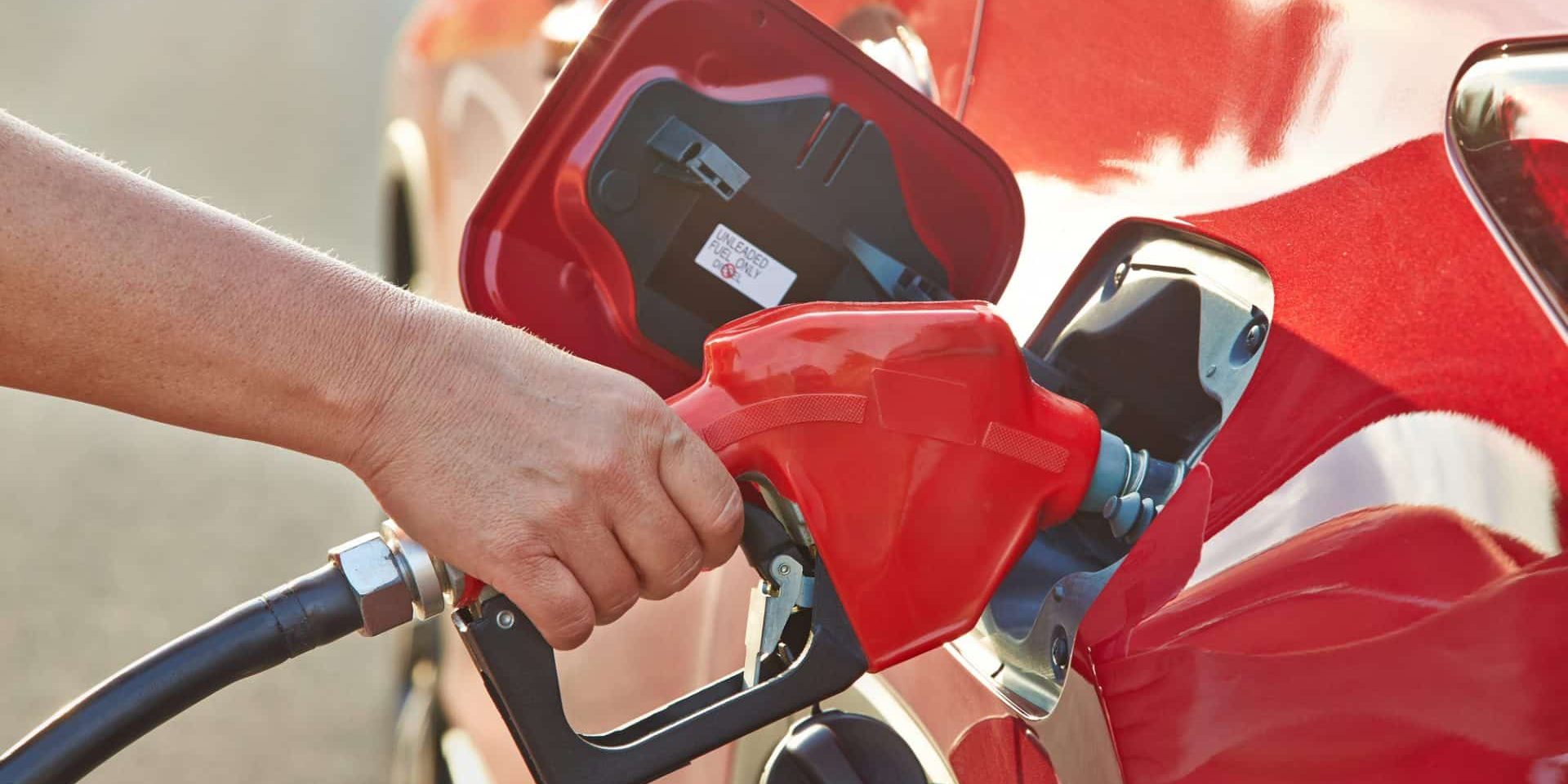
- Gasoline cost 37.4% more in October than a year earlier, the largest rise among the three car prices with a 12-month figure from the Bureau of Labor Statistics.
- Over the same 12 months new vehicles rose 0.7% and used cars and trucks fell 3.3%.
- AAA puts the national average for regular at $3.84 on Nov. 14, 76 cents above a year ago, with North Carolina at $3.12 and Hawaii at $5.61.
Gasoline Jumped While New and Used Car Prices Stayed Flat or Fell
Of the car costs that carry a 12-month reading, fuel is the one that grew. The Bureau of Labor Statistics (BLS) measured gasoline of all types at 37.4% above its October 2025 level in the Consumer Price Index it released on Nov. 10. New vehicles sat 0.7% higher over the same 12 months, and used cars and trucks sat 3.3% lower.
Those three readings are the only car prices with a 12-month figure in the release’s summary table. The vehicle itself cost about what it did a year ago, or less on the used market. The gallon that keeps it moving cost far more.
The pump has started to relax. AAA’s national average for regular was $3.8406 on Nov. 14, down from $4.3333 a month earlier. Even at that lower level, a gallon costs 76 cents more than the $3.0804 AAA recorded on the same date a year ago.
Why BLS Published 12-Month Changes for So Few Car Costs
The short list has a cause. A lapse in appropriations stopped BLS from surveying prices in October 2025. Most CPI series have no October 2025 index, and a 12-month change for October 2026 cannot be calculated for any series missing that base month.
The effect shows up in Table A of the release. The 12-month column is blank, marked with a dash, for the all items index, food, energy, shelter and every other line. Gasoline, new vehicles and used cars and trucks are the entries that carry a number. The detailed expenditure table adds one more, a 38.6% rise for unleaded regular gasoline, and shows a dash in the 12-month column for motor vehicle insurance, maintenance and repair, parts and tires. How those costs moved over the year is not on the page, so this report makes no claim about them. The motor vehicle insurance index rose 0.7% in October alone, a month that also brought a 1.2% drop in used cars, as the earlier report on October’s insurance and used car readings set out.
Monthly figures fill part of the gap. The seasonally adjusted gasoline index rose 5.4% in April and 7.0% in May, fell 9.7% in June and 2.9% in July, then rose 3.9% in August, 9.1% in September and 1.0% in October. Compounded, those seven readings add up to a rise of about 13.2% from the end of March (our arithmetic from the table). The energy index as a whole rose 0.7% in October after a 5.2% surge in September.
The seasonal adjustment hides one detail worth knowing. BLS says seasonally adjusted data strip out changes that normally repeat at the same time each year, and that shoppers tracking what they actually pay should read the unadjusted numbers. Before seasonal adjustment, gasoline prices fell 0.7% in October. The 37.4% figure sits in the unadjusted column, so it describes the cost a shopper met at the pump.
New vehicles moved in small steps: down 0.2% in April, down 0.3% in May, flat in June, then up 0.1%, 0.3%, 0.2% and 0.2% from July through October. Used cars and trucks rose 0.4% in July, 0.4% in August and 0.7% in September before the 1.2% fall in October. A new vehicle priced 0.7% higher costs $280 more on a $40,000 sticker, an illustration with our own price tag. The average new car price record reported on Nov. 11 gives the actual transaction level.
What the Pump Shows Now and Why 37.4% Is Bigger Than 24.7%
AAA’s weekly releases trace the slide. The national average for regular stood at $4.27 on Oct. 22, $4.22 on Oct. 29, $4.10 on Nov. 5 and $3.90 on Nov. 12, the first reading under $4 after July. By Nov. 14 it reached $3.8406, with the previous day at $3.8724 and a week earlier at $4.0371. That is 19.65 cents off in a week and 49.3 cents off in a month.
AAA names three drivers of the decline: falling crude prices, the switch to winter-blend gasoline, which is cheaper to produce, and the autumn drop in demand. WTI crude settled at $86.53 a barrel on Wednesday, Nov. 11, after AAA noted crude above $100 in its Oct. 29 release. AAA cites EIA data showing U.S. gasoline demand slipping from 8.80 million barrels a day to 8.76 million, supply rising from 209 million barrels to 210.8 million and crude inventories gaining 4.7 million barrels to 414.4 million, which sits 4% below the five-year average.
The EIA weekly survey gives the same direction in its own numbers. Regular gasoline averaged $4.354 in the week of Oct. 5 and $3.995 in the week of Nov. 9, a drop of 35.9 cents in five weeks. EIA publishes its next weekly update on Nov. 17.
Why does BLS show 37.4% when AAA’s own year-over-year gap is 24.7%? The CPI measures October, and October was the expensive month. EIA’s regular readings for the four October Mondays (4.354, 4.331, 4.284 and 4.269) average $4.31, against $3.84 on Nov. 14. A yearly comparison built on October prices meets a bigger jump than one built on a mid-November price after a month of falling. BLS’s own line for unleaded regular, the grade AAA’s headline number tracks, shows a 12-month rise of 38.6%, so grade mix does not explain the gap. These are our own comparisons of the saved figures, not a statement from either agency.
AAA also says the level remains high for the season. Its Nov. 12 release says November so far is the priciest November for gas in its records. Regular’s all-time AAA high is $5.0165, set on 6/14/22, so the pump sits well under that mark. Diesel tells another story: $6.0366 on Nov. 14 against $3.7690 a year earlier, a rise of $2.2676 or 60.2%, and 49.1 cents under the $6.5276 record AAA logged on 9/22/26. EIA’s all types diesel average was $6.127 on Nov. 9.
From North Carolina to Hawaii: A $2.49 Spread
The national average covers a very wide field. AAA’s state table for Nov. 14 puts North Carolina first for cheapness at $3.1220 a gallon for regular, followed by Texas at $3.3180, Georgia at $3.3553, Indiana at $3.3773 and Oklahoma at $3.3900.
The other end is steep. Hawaii costs $5.6102, California $5.5830, Nevada $4.9196, Washington $4.8458, Oregon $4.4781 and Alaska $4.4588. The gap between North Carolina and Hawaii is $2.49 a gallon (5.6102 minus 3.1220 is 2.4882). On a 15 gallon fill-up that is $46.83 in North Carolina and $84.15 in Hawaii, a difference of $37.32 per tank. Over 480 gallons it is $1,194.34 a year.
The spread shows up between neighbors too. Illinois regular costs $4.2317 and Indiana $3.3773, an 85.4 cent gap that adds $12.82 to a 15 gallon fill-up on the Illinois side of the line. The earlier report on North Carolina and Hawaii gas prices tracked the same two ends of the table, and the Nov. 14 figures show both moving: North Carolina fell from the $3.18 AAA listed on Nov. 12, while Hawaii slipped from $5.63 to $5.61.
What a 76 Cent Rise Adds to a Year of Driving, and How to Cut It
Take a driver who covers 12,000 miles a year in a car that returns 25 miles per gallon. That is 480 gallons. At the $3.0804 a gallon AAA recorded a year ago, the fuel bill comes to $1,478.59. At today’s $3.8406 it comes to $1,843.49, a gap of $364.90 (the mileage and mpg are an assumption, so swap in your own).
Set that against the vehicle line. The new vehicle index sits 0.7% above a year ago and the used index 3.3% below, so car prices in the index stand near last year’s level or under it. Fueling a car at the assumed mileage costs $364.90 more. Of the three, fuel is the line that grew.
Four checks keep the bill down. Look up your state on the AAA state gas price page before a long drive and compare it with the next state over. Use the AAA TripTik Travel planner, which AAA says shows current gas prices along a route. Buy regular unless the maker requires premium: premium averaged $4.7645 on Nov. 14, 92.39 cents above regular, which comes to $443.47 over 480 gallons. And read the weekly AAA release, which has landed on Thursdays through October and November, for the next move in crude and demand.
The next BLS reading arrives on Thursday, Dec. 10 at 8:30 a.m. ET with the November Consumer Price Index. That release will show how much of the pump’s slide reached the index.
Want more car content? Add us as a preferred source on Google to your favourites list for the best automotive news and analysis on the internet.
If you enjoyed this article, be sure to follow us on Microsoft Start.
Sources
- U.S. Bureau of Labor Statistics: Consumer Price Index Summary, October 2026
- AAA Fuel Prices: State Gas Price Averages
- AAA Fuel Prices: For the First Time Since July, National Average Drops Below $4
- U.S. Energy Information Administration: Weekly Retail Gasoline and Diesel Prices
Reviewed by Preetam Gadekar

Leave a Comment
More in News

Toyota Recalls 62,000 Tundras Over Camshafts That Could Snap While Driving

What Highway Code Rule 57 Expects of Every Driver With a Dog in the Car

SA Drops Police Reports for Most Crashes Over $3,000 From 23 November

Palm Beach School Bus Cameras Mail Warnings Nov. 16, Then $225 Fines Jan. 5

Orlando School Zone Cameras Mail $100 Fines From Nov. 30, No License Points
Trending on Motoring Chronicle

Subaru Debuts All-New 2026 Outback with Bold New Styling, Upgraded Technology, Innovative Safety Features [Photo Gallery]

Every Diesel Driver Pays a Record £110 a Tank, RAC Says, With Duty Rising

Toyota Debuts All-Electric “bZ Time Attack” AWD Concept at 2025 SEMA Show

New Mercedes-AMG GT 53 4-Door Coupe Arrives With 544bhp and 800km Range