
How Bugatti Traced the Secret History of One of the First Veyrons Ever Built


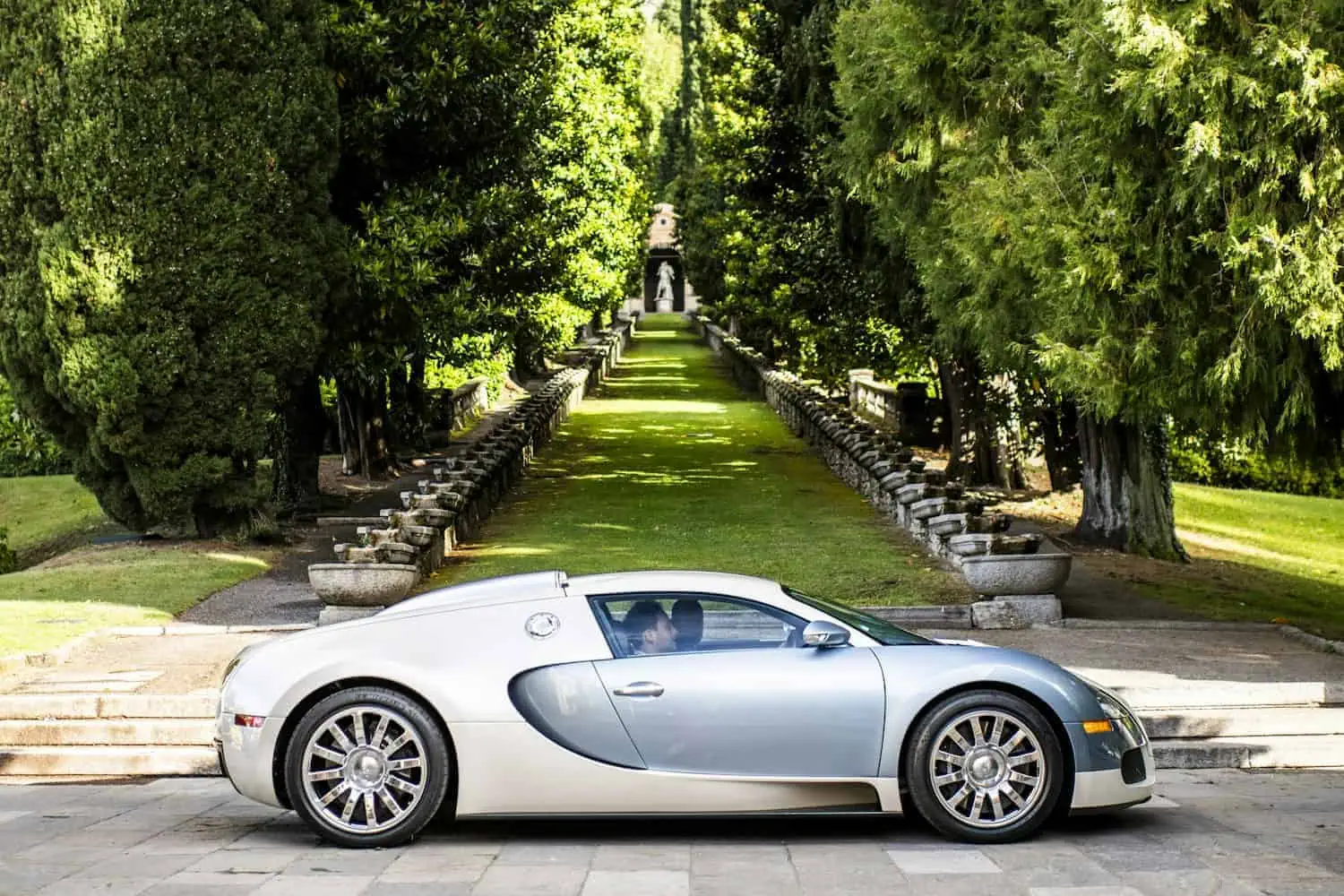
Before the Bugatti Veyron became the car that redefined what a road-legal production vehicle could achieve, a handful of pre-series prototypes carried the burden of proving it was even possible. Chassis 5.1 was one of just six such cars, and its story reads like a biography of the Veyron programme itself. Now, after years of painstaking research by Bugatti’s La Maison Pur Sang authentication team, the full history of this development car has been pieced together for its current owner, who brought it to the Concorso d’Eleganza Villa d’Este 2026.
The certification reveals a car that was present at almost every defining moment in the Veyron’s journey from engineering ambition to production reality. It was hammered across Nevada’s salt flats in brutal heat, driven by Ferdinand Piëch himself at the model’s first public outing in Sicily, paraded before prospective buyers at Pebble Beach, and rebuilt three times before finally being signed off to customer specification in 2008. For collectors, it represents something rare: a car whose provenance is not just documented but central to the origin story of a generation-defining hypercar.
Born to Prove a Point
The Veyron 16.4 was, by any measure, an absurd proposition. A car with 1,001 hp from an 8.0-litre quad-turbocharged W16 engine, engineered to exceed 400 km/h (249 mph) while remaining docile enough for daily use. The project was driven by Prof. Dr. Ferdinand Karl Piëch, then chairman of the Volkswagen Group, whose reputation for demanding the technically impossible made the Veyron as much a test of Bugatti’s engineering culture as its hardware.
Chassis 5.1 emerged from the Molsheim Atelier as a validation platform during this period. Its job was not to look beautiful in a showroom but to answer hard questions. Could the drivetrain survive sustained high-speed running in extreme heat? Could the seven-speed dual-clutch DSG transmission, engineered under the direction of Dr. Wolfgang Schreiber, handle the colossal torque of the W16 without self-destructing? Could the cooling system, which required ten radiators in the production car, keep temperatures in check when the car was pushed to its limits for hours at a time?
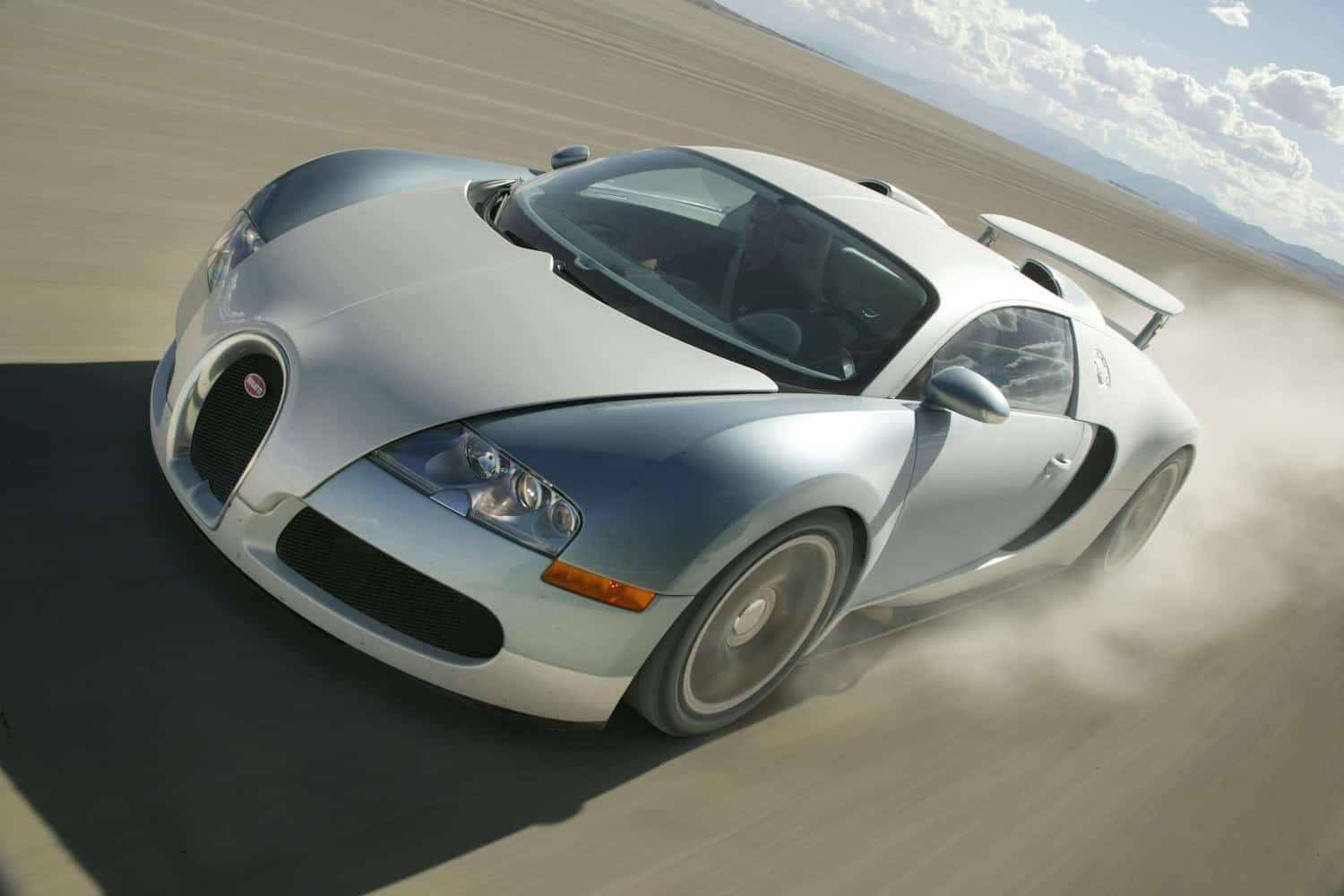
To find out, 5.1 was shipped to the salt flats of Nevada, where searing temperatures and an endless horizon provided the perfect proving ground. High-speed endurance testing in those conditions was deliberately punishing, designed to expose weaknesses that a climate-controlled test facility might never reveal. It was the kind of testing that breaks cars, and the data gathered during those sessions fed directly into the refinements that would make the production Veyron viable.
The Car Piëch Drove in Sicily
By September 2005, Chassis 5.1 had been registered for road use in Germany and its role shifted from pure development mule to something more public-facing. Bugatti chose Sicily for the Veyron’s first global dynamic event, inviting clients and international press to experience the car on both track and open road. Chassis 5.1 sat at the heart of this event, racking up miles across the island’s challenging terrain.
The photographs taken during those Sicilian days have since become some of the most recognisable images in modern Bugatti history. In several of them, Prof. Dr. Ferdinand Karl Piëch is seated inside Chassis 5.1, watching the car he had willed into existence prove itself in public for the first time. It was, as Bugatti’s own heritage team describes it, “a profound declaration of intent” from a marque returning to the global stage after decades of dormancy.
For context, the production Veyron 16.4 had a list price of approximately €1 million (around £840,000 at the time) when deliveries began, making it comfortably the most expensive production car in the world. The engineering costs behind it were famously vast. Volkswagen Group reportedly invested more than €1.6 billion in the Veyron programme, and each car was widely estimated to have been sold at a loss. The pre-series cars like 5.1 were the instruments through which Bugatti attempted to close the gap between Piëch’s vision and the laws of physics.
Three Lives in Three Years
What makes Chassis 5.1 particularly interesting from a collector’s perspective is the number of documented configurations it passed through during its working life. After its Sicilian debut, the car spent a year in active service before receiving its first significant overhaul. New full-silk seats were fitted, the engine bay was finished in a monochromatic scheme, and the car took on a more understated elegance as it transitioned into a customer-facing role.
In this second configuration, 5.1 toured North America as a Bugatti ambassador. It appeared at Sun Valley, San Diego, and the full suite of Monterey Car Week events: the Jet Center, The Quail, The Lodge, and the Bugatti Villa at Pebble Beach. At each stop, it stood alongside other pre-series Veyrons as living proof of how far the car had come from concept to reality.
By early 2007, the car entered its third configuration. The engine cover was updated to match the final production specification, and the interior was refinished in deep black, giving it the focused, purposeful look of a series-production Veyron. By this point, 5.1 had accumulated more than 21,000 km, and service records from Bugatti Greenwich document the honest wear of a machine that had lived a full and demanding life. Inspections, recalibrations, and the traces of hard use all tell the story of a car that was worked, not pampered.
The final chapter of 5.1’s transformation came in 2008, when it returned to the Molsheim Atelier to be brought into line with full customer specification. Production-standard mechanical systems, interior finishes, and exterior details were fitted, completing its journey from development tool to a car that could be owned and enjoyed as a Veyron in its own right.
What La Maison Pur Sang Actually Does
For those unfamiliar with the programme, La Maison Pur Sang (literally “the house of pure blood”) is Bugatti’s in-house authentication and certification service. It draws on the marque’s own archives, factory records, technical specialists, and Atelier knowledge to trace the complete history of significant Bugatti vehicles. The output is a detailed provenance dossier that covers everything from original order records and development notes to historic photography, service documentation, and physical inspection findings.
For a car like Chassis 5.1, the certification process was especially involved. Pre-series vehicles were not built to a single fixed specification; they evolved as the production programme matured, meaning their histories are more complex and less linear than a standard customer car. Tracing 5.1’s life required cross-referencing development archives, event records, shipping documents, dealership service logs, and photographic evidence spanning multiple countries and configurations.
The result is a document that transforms 5.1 from “an early Veyron with an interesting back story” into a car whose significance is fully mapped and independently verified by the factory itself. In a market where Veyron values have climbed steadily, with well-specified examples regularly trading between €1.5 million and €2.5 million, that kind of factory-backed provenance carries considerable weight. A pre-series car with a documented role in the Veyron’s development and a direct connection to Ferdinand Piëch occupies a different category entirely.
Villa d’Este and the Bigger Bugatti Picture
Chassis 5.1 made its public return at the 2026 Concorso d’Eleganza Villa d’Este on the shores of Lake Como, entered in Class H: ‘The Pace Race: The Supercar Comes of Age.’ The class celebrated the cars that defined the modern performance car era, and the Veyron’s place in that story is difficult to overstate. When it launched in 2005, the Veyron did not simply join the hypercar segment. It created it, establishing a benchmark of 1,001 hp and 400 km/h that every subsequent rival has had to acknowledge.
Bugatti was well represented across the concours. An EB110 GT, the first customer-delivered example of the Romano Artioli-era revival, received an honorary prize in the same class. A highly original, unrestored Type 37 from Ettore Bugatti’s own era won the ‘Trofeo dei Ragazzi’ by the Young People’s Referendum, while a rare coachbuilt Type 57C ‘Aravis’ provided a reminder of the extraordinary craftsmanship that defined the marque in the 1930s.
Together, the four cars formed a timeline of Bugatti’s history: from Ettore’s original vision through the Artioli-led comeback of the 1990s to the Volkswagen Group era that produced the Veyron and, subsequently, the Chiron. Chassis 5.1 sat at the hinge point of that narrative, representing the moment when Bugatti’s modern identity was forged.
“Every Bugatti tells a story, but Veyron 5.1 carries within it the story of a whole new era for the marque,” said Luigi Galli, Heritage and Certification Expert at Bugatti. “It was present at moments that shaped the Veyron’s development, its public unveiling and its introduction to customers around the world. Through La Maison Pur Sang, our role is to reveal and preserve that story with the greatest possible care, to certify the car and thus help its owner understand the depth of its significance. Chassis 5.1 therefore stands as a witness to the materialisation of a dream, as did all the teams whose talent coalesced to make it a reality.”
For the collector market, the authentication of Chassis 5.1 is a reminder that the most valuable cars are not always the ones with the lowest mileage or the most pristine paint. Sometimes, the cars that matter most are the ones that were there when history was being written. Chassis 5.1 was not just there. It helped write it.

Leave a Comment
More in News
How Long a Car Battery Should Last (and Why Short Journeys Halve It)
How to Wash a Black Car Without Putting Swirl Marks in the Paint

Motability Drivers Now Pay Up to £400 More to Join; Here’s What Changed

What to Do When Fines Arrive for a Car You Were Not Driving as Plate Cloning Jumps 41 Percent

Wheel Bearing Noise: How Long Can You Really Keep Driving?
Trending on Motoring Chronicle
Aston Martin Valhalla: the ultimate driver’s supercar [Photo Gallery]
Annapolis Speed Cameras Will Run 24/7 Starting September 8 With Fines Up to $425
Cabin air quality in cars: what helps and what doesn’t

Why California’s Gas Tax Just Hit a Record 63.4 Cents a Gallon
