
Why Any Warning Light on Your Dashboard Will Now Automatically Fail Your MOT

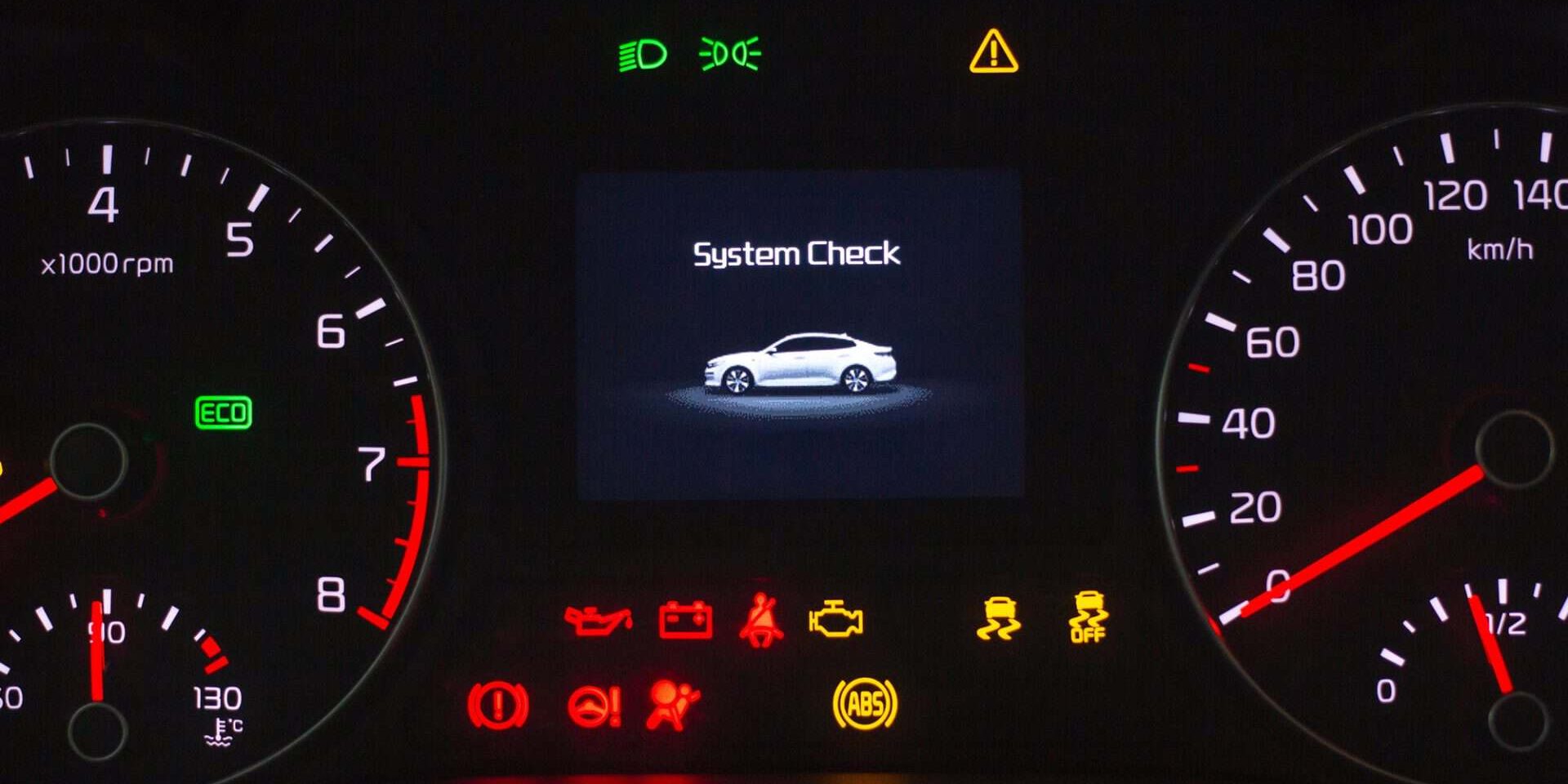
Any dashboard warning light left on when your car enters the test bay will now result in an automatic MOT failure. That includes the engine management light, the ABS warning, the airbag indicator and the tyre pressure monitoring system alert. Under the DVSA’s updated MOT testing standards for 2026, an illuminated warning light is treated as evidence of a safety system malfunction, and the tester will not accept a pass until it has been cleared. With approximately 40 million MOT tests conducted in the UK each year, the rule change affects an enormous number of drivers who may not yet be aware of it.
The 2026 overhaul goes further than the warning light rule alone. Brake standards have been tightened, diesel particulate filter checks are now more rigorous, electric and hybrid vehicles face new dedicated assessments, and photographic documentation of defects is now mandatory. For any driver whose car is coming up for its annual test, understanding what the tester is now looking for is the single most effective way to avoid a costly failure and retest fee.
The Warning Light Rule and What Triggers It
The engine management light (EML), sometimes called the check engine light, covers a wide range of faults from minor sensor failures to serious emission system problems. Under previous guidance, a tester could in some circumstances use their discretion about whether an EML was relevant to roadworthiness. Under the 2026 standards, any illuminated EML is a major defect and results in MOT failure without exception.
The ABS warning light is equally clear-cut. Anti-lock braking is a critical safety system that prevents wheel lock-up under emergency braking, maintaining steering control. A lit ABS light indicates the system is not functioning, and the tester will record this as a fail. Similarly, if the supplementary restraint system (SRS) airbag warning light does not extinguish at startup, it signals a fault in the airbag or seatbelt pre-tensioner system and will result in failure.
Tyre pressure monitoring system (TPMS) alerts, which appear as a horseshoe symbol with an exclamation mark on most modern cars, are also covered by the rule. A persistent TPMS warning generally means either a tyre has been replaced without being paired to the system, a sensor has failed, or an actual low-pressure condition exists. All three require attention before an MOT. Resetting a TPMS sensor at a tyre centre typically costs £15 to £50 depending on the sensor type; replacing a faulty sensor costs £40 to £120.
To clear a warning light before an MOT, you need to identify and fix the underlying fault rather than simply reset the code. Reconnecting the battery or using an OBD-II reader to clear codes without making a repair will cause the light to reappear within a short period of driving, and many garages perform a pre-test drive specifically to check whether warning lights return. A basic OBD-II scanner for identifying fault codes costs from around £20 on Amazon, or many high street auto parts retailers such as Halfords will read codes for free.
Stricter Brake Standards and the New Measurement Rules
Brake system checks have been significantly tightened under the 2026 MOT rules. Testers now measure brake pad thickness more precisely using standardised measurement tools, rather than relying on visual estimation. The acceptable tolerance for brake imbalance between the left and right sides of an axle has been reduced, meaning even slight variations that previously would have passed may now trigger a failure.
Brake fluid condition is now also assessed more thoroughly. Contaminated brake fluid absorbs water over time, which lowers its boiling point and can lead to brake fade under hard use. While there is no statutory minimum for brake fluid water content, a tester who identifies discoloured or heavily contaminated fluid may record an advisory or, in severe cases, a major defect.
The practical implication for drivers is that if you have been experiencing any sponginess in the brake pedal, pulling to one side under braking, a grinding noise from the wheels, or if your brake warning light has been on intermittently, these need to be investigated before the MOT. A basic brake inspection at a reputable independent garage typically costs nothing or around £30 as part of a pre-MOT check.
Tyre condition has also come under closer scrutiny. Testers now use digital depth gauges to measure tread across multiple points around the tyre, not just one spot, and irregular wear patterns must be documented. The legal minimum remains 1.6mm, but a tyre with acceptable overall depth but extreme wear on one shoulder may attract an advisory or failure if the tester determines the wear is dangerous. Checking tyre pressures and alignment before an MOT is worth doing: under- or over-inflated tyres cause uneven wear that can worsen between booking and testing.
Diesel Particulate Filter Checks and the New Emissions Equipment
Diesel drivers face some of the most significant changes in the 2026 MOT update. Testers now use advanced diagnostic equipment capable of detecting removed or tampered diesel particulate filters (DPF), and any evidence of DPF removal or modification results in an automatic failure with no discretion available to the tester. This represents a hardening of a rule that has existed since 2014 but was previously enforced primarily through visual inspection and the opacity smoke test.
DPF removal was once common among owners of high-mileage diesel cars, particularly older models prone to DPF blockage. A DPF delete costs around £300 to £500 and was, in some circles, presented as a solution to expensive regeneration cycles. Under the 2026 rules, a vehicle with a deleted DPF cannot pass an MOT. Owners of such vehicles face either a DPF replacement (typically £1,000 to £3,000 fitted) or keeping the car off the road.
Even for diesel owners whose DPF is intact, emissions limits have been tightened. The maximum smoke opacity figure for older Euro 5 diesel cars has been reduced from 3.0m-1 to 2.5m-1. For Euro 6 diesels, the limit is already tighter at 1.5m-1. A clogged but present DPF can produce smoke readings above the legal limit. Regular motorway driving, which allows the filter to complete active regeneration cycles at sustained high temperatures, is the most effective way to keep a DPF in good condition.
What EV and Hybrid Owners Need to Know
Electric and hybrid vehicles now face dedicated assessment criteria that were not part of the standard MOT framework until 2026. For fully electric vehicles, testers must inspect high-voltage cables for damage, corrosion or exposed conductors, verify that battery warning lights function correctly and extinguish at startup as designed, and assess the condition of charging port covers and housings. The absence of a conventional exhaust means there is no emissions test, but the electrical safety inspection is more detailed.
For hybrid vehicles, including plug-in hybrids, testers must also check that the vehicle can operate in electric mode where applicable, and that transitions between the internal combustion engine and electric motor occur smoothly without triggering warning lights. Both high-voltage and conventional 12-volt systems are checked. Hybrid owners should note that a fault with the high-voltage system often illuminates a warning light, which will fail the car under the dashboard light rule regardless of whether the fault is deemed dangerous or minor.
Regenerative braking systems are also assessed. While the function of regenerative braking is broadly different from friction brakes, the MOT inspection requires that it operates within normal parameters and does not cause unexpected deceleration behaviour that could catch other road users off guard.
What to Do Before Your Next MOT
A pre-MOT checklist costs nothing and can prevent a failed test and a retest fee of typically £30 to £50. Start with all lights: check headlights (dipped and main beam), front and rear fog lights, indicators front and rear, brake lights (which require someone else in the car or a wall to check against), number plate lights and reversing lights. A blown bulb costs £3 to £20 depending on the fitting and is one of the most common reasons for failure.
Check that the horn works, that all mirrors are securely mounted and give clear rearward visibility, and that the windscreen has no chips larger than 10mm in the driver’s line of vision (a zone roughly 290mm wide in front of the driver). Chips smaller than 40mm outside the driver’s primary vision zone are allowable but may attract an advisory. A chip repair costs around £25 and is almost always preferable to a windscreen replacement if the damage qualifies.
Under the 2026 rules, testers must also take digital photographs of dangerous defects and major defects, which become part of your vehicle’s official DVSA MOT record. These images can be accessed via the government’s free MOT history checker at check-mot.service.gov.uk using your vehicle registration number. If you want to challenge a failure, the photographs form the basis of any appeal to the DVSA.
If your car fails, you can ask for a free partial retest within 10 working days, covering only the items that failed, provided the car is left with the testing station or returned promptly for repair. A full retest fee applies if the car is taken away for repairs elsewhere and returned after 10 working days. Always ask the tester to clarify which defects are dangerous (requiring immediate repair before driving) and which are major (which allow you to drive away on a valid remaining MOT).
Sources:

Leave a Comment
More in News

Car Insurance Fronting Now Risks a Voided Policy for Half of UK Drivers

What the October 28 Budget Could Mean for Every UK Driver’s Fuel and Car Tax Bills

America Is Investigating This Engine. Britain Has Not Recalled One Car

Why Connecticut Drivers Cruising in the Left Lane Now Face an $88 Fine
Hurricane Isaias Flooded Thousands of Cars That Could Reach Used Lots
Trending on Motoring Chronicle

Why Nearly One in Four Stolen Cars in Philadelphia Is a Honda

Nissan PIXO Revealed as New Electric City Car with 161-Mile Range
How Driving Without a Valid MOT Could Soon Cost You Penalty Points Under New Road Safety Plans

Polestar 4 SUV Priced From £54,750 With Up to 391 Miles of Range
