
The Bugatti F.K.P. Hommage: Honoring the Veyron and its visionary creator


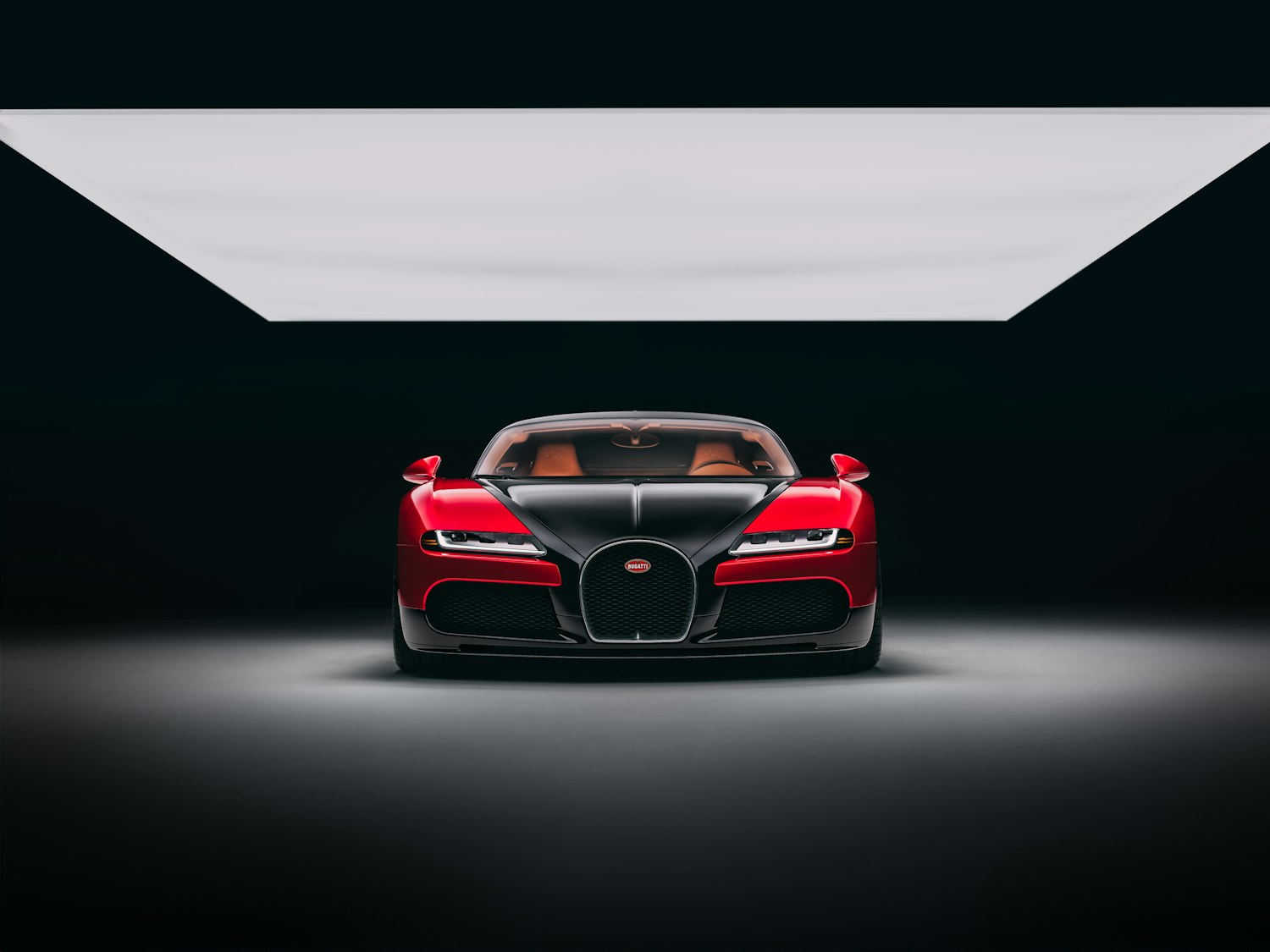
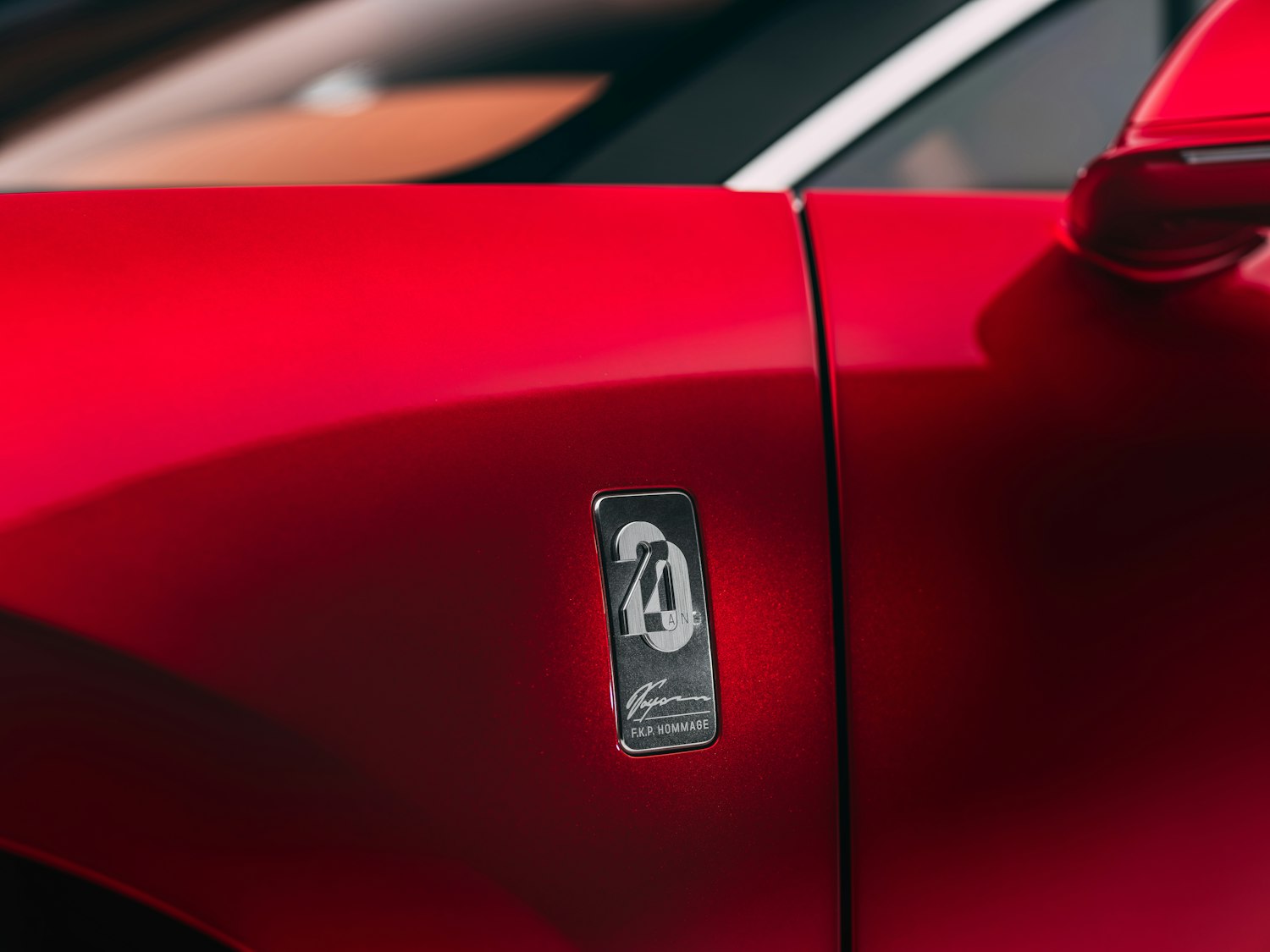
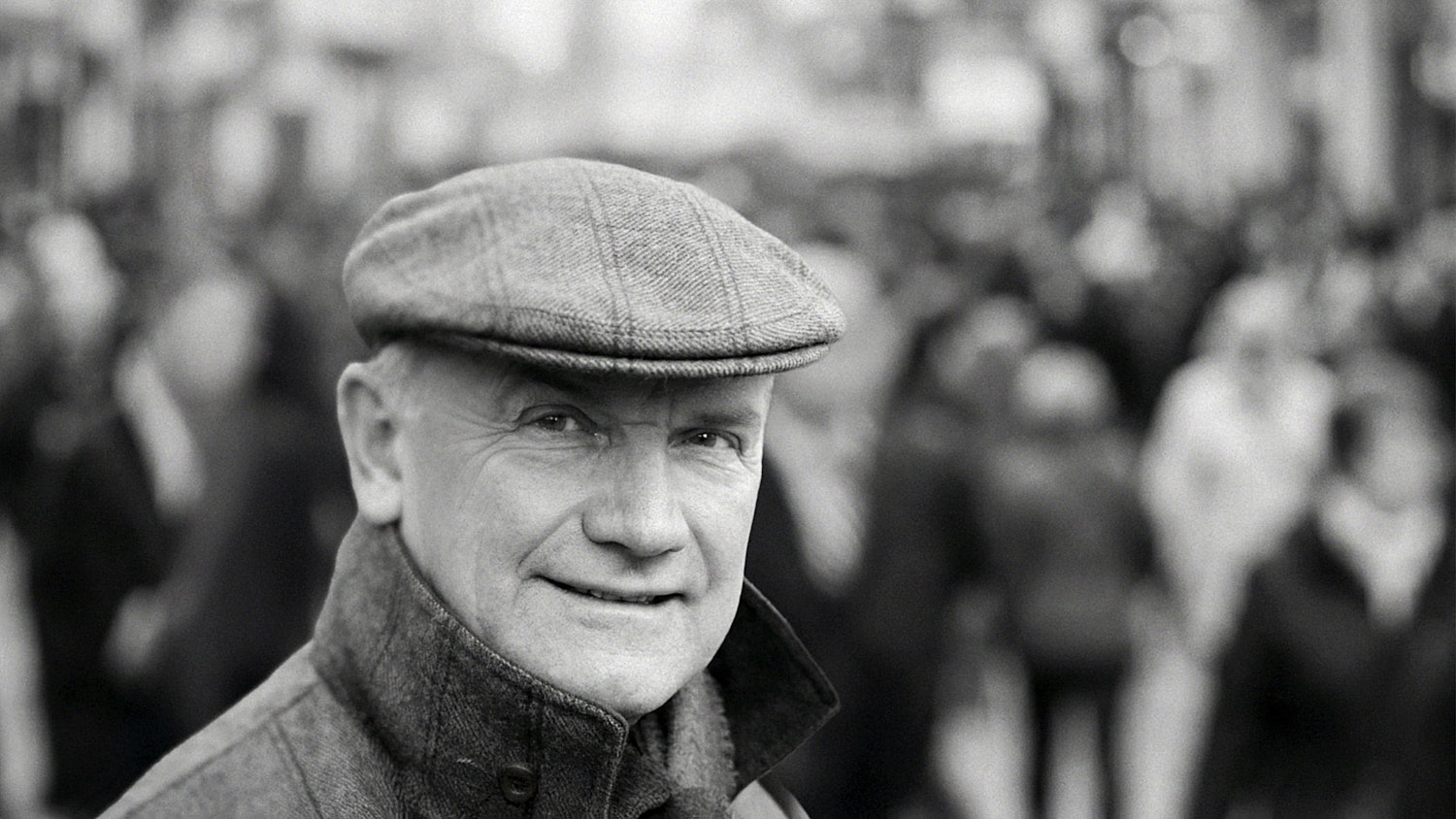
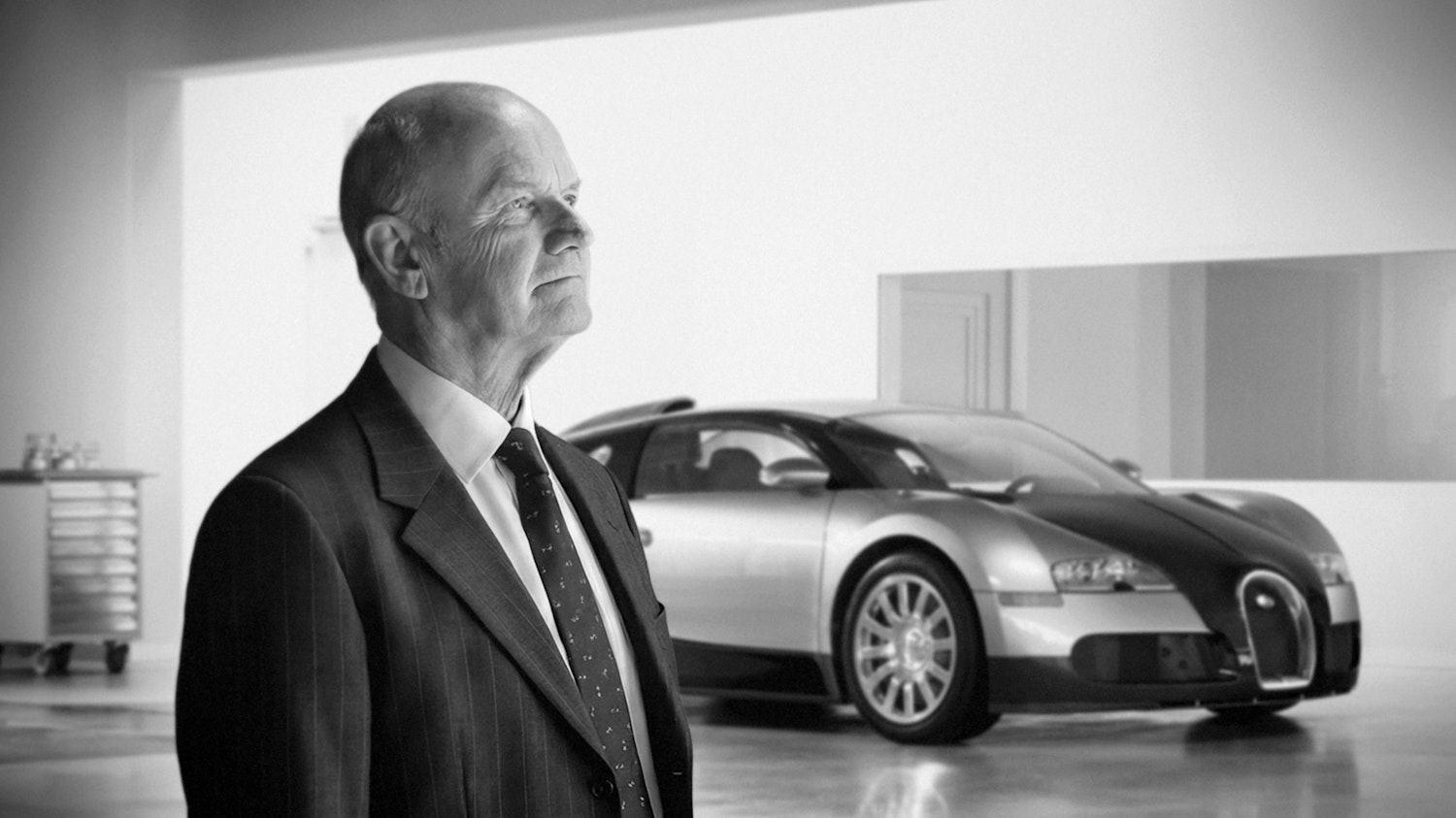
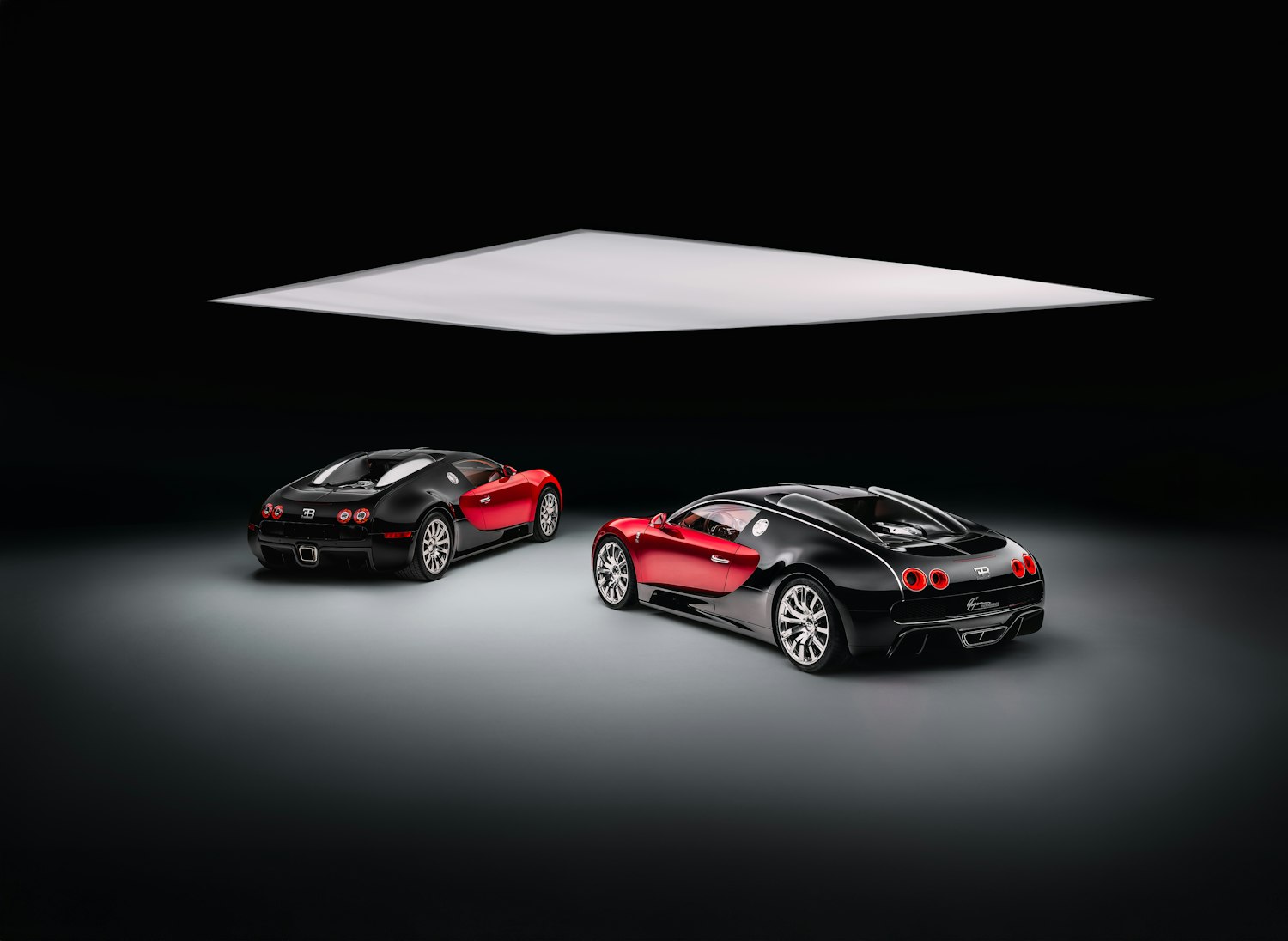
Twenty years ago, the Bugatti Veyron rewrote the rules of automotive possibility. With 1,001 hp, a top speed exceeding 400 km/h, and a level of refinement unheard of in a performance car, it created an entirely new category: the hyper-GT. Today, as the second creation of Programme Solitaire, Bugatti unveils the F.K.P. Hommage – a masterpiece that honors both the revolutionary spirit of the original Veyron and the visionary engineer who made it possible: Prof. Dr. Ferdinand Karl Piëch.
The story of the Veyron begins not in Molsheim, but on a bullet train in Japan, where Prof. Dr. Ferdinand Karl Piëch sketched the revolutionary W engine configuration that would become the beating heart of Bugatti’s renaissance. As Chairman of the Volkswagen Group, Piëch had already demonstrated his engineering genius through the development of Volkswagen’s unique VR engine architecture – from the compact VR6 that transformed the Golf, through the W8 and W12 that powered Passats and Bentleys, to the ultimate expression: the quad-turbocharged W16.
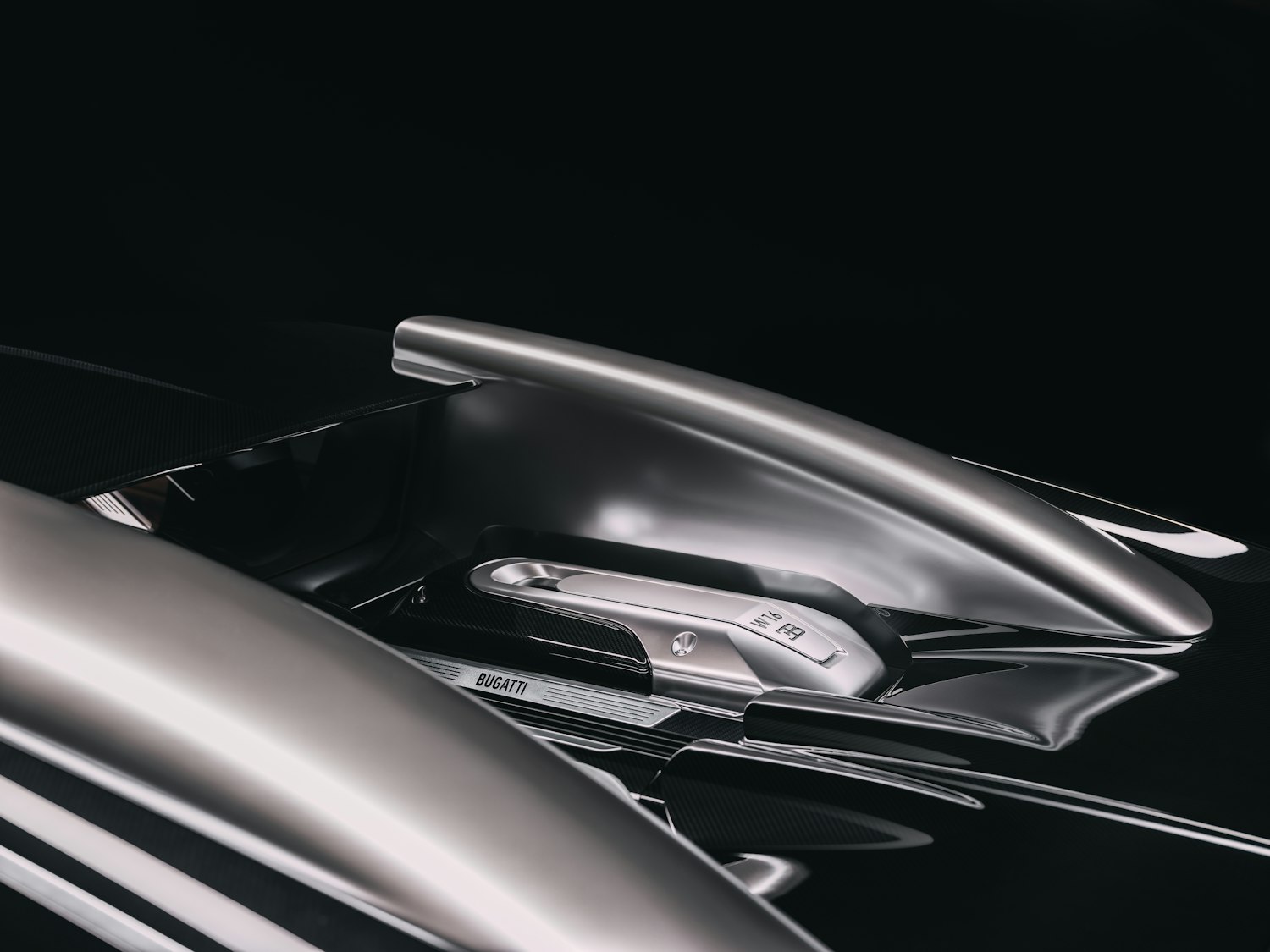
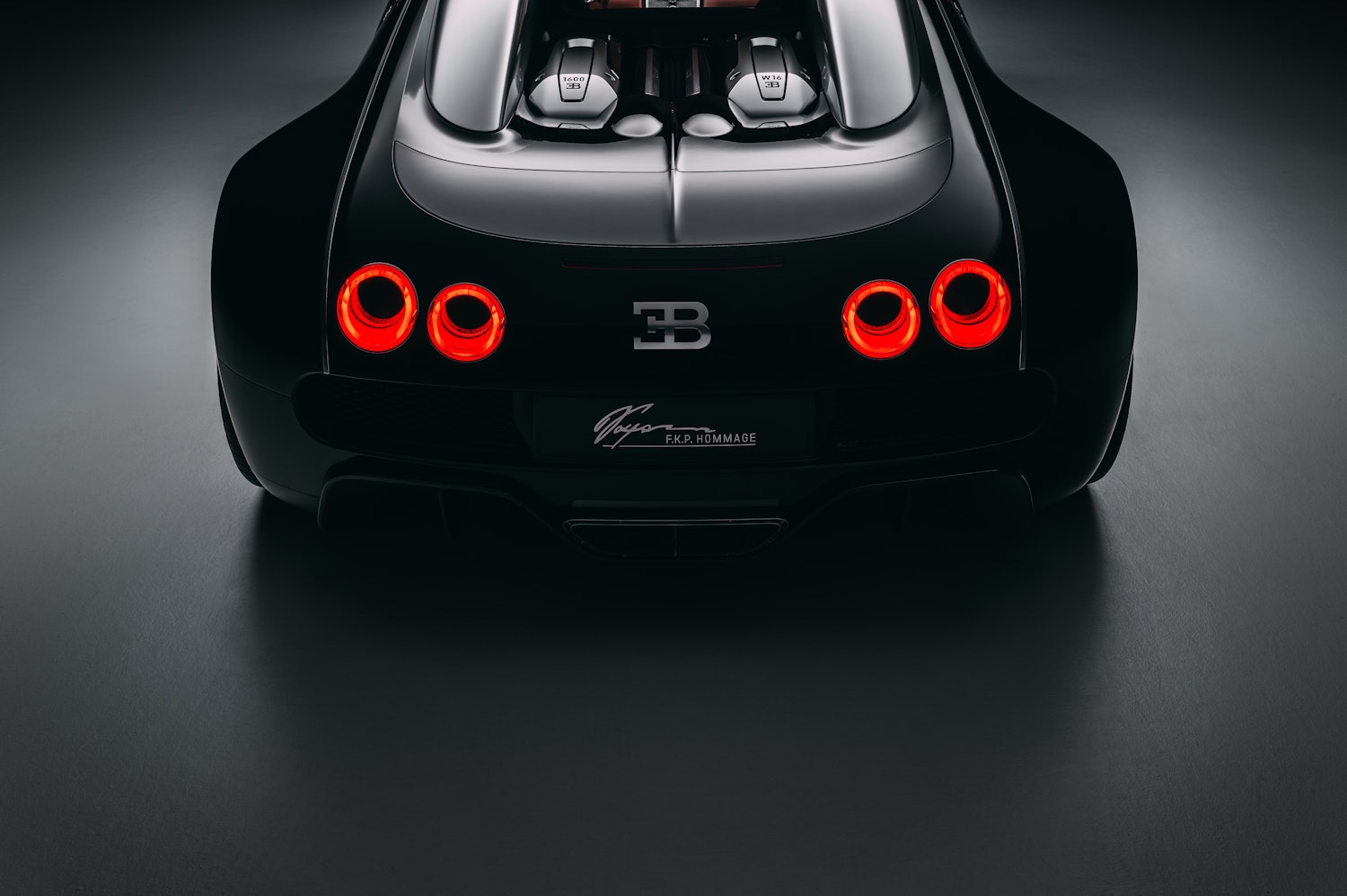
The W16 engine itself represents a marvel of packaging. By staggering cylinders in a short and wide-bank configuration, engineers compressed what would typically be a meter-long powerplant into just 645 millimeters – enabling the Veyron’s remarkably compact 2,700mm wheelbase. This architectural brilliance, combined with all-wheel drive and near-perfect weight distribution, created a hypercar that was as civilized as it was devastating.
When the Veyron debuted at the 1999 Tokyo Motor Show, designed by a young Jozef Kabaň under Hartmut Warkuß’s direction, it presented a radically different aesthetic philosophy. Where many supercars still followed the forward-leaning wedge shapes popularized by Gandini, the Veyron reclined. Noble and self-assured – it was a 1,000-horsepower car defined by composure rather than spectacle. This confident, Bauhaus-influenced design language has aged remarkably well, remaining contemporary two decades later.
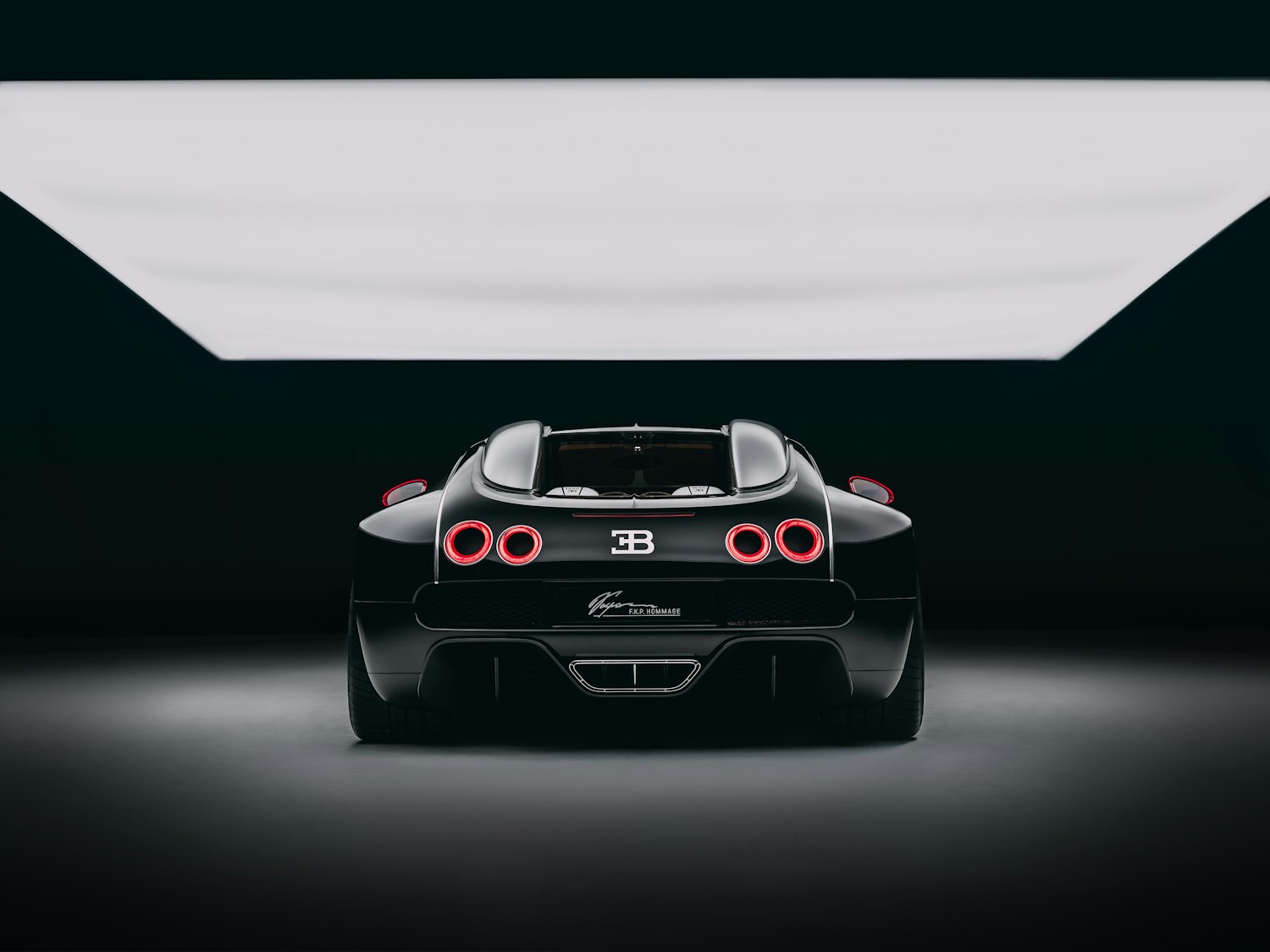
Built upon the highest evolution of Bugatti’s W16 platform, the F.K.P. Hommage features the 1,600 hp quad-turbocharged engine first introduced in the Chiron Super Sport – the very car that fulfilled Piëch’s speed ambitions by exceeding 300 mph. This represents the pinnacle of W16 development: larger turbochargers, enhanced intercoolers, upgraded cooling systems, and a reinforced gearbox capable of handling the increased torque.
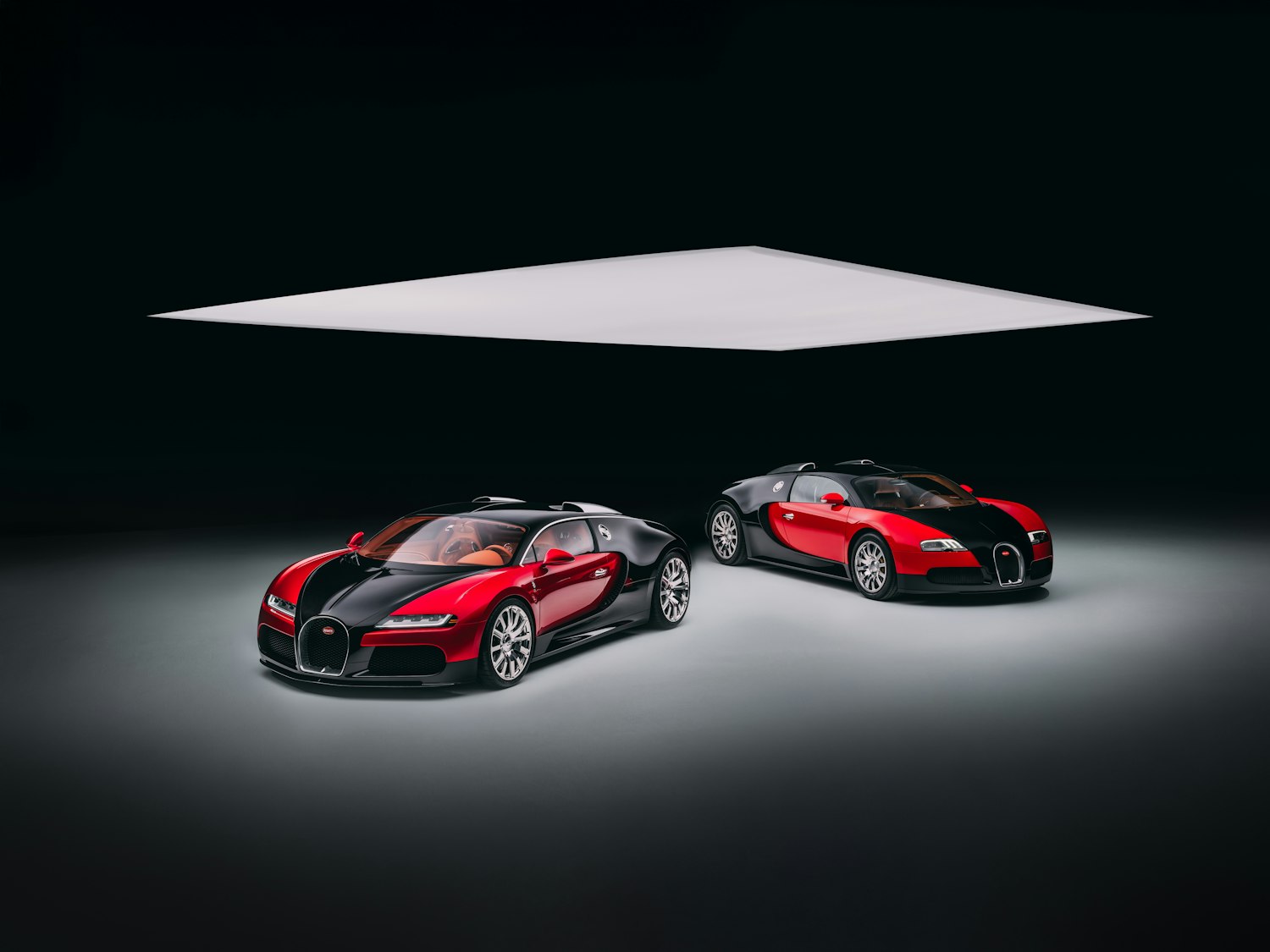
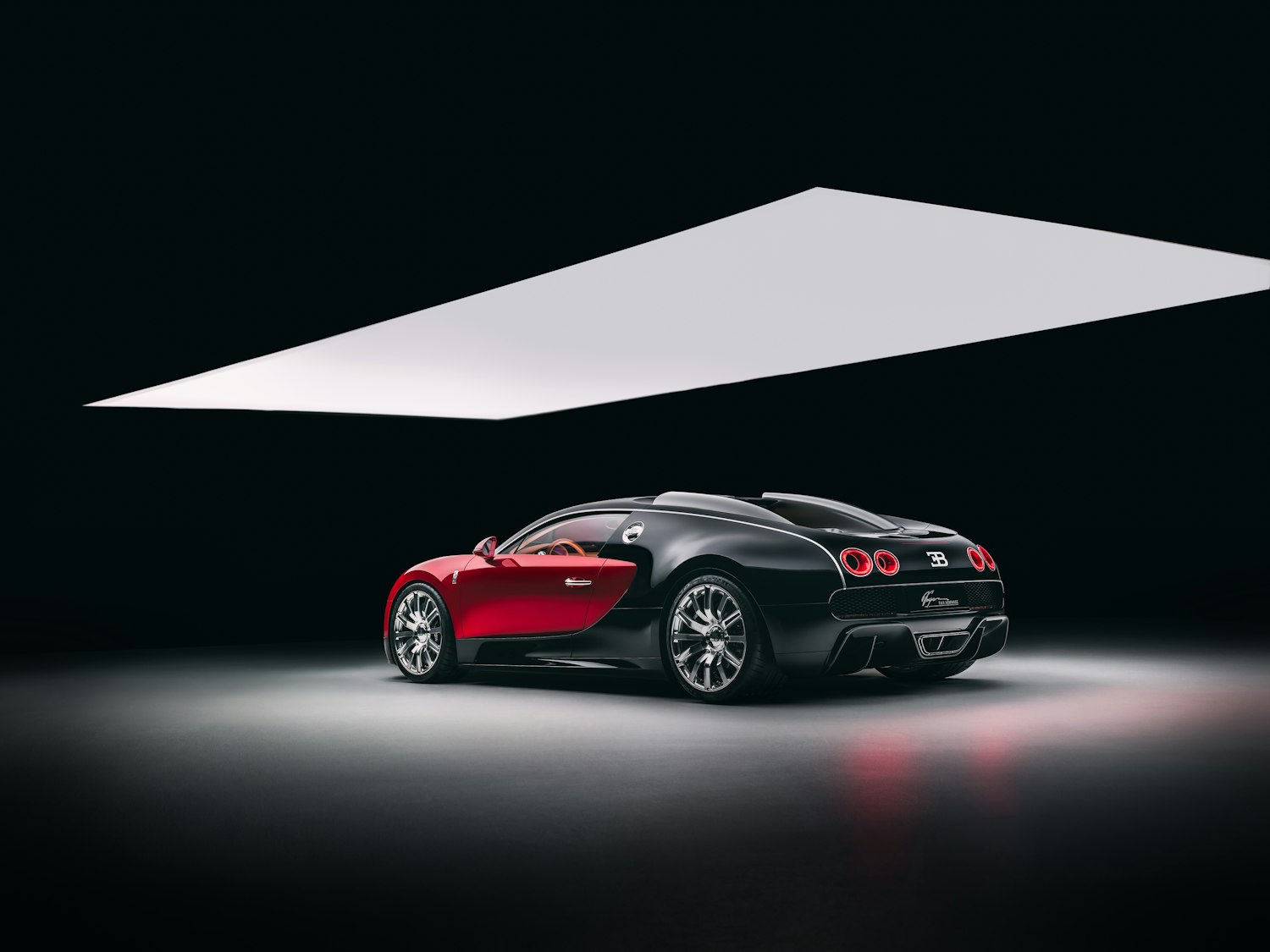
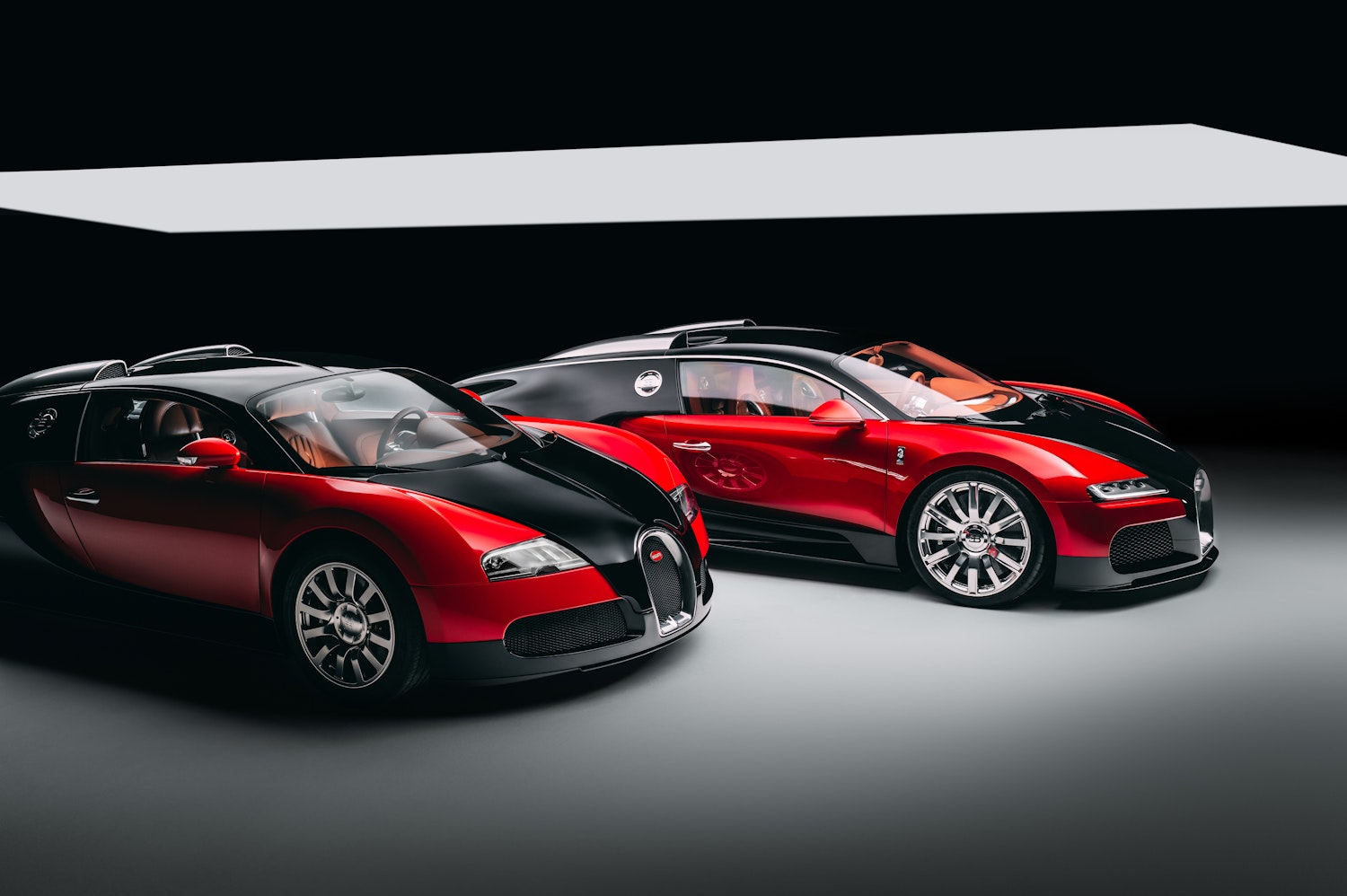
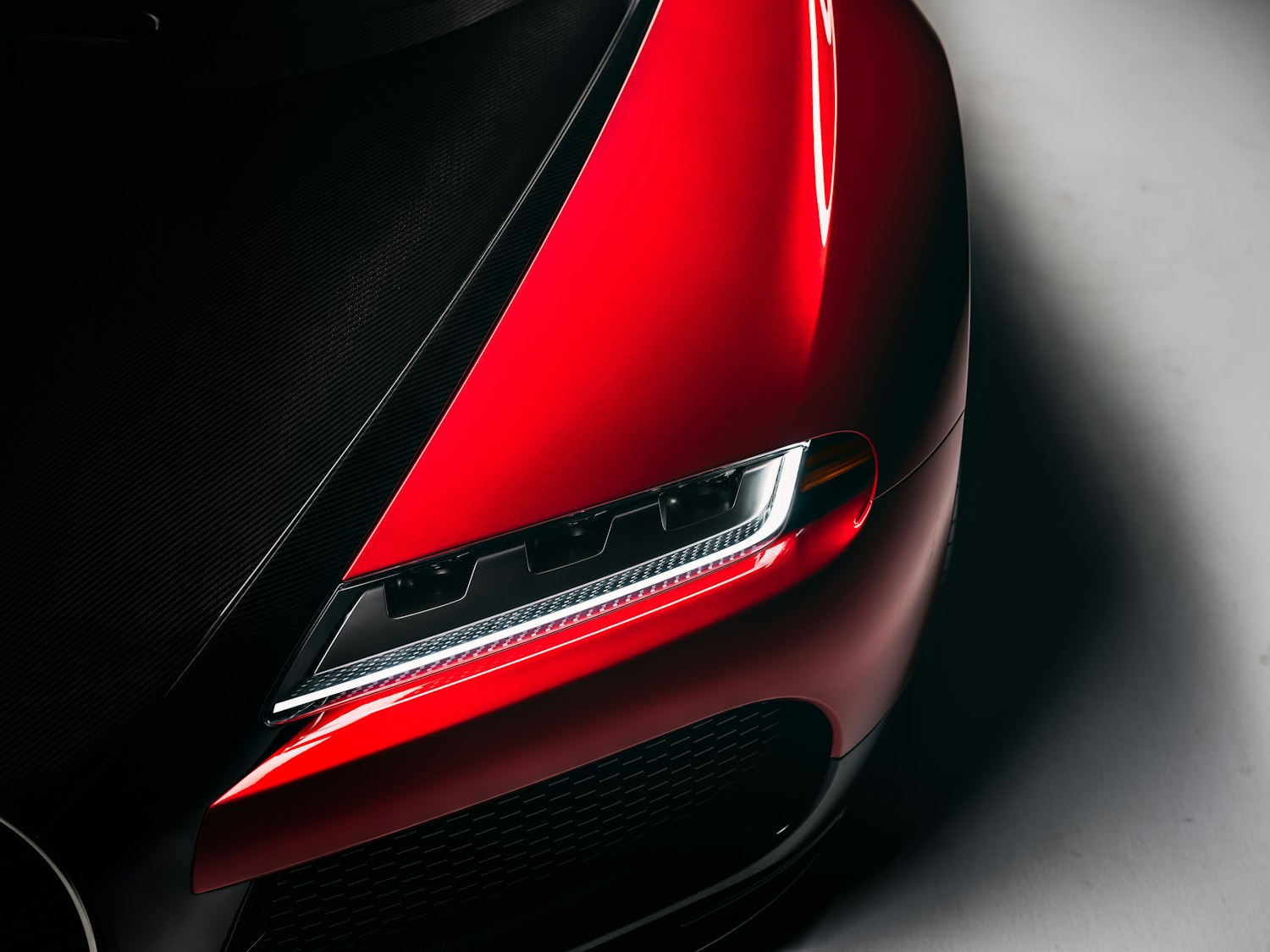
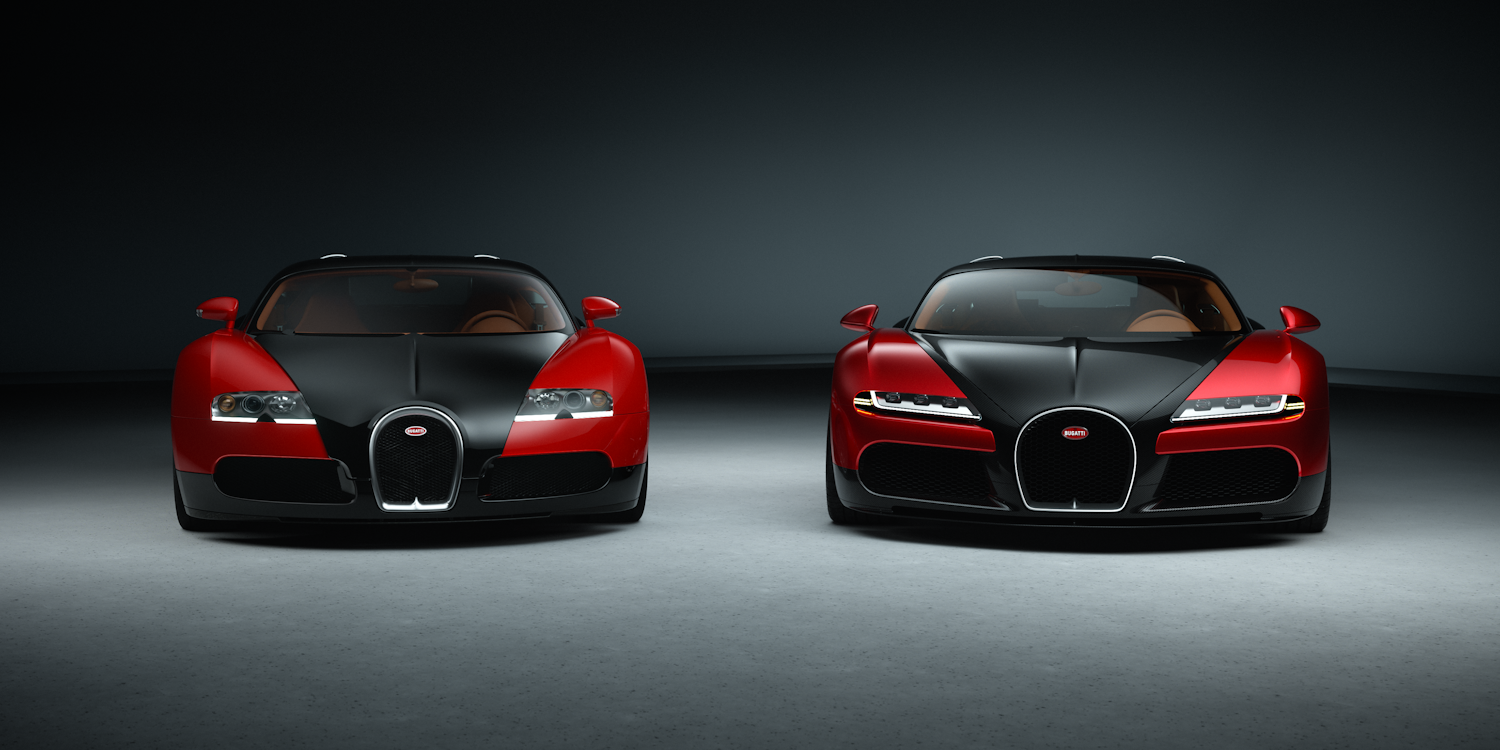
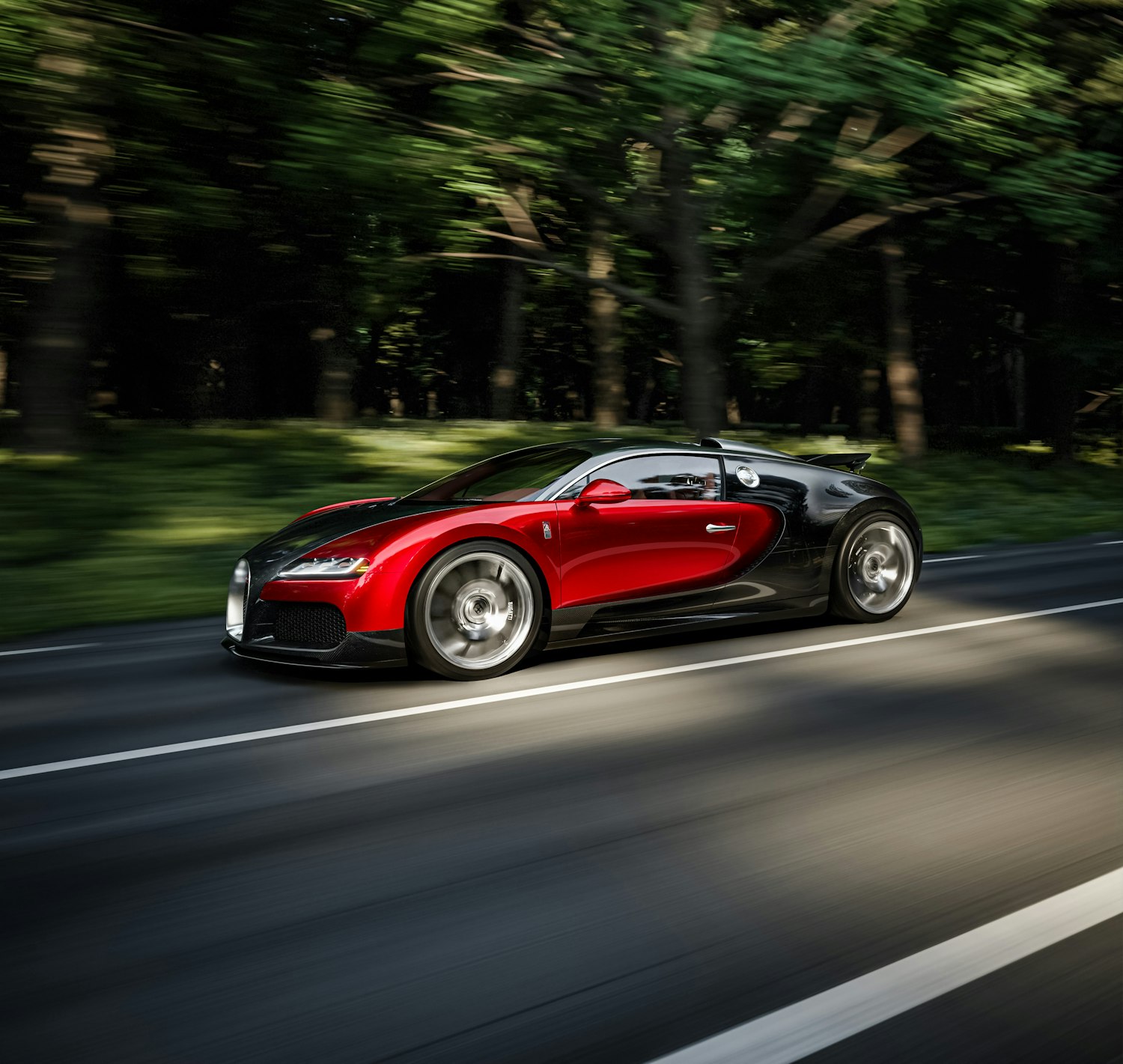
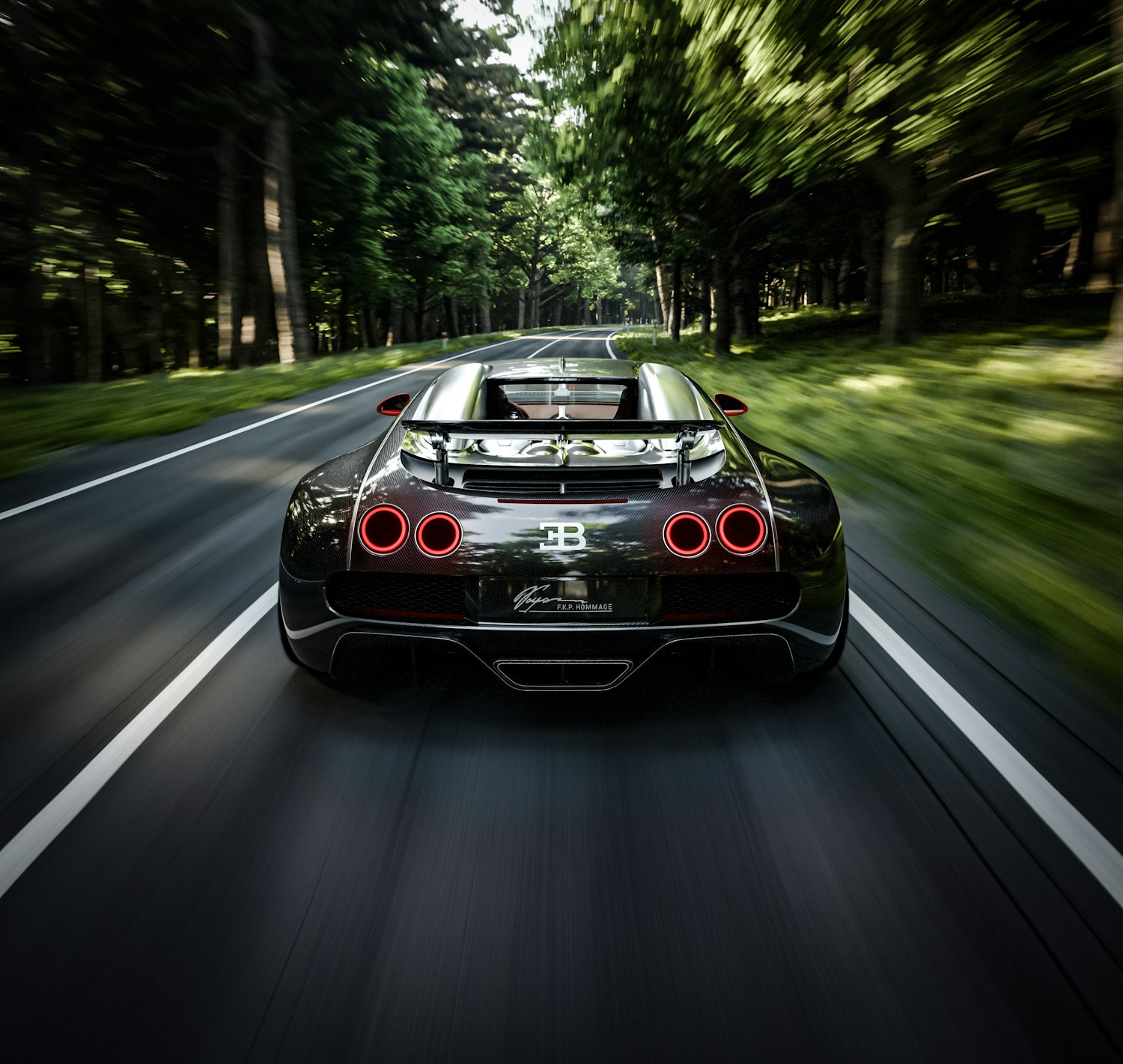
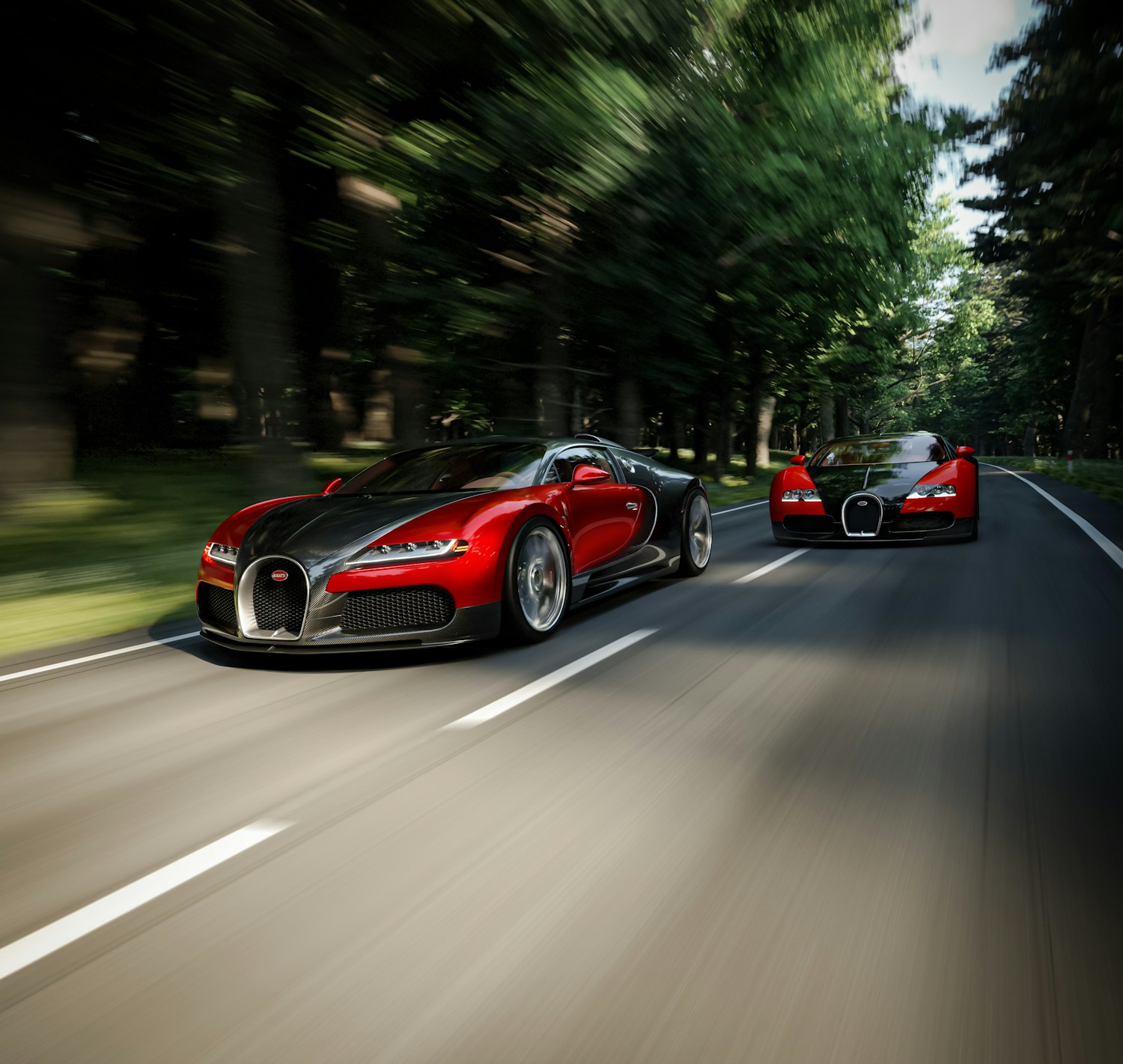
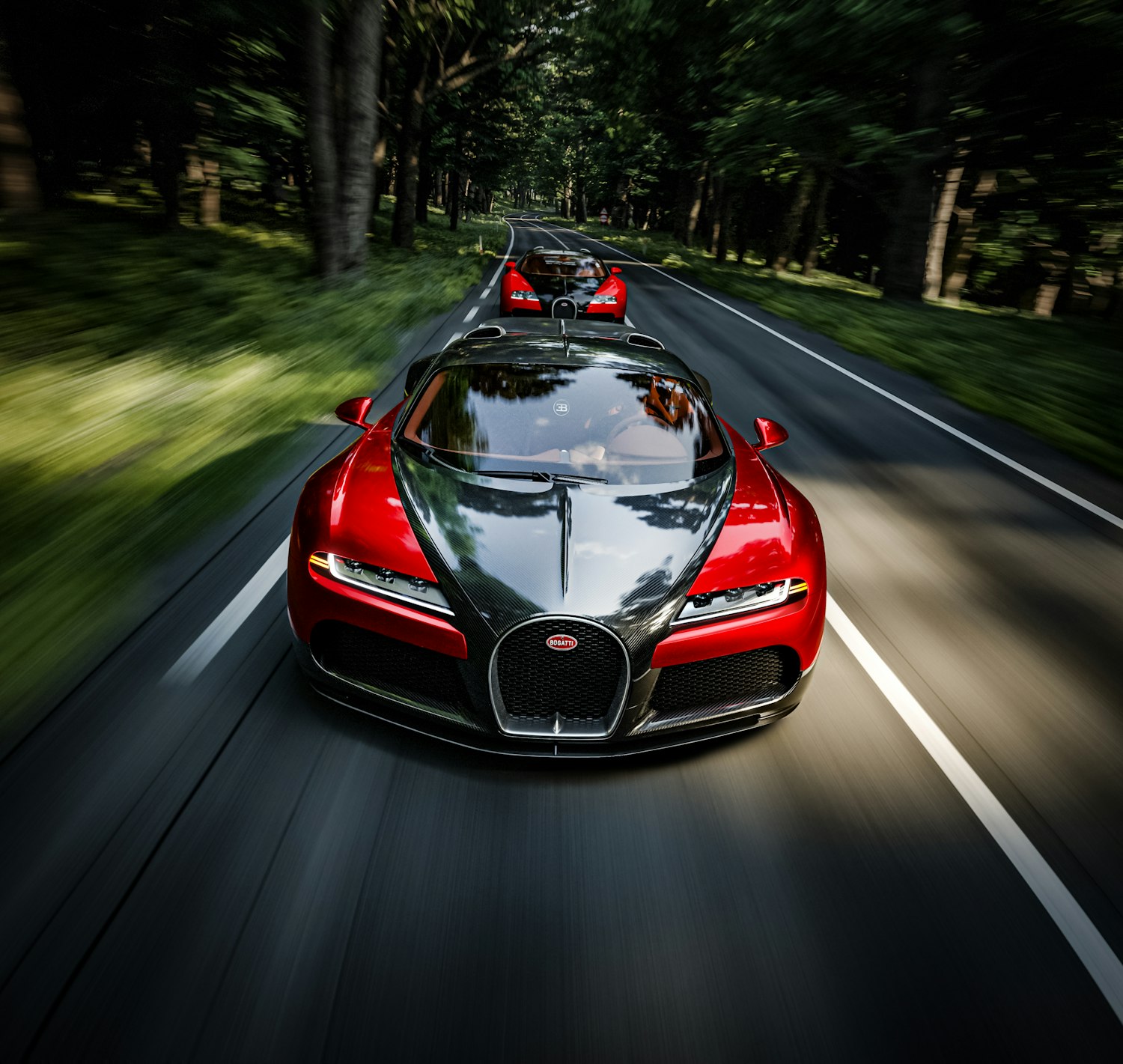
The exterior showcases a subtle yet significant evolution. While maintaining the Veyron’s leaning-back posture and dropping belt line – at a time when supercars were simply repeating the wedge-shaped, forward-angled look – every surface has now been refined. The three-dimensional horseshoe grille, machined from a solid block of aluminum, now flows organically into surrounding bodywork, rather than its original more two-dimensional approach. This new clarity extends to the color division, which aligns precisely with the updated panel layout, creating a more harmonious visual split across the body. Larger air intakes within the front feed the more powerful engine, while the signature air ducts are maintained right behind the occupants’ heads. Updated wheel sizes – 20-inch front, 21-inch rear – utilize the latest Michelin tire technology, improving both performance and visual balance.
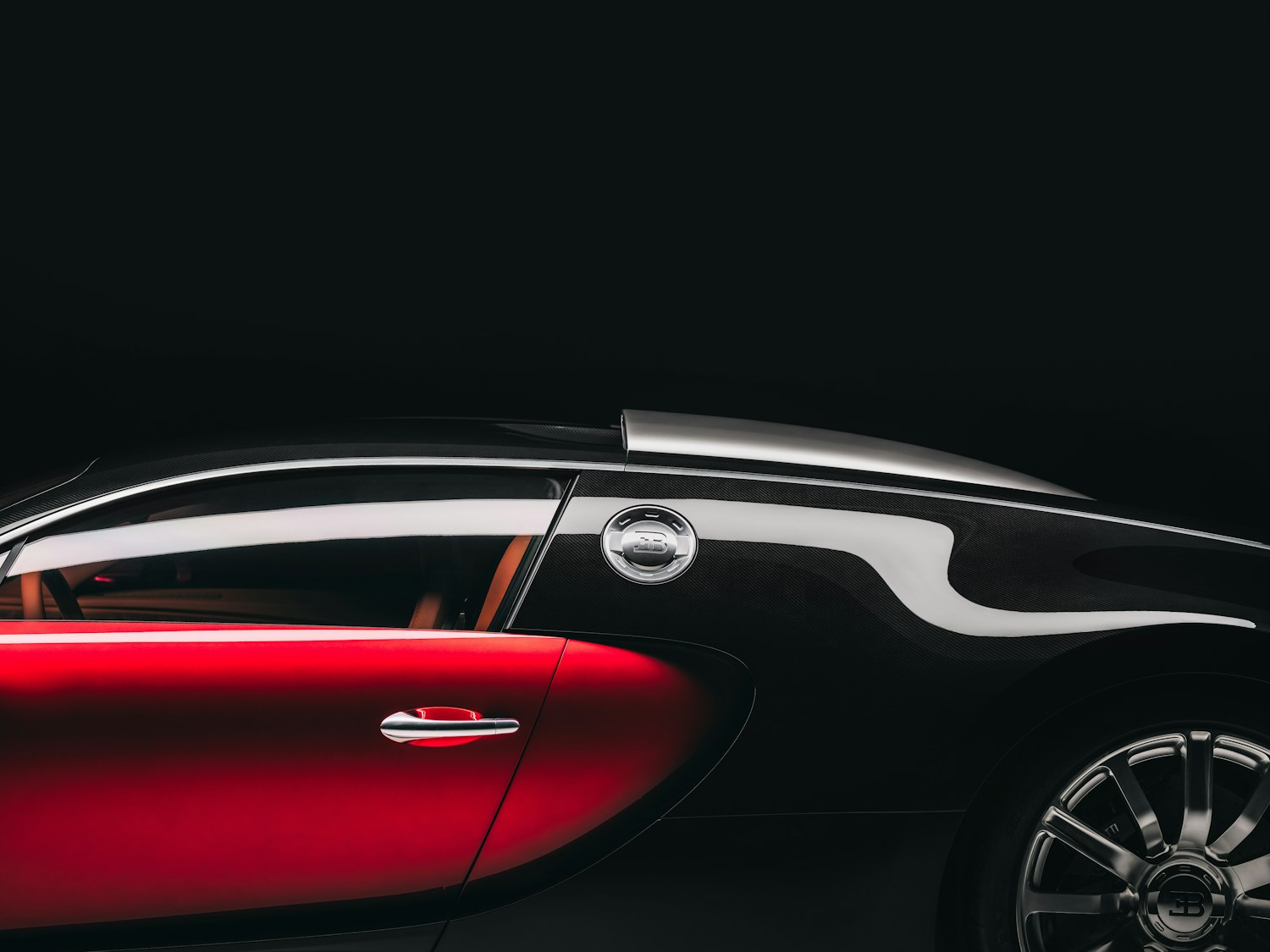
Cutting-edge paint technology has made incredible strides in the 20 years since the Veyron’s introduction, and the F.K.P. Hommage sits right at the vanguard of these improvements. A distinctive red exterior finish employs advanced layering techniques: a silver aluminum-based coat beneath a red-tinted clear coat, creating extraordinary depth and three-dimensionality that reveals itself as one moves around the car. Black-tinted exposed carbon fiber – as opposed to standard black paint – provides contrast with a 10% black pigment integrated into the clear coat, offering both visual and tactile richness upon close inspection.
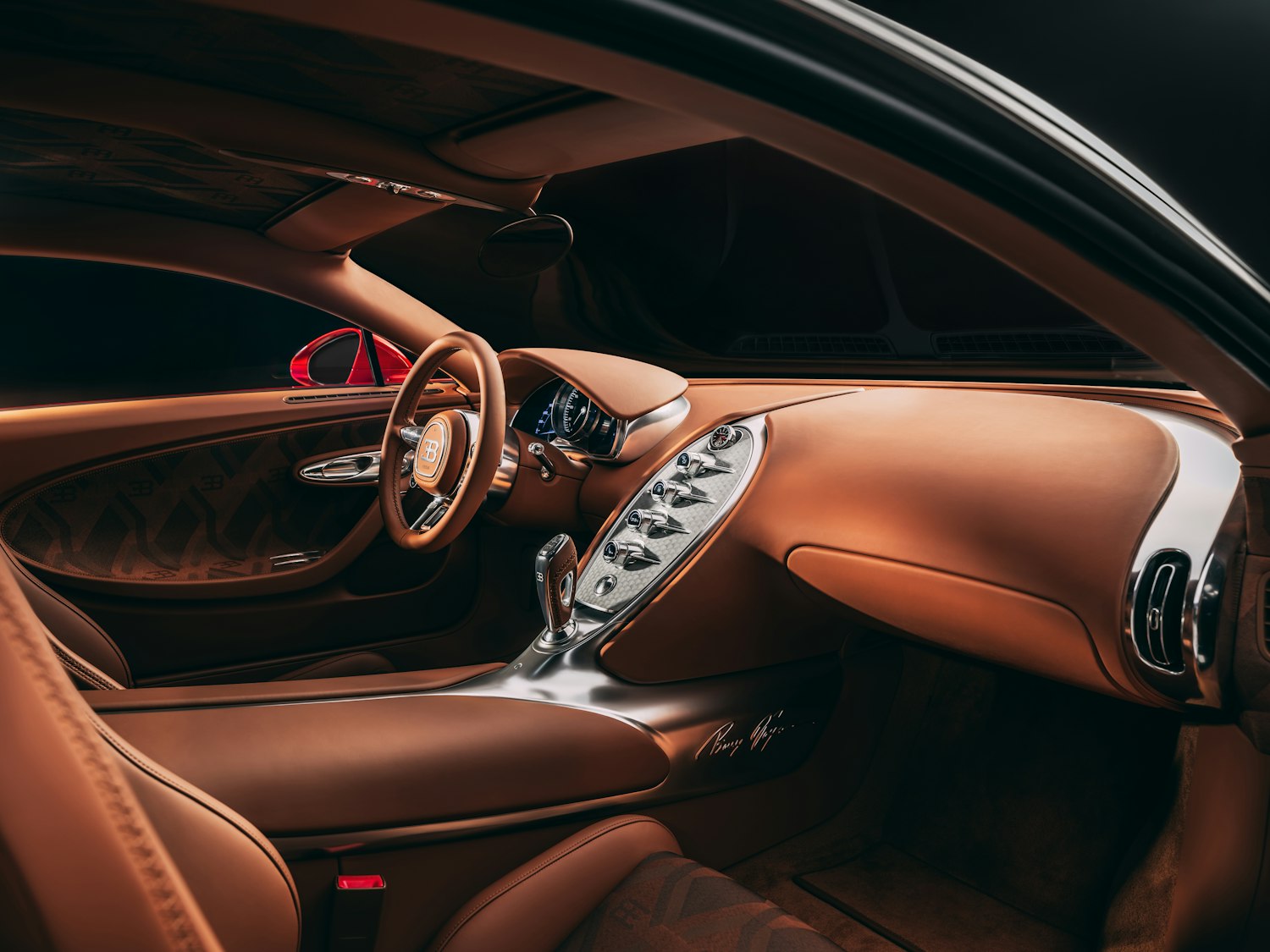
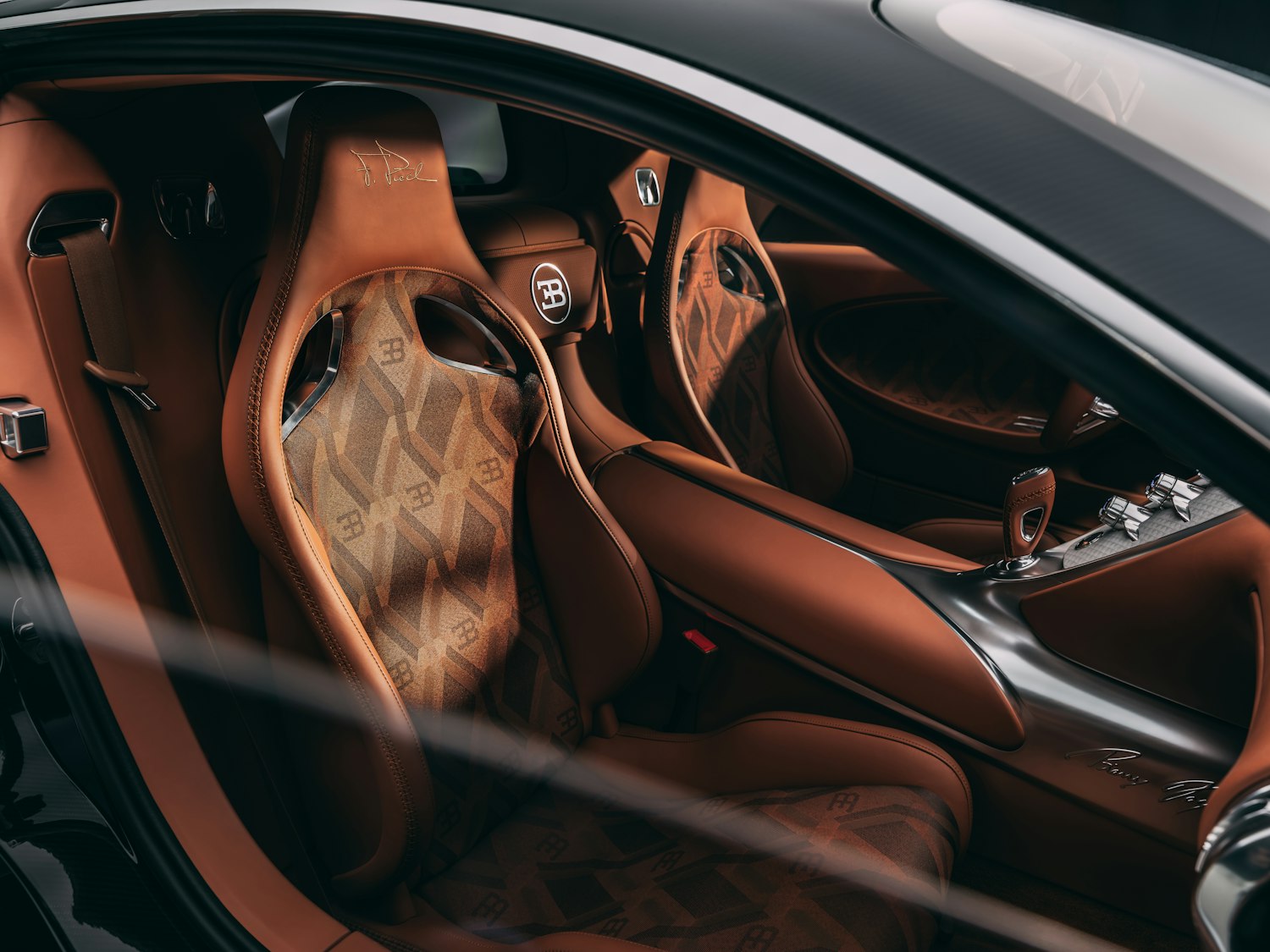
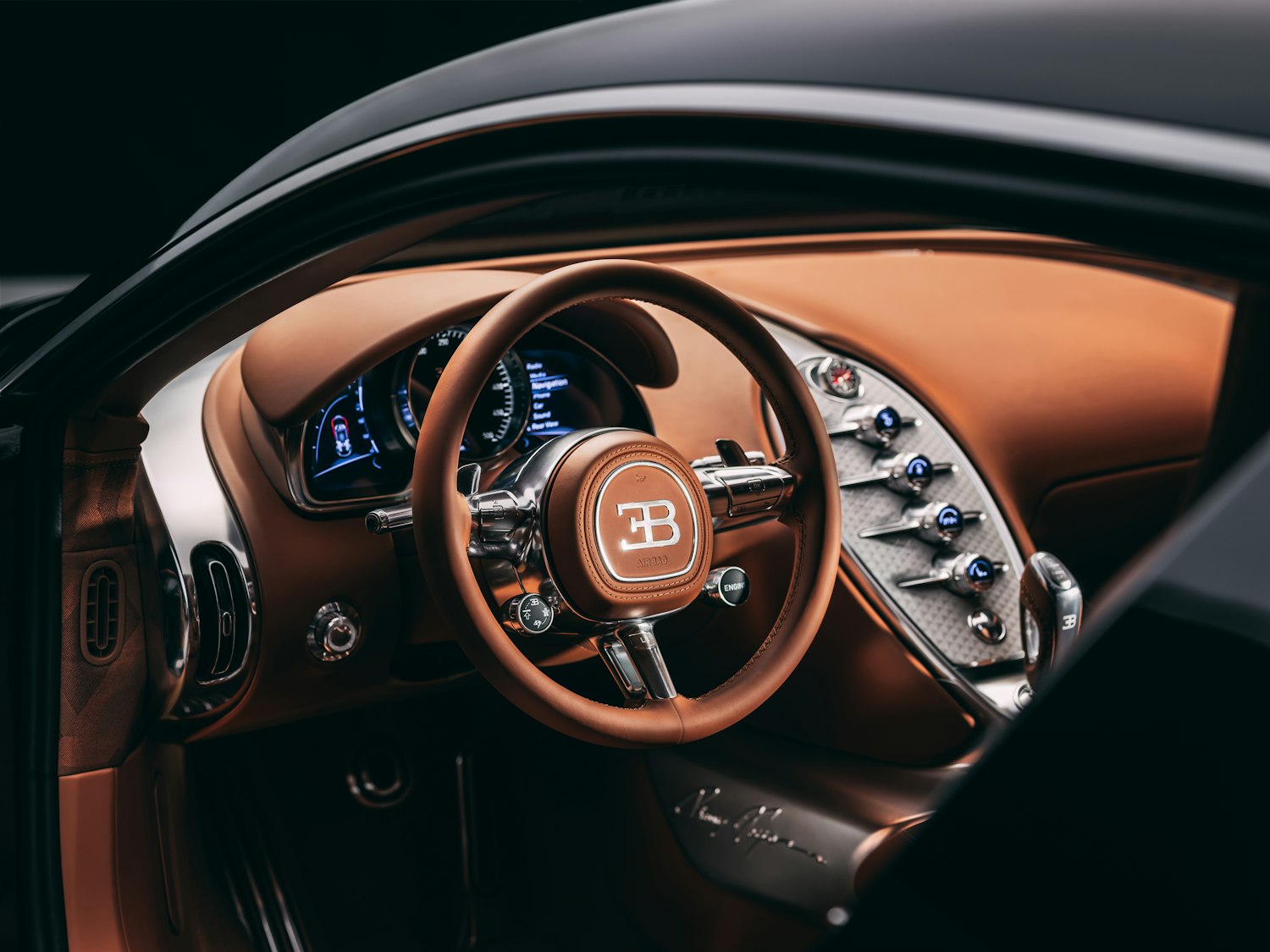
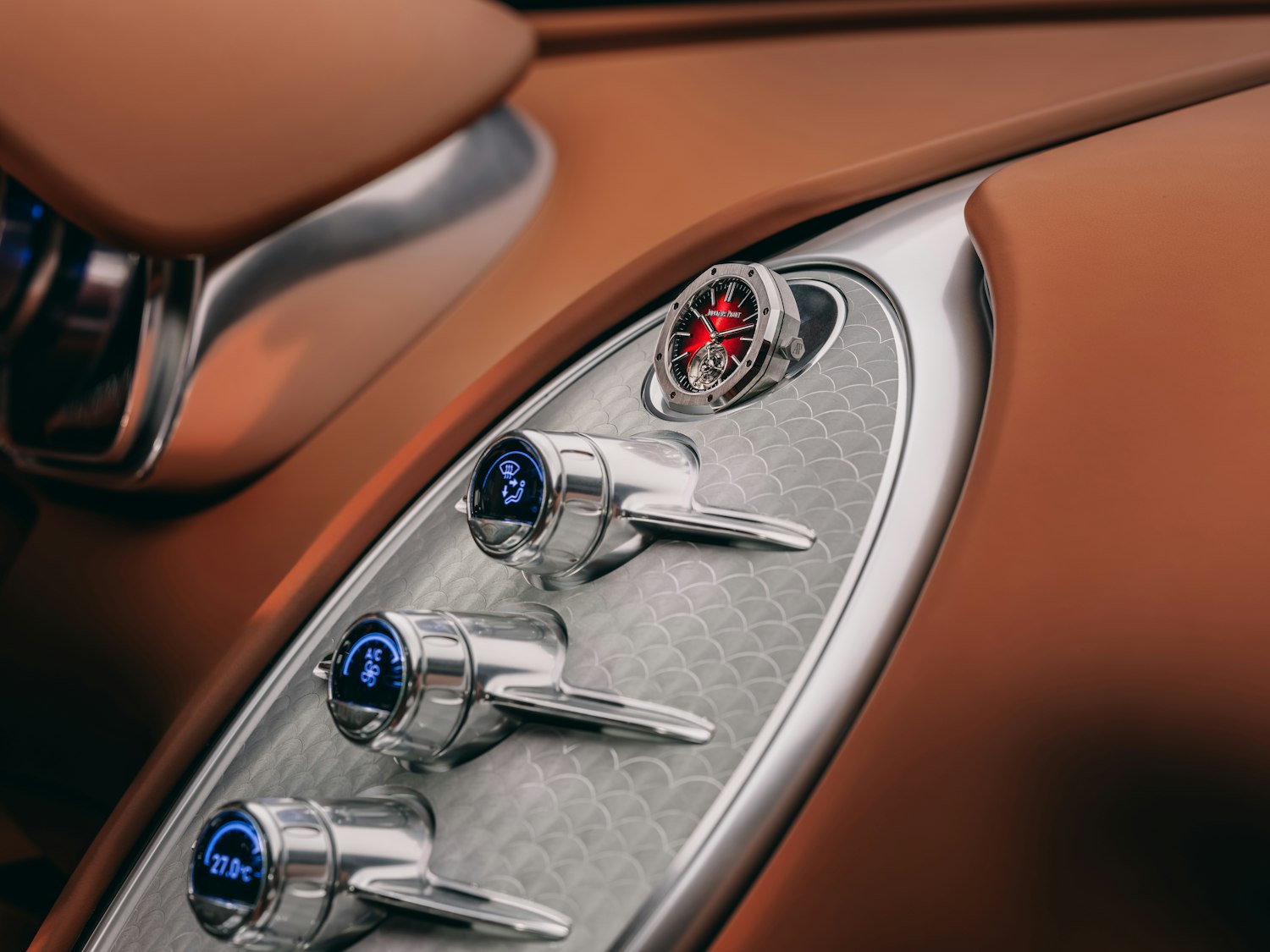
The F.K.P. Hommage’s interior represents a near-complete revolution compared with any other recent W16 model, including both Chiron and Mistral. A unique steering wheel – circular and Bauhaus in character like the original Veyron – joins a completely bespoke center console and tunnel cover machined from solid aluminum blocks. Custom Car Couture fabrics, woven exclusively in Paris, represent Bugatti’s latest advancement in interior personalization, introduced with the Tourbillon – an evolution of the leather-only interiors of the Veyron.
Dominating the dashboard is an Audemars Piguet Royal Oak Tourbillon, a 41mm timepiece integrated into this vehicle at the request of the future owner of F.K.P. Hommage. The octagonal watch sits within an “island” finished in engine-turned polish, a technique borrowed from the finishing of Ettore Bugatti’s original straight-eight cylinder heads. The watch features an ingenious self-winding mechanism: a gondola that rotates on a diagonal axis several times per hour, powered by the car itself without electrical connection. This unique integration reflects the customer’s personal vision and Bugatti’s ability to accommodate highly individual requests as part of the Programme Solitaire.
The F.K.P. Hommage joins Brouillard as the second creation of Programme Solitaire, Bugatti’s exclusive initiative creating up to two bespoke masterpieces annually. Like all Solitaire projects, it completely reimagines the bodywork, interior details, and delivers ultimate personalization that celebrates the deep stories woven throughout Bugatti’s heritage.
The Bugatti F.K.P. Hommage will be physically unveiled at Ultimate Supercar Garage in the frame of Rétromobile Paris from January 29 to February 1 2026.
If you enjoyed this article, be sure to follow us on Microsoft Start.
The Bugatti F.K.P. Hommage

Leave a Comment
More in News
How to Restore Cloudy Headlights Before They Fail Your MOT

What Your Engine Management Light Actually Means (and Whether You Can Keep Driving)

Drivers With 6 Penalty Points Pay 58 Percent More for Car Insurance, Confused.com Finds
RAC Data Shows 5.6 Million Drivers Will Hit the Roads This Half Term Weekend
Why Learners Paid Up to £500 for a £62 Driving Test Before DVSA’s Crackdown
Trending on Motoring Chronicle

UK Airports Now Charge Up to £1.60 a Minute to Drop Off a Passenger

Do Electric Cars Need Oil Changes?
What New Tariff-Driven Price Hikes Mean for Your Next Car From BMW, Toyota and Audi

Bugatti Responds to Mat Armstrong’s Chiron Rebuild
