
What Actually Happens If You Skip a Car Service
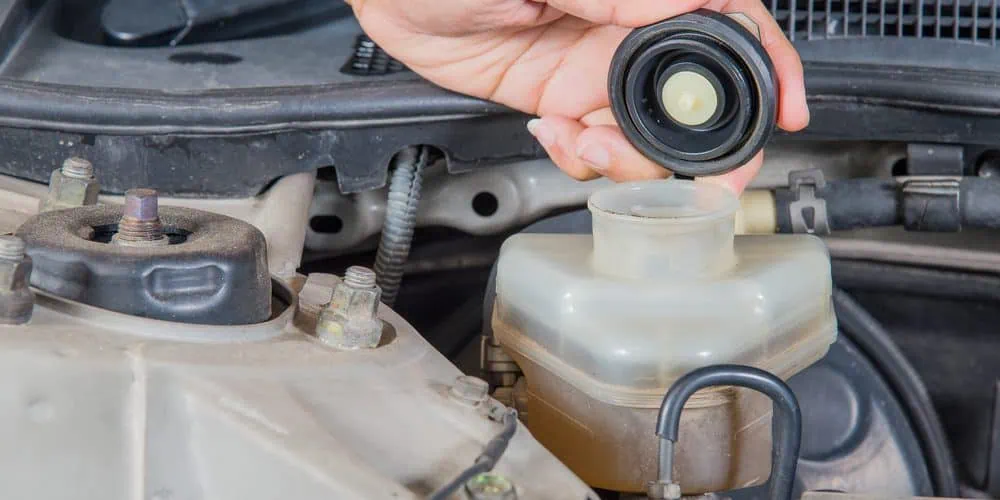

- Nothing breaks the moment you miss a service date. The real risk builds over the following weeks: your warranty, your insurance evidence and the wear on your engine, brakes and gearbox all start working against you.
- A full UK service costs £170 to £400 (roughly $217 to $512) at an independent garage, and £250 to £600 or more ($320 to $768) at a main dealer. Skipping one does not save that money. It usually just puts off the bill and adds interest in the form of extra wear.
- Oil and other fluids break down with time and with mileage. A car that covers only a few hundred miles a year still needs its service on the date shown in the logbook, and cannot just wait for the odometer to reach a round number.
Why a Missed Service Rarely Fails You Straight Away, but Changes What You Are Risking
Skip a service and your car will almost certainly still start, still drive and still get you to work the next morning. That is exactly why so many drivers put it off. Nothing dramatic happens on the day the reminder sticker runs out. What changes is the safety net underneath the car: the manufacturer warranty that depends on a full service record, the insurer’s ability to argue neglect after a claim, and the slow mechanical wear that a service is designed to catch early. None of those show up immediately. All three can cost far more than the service itself once they do.
What Happens the Day You Miss a Service
Nothing in the car itself flags a missed service. There is no dashboard light for it and no automatic MOT penalty: the MOT test does not check your service history at all. It checks the condition of the car on the day of the test, and a car can pass an MOT with a service well overdue if nothing on the checklist has failed yet.
The change is on paper, not on the road. According to RAC Drive, driving without regular servicing raises the odds of specific, avoidable failures: oil that has broken down and no longer protects the engine, coolant that has lost its ability to stop corrosion and overheating, and brake fluid that has absorbed moisture and become less effective under hard braking. A service is also how a garage tracks pattern over time, so it can flag a fading battery, uneven tyre wear pointing to a suspension problem, or a small oil seep before it becomes a bigger leak. Skip the service and those early warning signs simply go unrecorded until something fails outright.
Why Your Warranty Is the First Thing to Go
Most new and nearly new cars are sold with a manufacturer warranty that runs for a fixed number of years or miles, and nearly all of them carry a condition attached: the car has to be serviced at the intervals set out in the handbook, usually at a garage that can stamp or log the work. Miss a scheduled service, or have it done later than the handbook allows, and you hand the manufacturer a clean reason to reject a warranty claim if something expensive goes wrong afterwards, such as a gearbox or turbo failure.
This is not a theoretical risk. Warranty providers and dealer groups routinely point out that a broken service history is one of the most common grounds for a rejected claim: the garage either has a record of the work on the date required, or it does not, and there is no room to argue the point afterwards. A car with a full, unbroken service history is also worth more when you come to sell it. A buyer checking the paperwork can see exactly what has been done and when, and a gap in that record is a visible red flag that buyers price into their offer.
How Time and Mileage Both Trigger a Service
Most manufacturers set two limits for a service, not one: a mileage figure and a time figure, whichever comes first. A typical modern petrol or diesel car on good quality oil is due a service every 10,000 to 12,000 miles or every 12 months. Some newer models with long life synthetic oil stretch that to 18,000 to 20,000 miles, but even those still carry a roughly annual limit regardless of how few miles the car has covered.
That time limit exists for a simple reason: engine oil does more than wear out through use, it also breaks down chemically over months, losing its ability to protect moving parts even in a car that has barely left the driveway. A low-mileage second car, a car used only for short local trips, or a car left standing for a chunk of the year can all reach its service date well before it reaches its service mileage. Going purely by the numbers on the odometer, and ignoring the calendar, is one of the most common reasons drivers end up overdue without realising it.
Why a Service Interval Is Not Just an Oil Change
A standard service covers more than oil and a filter, which is part of why the interval is set where it is. A full service usually includes checks on the brakes, suspension, steering, lights, tyres, coolant and battery, and a look for early leaks around the engine and gearbox. On many cars, the schedule also flags separate, less frequent jobs, such as a timing belt or cambelt change, that sit on their own mileage and time limit rather than the standard 12,000-mile figure. A cambelt that snaps rather than being replaced on schedule can wreck the internals of an engine that was otherwise running fine, turning a planned job worth a few hundred pounds into a rebuilt or replaced engine worth thousands. A missed standard service does not cause that kind of failure directly, but it is the same underlying pattern: a scheduled check that exists specifically to catch a problem before it becomes catastrophic gets pushed back, and the car keeps running right up until it does not.
What a Skipped Service Actually Ends Up Costing
The maths rarely works in favour of skipping. An interim service in the UK averages around £100 to £180 (about $128 to $230), a full service averages £170 to £300 (about $217 to $383), and a major service typically runs £250 to £400 or more (about $320 to $512 or more), according to current UK pricing guides. Put off a service and that bill does not disappear. It either arrives later, often alongside a bigger repair once worn oil or old fluid contributes to a fault that would have been caught early, or it arrives at the worst possible time, in the middle of a roadside breakdown.
There is also a slower cost that many drivers underestimate: resale value. A car offered for sale with a complete, stamped service history typically attracts stronger offers and sells faster than an equivalent car with a gap in the record. Buyers cannot be sure what condition the engine and gearbox are really in underneath a clean-looking exterior, and a missing stamp is the first thing many of them check.
When It Is Reasonable to Wait, and When It Is Not
A short delay of a week or two past a service date, on a car that is otherwise healthy and not showing any warning lights, is unlikely to cause real damage. Manufacturers build some slack into their intervals for exactly this reason. What changes the outlook is stacking that delay on top of other signs: an oil warning light, a noticeably louder engine, a coolant reservoir that keeps needing topping up, or brakes that feel less sharp than they used to. Any one of those alongside an overdue service is a reason to book the car in straight away rather than waiting for a convenient gap in the diary.
It is also worth checking your specific handbook rather than assuming a generic interval. Some manufacturers do allow longer gaps between services on certain engines with fully synthetic oil, and following that official schedule will not cause problems or affect a warranty claim. The risk comes from missing the schedule your own car actually has, not from questioning whether every car needs a service exactly every 12,000 miles.
Sources

Leave a Comment
More in News

America Is Investigating This Engine. Britain Has Not Recalled One Car

Why Connecticut Drivers Cruising in the Left Lane Now Face an $88 Fine

Hurricane Isaias Flooded Thousands of Cars That Could Reach Used Lots

Gas Prices Jump to $4.36 a Gallon as the National Average Rises 40 Percent in a Year

NHTSA Recalls Over 346,000 Vehicles From Ram, Ford, VW and Land Rover
Trending on Motoring Chronicle

2026 Nissan LEAF named a 2026 Car and Driver Editors’ Choice winner

What Your Oil Pressure Warning Light Actually Means (and When to Stop Driving)
What Does ‘Eco’ Mean on a Car?

How Chinese Cars Took One in Ten UK Sales and What Every Buyer Needs to Know
