
Volkswagen ID. Buzz Beach Electric Camper Costs From £53,955 Before VAT


- Volkswagen Commercial Vehicles prices the ID. Buzz Beach from £53,955 before VAT, which becomes £65,837 with VAT and on-the-road costs.
- A folding mattress of 2.0m by 1.2m sleeps two, and the bed base lives in the boot of 5-seat versions.
- Overnight mode runs the climate control from the main battery for up to 48 hours, and a 230-volt socket adaptor is standard.
What an Electric Camper Costs Once VAT and Registration Are Added
Volkswagen Commercial Vehicles has priced the ID. Buzz Beach from £53,955 before VAT, the basic recommended retail price. Volkswagen plans to open order books later in November.
The number a buyer pays is higher. VAT at 20 percent adds £10,791, taking the price to £64,746. Volkswagen’s on-the-road figure of £65,837 sits another £1,091 above that. Volkswagen defines its on-the-road price on the ID. Buzz range as delivery to the Van Centre, number plates, the new vehicle registration fee, the first year of vehicle excise duty and VAT.
Volkswagen lists the cheapest ID. Buzz at £59,405 on the road including VAT, so the Beach asks £6,432 more than the entry point of the range. The range comes in 5, 6 and 7 seats and three trim lines, so a buyer comparing the two prices needs the same seat count and trim on both sides.
How the Beach Compares With the California
Volkswagen’s other Beach camper is the facelifted California. The California Beach trim with the 2.0 TDI diesel costs £54,065 before VAT and £66,334 on the road, which is £110 and £497 more than the electric ID. Buzz Beach. The California’s electric stationary air conditioning, fitted to the 1.5 eHybrid 4MOTION, runs for up to eight hours. Overnight mode on the ID. Buzz Beach is quoted by Volkswagen at up to 48 hours, a gap of 40 hours. The full California price list covers six versions.
A 2.0m by 1.2m Bed and Furniture Hidden Under the Floor
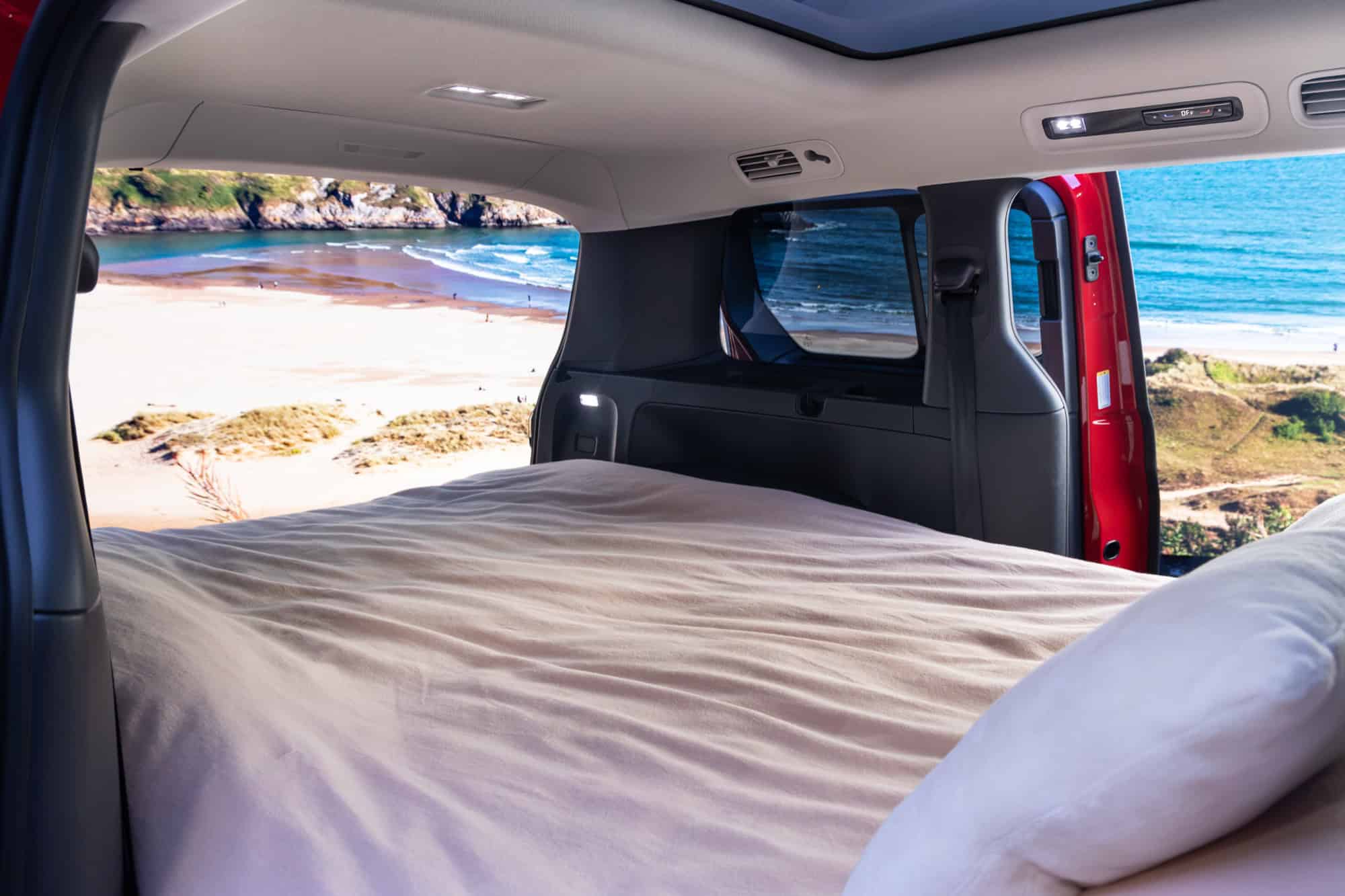
The camping kit starts with a removable bed base and a custom-fit folding mattress that measures 2.0m by 1.2m. Volkswagen describes it as slightly larger than a standard small double bed. Two adults share 120cm of width, which works out at 60cm each, so the bed suits a couple who like to sleep close.
Where the bed travels depends on the seats. A 5-seat Beach carries the base in the boot, with space underneath for luggage and travel equipment. A 6-seat or 7-seat Beach stores the bed upright behind the third row of seats.
A folding table and a set of chairs travel in the same vehicle. On 5-seat versions they sit under the false floor. On 6-seat and 7-seat versions they stand upright next to the mattress. Internal blackout curtains are fitted, and the front side windows have ventilation grilles.
New exterior options include a two-tone paint scheme in candy white and cherry red and 20-inch Stockton wheels.

Overnight Mode and the 230-Volt Socket
Owners switch on Overnight mode from the centre touchscreen. The van then runs continuous climate control from its high-voltage battery for up to 48 hours, which is Volkswagen’s figure and has not been independently verified. That battery also drives the van, so every hour of climate control comes out of the charge left for the road. A driver planning a weekend away needs to arrive with a full battery and leave a margin for the drive home.
Volkswagen’s own ID. Buzz page gives official WLTP range figures of 251 to 300 miles depending on trim, with 251 miles for the GTX 5-seat short wheelbase and 300 miles for the Life 6-seat long wheelbase. Those figures belong to the wider line, and no range has been given for the Beach itself, so ask a Van Centre which number applies before ordering. Volkswagen Commercial Vehicles gives an 8 year, 100,000 mile battery warranty on its electric vehicles, and a Motoring Chronicle guide explains how long an EV battery lasts and what happens to capacity as a pack ages.
The Beach also works as a power station. Vehicle-to-load technology feeds a 230-volt socket adaptor, which Volkswagen compares to a standard UK plug, and the adaptor is standard on every Beach. It charges phones, boils a kettle, runs a coffee machine and fuels a grill. A camping connector can replace the adaptor as an option.
Overnight stays carry their own rules. Councils at a growing number of seaside and rural spots ban overnight parking for motorhomes and campervans, and the penalty is a charge notice. The places affected are listed in an explainer on how seaside towns restrict motorhomes and campervans.
The £440 Vehicle Tax Line Buyers Should Check
GOV.UK sets a higher rate of vehicle tax for expensive electric vehicles. Any electric car or motorhome whose list price tops £50,000 pays an extra £440 a year on top of the standard £200, a total of £640 a year as a single 12 month payment. Paying by 12 monthly Direct Debit instalments costs £672 in total against £210 for a vehicle below the line.
The supplement applies for 5 years from the second time the vehicle is taxed, which makes £2,200 of extra tax over that period (£440 times 5). GOV.UK defines list price as the published price before the vehicle is first registered and before any discount. The first tax payment at registration is separate: vehicles rated at 0g/km pay £10, and Volkswagen’s on-the-road price already includes the first year.
Volkswagen’s £53,955 sits above £50,000 even before VAT. GOV.UK applies the £50,000 line to electric cars and motorhomes, and Volkswagen’s release does not say how the Beach is registered. GOV.UK tells buyers to check the list price with the dealer, and a buyer of a Beach should ask for the tax class and the five-year tax cost in writing before signing an order form.
Want more car content? Add us as a preferred source on Google to your favourites list for the best automotive news and analysis on the internet.
If you enjoyed this article, be sure to follow us on Microsoft Start.
Reviewed by Preetam Gadekar

Leave a Comment
More in News

What the Two Day Rule for Council Road Changes Means for Every Driver
Every Driver With Driver Assist Could See Their MOT Test the System

What Your £100 Overstay Charge Means When a Camera Merges Two Visits

What You Can Do When a Revoked Medical Licence Sits Untouched for Months

Why TfL’s New Radar Speed Cameras Defeat Every App That Warns UK Drivers
Trending on Motoring Chronicle

The Bugatti F.K.P. Hommage: Honoring the Veyron and its visionary creator

What the Bike Box Rule Means for Drivers Facing £100 Fines This Bike Week

Is Revving Your Engine Bad?

GM opens new UK advanced design studio, showcases Corvette-inspired concept car [Photo Gallery]
