
What the Two Day Rule for Council Road Changes Means for Every Driver

- Traffic regulation authorities in England must send each speed limit, closure, parking rule and charge order made after 11 February 2027 to a national digital service within two working days, and temporary road works orders on the day they are made.
- Each digital record has to list the roads affected, the dates and times, any diversion route, speed limits and charges, and the Department for Transport (DfT) says anyone can use the data free after registering.
- The paper order remains the legal document and the regulations set no fine or sanction, so a driver still reads the council’s own notice before parking, turning or speeding up.
Your Council Will Have Two Days to Report Each New Road Restriction
Many speed limits, one way streets, parking restrictions and road closures rest on a traffic order, and the Department for Transport (DfT) says those orders are usually paper based documents. A statutory instrument signed on 16 November 2026 changes how fast the details of new ones reach a national service. The Traffic Orders and Notices (Provision of Digital Information) (England) Regulations 2026, number 1202, was made by Justin Madders, Parliamentary Under-Secretary of State at the DfT, and laid before Parliament on 19 November.
The regulations are not in force yet. They take effect on Thursday 11 February 2027, with three groups of provisions held back until Monday 2 October 2028. For orders made after that date, a traffic regulation authority, meaning the body with the power to make these orders, such as the council that sets a local speed limit, must pass the details of each order it makes to a government digital service. The deadline is two working days for most orders and the same day for the temporary ones that close roads for works.
The law carries no penalty for a council that misses the deadline. Nothing in the ten regulations sets a fine, cancels a driver’s liability or sets out a sanction. What the instrument builds is a national record, and the Explanatory Note says the Secretary of State will publish that data in open data format.
What Changes on 11 February 2027 and Which Orders It Covers
The rules apply to orders made after 11 February 2027. An older order falls inside them only when a later order amends it, and then only the amended provision has to be reported. Orders made to deal with terrorism under section 22C of the Road Traffic Regulation Act 1984 are excluded entirely.
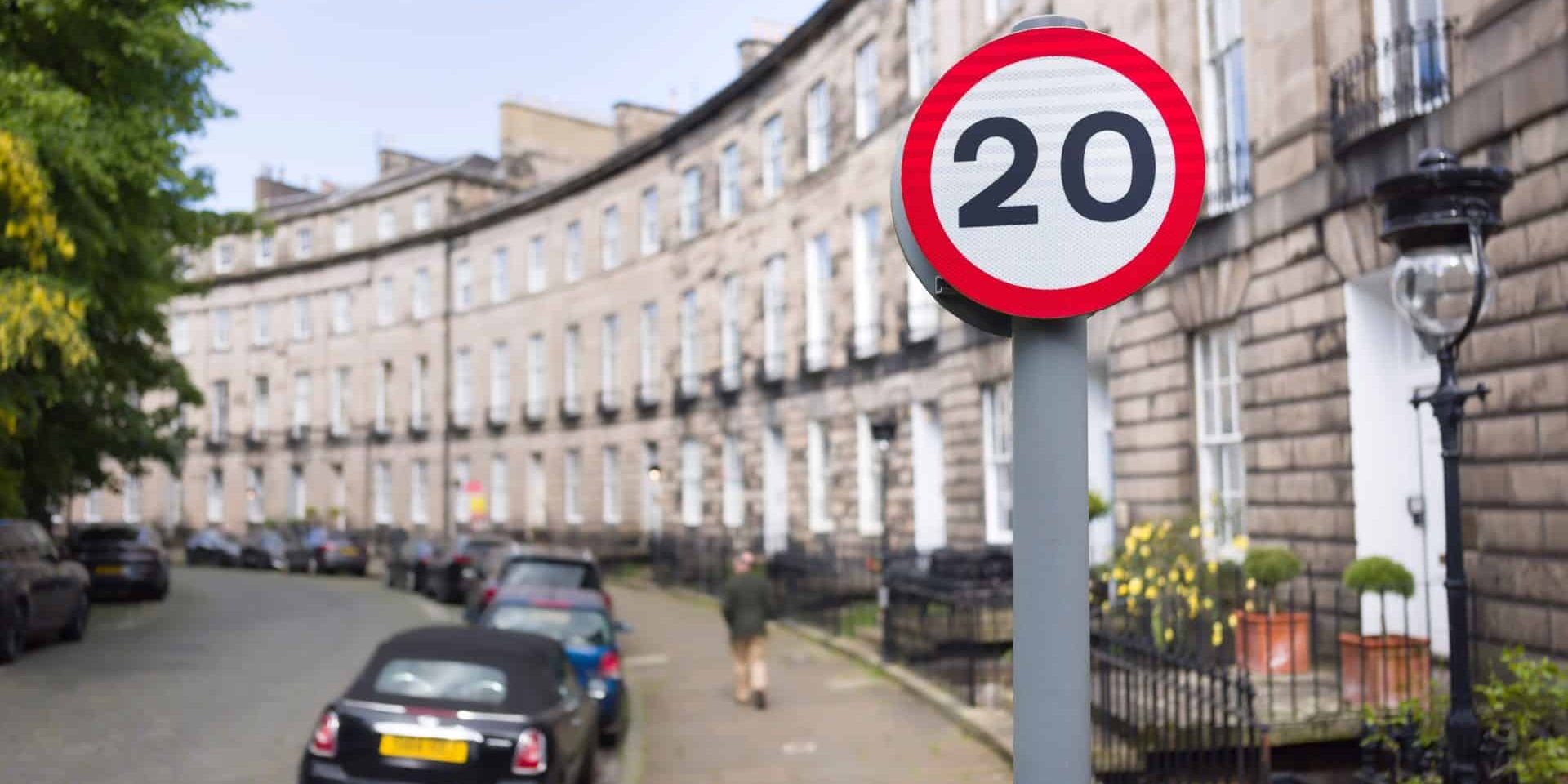
Six kinds of measure are covered: ordinary traffic regulation orders, orders under section 6 of the 1984 Act, experimental orders, temporary orders and notices for works and closures, special event orders, and speed limit orders on roads other than restricted roads. That list covers the things drivers meet daily: a new 20mph zone, a bus lane change, a parking bay turned into a loading bay, a road shut for a gas main, a street closed for a parade.
The power comes from section 93 of the Automated Vehicles Act 2024, which came into force on 15 May 2026. The Act allows the Secretary of State to make these regulations only on one condition: the Secretary of State must judge that the data will help authorised self driving vehicles, and electronic equipment that helps with driving other vehicles, to receive and act on the effects of traffic restrictions. The instrument records that view in its opening paragraphs. Automated vehicles are the statutory reason for the rule, and the data is free to use after registering.
The Timetable by Type of Order
The clock depends on the kind of order. For a standard traffic regulation order, a section 6 order or a speed limit order, the authority must send the information as soon as practicable, and in any event within two working days, with the count starting on the date the order is made. A working day excludes Saturdays, Sundays, Christmas Day, Good Friday and bank holidays, so an order made on a Friday has the Friday and the following Monday to reach the service.
Experimental orders follow the same two day period, and it restarts each time something changes. An authority that extends an experiment, modifies it, suspends part of it or ends it early has two working days from that event to update the record. If an experiment stops before its stated end date, the authority must also report which restriction ended and the actual date it ended.
Temporary road works orders move faster. An order under section 14(1) of the 1984 Act must be reported on the day the authority makes it. So must the notice an authority issues under section 14(2), and so must a special event order. Leaving aside the 2028 start and stop times described below, the only exception is an order the Secretary of State later directs to continue, where the authority gets two working days from receiving that direction.
A worked example shows the difference. A council makes a permanent speed limit order on a Friday afternoon: the details are due by the following Monday. The same council makes a temporary closure order for repairs on that Friday: the record goes up that day.
From Monday 2 October 2028 a second layer arrives for councils that carry out the works themselves. They must report the actual start time and the actual stop time of each closure, within a cut off that depends on when it happened. A start between midnight and 7.59am is due by 10am the same day. A start between 8am and 4.30pm is due no later than two hours after it. A start between 4.31pm and 11.59pm is due by 10am the next day. A closure that begins at 9am has to show that start by 11am, and one that finishes at 2pm has to show the stop by 4pm. Stop times follow the identical pattern.
What Each Record Must Contain
The detail required is long, and most of it is what a driver wants to know before setting off. For each order the authority submits the title, the date it was made, the date it comes into force, its duration, a statement of what it prohibits or restricts, and the dates and times it applies.
For each provision inside the order the list grows. The record names every road affected, with Ordnance Survey grid references and a unique street reference number where the road has one. It states any alternative route for diverted traffic, listing road names, road numbers and street reference numbers in the order a driver would travel them. It reports speed limits, charges, and any conditions or exceptions, and whether the road carries a bus route, a tram service, a footpath, a bridleway or a cycle track.
Regulation 5 adds detail on who is affected. An authority has to say which vehicle classes the restriction hits or excuses, and give any limits on height, width, length or mass, the goods carried, the fuel type, emission limits, driver or passenger characteristics, and the direction of travel. A low emission rule that exempts certain engines, a width restriction on a narrow bridge or a mass limit on a village road all have to be written as data, not just as text on a sign.
The authority also has a duty to correct itself. Where it learns that information it sent is wrong, it has two working days from that point to send the right version. The same period applies to information it learns it never sent.
What the Record Is and Is Not
The DfT service page describes the digital order as “not a legal document, but rather a digital extract of the legal order”. The paper order stays in force as the legal instrument. That distinction decides what a driver can rely on. The regulations do not say that a restriction fails when a council uploads it late, and nothing in them cancels a penalty charge. The instrument contains no defence for a driver who receives a notice for a restriction the sat nav never showed.
The DfT publishes the data free of charge through its D-TRO service, and anyone who registers can use it. The department lists the uses: better routing for sat navs, cheaper enforcement and processing for highway authorities, less congestion through information on road closures, new services built on the feed, and the digital base for connected and automated vehicles. Whether any sat nav maker or car manufacturer uses the feed is not confirmed, and the service page makes no promise on that.
The Explanatory Note says no full impact assessment was produced, on the stated ground that the department foresees no, or no significant, impact on the private, voluntary or public sectors. No cost to councils is stated in the instrument.
What to Do as a Driver
Until February 2027 nothing changes, and after it the legal restriction still sits in the council’s own order and notice. A council traffic order for disabled bays shows how much rests on that document: DfT guidance says a bay with no order behind it cannot be enforced.
Under the new rules a temporary closure order reaches the national service on the day it is made, and the DfT lists sat nav routing among the uses of the data. The risk of a limit that drivers cannot see is real: on the A20, drivers said sat navs still showed the old limit, as the report on a 40mph limit a court found invalid explains.
Councils can already charge firms for weekend roadworks overruns, a separate regime from this one.
One caveat on where the rules apply. The regulations extend to England and Wales in their formal wording, yet the title says England, the power behind them covers areas in England, and Welsh Ministers hold their own power under section 93 of the Act. Drivers in Wales should not assume the same deadlines apply to their council.
Want more car content? Add us as a preferred source on Google to your favourites list for the best automotive news and analysis on the internet.
If you enjoyed this article, be sure to follow us on Microsoft Start.
Sources
- Legislation.gov.uk: The Traffic Orders and Notices (Provision of Digital Information) (England) Regulations 2026
- GOV.UK: Digital traffic regulation orders D-TRO service
- Legislation.gov.uk: Automated Vehicles Act 2024 section 93
Reviewed by Preetam Gadekar

Leave a Comment
More in News

What Your £100 Overstay Charge Means When a Camera Merges Two Visits

What You Can Do When a Revoked Medical Licence Sits Untouched for Months

Why TfL’s New Radar Speed Cameras Defeat Every App That Warns UK Drivers

NSW Toll Rebate Claims Worth Up to $340 a Week Close 1 December

EV Tax Discount Shrinks Above $75,000 From 1 April 2027 If Senate Passes It
Trending on Motoring Chronicle

Bentley Torcal EV Battery Must Withstand Two Hour Fire Test and Over 100mph Projectile

Harley Recalls 21,643 Motorcycles That Can Show Neutral While in Gear

Idaho Stops Issuing CDLs to Out of State Truck Drivers Starting July 1
London’s Congestion Charge Now Costs Commuting Drivers £4,500 a Year, TfL Data Shows
