
Rapid EV Charging Could Hit £1 a kWh in 2027, Grid Fee Report Warns
- Charger operator Zest and the newsletter The Fast Charge project rapid charging at £1 a kWh in 2027, against a 2026 average of 79p.
- Their Reverse the Charge assessment puts one standard rapid charger’s grid fee at £440.13 a week in 2026, up from £61.47 in 2021, and at £77.39 a day under 2027 tariffs that are out already.
- The Government’s own review found operators’ standing charges rose by 83% to 283% between 2021 and 2026, a narrower measure than the assessment’s 616%.
A Rapid Charger Pays Its Grid Bill Whether or Not Anyone Plugs In
Every rapid charger sits on a grid connection, and its operator pays a fixed daily charge for that connection however many cars use it. Reverse the Charge, published on 11 November, calculates that the weekly bill for a modelled charger with two 100kW connectors and a 232 kVA supply rose from £61.47 in 2021 to £440.13 in 2026. That is a rise of 616%. Under 2027 tariffs that the regional network operators and the national system operator have published already, the same charger pays £77.39 a day.
Tom Riley wrote the assessment with Zest, a Leeds operator of more than 3,400 charge points. Zest has a commercial interest in lower grid fees, and the £1 a kWh price is the authors’ own projection. The 2026 average of 79p stands on firmer ground: the Government’s review of public charging costs, published on 28 October, reports the same 79p average for rapid and ultra-rapid chargers.
The review also gives a lower and narrower figure for the same trend. It estimates that operators face standing charges 83% to 283% higher than in 2021, using local distribution charges alone. The assessment’s 616% also takes in national transmission charges plus fixed policy and supplier costs, priced for a single defined connection, so the two numbers measure different things, and neither is a price a driver sees on a screen.

What Changed in 2022, and What the Government Review Found
The assessment traces the rise to a 2019 Ofgem decision that took effect in 2022 and bills businesses on the capacity they could use. The review describes the same shift in its own terms: Ofgem’s Targeted Charging Review, introduced in 2022, swapped a usage based levy for a fixed charge set by connection capacity. Operators built many sites with capacity sized for future demand, so the review concludes the change has had a severe impact on their unit costs.
Low use makes it worse. The review puts average energy use of rapid and ultra-rapid networks in 2025 at 3% to 4% of capacity, and of standard chargers at 3% to 7%, so a typical charger works for only 5 to 12 hours in a week. At that level of use, fixed costs such as grid standing charges, rent and equipment add up to about half of what a charger costs to run. Across the review’s sample, a rapid or ultra-rapid charger’s total cost ranged from 30p to 206p a kWh, and it found very few operators with positive earnings before interest, tax, depreciation and amortisation.
Two more findings in the review pull in different directions. It has seen no evidence that the Targeted Charging Review change is properly cost-reflective for public EV charging. It also warns that any charges lifted from operators would have to be recovered from other electricity users or the taxpayer, and that nothing guarantees a saving reaches the driver as a lower price.
The 2027 Numbers and What They Rest On
The assessment’s 2027 daily fee of £77.39 equals £541.73 a week, which is £101.60 more than the 2026 figure of £440.13, a rise of 23.1% (arithmetic from the assessment’s own figures). Across the country, the authors estimate rapid charger operators pay about £336 million in grid charges this year and £413 million in 2027, a rise of £77 million with no new chargers built. The total starts from Zapmap’s July 2026 count of 29,246 rapid and ultra-rapid chargers and assumes the network stops growing.
The modelling has limits the authors state: it averages the tariffs of 8 out of 14 regional distribution areas, adds transmission charges, takes the 2027 numbers from initial 2027/28 national tariffs and leaves out AC chargers. The authors call the figures conservative, as newer ultra-rapid sites need bigger connections. The review shows how much one site can differ from an average: fixed daily distribution charges vary by up to 675% between regions.
Tom Riley, author of the report and Editor of The Fast Charge, said:
“Grid standing charges are effectively a feudal tax, enabled by Ofgem without proper thought, with money going from a driver’s pocket straight to energy networks.”
“At a time when the cost of running non-EVs is near a record high, the Government must do all it can to provide relief for people wanting to go electric so they can save money. At present, the UK is allowing a situation where going electric, especially if you don’t have a driveway, could be more expensive than sticking with a banger.”
“The Government’s own review has confirmed what charging networks have been warning about. Ofgem has known about this problem for at least a year. It’s time to fix it.”
The review does not forecast £1 a kWh. It says prices will probably rise across the medium term, starting in 2027, if electric car uptake slows or charger building runs ahead of need, and it expects the distribution charging framework that begins in April 2028 to add further rises.
Who Pays Most: Drivers Without a Driveway
The review puts the share of drivers without their own driveway at around a third, and 90% of current electric car drivers can charge at home. Those who cannot rely on public chargers, where the review finds prices rose by 69% for lower powered AC charging and 94% for DC charging from 2021 in real terms. Every driver without a driveway already felt that rise.
The review prices a rapid or ultra-rapid only habit at 24p a mile, against 22p for petrol at September 2026 prices and 8p to 12p for a driver who mostly charges at home. A mix of charging powers comes to 17p to 20p, the range explained in public charging costs per mile. At the review’s 79p average, 24p a mile implies about 0.30 kWh a mile; at £1 a kWh the same driving would cost about 30p a mile (an illustration at constant consumption, not a figure from either document).
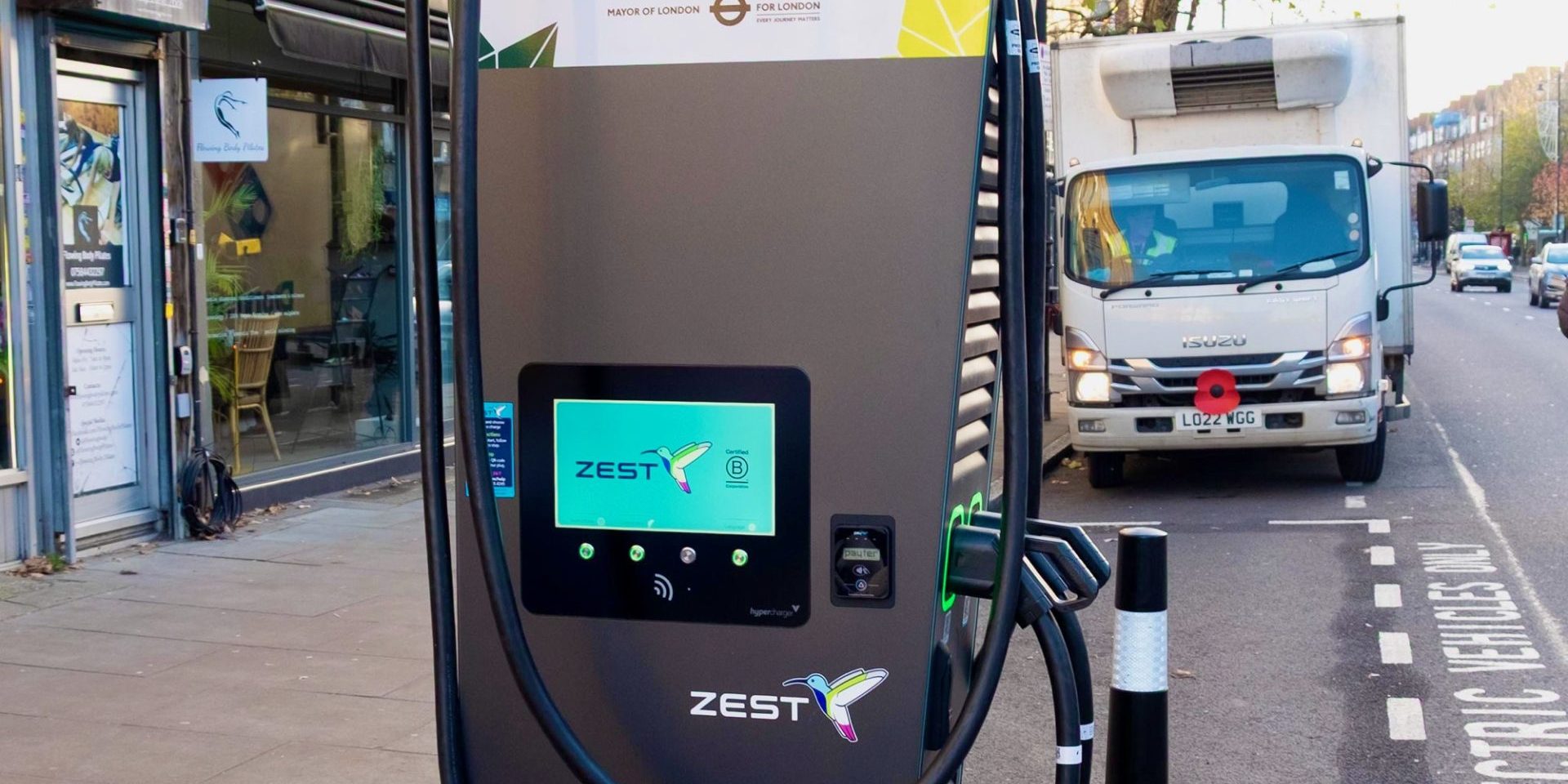
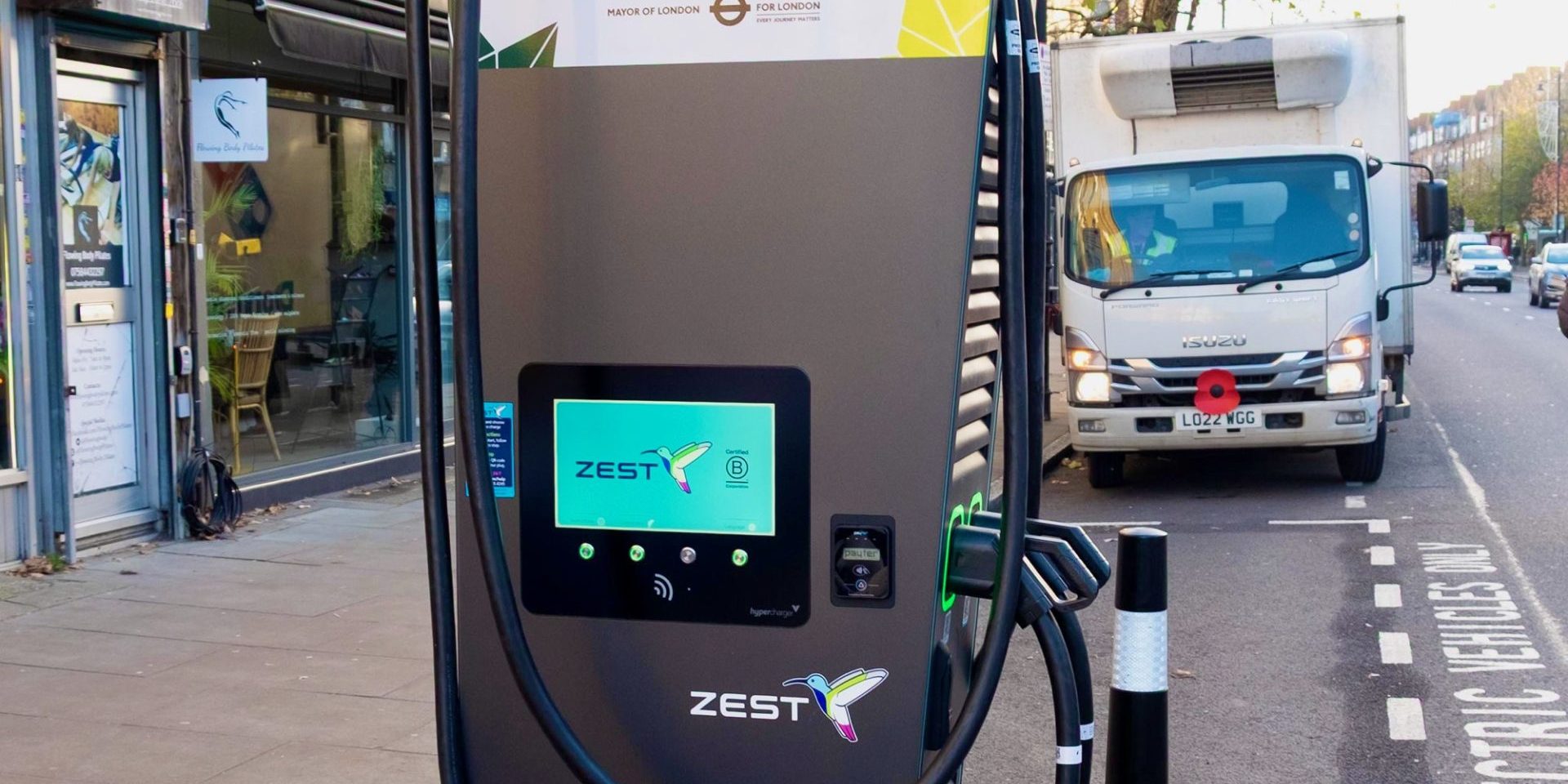
Two real Zest sites show where the money goes early in a charger’s life, with sales modelled at 50 kWh per connector per day. At the Birmingham urban hub a driver pays 58p a kWh before VAT, and 48p of that covers electricity and grid costs, which leaves 10p. At the London on-street ultra-rapid charger the driver pays 64p, with 58p going on the same costs and 6p left. With VAT at the full 20% rate that public charging carries, those prices come to 69.6p and 76.8p a kWh (arithmetic from Zest’s figures).
Drivers can act on the review’s own findings today. It confirms that rapid networks are passing cost increases on to customers, that some offer cheaper night tariffs that need an app sign-up, and that pre-authorisation holds can reach £60 a charge. Comparing p/kWh in a price app before a long stop, and checking the hold, costs nothing.
What Zest and Its Partners Want From Ofgem and the Chancellor
Reverse the Charge wants Ofgem to rework capacity billing for EV charging in both local and national grid charges, and wants the Chancellor to back that. It names two proposed industry rule changes, DCP 420 and DCP 454, that would lower grid charges for charging sites. The authors say three years in industry working groups has not yet put either in front of Ofgem for a decision. The review says industry proposals of this kind could reach Ofgem shortly, and recommends that whatever network charging regime follows should leave operators paying no more than before the Targeted Charging Review.
The authors also obtained papers through a Freedom of Information request. Ofgem’s 2025 briefing to Treasury officials, they report, described rapid chargers as stuck in an “unproductive cycle” under high fixed grid charges, and put the result as a “high cost per customer.”
The Budget on 28 October pledged £100 million over two years, from spring 2027, to cut costs at local, lower powered public chargers. The assessment points out that rapid chargers fall outside that money. The review’s own recommendation two also aims time-limited support at lower powered chargers near homes.
Robin Heap, Founder and CEO of EV charging network Zest, said:
“The switch to capacity-based network charges was never intended to put the brakes on EV adoption. For public charging, however, it has created an egregious cost burden that pushes up prices for drivers and means many otherwise investable charging projects are delayed or shelved.”
“Energy-intensive industries already receive recognition that high electricity costs can damage investment and competitiveness. Public EV charging faces the same structural problem, yet CPOs receive no equivalent protection despite building infrastructure essential to the UK’s transition to electric transport.”
“The solutions have been developed by the energy industry and are ready to implement. Reforming these charges would bring stalled projects back into play, unlock private investment and give drivers better access to affordable, reliable charging, particularly those without the option of charging at home.”
Zest describes its funding as coming from the government sponsored Charging Infrastructure Investment Fund, and as an operator it would gain from lower grid fees on its own sites. The review points to a second route to lower fixed charges: batteries that let a site run on a smaller grid connection. Public money for charging is already under scrutiny, with the competition regulator telling the Office for Zero Emission Vehicles that its £190 million motorway charging plan needs more evidence. Until Ofgem decides, the 79p average is the number to hold the £1 projection against.
Want more car content? Add us as a preferred source on Google to your favourites list for the best automotive news and analysis on the internet.
If you enjoyed this article, be sure to follow us on Microsoft Start.
Reviewed by Preetam Gadekar

Leave a Comment
More in News

What DVSA’s 10.3 Week Test Wait Hides for 27.5% Waiting Over 21 Weeks

DVSA Tested 20 Tyres and 13 Missed the Class Printed on Their Label

Every Driver Stopping in a Yellow Box Risks a £70 Council Fine
Every Driver on Devon’s M5 Faces AI Cameras and £200 Phone Fines
‘Are we serious? I need to pay to go home’: Man’s phone stops working in rented Toyota. Then he tries to use the navigation
Trending on Motoring Chronicle

Learning to Drive Now Costs UK Teenagers Up to £2,300 Before They Even Pass

What the End of Federal Highway Funding on September 30 Means for Your Commute

What the New 76 Plate Means for Every UK Driver From September

F50 Legacy Tour 2025: A journey through Tuscany to celebrate 30 years since the birth of an icon [Photo Gallery]