Why Relying on Public Charging Costs 17p to 20p a Mile (and What Helps)
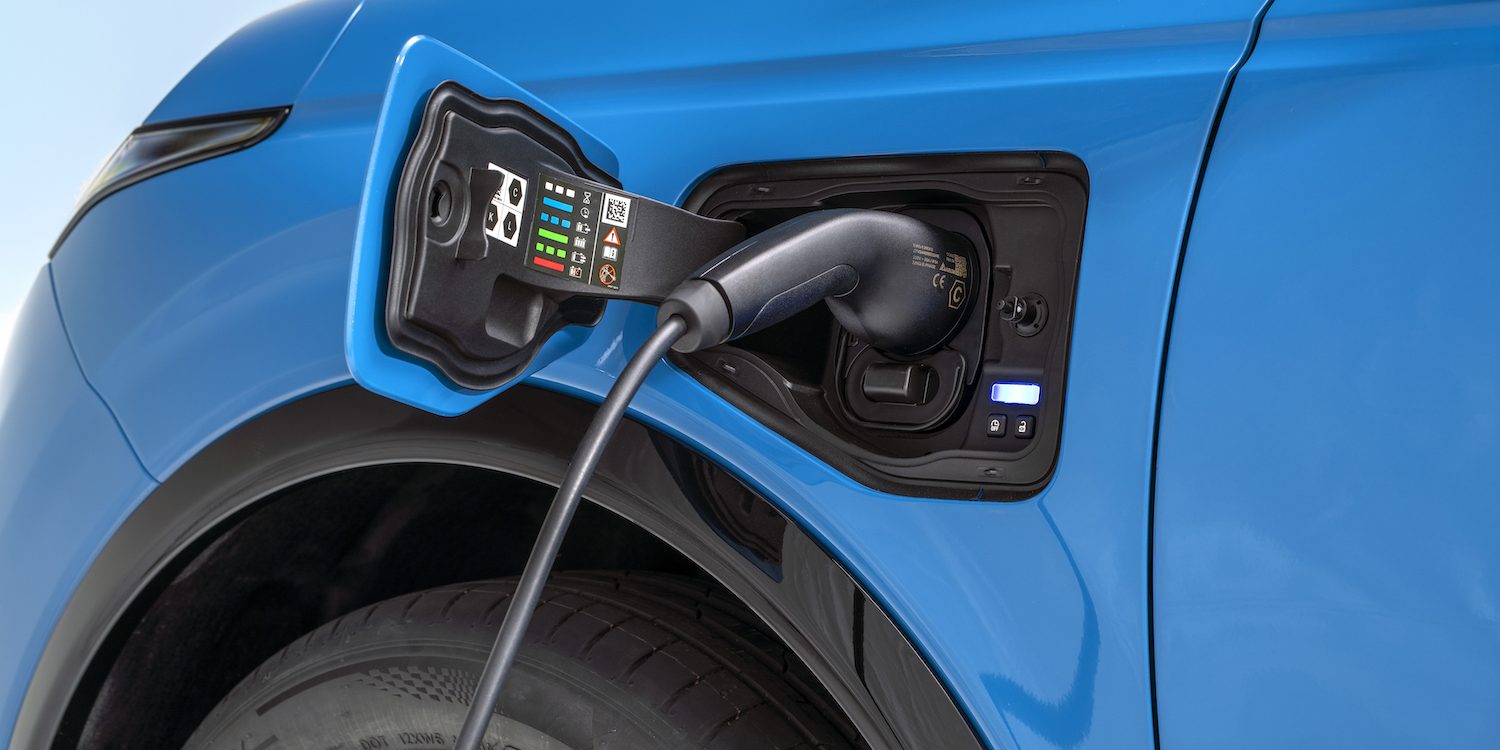
- An independent government review published on 28 October puts a driver who relies on public chargers at 17p to 20p a mile, against 8p to 12p for a driver who charges mostly at home and 22p for petrol at September prices.
- Public charging prices are up 69 percent at lower-powered chargers and 94 percent at higher-powered chargers in real terms between 2021 and October 2026, and the government has committed £100 million over two years from spring 2027, worth about £150 a year to an on-street driver.
- Legislation taking effect on 1 November will clarify that public and workplace charging carries 20 percent VAT, so the cheapest steps now are slow overnight chargers and a price check on a full session before plugging in.
Relying on Public Chargers Puts You Within 5p a Mile of Petrol
A driver who relies on public chargers and uses a mix of charging powers pays 17p to 20p a mile at today’s prices. A driver who charges mostly at home pays 8p to 12p, and a petrol car costs 22p a mile at September 2026 prices. Those are the figures in the Cost of Public Electric Vehicle Charging Review, an independent report led by Philip New for the Department for Transport, the Department for Energy Security and Net Zero and HM Treasury.
The review’s Table 1 compares five ways of refuelling. Mostly home charging, with a small share of public charging and the cost of the home charger included, comes to 8p to 12p a mile. Standard and standard-plus public chargers alone cost 12p to 16p, depending on how much of the charging happens at off-peak prices. A mix of public charging powers costs 17p to 20p, and rapid and ultra-rapid chargers alone cost 24p. Petrol cost 17p a mile in 2025, before the Middle East conflict, and 22p at September 2026 prices.
Rapid charging alone now costs 2p a mile more than petrol. The mixed public rate saves 2p to 5p a mile against the pump, and home charging saves 10p to 14p.
Around a third of drivers have no driveway of their own, and 90 percent of current electric car drivers can charge at home. Evidence in the review suggests drivers who cannot charge at home are on average more likely to have lower incomes, and they are significantly less likely to own an electric car today. Philip New, the independent chair of the review, writes in the foreword: “There is a basic unfairness at the heart of the market.”
What 8,000 Miles Costs at Each of the Review’s Rates
The Treasury builds its £150 saving on a driver covering 8,000 miles a year, so the same distance gives a fair comparison. At the review’s per-mile rates, 8,000 miles costs £640 to £960 for a driver who charges mostly at home and £960 to £1,280 on standard public chargers alone. A mix of public charging powers costs £1,360 to £1,600, rapid charging alone costs £1,920, and petrol at 22p costs £1,760.
The gap between mixed public charging and home charging runs from 5p a mile (17p against 12p) to 12p a mile (20p against 8p). Over 8,000 miles that is £400 to £960 a year. A buyer without a driveway who prices an electric car at the home rate is budgeting with the wrong number.
Petrol’s climb from 17p to 22p a mile keeps mixed public charging ahead. At the 2025 price, it would have matched the pump at best.
Empty Chargers, Fixed Grid Charges and Levies Push the Price Up
Chargers sit idle. In 2025 rapid and ultra-rapid chargers ran at 3 to 4 percent utilisation and standard chargers at 3 to 7 percent, which the review equates to 5 to 12 hours of use a week, after operators built ahead of demand. Costs that do not move with use, including hardware, land rent, finance and the daily grid standing charge, make up around half of what a charger costs to run, and fewer customers share them.
Grid charges are the bigger issue, the review finds. Its analysis of Ofgem’s 2020/21 and 2026/27 rates puts operators’ standing charges 83 percent to 283 percent higher than in 2021. Ofgem’s Targeted Charging Review in 2022 turned a usage-based levy into a fixed charge based on connection capacity, which hits sites built for future demand.
Levies and tax add more. The largest policy levies come to 6.4p a kWh on public charging against 4.7p on home electricity, where households get a 75 percent discount on the Renewables Obligation. The Climate Change Levy of 0.80p a kWh, rising to 0.83p in April 2027, does not apply to home charging. Public charging carries VAT at 20 percent, the same rate as petrol and diesel.
Prices still sit near or below cost. Against an average tariff of 54p a kWh, the review’s cost stack for standard chargers shows a loss on each kWh sold at current use. Total costs in the Department for Transport’s May 2026 sample of operators ranged from 31p to 155p a kWh at standard and standard-plus sites. The review calls the figures indicative, as the sample is small.
Absent intervention, the review expects charging prices to increase. It says any slowdown in electric car uptake or undisciplined expansion of the network makes rises likely over the medium term, from 2027, and Ofgem’s new framework for distribution charges, starting in April 2028, will likely lead to further rises.
What the Budget Changes and What It Leaves Open
The government used Budget 2026 on 28 October to commit £100 million over two years, starting in spring 2027, to cut costs at local, lower-powered public chargers across Great Britain. The Treasury expects the money to save the average electric car driver who has no home charging and charges on the street around £150 a year. The chargers it covers are the kind on residential streets, where cars sit for several hours or overnight, and the Treasury puts them at around a third of the current network.
The Department for Transport will set out next steps in due course, so who qualifies, which operators join and how the money reaches the price on the screen are still unknown. The review sets the test: funding has to reach drivers as lower prices instead of vanishing into operator revenue, with controls that stop an operator raising its tariff before applying the discount.
The sums show how far £150 goes. The Treasury builds it on 8,000 miles at 0.303 kWh a mile, which is 2,424 kWh. Spread over those miles, £150 is under 2p a mile and about 6p a kWh. If the full £150 reached the price, a driver on standard chargers only, at 12p to 16p, would pay roughly 10p to 14p a mile, against 8p to 12p at home. The review says its whole package could be designed to cut local public charging costs by around 15p to 20p a kWh, which on the same 2,424 kWh is worth £364 to £485 a year.
The Budget also commits to a tariff porting taskforce. Porting would let a driver charge at a standard or standard-plus public charger near home and have the electricity billed through their domestic supplier, plus an access fee. The review’s example fee is £1,000 over five years, or £200 a year, and it recommends pilots first.
Two tax decisions sit alongside. The zero rate of VAT on home electricity, which started on 1 October 2026 for six months, is extended by three months to 1 July 2027. Public chargers stay at 20 percent. Legislation in the Finance Bill 2026-27, effective from 1 November 2026, will clarify that electricity supplied through publicly accessible and workplace charge points is subject to 20 percent VAT and is not domestic use for the Climate Change Levy. HM Revenue and Customs Brief 13 (2026), published on 28 October, puts the same position in writing: publicly accessible charge points and charge points that employees and contractors can reach at work are not domestic use for VAT and the Climate Change Levy. The change follows the First-tier Tribunal decision in Charge My Street Ltd and gives statutory effect to HMRC’s longstanding policy on public charge points.
What to Do Before the Support Arrives
Start with the night rate. Many standard AC operators offer reduced pay-as-you-go prices at night, and a full charge on a standard charger takes 6 to 10 hours, which suits a car parked outside overnight. Some rapid operators cut night tariffs too, but generally through an app sign-up.
Price the whole session before plugging in. Tariffs must be shown in p/kWh, yet the review finds they are often hard to locate and hard to turn into a session cost. Multiply the p/kWh price by the kWh a session delivers for its total, or by the kWh the car uses a mile for the cost per mile. At the Treasury’s 0.303 kWh a mile, the 54p average for standard chargers works out at 16p a mile and the 79p average for rapid chargers at 24p, which matches the review’s table. Zapmap’s price index, which the review uses for its tariff averages, publishes the current figures.
Read the pre-authorisation hold. Some operators place a hold on a bank account of as much as £60 per charge, and some chargers deliver less than their advertised power, so check both in the operator’s app first.
Drivers who park at the kerb outside their own home can price a cross-pavement charger. From 21 October a pavement channel that carries a charging cable from a home to a parked car no longer needs planning permission in England, which the Treasury says saves up to £300 on installation and lets drivers charge at home for as little as 2p a mile. The right covers channels installed by, on behalf of or with the authorisation of the highway authority, so the council still decides whether one goes in outside your door. Conservation areas are left out of the new right, along with the grounds of listed buildings and scheduled monuments. The review warns that each driver who leaves a public charger for a private cable removes use from the public network and raises costs for those who stay.
Ask the council about a charger on the street. The £480 million Local EV Infrastructure Fund supports councils and operators to install over 100,000 more chargers for England. Anyone who charges at work should ask the operator whether the price changes on 1 November, the day the VAT and Climate Change Levy position for workplace charge points takes effect.
What Happens Next
Three things are still to come: the design of the £100 million scheme and the porting taskforce’s details, both from the Department for Transport, and a review of the Public Charge Point Regulations 2023 that is under way this year. Revisions under discussion include extending price transparency rules to the apps drivers use to compare prices, and the review calls for options that include showing the cost of a full charge beside the p/kWh rate.
The money starts in spring 2027, the year from which the review says rises are likely, and is funded over two years. The review’s foreword sets the standard the scheme will face: “An EV transition that works only for people with driveways is not a fair or durable transition.” Until the Department for Transport publishes the design, the £150 is an estimate and 17p to 20p a mile is what a driver using a mix of public chargers pays today.
Want more car content? Add us as a preferred source on Google to your favourites list for the best automotive news and analysis on the internet.
If you enjoyed this article, be sure to follow us on Microsoft Start.

Leave a Comment
More in News

Zapmap Counts 3.4 Percent Fewer Rapid Chargers in Three Months as Ultra-Rapid Ones Overtake

Sheffield Council Issued 88,577 Bus Lane Fines to Drivers and Cancelled 83 Percent More

Mercedes-AMG GT SUV Goes Electric With Up to 1,169hp and 710kW Charging

Glasgow Drivers Won 82 Percent of LEZ Appeals as Council Costs Passed Fine Income

Edinburgh Council Says 50 LEZ Debtors Owe Almost £530,000 as Fines Go Unpaid
Trending on Motoring Chronicle

MINI 1998 GT Edition Priced at $36,875 as Sixth Icon Drop of 2026
Smoother Driving Could Save UK Motorists Up to £200 a Year, Experts Say
Why Drivers Are Ditching Claims Firms to Fight Insurers Themselves

Steering Wheels: The 9 and 3 Paradigm