
Phantom at 100: Rolls-Royce reflects on places and moments that shaped Phantom’s first century


The story of Phantom spans 100 years, and the entire world. Today, Phantom owners can be found in over 100 countries on six continents, with each individual motor car commissioned to satisfy both its owner’s personal tastes and codes of luxury, and the specific conditions and surroundings in which it operates.
Rolls-Royce Motor Cars reflects on some of the key locations, moments and people that have shaped Phantom’s development and philosophy from its launch in 1925 to the present day.
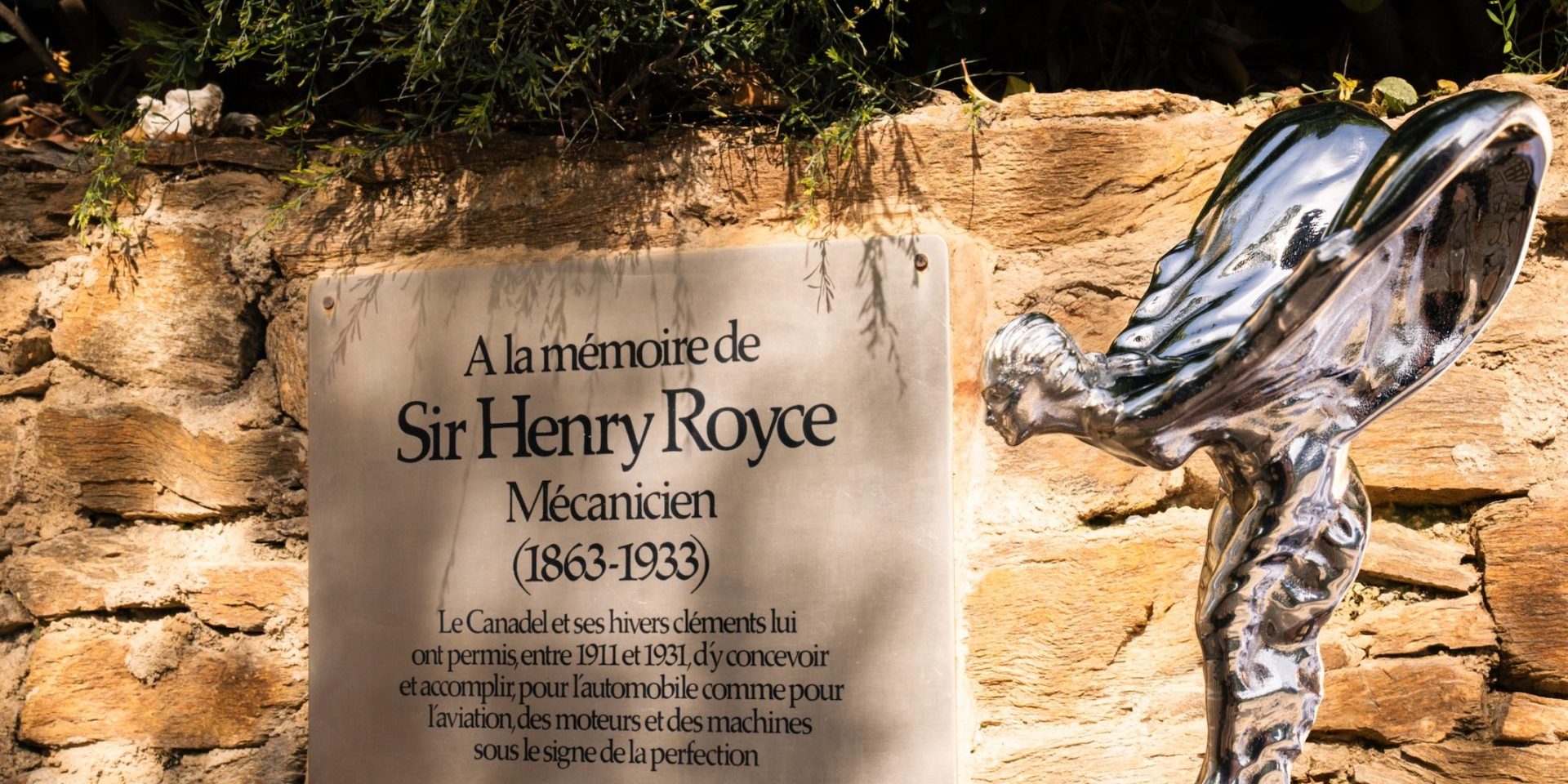
LE RAYOL-CANADEL-SUR-MER: ENGINEERING AN ICON

From 1911 until his death in 1933, Sir Henry Royce spent the winter months in the South of France, at a secluded retreat on the Côte d’Azur. He initially stayed at Claude Johnson’s villa, until Villa Mimosa was completed in 1917; Royce used this location to test and refine many Rolls-Royces, including the first motor car to bear the Phantom nameplate.
The combination of high-speed cruising from England to France and the Riviera’s sweeping, cinematic corniches provided the ultimate environment for assessment and improvement. From Villa Mimosa, Royce obsessively refined Phantom to deliver an experience as singular then as it is today: the effortless command of immense power.
The influence of Sir Henry’s winter residence is enshrined in modern materials used by the marque, including Canadel interior wood panelling, and Duality Twill bamboo fabric inspired by the extensive groves in Le Jardin des Méditerranées, which adjoins Villa Mimosa.
WEST WITTERING: THE QUIET PURSUIT OF PERFECTION

In the warmer months, Sir Henry returned from France to Elmstead, his beloved home in the village of West Wittering on the Sussex coast. Just eight miles from the present-day Home of Rolls-Royce, Elmstead remains a place of pilgrimage for enthusiasts, providing a personal and emotional connection to one of the founders that resonates throughout the company today.
As he had done at Villa Mimosa, Royce set up a separate studio nearby for his team of designers and engineers. Although the Rolls-Royce factory was halfway across the country in Derby, Royce still insisted on signing off every new component personally, so motor cars arrived almost daily to be inspected, adjusted and approved before returning. Each journey was a round trip of over 400 miles, and some of these same roads are still used by the marque’s test and development specialists to this day.
Alongside Elmstead, Royce acquired 60 acres of land, where he devoted himself to agriculture and horticulture with characteristic zeal and almost obsessive attention to detail; qualities that extended even to his leisure pursuits. A skilled engineering draughtsman, Royce also became a highly accomplished watercolourist. His exquisite studies of scenes in West Wittering and Le Canadel still provide inspiration for Rolls-Royce designers seeking to immerse themselves in his world.
LONDON: A CENTURY OF INFLUENCE

For all its global reach, London remains Phantom’s spiritual home. For much of the twentieth century, Rolls-Royce was based at 14-15 Conduit Street, near Savile Row in London’s fashionable Mayfair, where Charles Rolls had established one of Britain’s first car showrooms in 1905. Here, Rolls conducted demonstration drives of early motor cars and met clients from London’s social elite. The building’s role in automotive history was commemorated by English Heritage in 2010 with a Blue Plaque, unveiled by Lord Montagu of Beaulieu.
London also played a pivotal role in Phantom’s renaissance. In the late 1990s, the marque’s designers established a secret studio in a former bank building on the north side of Hyde Park. In what was known simply as ‘The Bank’, a handpicked team, led by Chief Designer Ian Cameron, worked on a secret project codenamed RR01.
Cameron and his team’s brief was simple, but enormously ambitious: to create a new Rolls-Royce from a blank sheet of paper. They were given only three stipulations: the car should have very large wheels, the famous Pantheon Grille and, of course, the Spirit of Ecstasy mascot.
Chief Exterior Designer Marek Djordjevic turned to designs from the past for inspiration. A coachbuilt Phantom II from the early 1930s would prove the most influential, providing the design elements that still inform every Goodwood-era Rolls-Royce – most notably the famous ‘waft line’, rising from rear to front along the lower edge of the body, reminiscent of a motor yacht at speed.
AUSTRALIA: A NEW ERA BEGINS

The first Goodwood Phantom made its global debut on 1 January 2003, where it was handed over to its new owner at exactly 00:01. The delighted client wished to immerse themselves in this grand and contemporary expression of the marque, and so began a 4,500-mile journey from Perth across the Australian continent. It was an audacious statement – and a bold demonstration that Phantom had not only returned, but was ready to define a new era of global luxury travel. In a fitting full-circle moment, that very same Phantom returned to the Home of Rolls-Royce in August 2025 – Phantom’s centenary year – to undergo a detailed inspection by the marque’s engineers.
102EX: AN ELECTRIC VISION

Following Phantom’s highly successful market introduction, engineers within Rolls-Royce began thinking about the marque’s longer-term future. Reflecting the Rolls-Royce’s visionary spirit, a small team considered a wide range of powertrains that would be suitable for the brand’s electric future and amplify the qualities clients celebrated about their Rolls-Royce.
In 2011, Rolls-Royce revealed 102EX, also known as the Phantom Experimental Electric (EE): a fully electric Phantom. Though never intended for production, this experimental motor car offered the first glimpse of how the brand might harness battery-electric technology to elevate the wider Rolls-Royce experience. It marked the beginning of a bold electric journey – one that would carry the marque into the present day, and beyond.
THE FUTURE OF PHANTOM, TOLD THROUGH ITS LEGACY

Phantom’s remarkable history remains a constant source of inspiration within Rolls-Royce. The centenary year of this nameplate, celebrated in 2025, offers a fitting moment to honour the individuals and ideas that have shaped Phantom’s first 100 years. From world-renowned artists to musical pioneers, Phantom has been chosen by those who truly shape our world. It has served monarchs, statesmen and captains of industry – and, above all, remains a tribute to the vision of the marque’s founders, Charles Rolls and Sir Henry Royce.
Across generations, Phantom has revealed its unique breadth and brilliance – as a studio, stage, state room and gallery. These stories will soon be brought together in a landmark Bespoke motor car that captures Phantom’s singular legacy, honours an extraordinary milestone, and represents the continuation of one of the most illustrious journeys in automotive history.

Leave a Comment
More in News

2027 Mazda CX-5 Starts at $29,990 with Standard AWD and Google Built-In

Mazda CX-6e Arrives in the UK from £42,990 Ahead of November Launch
How DVSA’s Seven Week Driving Test Promise Became an 11 Week Wait

Ombudsman Closed Nine of Ten Latest Parking Fine Complaints After Initial Enquiries Only

Why TfL’s New Radar Speed Cameras Defeat Every App That Warns UK Drivers
Trending on Motoring Chronicle

BMW Recalls 29,119 Vehicles Over a Starter Relay Fire Risk

SHEdrives a Lambo returns for an exclusive Palm Springs retreat

Two in Five Drivers Now Switch Off Their Car’s Built-In Safety Systems

Porsche 911 Spirit 70 wraps modern performance technology in retro style [Photo Gallery]
