What Your Licence Lets You Tow This Caravan Season (and the Fines to Avoid)


Caravan and trailer season is here, and with it a set of rules that catch out thousands of otherwise careful drivers every summer. Hitch a caravan, a boat trailer or a loaded box trailer to the back of your car and three things change at once: what your licence allows you to pull, the speed limits you must obey, and the penalties you face if you get it wrong. Break the rules and you could be looking at a fine of up to £1,000, penalty points, or in the worst cases a roadside prohibition that strands you and your caravan at the side of the road.
None of it is complicated once you know the limits, but plenty of drivers head off on holiday assuming their normal car licence and normal driving habits carry over. They do not. Here is what every driver towing this summer needs to know before setting off.
What your licence actually lets you tow
The good news is that the rules were relaxed in December 2021. If you passed your car test from 1 January 1997 onwards, you can now tow a trailer up to 3,500kg maximum authorised mass (MAM) using a standard category B licence, without sitting a separate trailer test. The DVLA updates your licence record to show category BE automatically, so most drivers towing a typical touring caravan are covered without doing anything extra.
If you passed your test before 1 January 1997, your entitlement is even broader. You can generally drive a vehicle and trailer combination with a combined weight of up to 8,250kg MAM. Either way, the key figure to check is not just your licence but your car. Every vehicle has a maximum towing weight and a gross train weight, the combined limit for the car plus a fully loaded trailer, listed in the handbook or on the VIN plate. Exceed either and you are towing illegally, whatever your licence says.
It is worth being precise here, because driving outside your licence entitlement is treated as driving without the correct licence. That carries a fine of up to £1,000 and penalty points, and it can invalidate your insurance at the same time, leaving you exposed to a far larger bill if anything goes wrong.
The speed limits that change the moment you hitch up
This is the rule that catches out the most drivers. The moment you attach a trailer, your speed limits drop on the open road. In built up areas the usual 30mph limit still applies. On single carriageways the limit falls to 50mph, not the standard 60mph. On dual carriageways it drops to 60mph rather than 70mph, and the same 60mph cap applies on motorways. Cruising at 70mph on the motorway with a caravan behind you is therefore speeding, even though every car around you is doing it legally.
There is a lane restriction too. When towing on a motorway with three or more lanes, you must not use the outside (right hand) lane except in special circumstances such as lane closures. On dual carriageways and motorways you should stay in the left hand lane and only move out to overtake. Ignore these limits and the penalty is the same as any other speeding offence: a minimum £100 fine and three penalty points, rising to a fine of up to £2,500 and a possible ban if the case goes to court.
Weight, loading and the 85 per cent rule
Overloading is dangerous and illegal, and the DVSA runs roadside checks on caravans and trailers through the summer. The hard limits are your car’s maximum towing weight and the trailer’s own MAM, neither of which you can exceed. On top of that, experienced towers follow the 85 per cent rule: for a stable, manageable outfit, the loaded weight of the caravan or trailer should ideally be no more than 85 per cent of your car’s kerbweight. This is guidance rather than law, but it is a sensible ceiling, especially for anyone who is new to towing.
How you load the trailer is just as important as the total weight. Heavy items should sit low and over the axle, not at the back, because a tail heavy trailer is what triggers the dreaded high speed snake. The nose weight, the downward force where the trailer meets the towball, must stay within the limits set by both the car and the towbar. Get the balance wrong and the outfit becomes unstable at exactly the moment you least want it to, on a fast dual carriageway or in a crosswind.
The fines you risk
Beyond speeding and licence offences, several towing specific faults carry penalties. If your caravan or trailer is wider than your car, you must fit suitable towing mirrors so you can see clearly down both sides. Failing to do so is an offence that can bring a fine of up to £1,000 and three penalty points. An insecure or badly loaded trailer can also land you with a fine and points, and an examiner who judges your outfit unsafe at a roadside check can issue a prohibition that stops you driving on until the fault is fixed.
Tyres deserve special attention, because caravan tyres often look fine while hiding their age. Rubber that has sat unused for a winter can crack and fail under load and summer heat. That is no small risk: caravan and motorhome tyre failures have driven a 16 per cent rise in towing breakdowns, and a blowout at 60mph with a caravan attached is a frightening experience. Check the tread, the pressures and the sidewalls for cracking before every long trip, and replace tyres on age as well as wear.
What to check before you set off
Run through a quick checklist every time. Confirm the trailer is within your car’s towing limit and your licence entitlement. Make sure the towball is properly coupled and the breakaway cable or secondary coupling is attached. Check that all the lights, indicators and brake lights on the trailer work. Fit extension mirrors if the load is wider than the car. Check the tyres, including the spare, and confirm the nose weight is correct. Finally, make sure the number plate on the trailer matches your towing vehicle, which is a legal requirement.
If your summer plans involve taking the caravan abroad, remember that the rules change again once you cross the Channel, with extra equipment and documents required in several countries. It is worth reading up on the latest sticker and equipment rules for UK drivers in France and Spain before you travel. A few minutes of checks at home is a small price to keep your licence, your insurance and your holiday intact.
Stability, insurance and breakdown cover
If you are new to towing, a few extras are worth the money. A stabiliser hitch helps damp out the sideways movement that leads to snaking, and many modern cars include trailer stability programmes that gently brake individual wheels to keep the outfit in line. Neither replaces sensible loading and a steady speed, but both add a useful margin of safety on a long motorway run.
Insurance is the other thing drivers overlook. Your car insurance usually covers your legal liability while towing, meaning damage you cause to others, but it rarely covers accidental damage to or theft of the caravan or trailer itself. For an expensive touring caravan, a separate caravan policy is worth considering. Check, too, that your breakdown cover includes the trailer and will recover both the car and the caravan together, because a basic policy may only rescue the towing vehicle and leave you to arrange separate recovery for the caravan.
Take it steady, especially for the first few miles of any trip. Build your speed gradually, leave far more room for braking than you would in the car alone, and allow extra time and distance for overtaking. Towing is not difficult once you respect the limits, but it rewards patience and punishes the driver in a hurry.
Sources:

Leave a Comment
More in News
Every Driver Saves £4 a Tank if Fuel VAT Drops to 15%, Says RAC

Ram Recalls 8,329 Heavy-Duty Trucks Over a Defect That Can Disable Stability Control

What a £12,000 EV Mandate Fine Means for Every New Car Buyer in Britain
Why Lexus Is Telling 68,356 NX Owners Their Dashboard Could Hide a Warning Light

Toyota Recalls 228,367 Sienna Hybrid Minivans Over Seatbacks That Could Detach
Trending on Motoring Chronicle

How Long Does an EV Battery Actually Last? (Real-World Numbers)
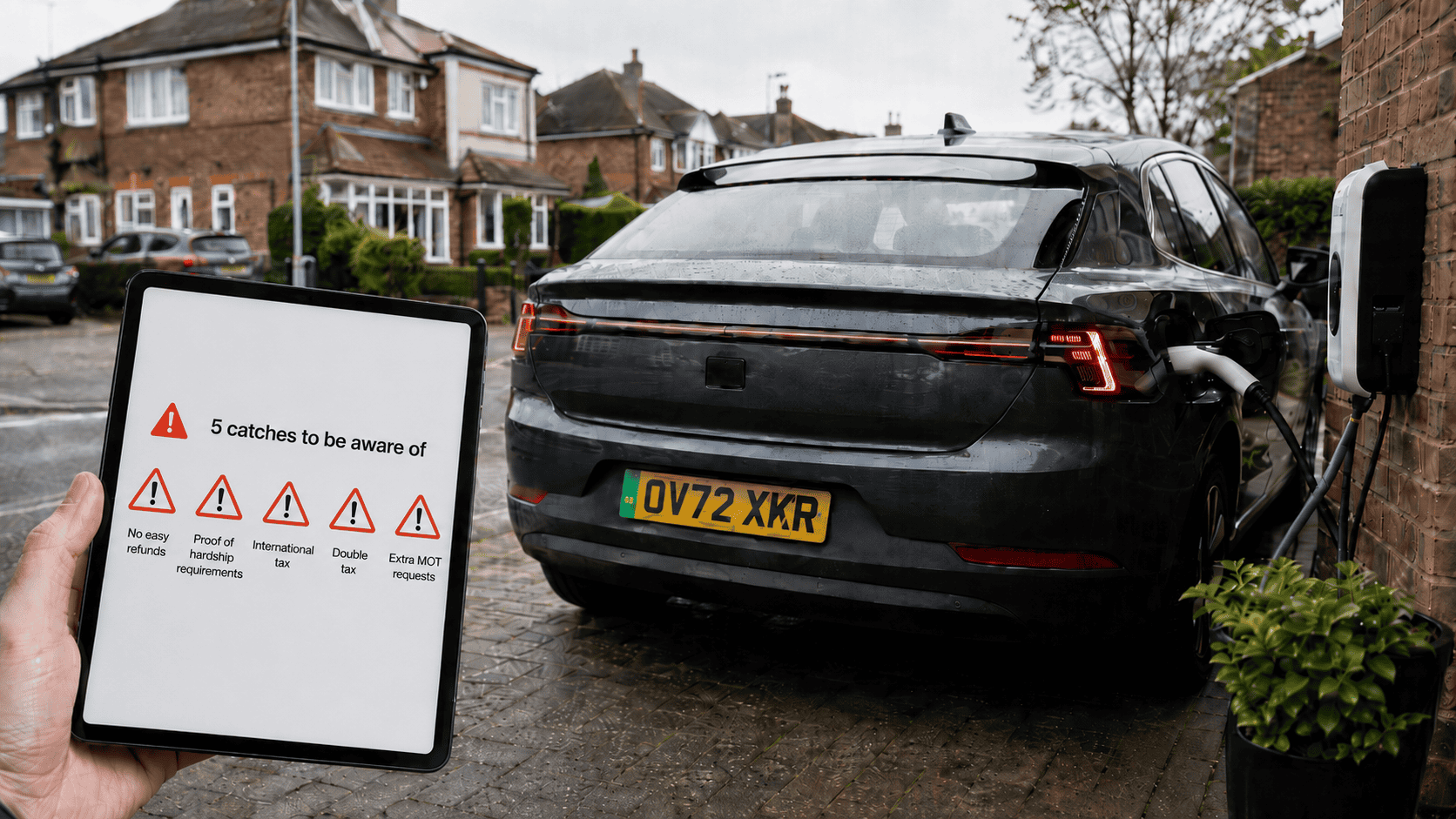
The New Electric Car Mileage Tax Has Five Catches Drivers Were Not Told About

The OMODA 7 Plug In Hybrid Does 56 Miles On Electric, 700 Miles On A Full Tank And Costs £32,000

How to Challenge a £100 Toll Fine That Should Never Have Been Issued