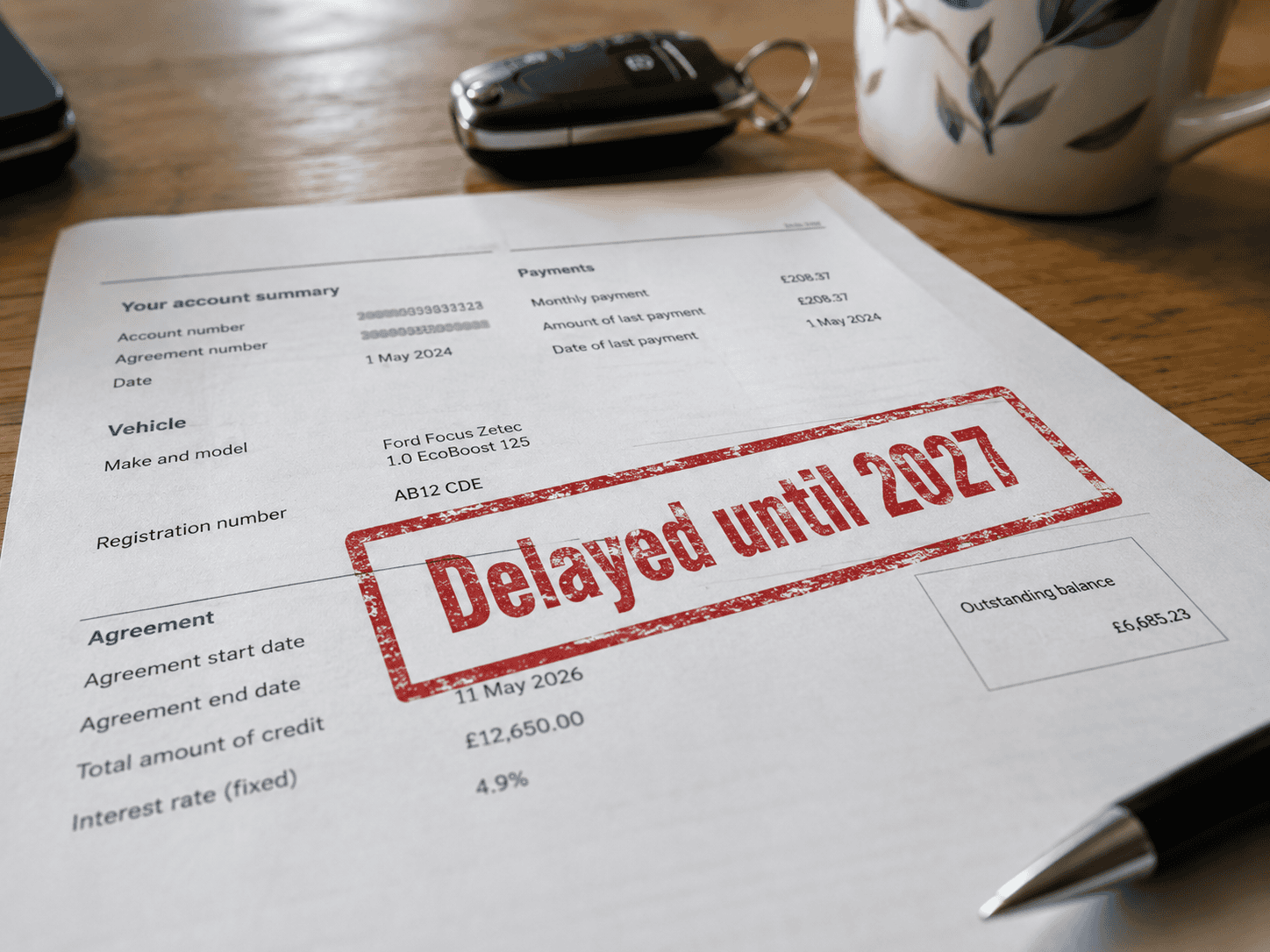
FTC Deal Would Make Stream Auto Show Full Car Prices, Fees Included


- The Federal Trade Commission announced an agreement on November 9 that would require Stream Auto Outlet, a New York dealership group, to show the price a buyer actually pays in its ads.
- The FTC alleges Stream advertised cars online at low prices, then charged thousands of dollars more, with required down payments tucked into small print behind a pop-up.
- FTC staff guidance from September applies the same test to every dealer: the advertised price is what any buyer can pay on arrival, with only government charges left out.
The Price on the Ad Is Supposed to Be the Price You Pay
The Federal Trade Commission struck a deal on November 9 with Stream Auto Outlet, a Long Island, New York dealership group, that would stop the company from advertising a car at a price no customer ends up paying. The FTC alleges Stream listed vehicles online at figures well under what buyers faced at the store, then added thousands of dollars in down payments, dealer fees and add-ons. Under the proposed order, any Stream ad that shows a price has to display the real one. Taxes and other charges set by the government are the only exceptions.
The order is a negotiated settlement, not a court finding. Stream Auto has not been found to have broken the law, and the order carries no payment. The FTC filed it in the U.S. District Court for the Eastern District of New York, where it waits for a judge’s approval and signature. Stipulated orders carry the force of law once the judge signs.
The case reaches well beyond three dealerships on Long Island. In September the FTC published its Automobile Industry Pricing Transparency FAQs, which spell out how the agency reads the price on any dealer ad in the country. The test: the number must be a price any shopper can actually pay when they arrive. A dealer advertising a $40,000 car with an $85 document fee charged to every buyer has to advertise $40,085. Shoppers can hold any ad up against that test before they drive to the lot.
What the FTC Says Stream Auto Did
The FTC’s complaint says Stream drew buyers to its dealerships with low online prices and then would not honor them. The agency alleges Stream charged required down payments of thousands of dollars on top of the advertised price. The complaint says the websites tucked that requirement into a small-print disclaimer on a “details” page behind a pop-up, mixed in with other disclosures.
Stream’s defense, as the complaint describes it, was that the extra fees had been disclosed. Customers who pushed back on the higher totals were allegedly sent back to the disclaimers in Stream’s online ads. Finding one took work, the FTC says: click a “Details” link, wait for a pop-up, scroll to its bottom and read a few lines of dense small type. Elsewhere, similar disclaimers sat several screens down a vehicle listing, under the History Report, Original Window Sticker, Description, Basic Info and Vehicle Details sections. The wording said that pricing was “believed to be accurate” and told shoppers to contact the dealer for complete information.
Stream also made a promise of its own. Its promotional material claimed “NO FEES. NO GAMES. JUST CARS”, yet the FTC alleges the group kept billing customers thousands of dollars over the advertised amount, using dealer fees and add-ons they did not want.
Stream had notice. The FTC’s Bureau of Consumer Protection sent a warning letter dated March 11, 2026, to Stream Auto Outlet at an Amityville, New York address, with copies to the Amity, Islip and Valley locations. It named “advertising a price that does not reflect all required fees” as an example of an illegal pricing practice. The letter listed five more: advertising a price that counts rebates or discounts not open to every buyer, ignoring a required down payment, conditioning the price on dealer financing, requiring extra items the price leaves out, and advertising vehicles that are unavailable or do not exist. The letter did not conclude that Stream was doing any of it. The complaint alleges the practices continued.
What the Proposed Order Requires
The order bars Stream from misrepresenting the costs or terms of acquiring a vehicle. It also sets a defined term for ads. Stream must clearly and conspicuously disclose the Total Price, which the order defines as “the maximum total price, including all mandatory fees or charges a consumer must pay for a motor vehicle”. Government-required charges are the only exclusion.
Under the order, a disclaimer cannot stand in for the price itself. The FTC typically judges disclosures by a clear-and-conspicuous standard that appears in its guides and consent orders. In the wording of that standard, information needed to qualify a claim must be “difficult to miss (i.e., easily noticeable) and easily understandable by ordinary consumers.” For online ads the agency expects disclosures to be unavoidable. A pop-up reached through a link, followed by a scroll through dense type, is unlikely to meet that standard.
Christopher Mufarrige, Director of the FTC’s Bureau of Consumer Protection, laid out the agency’s position in the announcement. “Buying a car is one of the largest purchases many consumers make, and they deserve clear, transparent information about what they will pay,” said Mufarrige. “Hidden costs and deceptive pricing undermine informed consumer choice and distort competition. Price transparency is a cornerstone of a fair marketplace and continues to be a top priority for the Trump FTC.”
The Commission voted 2-0 to file the complaint and the stipulated order. It is the second auto dealer settlement in two months: last month’s order with Florida’s Greenway Auto Group was also limited to injunctive relief with no money paid. The FTC has also targeted price transparency in grocery delivery, rental housing and sports and concert ticketing. Earlier dealer cases cited in the March letter, all allegations, involved Lindsay Chevrolet in Virginia, Leader Automotive Group in Illinois and Asbury Automotive Group, an FTC complaint dated August 2024 over hidden charges and required add-ons.
The Test Every Dealer Ad Has to Pass
The September FAQs reflect the views of FTC staff and do not bind the public or the Commission. Even so, they show how the agency will read any ad. The FTC says the requirement is old: Section 5 of the FTC Act has applied for decades, and the FAQs set no new compliance deadline.
Here is the standard in practical terms. A fee the dealer imposes on any buyer goes in the advertised price. Only an amount a federal, state or local agency requires the buyer to pay directly can stay out, and taxes are the FTC’s own example. Dealer-required fees that a government authorizes but does not mandate must be included. So must fees a government requires the dealer to pay that the dealer passes to the buyer.
Document fees get their own treatment. When a dealer quotes a lower fee to one buyer and a higher mandatory fee to another, the ad has to carry the higher number. State rules on those fees vary: some states rely on general deceptive-practices laws, some require a separate disclosure and some set caps or specific wording. The FTC says such rules do not change its requirement. The real price stays the most prominent amount, and any state disclosure goes on top. California adds its own rules on top, covered in our look at California’s new car-buying law.
The price also has to be the biggest thing on the page. On search results pages and single-vehicle listings, the actual price must be the most prominent amount, and prominence covers more than font size. A dealer can show the sticker price or a rebate as long as the real price stays dominant. A $34,999 car can display a $1,000 first-responder discount, for example, and a $39,999 vehicle can offer $2,000 off for using dealer financing, provided the $34,999 or $39,999 that any buyer pays stays most prominent and the terms are clear.
Negotiation changes none of it. A shopper who sees $24,999 and is quoted $26,499 at the store, a $1,500 gap, has been misled if only a handful of earlier customers got the lower figure. Add-ons have limits too. A dealer cannot present an optional extra as mandatory, suggest an installed option cannot be removed, misstate its cost or bill for options the buyer never agreed to.
The rules reach well past the dealer’s own website. They cover third-party sites, social media, print, roadside signs, calls and texts with dealership staff, and the FTC puts responsibility on everyone who controls the advertising: dealers, third-party advertisers and manufacturers. Cox Automotive has already paused its Good Price and Great Price badges on Autotrader and Kelley Blue Book listings, and TrueCar, Cars.com and CarGurus changed their sites to display all-in prices.
What to Do Before You Drive to the Lot
Screenshot the ad. A listing can change by the time you arrive, and a dated image of the price is your record. The FTC asks people who report a dealer to include any ads or contracts they kept.
Ask for the out-the-door price in writing before you travel, as a line-by-line total. Compare it with the advertised figure. A gap means a fee, down payment or add-on the ad left out, and the FTC’s standard says dealer-required charges belong in the ad price.
Ask which items on the quote go straight to a government agency. Taxes qualify. Anything the dealer sets, adds or passes through does not, and it should already be inside the number you saw online. Treat any item described as optional with suspicion if the dealer will not sell the car without it.
Watch the financing line. A price that applies only with dealer financing, or a down payment the ad never mentioned, is on the FTC’s list of practices it calls illegal. The cost of the loan itself is a separate matter, and typical car loan interest shows what financing adds once the price is settled.
If an ad promised one price and the store charged another, report it at ReportFraud.ftc.gov. The FAQs ask for details about the dealership and the violation, plus any ads or contracts you kept.
What Happens Next
A federal judge has to approve and sign Stream’s order before it binds the company. Until then, the order is a proposal and the claims against Stream remain allegations.
For the rest of the industry, the direction is plain. The March warning letters went to 97 dealership groups. The September FAQs put the standard in writing, and NADA welcomed the guidance. Two dealer settlements in two months show the FTC bringing these cases at a steady pace. A shopper who spots an ad price nobody can actually pay now has the FTC’s own yardstick to hold it against. The background to the FTC’s 97 dealer warnings shows where the pressure began.
Want more car content? Add us as a preferred source on Google to your favourites list for the best automotive news and analysis on the internet.
If you enjoyed this article, be sure to follow us on Microsoft Start.
Sources
- Federal Trade Commission: FTC Secures Settlement with Stream Auto Outlet, Advancing Price Transparency for Auto-Buying Consumers
- Federal Trade Commission: Automobile Industry Pricing Transparency: FAQs
- Kelley Drye & Warren LLP: FTC Says Fine-Print Disclaimers Can’t Fix Misleading Prices in Latest Auto Dealer Settlement
- CBT News: FTC reaches agreement with Stream Auto Outlet over deceptive vehicle pricing
Reviewed by Preetam Gadekar

Leave a Comment
More in News
2027 Nissan Armada Patrol PRO-4X Starts at $78,990 as Patrol Badge Returns

Every Driver Who Damages an Unattended Parked Car Has 24 Hours to Tell Police

Scion KEI-01 Mini Truck Tops Out at 25 MPH, Fleet Sales Start in 2027

US Traffic Deaths Fall 2.5% to 16,750, but 15 States and DC Rose

DOJ Sues Lyft for $53 Million, Alleging Rides Denied to Disabled Riders
Trending on Motoring Chronicle
DENZA D9 Seven-Seat MPV Priced From £75,000 With Five-Minute Fast Charging

GMC Prices 2027 Sierra 1500 From $51,295 With New V8 Power

Every EV Driver Without a Driveway Pays a 20 Percent Tax at Public Chargers
Honda Recalls 325,588 Odyssey Minivans Over Rearview Cameras That Fail in the Rain