
Every Driver Who Damages an Unattended Parked Car Has 24 Hours to Tell Police

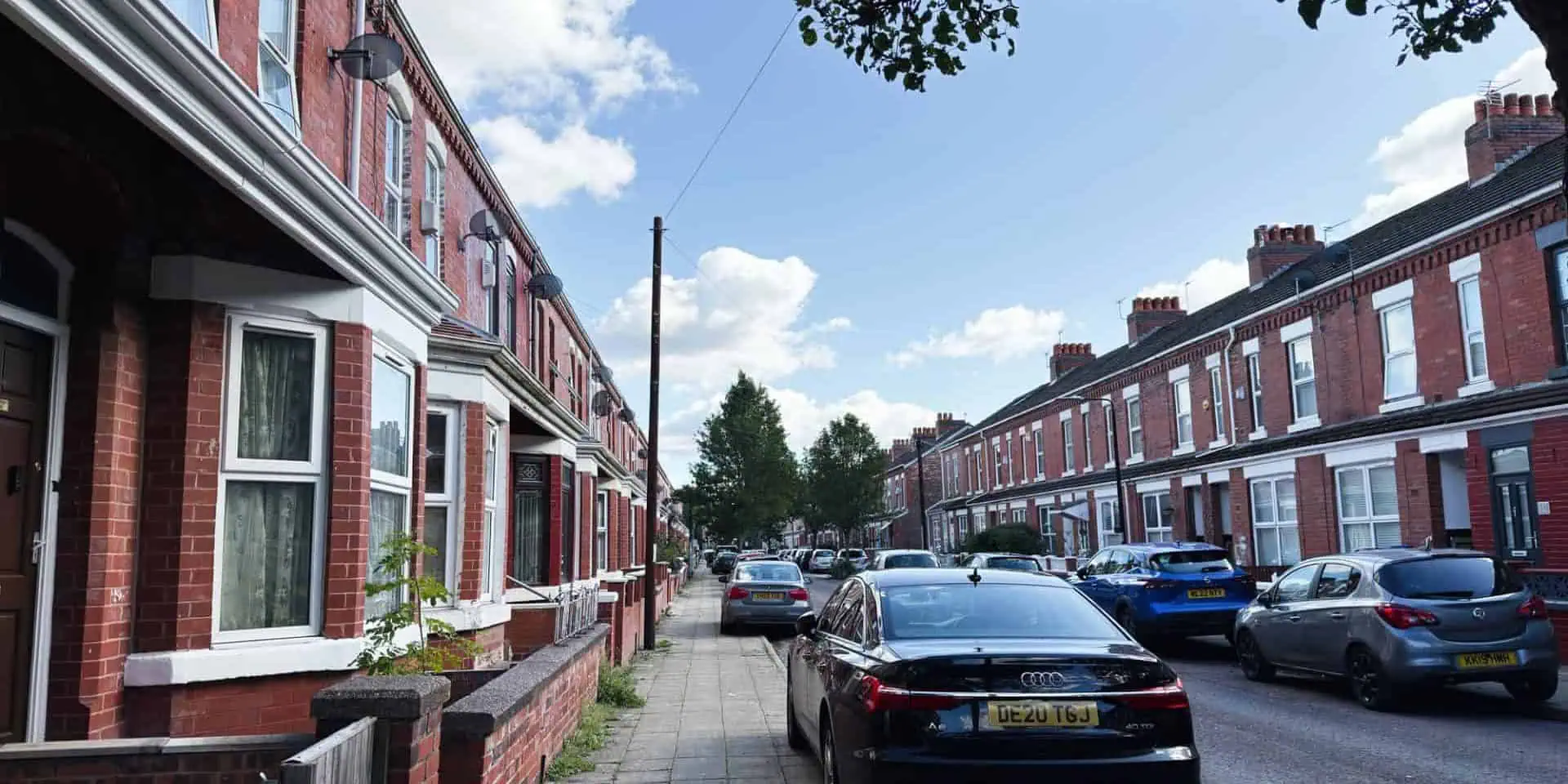
- Damaging a parked car counts as a collision, and the law requires a driver to stop even when nobody is there.
- A driver who cannot give name and address to someone with reasonable grounds to ask must report to the police within 24 hours.
- Driving off carries 5 to 10 penalty points, an unlimited fine and a possible ban.
A Scrape Nobody Saw Still Starts a 24 Hour Clock
The answer is short. After any collision that damages another vehicle, the driver must stop. If the owner of the damaged car is standing there, the driver gives name, address, the vehicle owner’s name and address and the registration number. If nobody is there to receive those details, the driver must tell the police as early as is reasonable, and in any case before 24 hours have passed.
That duty sits in section 170 of the Road Traffic Act 1988, and rule 286 of the Highway Code repeats it in plain words. The quiet scenario is the one that catches people out: a wing mirror clipped on a narrow street, a bumper tapped while reversing. No witness, no owner in sight. The law treats a collision that damages the other car as an accident all the same.
The section applies where a mechanically propelled vehicle on a road or other public place is the cause of an accident that injures someone other than the driver, or damages another vehicle, an animal, or property on or beside the land. A parked car is a vehicle other than the one the driver is in, so damage to one meets the test in section 170(1)(b)(i).
What the Rules Say You Must Do at the Scene
Rule 286 of the Highway Code opens with the stop. A driver involved in a collision that causes damage or injury must stop and, if possible, do it in a place of relative safety. Rule 275 defines that term as a spot where the driver, any passengers and the car face less risk from moving traffic. The safest choice is a location designed for parking, and a lay-by qualifies too.
Rule 283 sets out what follows for an incident or collision. The driver switches on the hazard lights, pulls on high-visibility clothing if the car carries it, asks drivers to switch off their engines, asks drivers and passengers to stop smoking, and phones 999 with full details of the location and any casualties. Uninjured people walk clear of the vehicles. Injured people are left in place unless they face immediate danger. The rule closes with the line that applies to a scrape: be prepared to exchange details.
For a scrape with no injuries and no one around, most of that list shrinks to the first steps: stop somewhere safe, switch on the hazard lights and look at what has happened. Then comes the legal question of who can be given the details.
The 24 Hour Report: Where, When and to Whom
Section 170(2) requires the driver to stop and, if a person with reasonable grounds asks, to give the driver’s own name and address, the name and address of the vehicle’s owner, and the identification marks of the vehicle. That last item means the registration number. Section 170(3) covers the case where the driver gives no name and address, for any reason at all: the driver must report the accident.
The wording “for any reason” in the Act covers the empty street. No one is there to ask, so no details change hands, and the duty to report takes over.
Section 170(6) fixes how the report is made. The driver reports to a constable or goes to a police station, and the same subsection sets the time limit: “must do so as soon as is reasonably practicable and, in any case, within twenty-four hours of the occurrence of the accident.” Two points follow. The limit is a ceiling, and the first test is still how soon the driver reasonably can. And the clock runs from the accident, so a collision at 6pm on Monday needs a report before 6pm on Tuesday.
The Highway Code and the Act are both silent on a note left under the wiper blade. Neither text lists it as a way to meet the duty. The two routes the law names are giving the details to a person with reasonable grounds to ask for them, and reporting to the police. A driver who leaves a note should still treat the report to police as the duty the law spells out.
What Happens to a Driver Who Drives Off
Section 170(4) makes failure to comply with either the stop-and-give-details duty or the reporting duty an offence. The penalties sit in two gov.uk tables, and the figures match.
Annex 5 of the Highway Code gives one entry for driving off or not reporting: up to 6 months in prison, an unlimited fine, a court’s discretion to ban the driver, and 5 to 10 penalty points. The endorsement code table splits the offence three ways. A driver who does not stop is coded AC10 and receives 5 to 10 points. A driver who does not give particulars or report within 24 hours is coded AC20, also 5 to 10 points. AC30 covers undefined accident offences at 4 to 9 points. Each of the three remains on the record for 4 years, counted from the day of the offence.
Those numbers sit close to the disqualification line. Annex 5 says a driver who builds up 12 or more points within 3 years must be banned for at least 6 months. A 10 point endorsement leaves the licence 2 points short of 12 (12 minus 10). A 5 point endorsement leaves it 7 short (12 minus 5). A driver already carrying points for speeding or a phone offence adds the accident points on top, and the 4 year record period outlasts the 3 year window that counts toward a ban. The guide on which penalty points stay for 4 years lists which offences share that record period.
Separately, a court can disqualify a driver for any offence that carries points. Annex 5 says the period is whatever the court thinks fit, usually between a week and a few months. The hub page on how penalty points work covers the wider system.
One distinction avoids a common mix-up. Failing to stop after a collision is a different offence from failing to stop when a police officer signals a driver to pull over. The government has put forward extra points for the second, as covered in the report on extra points for failing to stop. That change is a proposal. The collision duty in this guide is law now, and the penalty figures above are the ones in force.
Injuries, Insurance Certificates and the Seven Day Rule
A scrape against a parked car rarely involves injury, but the law builds in a second duty for the cases that do. Rule 287 applies when someone else is hurt and the driver has not shown an insurance certificate at the scene, whether to an officer or to anyone with reasonable grounds to ask. That driver must tell the police within 24 hours at the latest, then hand the certificate to them within seven days.
Section 170(5) and (7) supply the detail. The duty applies where the accident caused personal injury, and a driver is not convicted for failing to produce a certificate or other evidence of insurance if it is produced within seven days at the police station the driver specified when reporting the accident. Section 170(7) makes failing to comply with that duty an offence.
Property and animals count too. Section 170(1)(b)(iii) covers damage to other property that is built on, attached to or growing in the land beside the road, which takes in a wall, a fence, a gatepost or a hedge. Section 170(8) defines an animal as a horse, cattle, ass, mule, sheep, pig, goat or dog. Cats are not on that list. Rule 286 of the Highway Code uses the word animal without a list, so stopping and reporting after hitting any animal is the course the Highway Code points to.
The practical order for a driver who has just clipped a parked car runs like this: stop in a place of relative safety, switch on the hazard lights, look for anyone with reasonable grounds to ask for details and give them the name, address, owner’s details and registration number, and if nobody is there, report to an officer or at a police station within 24 hours. The law gives a day, and the rule says sooner if reasonably practicable.
Want more car content? Add us as a preferred source on Google to your favourites list for the best automotive news and analysis on the internet.
If you enjoyed this article, be sure to follow us on Microsoft Start.
Sources
- legislation.gov.uk: Road Traffic Act 1988, section 170
- GOV.UK: The Highway Code, Breakdowns and incidents (275 to 287)
- GOV.UK: Endorsement codes and penalty points
- GOV.UK: The Highway Code, Annex 5 Penalties
Reviewed by Preetam Gadekar

Leave a Comment
More in News

Scion KEI-01 Mini Truck Tops Out at 25 MPH, Fleet Sales Start in 2027
US Traffic Deaths Fall 2.5% to 16,750, but 15 States and DC Rose

DOJ Sues Lyft for $53 Million, Alleging Rides Denied to Disabled Riders

Car Loan Debt Hits $1.73 Trillion as Contract Rates Climb to 11.46%

Used Diesel Sales Fell 5.3 Percent as 4.8 Percent of Buyers Chose Electric
Trending on Motoring Chronicle

Why 1.6 Million UK Diesel Drivers Are Still Waiting for a Payout
Annapolis Speed Cameras Will Run 24/7 Starting September 8 With Fines Up to $425

A record-breaking force of nature: the Bugatti W16 Mistral sets a new top-speed world record for an open-top car [Photo Gallery]

Mile Stones: Why Every EV Driver Will Pay 3p Per Mile From 2028
