
Every Driver Carrying a Child Under 14 Risks a £500 Court Fine
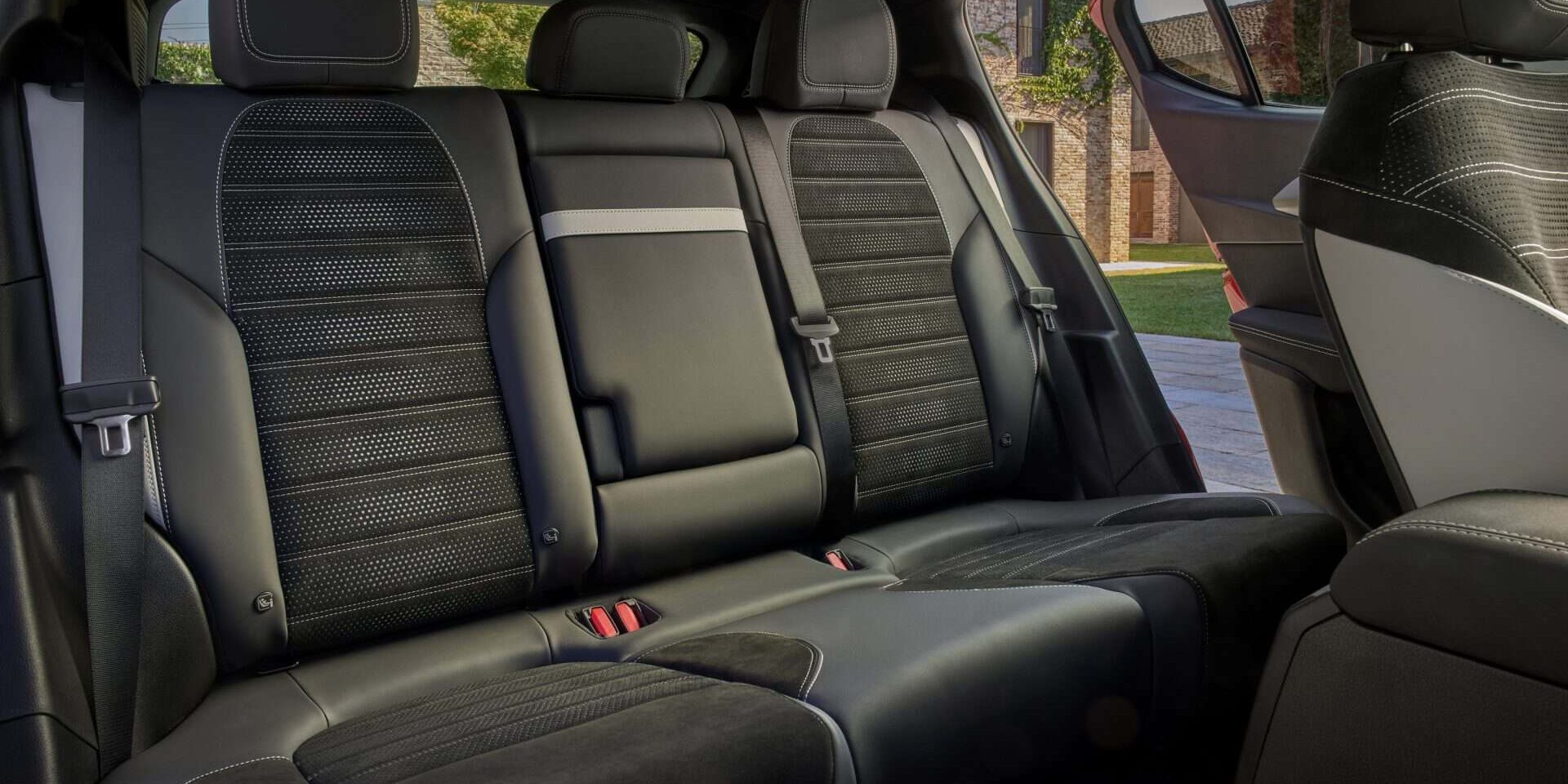
- The driver answers for a child who is not properly restrained, facing a £100 fixed penalty at the roadside and up to £500 if the case reaches court.
- Across 2023 to 2025 the 31 police forces that answered Freedom of Information requests issued 5,533 fixed penalty notices over child seats and belts, and 64 per cent of the 1,200 parents Confused.com surveyed cannot name the legal cut-off.
- A child needs a car seat until the 12th birthday or a height of 135cm, whichever comes first, and the offence carries no penalty points.
The Seat That Fits at Four Can Be Wrong at Eight
Look at the child in the back of the car. If the child is under 12 and under 135cm, a correctly approved child car seat is the law. If the child has passed either mark, an ordinary seat belt does the job. The government’s guidance on gov.uk sets the test: a seat is the norm up to the 12th birthday or a height of 135cm, whichever arrives first, and a child past 12 or above 135cm goes on an adult belt.
The rule bites on the person behind the wheel. For the seat-by-seat detail, see what the child car seat law requires. The Road Traffic Act 1988 makes it an offence for a driver to drive with a child in the rear who is not wearing a seat belt as the law requires, and the Act defines a seat belt to include any restraining device for a child. Parents, grandparents, an uncle doing the school run and a neighbour offering a lift all stand in the same place once they take the wheel. A seat that suited a four year old is not guaranteed to suit the same child at eight: gov.uk tells drivers to check the seat against the child’s height.
The price of a mistake is £100 on the spot and up to £500 in court, and the offence carries no penalty points.
What the Law Asks of the Seat and the Driver
The law offers two ways to pick a seat, and gov.uk says the choice can rest on the child’s height or on the child’s kilograms.
Height-based seats carry a label showing a capital E in a circle and the code R129. They must face the rear until the child is over 15 months old, after which a forward-facing seat is allowed. The driver must check that the seat suits the child’s height.
Seats sorted by kilograms carry the label ECE R44 and fall into groups: group 0 for babies up to 10kg, group 0+ up to 13kg, group 1 from 9kg to 18kg, group 2 from 15kg to 25kg and group 3 from 22kg to 36kg. Several types can fit one group, so a parent can choose between a high-backed booster and a booster cushion where the group allows it. Manufacturers can now make booster cushions only as group 3, but cushions already in group 2 stay legal to use.
Three fitting rules catch people out. A child seat needs a seat belt with a diagonal strap, unless the seat is built for a lap belt or fitted on ISOFIX anchor points. A rear-facing baby seat in the front needs the front airbag deactivated first. No child seat goes on a side-facing seat.
The Road Traffic Act adds the age bands for the belt itself. A child under three in the rear must be restrained. A child from three up to the age of 14 must be restrained in the rear whenever a belt is fitted there. In the front, any child under 14 must be restrained. Each of these duties applies to a driver acting without reasonable excuse.
A £100 Notice, a £500 Ceiling and No Points
The fixed penalty for driving with a child in the rear who is not restrained, under section 15(4) of the Road Traffic Act, is £100. The figure sits in item 8 of the table in the Fixed Penalty Order 2000, as the table was substituted in 2013. Confused.com calls £100 the standard fixed penalty for these offences.
If the driver does not take the notice, or the officer sends the case to a magistrates’ court, the ceiling is higher. Section 15(4) is a Level 2 offence on the standard scale under Schedule 2 of the Road Traffic Offenders Act 1988, and gov.uk caps the fine at £500 for a driver whose passenger under 14 lacks the right seat or a belt.
Points are a separate question. The Offenders Act schedule gives no endorsement and no points for section 15(4), and the gov.uk list of endorsement codes has no entry for a child restraint. A driver who pays the notice or loses in court takes a fine and nothing on the licence. That makes the cost a flat £100 for most drivers and a possible £500 for those who fight and lose. Change is being discussed: a Department for Transport consultation that closed on 11 May 2026 asked whether drivers who fail to restrain a child under 14 should face three penalty points for restraint offences. Today’s rule has none.
A third outcome is the retraining course. In the same Freedom of Information returns, 24 forces reported sending 2,926 drivers on a course in place of a fine between 2023 and 2025, 958 of them in 2025. The usual course, Your Belt, Your Life, is offered through the National Driver Offender Retraining Scheme. It takes about 30 minutes, finishes with a test and costs £54, which undercuts the fixed penalty.
Thousands of Notices, and One Force Issuing a Quarter of Them
Confused.com sent Freedom of Information requests to 45 police constabularies. Thirty-one answered, nine declined and three did not respond, so every total below covers the forces that supplied figures.
Across 2023, 2024 and 2025 those forces handed out 5,533 fixed penalty notices over unrestrained children. Multiply by £100 and Confused.com arrives at £553,300 for the three years. A further 1,808 drivers were referred for prosecution over the same period, though only 26 forces supplied that figure.
Enforcement is uneven. Greater Manchester Police issued 1,514 notices, 27 per cent of the national total and more than any other force. West Yorkshire Police came next with £105,500 in fines, which is 1,055 notices at £100 each, and Merseyside Police followed with £52,700, or 527 notices.
The roadside stop is only part of the exposure. A separate OnePoll survey of 1,200 parents with children under 12, carried out for Confused.com between 19 and 25 June 2026, found 31 per cent have driven with a child in the wrong seat, or none, at some point. Of those parents, 35 per cent said police had stopped them.
Asked what happened next, parents in the survey reported the following: 57 per cent a verbal warning, 45 per cent an instruction to fix the problem before moving on, 35 per cent a fixed penalty notice or fine, 31 per cent a formal police record of the incident and 24 per cent a prosecution or an order to attend court. The survey found 20 per cent of parents call the rules confusing, 28 per cent say keeping up as a child grows is the hardest part and 23 per cent struggle to work out which seat belongs to which stage.
When the Rules Bend, and Who Is Covered
The law carves out a short list of exceptions, and all of them sit on the gov.uk page for travelling without a car seat.
When a vehicle has no rear belt, a child of three or older can ride in the back without a child seat or a belt. In most other cases children under three must always be in a child seat.
In a taxi or minicab, a child can travel without a seat if the driver does not provide one, but only on a rear seat. A child of three or older wears an adult belt there. A child under three travels without a belt. Vans follow the same rules as cars. In a minibus, children travel in the seats behind the driver if no child seat or adult belt is fitted, and children aged three or older use a child seat if the minibus has one. On a coach, children can travel without either when none is available. Minibus and coach drivers do not have to supply seats, so a parent who wants one brings it.
An unexpected trip allows a child of three or older to use an adult belt, but the trip must be unexpected, necessary and over a short distance. A child under three can make such a trip without the right seat only in a licensed taxi or minicab, on a rear seat and without a belt.
Where three children need three seats and the back of the car has no room, a child under three goes in the front in the correct child seat, and children aged three or older sit in the back on an adult belt.
Where a medical condition stops a child using a restraint or belt, a doctor can issue an exemption certificate. The Road Traffic Act sets a clock on it: a driver told by a constable that prosecution is possible must produce the certificate on the spot, or within seven days at the police station the driver names, to rely on it in court.
Insurance, and What to Do Before the Next Drive
Matt Crole-Rees, motoring expert at Confused.com car insurance, set out the safety case and the insurance position: “Getting your child’s car seat right isn’t just about avoiding a fine, it’s one of the most important things a parent can do to keep them safe on every journey.”
He went on: “Yet, despite most parents feeling confident in their knowledge, our research shows a significant number are still unsure exactly when their child should move onto the next stage, or which seat is right for their age and size. That uncertainty can have real consequences, both on the road and afterwards.”
On the insurance question he said: “It’s also worth remembering that getting this wrong won’t necessarily invalidate your car insurance outright. But following the law matters, for your child’s safety first and foremost.”
The word to hold onto in that answer is necessarily: a wrong seat does not automatically end the cover, and the expert stops short of promising that it never will. A call to the insurer settles the point before the question arises.
Four checks before the next drive. Measure the child against the 135cm mark. Read the label on the seat for an E in a circle with R129 or ECE R44. Confirm the belt has a diagonal strap, or that the seat uses ISOFIX. Check the same four points before giving another family’s child a lift, as the driver carries the £100 notice.
Confused.com has also launched a car seat safety checker. Crole-Rees said: “Our car seat safety checker takes the guesswork out of the equation. By simply entering your child’s age and weight, parents can get clear, instant guidance on the right seat for their child, helping families make safer choices and avoid falling foul of the law.” The gov.uk guidance remains the legal reference. The rule says whichever comes first: once a child passes either the 12th birthday or 135cm, a seat belt is the legal requirement, and until then the seat stays.
Want more car content? Add us as a preferred source on Google to your favourites list for the best automotive news and analysis on the internet.
If you enjoyed this article, be sure to follow us on Microsoft Start.
Sources
- GOV.UK: Child car seats: the law
- Confused.com: Parents hit with half a million pounds in fines over child car seat confusion
- legislation.gov.uk: Road Traffic Act 1988, section 15
- The Sun: Car seat warning as thousands of parents slapped with £100 fines
Reviewed by Preetam Gadekar

Leave a Comment
More in News
Man gets into car that matches license plate on Uber app. It’s the wrong one. Then the driver refuses to let him out

Victorian Toll Caps: Carroll Government’s $30 a Week or Coalition’s $50

Florida woman parks $80,000 BMW in 30-minute spot. Minutes later, her car gets towed. That’s not the worst part: ‘It’s already throwing codes’
GM Recalls 67,380 EVs That Can Briefly Lose Braking at Low Speeds

Wholesale Used Truck Values Fall 4.3% as Used EVs Hold 6.6% Above Last Year
Trending on Motoring Chronicle

Why Your Car Battery Gives No Warning Before It Dies

Some Driving Test Centres Have Waits Five Times Longer Than Others

Hyundai SUVs Score Three MAMA Favorite Awards at Chicago Auto Show

2027 Kia Carnival Priced From $37,490 With New Captain’s Chairs on EX and SX
