
Scion KEI-01 Mini Truck Tops Out at 25 MPH, Fleet Sales Start in 2027


- Toyota’s revived Scion brand has unveiled the KEI-01, a 660cc four-wheel-drive utility truck capped at 25 mph, due in the U.S. from the second half of 2027.
- Fleets get first access through a small group of Scion by Toyota dealers, with no price announced and retail sales left as a possibility for later.
- Toyota will assemble the truck at its Indiana plant under a $34 million investment that adds about 50 jobs.
A 660cc Truck With Four-Wheel Drive Is Heading to American Fleets
Toyota Motor North America introduced Scion by Toyota on November 9 at two simultaneous events, one in Ypsilanti Township, Michigan, and one in Frisco, Texas. The brand’s first vehicle is the KEI-01, a truck in the mold of the kei work trucks that Japanese and some other Asian buyers have relied on for decades. It arrives in the second half of 2027.
The headline number for a driver is 25 mph. Anyone sizing the KEI-01 against a pickup truck should start there. Toyota designed the KEI-01 to meet Federal Motor Vehicle Safety Standard No. 500 for low-speed vehicles, and that class stops at 25 mph by law. That ceiling points the KEI-01 at campuses, farms and city fleets rather than fast roads.
Toyota has not published a price, horsepower or fuel economy figure. The company says more detail and its wider sales plan will follow once plans are finalized, so anyone planning a purchase has no cost to budget against yet.
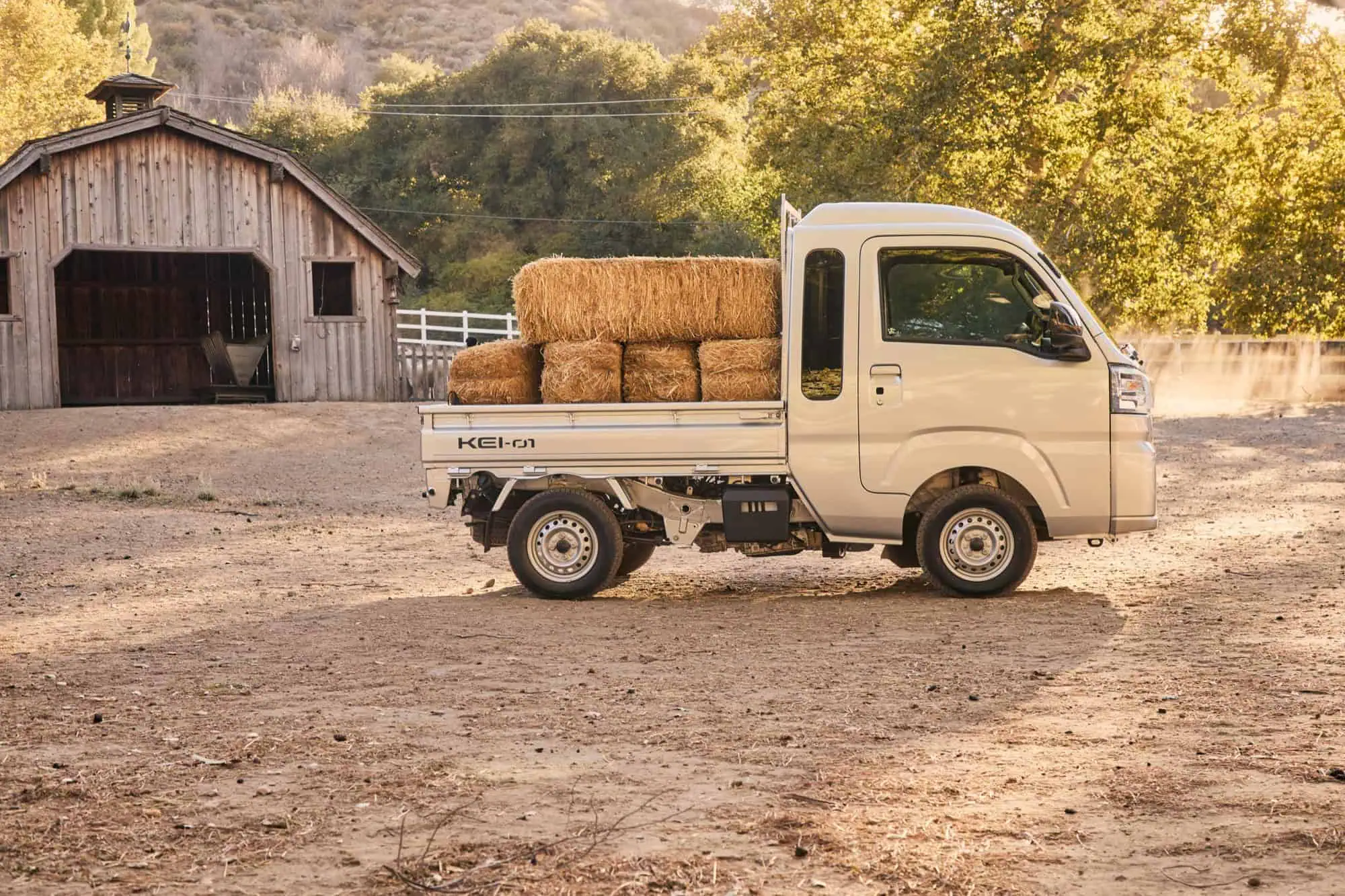
What the KEI-01 Can Carry and Tow
Power comes from a 660cc three-cylinder engine paired with a continuously variable transmission. Four-wheel drive is standard, with an automatic mode and a push-button lock for mud, snow and uneven ground.
The truck measures just over 11 feet long and under 5 feet wide, which Toyota pitches as an advantage in tight spaces. The bed carries up to 600 pounds of payload. The bed has a three-way fold-down design, so an operator loads and unloads from a lower height. Toyota says the structure is rigid enough to tow small trailers and equipment.
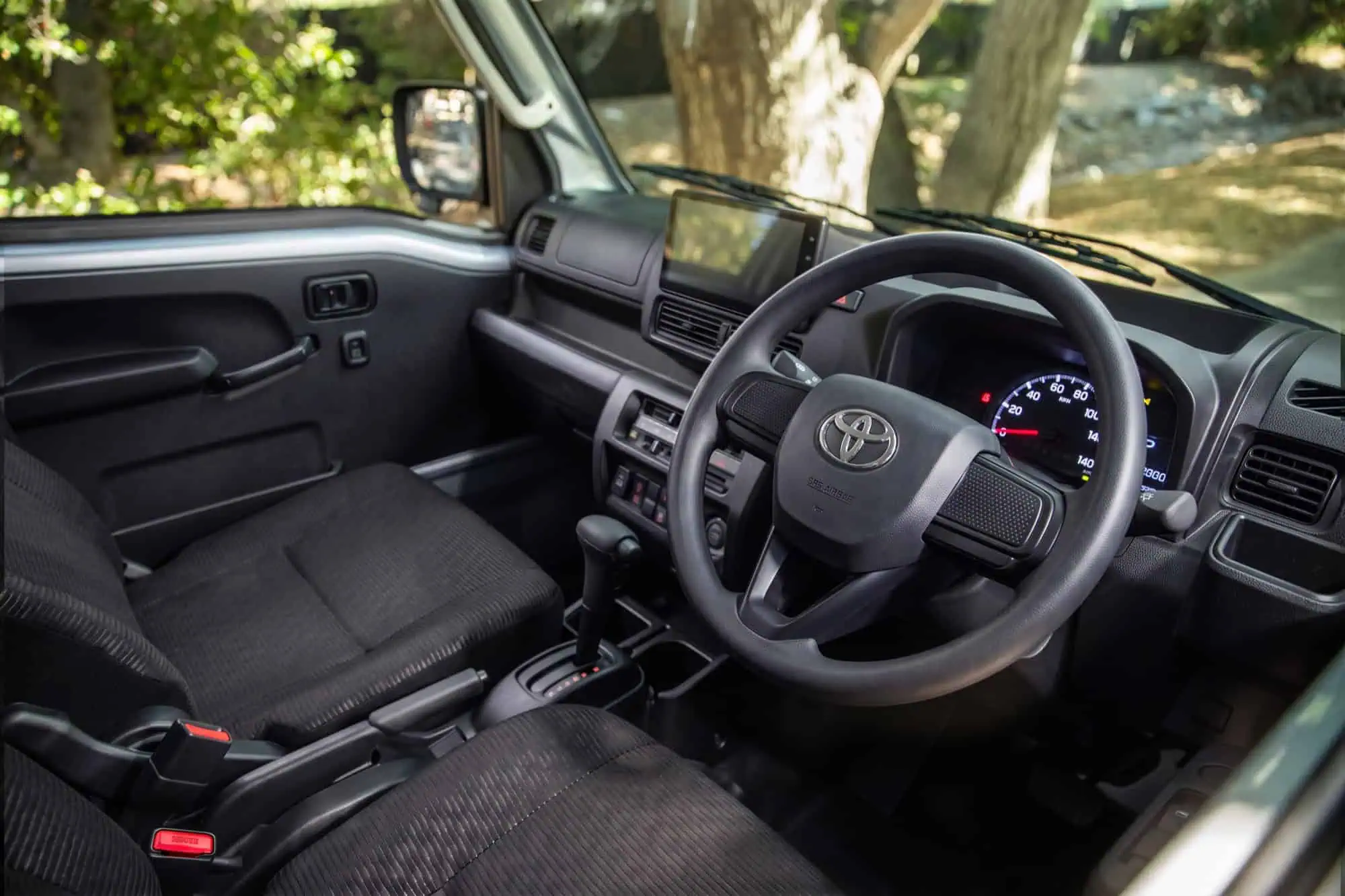
Inside, the extended cab gets a higher roofline so the seats can slide back and tilt, with a secure storage area behind them for tools and gear. The enclosed cabin has heat and air conditioning, so operators work comfortably through winter and summer. The KEI-01 is right-hand drive, so the driver sits on the opposite side from a typical U.S. car.
What a 25 MPH Federal Limit Means
The federal text sets the speed cap in plain terms. Under 49 CFR 571.500, the maximum speed a low-speed vehicle can attain in one mile (1.6 km) must not exceed 25 mph (40 km/h). Testers run the vehicle from a standing start and repeat the run in the opposite direction within 30 minutes.
The same standard lists the equipment every low-speed vehicle must carry: headlamps, front and rear turn signals, taillamps, stop lamps, reflectors, a parking brake, a windshield that meets the glazing standard, a vehicle identification number and a seat belt at each designated seat. The driver needs an exterior mirror on the driver’s side, plus either a passenger-side exterior mirror or an interior mirror. The vehicle must also meet the rear visibility requirements in FMVSS No. 111 and carry an alert sound. The regulation states its purpose as setting the minimum equipment appropriate for motor vehicle safety on public streets, roads and highways.
Federal law covers the vehicle. It does not tell a buyer which roads near them are open to a 25 mph truck, and Toyota has not addressed that in its announcement. Before ordering one, check with your state motor vehicle agency.
Who Gets One First, and Who Waits
Toyota calls the KEI-01 an intentionally low-volume, niche vehicle and is selling it first through a fleet pilot. The channel is a small network of Scion by Toyota dealers drawn from the existing Toyota dealer body. Toyota says limited retail sales are possible at a later date, depending on market conditions, customer demand and operations. No timeline is attached.
Toyota names five groups it has in mind: small business owners after a low-cost urban work vehicle, farmers and ranchers, municipalities, universities and corporate campuses, urban delivery and service companies, and outdoor hobbyists. The pitch is a work truck that skips the bulk and the bill of a standard pickup. Buyers who want highway speed and a full-size bed still have to look at trucks such as the 2027 Toyota Tundra.
Production stays in the United States. Toyota Motor Manufacturing Indiana starts assembling the KEI-01 in the second half of 2027, backed by a $34 million investment in new vehicle assembly operations and upgraded production and logistics infrastructure. With about 50 new jobs attached, that works out to roughly $680,000 of investment per position.
Scion Returns With Two Concepts and No Sales Plans for Them
The brand builds on the experimental spirit of the original Scion. Toyota’s design chief spoke for the brand. “The future of mobility will not be defined by one vehicle, one technology or one way of thinking,” said Simon Humphries, Chief Branding Officer, Head of Design, Toyota Motor Corporation. “Scion by Toyota gives us a place to challenge conventional thinking, explore new possibilities and create mobility in new ways. The KEI-01, SxS and BKE concepts each represent a different possibility—and together, they show what can happen when curiosity leads the way.”
Toyota also showed two concepts at the launch events. The SxS Concept, first shown at the 2025 SEMA Show, is a side-by-side off-road vehicle with a turbocharged four-cylinder hybrid powertrain that Toyota says produces more than 300 horsepower and a Silent Mode that runs on electric power. The BKE Concept is a small personal mobility idea with no specifications released. Toyota has announced no sales plan for either one. It says only that it will keep advancing the SxS and evaluating how it could reach enthusiasts.
What to watch next: which Toyota dealers join the Scion network, what the KEI-01 costs, and whether Toyota opens retail sales. Until those answers arrive, the KEI-01 is a fleet vehicle with a 25 mph ceiling and a 2027 start date.
Want more car content? Add us as a preferred source on Google to your favourites list for the best automotive news and analysis on the internet.
If you enjoyed this article, be sure to follow us on Microsoft Start.
Reviewed by Preetam Gadekar

Leave a Comment
More in News

US Traffic Deaths Fall 2.5% to 16,750, but 15 States and DC Rose

DOJ Sues Lyft for $53 Million, Alleging Rides Denied to Disabled Riders

Car Loan Debt Hits $1.73 Trillion as Contract Rates Climb to 11.46%

Used Diesel Sales Fell 5.3 Percent as 4.8 Percent of Buyers Chose Electric
Volkswagen Caddy Kombi Goes on Sale From £30,055 Before VAT With 775kg Payload
Trending on Motoring Chronicle

The Defender Redefined: Heritage Customs and Urban Automotive create world’s first new Defender Pickup

Why EV Charging Slows Down at 80% (The Science Explained Simply)

How to Challenge a £100 Toll Fine That Should Never Have Been Issued

How DVLA Data Reveals the Nissan Juke Is Now Britain’s Most Stolen Car