Every Driver Holding a Phone for Directions Risks 6 Points and a £200 Fine
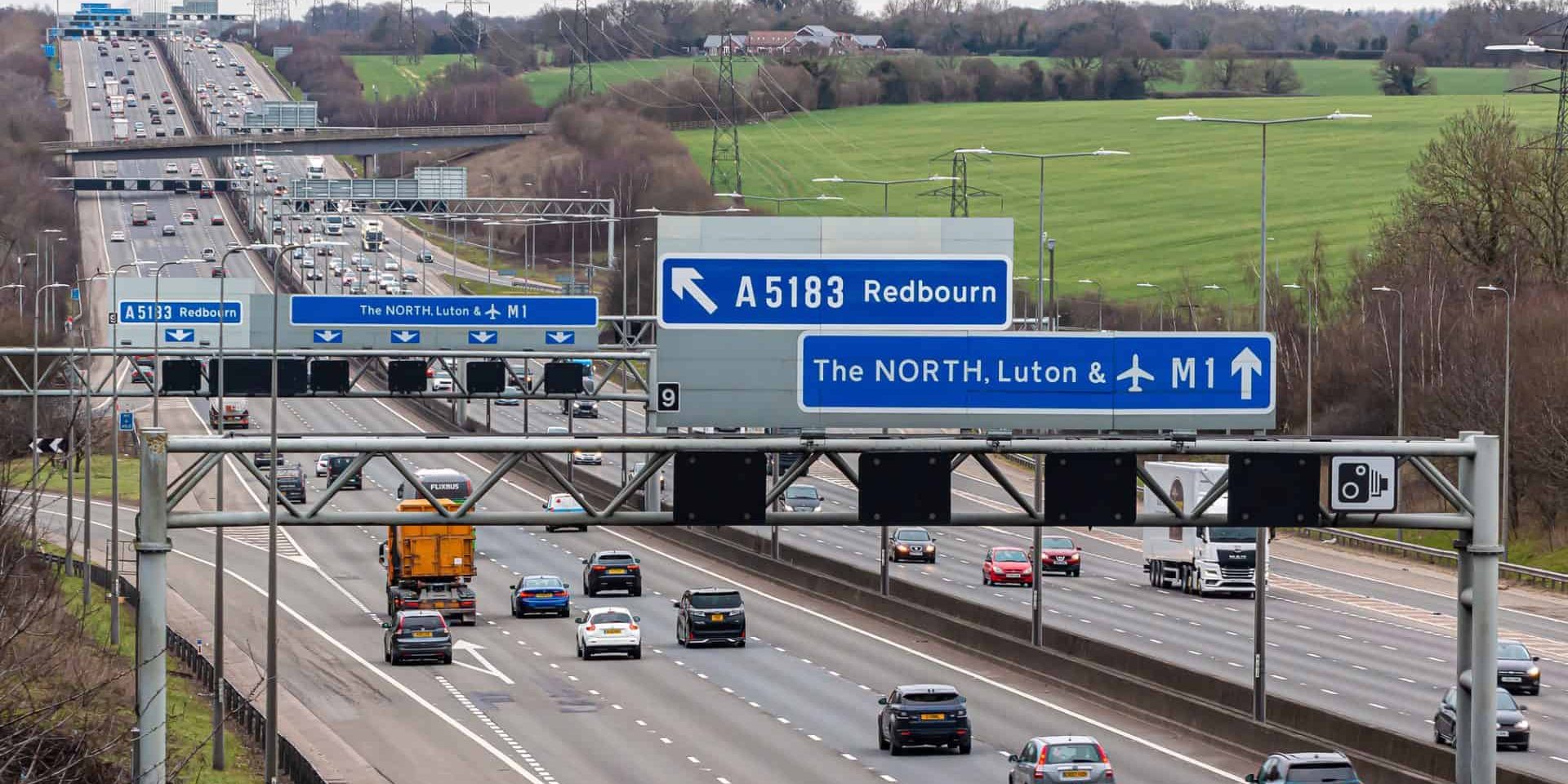
- Of 101 drivers pulled over on the M1 from 12 to 16 October, 46 were dealt with for using a phone, many with map apps running in their hands or in a cradle.
- Holding a phone or sat nav at the wheel means 6 points and a £200 fine, and a driver within two years of passing a test loses the licence.
- A cradle counts as hands-free only when the driver never holds the device and keeps full control, so the route belongs in the phone before the car moves.
A Phone in a Cradle Can Still Cost You Points
A cradle on the windscreen looks like permission, and the M1 stops show otherwise. A crew in an unmarked HGV spotted drivers on the motorway from 12 to 16 October, and 101 were pulled over in a pre-planned operation. Of those, 46 were dealt with for calling, texting, following a route or otherwise handling a phone. That is 45.5 percent, close to one driver in every two.
Nottinghamshire Police then warned drivers and urged them to mount their device properly and to leave it alone for the whole trip. Four of the drivers stopped were at the wheel of HGVs.
Sergeant Jim Carrington of the Roads Policing Team described the habit that the officers kept finding. “The bad news is that there are clearly others out there who think they can interact with a device held in a secure mount,” he said. He named searching for an address and looking for an alternative route as examples of a driver who is not paying proper attention to the road in front.
What the M1 Operation Found
Each driver was spotted on the M1 by the crew of the unmarked HGV, then dealt with by officers. Many of the drivers dealt with for phone offences were seen interacting with maps and route apps, with the phone either in a hand or secured in a cradle.
The cradle group deserves attention from every reader with a mount on the dashboard. The other 55 drivers stopped in the operation do not appear in the phone figure.
Sergeant Carrington put the stakes in plain terms. “At best, those consequences could be a fine and points on your licence; at worst, they could lead to a lengthy prison sentence,” he said. The government road safety campaign THINK! backs the concern with research: a driver who uses a phone is 4 times more likely to be in a crash, and reaction times are 2 times slower when texting on a hands-free phone than when drink driving, rising to 3 times slower with a handheld phone. At 30 mph a car travels 100 feet in 2.3 seconds, and THINK! pairs that figure with a warning that a split-second lapse in concentration could result in a crash.
What the Law Allows and What It Does Not
The rule on GOV.UK is plain. It is illegal to hold and use a phone, sat nav, tablet or any device that can send or receive data while driving or riding a motorcycle. A driver must not use a device in the hand for any reason, online or offline, which covers texting, calls, photos, video and browsing the web.
The law still applies at traffic lights, in a queue, when supervising a learner driver, in a car that switches the engine off when it stops, and when the device is offline or in flight mode. A red light is no exception, and neither is a standstill jam on the M1.
Four exceptions allow a device in the hand. A driver can call 999 or 112 in an emergency when it is unsafe or impractical to stop. A driver who is safely parked can use the phone. A driver can make a contactless payment in a vehicle that is not moving, for example at a drive-through restaurant. A driver can use the device to park the vehicle remotely.
Hands-free use is lawful as long as the driver never holds the device while using it. GOV.UK lists a Bluetooth headset, voice command, a dashboard holder or mat, a windscreen mount and a built-in sat nav as hands-free access. The device must not block the view of the road and traffic ahead.
Two further rules sit behind the headline offence. Drivers must stay in full control of the vehicle at all times, and police can stop a driver they think is distracted and can prosecute. THINK! adds that using a hands-free device, for route guidance for example, is not a specific offence in the way a handheld phone is. A driver whose attention slips and whose driving suffers can still be prosecuted.
The Penalty Ladder From 3 Points to a Ban
The law runs on two rungs, and the second can catch the cradle user. Holding and using a phone, sat nav, tablet or any data device means 6 penalty points and a £200 fine. A driver with no full view of the road and traffic ahead, or without proper control of the vehicle, can receive 3 points. A sat nav placed so that it blocks the view of the road is one case the 3 point rule covers.
Court sits above both. A driver taken to court can be banned from driving or riding and can be fined up to £1,000, or £2,500 for a lorry or bus driver.
Points last. GOV.UK says endorsements must stay on a driving record for 4 or 11 years, depending on the offence. A driver can be disqualified on building up 12 or more points within 3 years, and two phone offences at 6 points each reach 12. Two fixed penalty notices also cost £400 before any increase in insurance. THINK! lists higher insurance costs among the consequences of points, along with the risk of a ban and of losing a job. The cost of three points alone is set out in three penalty points and insurance costs, and six points sit above that.
New Drivers Lose Their Licence at 6 Points
The ladder is steeper for anyone who passed a test in the last 2 years. GOV.UK states that these drivers lose the licence for holding and using a phone, and THINK! says the same of anyone who collects just 6 points in the first 2 years after passing. One stop on the M1 can end a licence that is under two years old.
The penalty points guide adds that there are different rules for new drivers. The same cliff edge appears elsewhere on the road, for instance in the illegal tyres costing new drivers licences, but the phone is the offence a driver commits by choice, one glance at a time.
How to Set a Route Without Risking Points
The practical fix is a short list of habits, all of them drawn from the rules above.
Set the destination before the car moves. THINK! tells drivers to wait until they are safely parked before using a handheld phone, and the parked exception in the law agrees. Choose the route, check the alternatives and press start while the handbrake is on.
Mount the device where it leaves the road in view. A windscreen mount or dashboard holder counts as hands-free access, but the device must not block the view of the road and traffic ahead.
Use the voice. Voice command is on the GOV.UK hands-free list, and a built-in sat nav is on it too. Give the instruction aloud, and leave the screen to its job of showing the route.
Hand the job to a passenger. A passenger who searches for the next address or changes the music takes the whole question away. Sergeant Carrington named music and podcasts alongside route searches in his warning, so a driver who skips a track by touch is in the same position as one who types an address.
Stop before changing the plan. A driver who needs a new address or an alternative route can use the phone once safely parked, which is the first exception in the law. Motorway rules carry their own six point risks, as the case of ignoring a smart motorway red X shows.
Every task above can wait until the car stops. The penalty for not waiting is 6 points and £200 for holding the device, and a court can add a ban.
Want more car content? Add us as a preferred source on Google to your favourites list for the best automotive news and analysis on the internet.
If you enjoyed this article, be sure to follow us on Microsoft Start.

Leave a Comment
More in News

What Police Do When a Stranger Parks on Your Drive (and Who Fines Them)
How to Fix a Weak Car Heater Fan (Check the Fuse First)

Bexar County Drivers Must Now Pass an $18.50 Emissions Test Before Renewing Registration

2027 Nissan Rogue Hybrid Reaches Dealers This Week With an EPA-Estimated 38 MPG Combined
Indiana’s 60 Cent Gas Tax Break Ends Wednesday Unless the Governor Extends It Again
Trending on Motoring Chronicle

Why a Connecticut Nissan Dealer Just Had to Pay Customers Back $4 Million
Every Driver Faces Higher Crash Risk After Clocks Go Back as AA Claims Jump 8%
Your Car’s Tiny Bump Now Costs £3,699 To Fix. Here’s Why

Walmart’s EV Charging Network Quietly Becomes One of the Nation’s Largest