
Why EV Charging Slows Down at 80% (The Science Explained Simply)
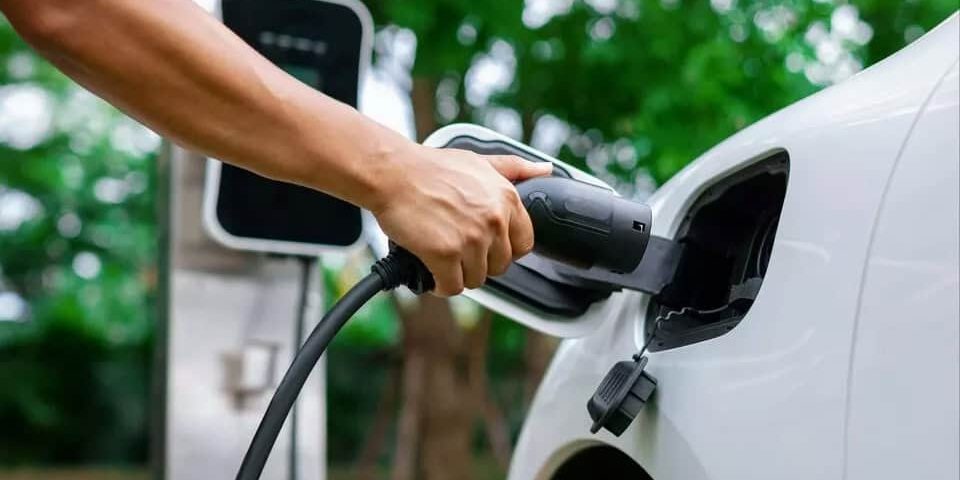
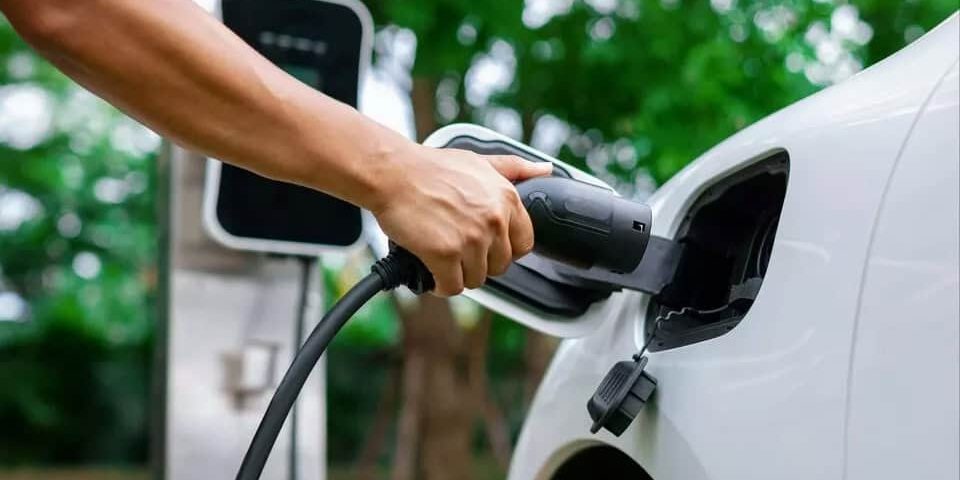
EV charging slows after 80 percent as the battery management system reduces current to protect cells from voltage-related damage. On a DC fast charger, 10 to 80 percent takes 20 to 35 minutes. The final 20 percent can take another 25 to 45 minutes on the same charger. That deliberate slowdown is the most important factor in planning charge stops on a long journey.
What Causes the Charging Speed to Drop at 80 Percent?
The constant current to constant voltage transition
Every lithium-ion battery, whether it is in a phone, a laptop, or an electric car, follows the same fundamental charging pattern known as CC/CV: constant current followed by constant voltage. During the first phase, the charger pushes a steady, high current into the battery cells. The voltage across each cell rises gradually as energy is stored. This phase is fast and efficient, and it is where the bulk of the energy transfer happens.
As the cells approach roughly 80 percent of their capacity, the voltage nears the maximum safe operating limit for that cell chemistry. For the most common EV cell type, nickel manganese cobalt (NMC), the maximum safe voltage is approximately 4.2 volts per cell. Pushing current into a cell that is already close to its voltage ceiling risks a chain of damaging chemical reactions. At this point, the battery management system (BMS) switches to the second phase: it holds the voltage constant at the safe maximum and allows the current to taper down naturally.
The result is a dramatic drop in charging power. A vehicle that was accepting 150 kW at 30 percent state of charge might be accepting 50 kW at 85 percent and 20 kW at 95 percent. The charger hardware is capable of delivering full power the entire time. It is the vehicle’s BMS that instructs the charger to reduce output, and it does so to protect the cells from permanent damage.
Why the cells cannot accept full power when nearly full
Think of the battery cells as a room filling with people. When the room is half empty, new people walk in quickly through multiple doors. As the room fills up, movement slows. The last few people have to squeeze into remaining gaps carefully to avoid crushing anyone. The energy equivalent of “crushing” in a lithium-ion cell is a process called lithium plating.
Lithium plating occurs when lithium ions arrive at the anode (the negative electrode) faster than the anode’s graphite structure can absorb them. Instead of intercalating neatly between the graphite layers, the excess lithium deposits as metallic lithium on the surface of the anode. This plated lithium is permanently lost from the charge cycle, reducing the cell’s capacity irreversibly. In severe cases, lithium plating can form dendrites, needle-like structures that grow through the separator between electrodes and create internal short circuits.
The risk of lithium plating increases as the cell approaches full charge. At 30 percent state of charge, the graphite anode has plenty of open sites for lithium ions, and high-current charging can proceed safely. At 90 percent, most sites are occupied, and the remaining ions must find increasingly scarce open positions. Slowing the current gives each ion time to find its place in the anode structure without piling up on the surface. This is the physical reason the BMS tapers the current so aggressively in the upper portion of the charge.
Heat generation and thermal limits
Charging generates heat inside the battery cells. The amount of heat is proportional to the current: higher current means more heat. At low and mid states of charge, the thermal management system can typically handle the heat generated by full-speed charging. As the cells fill and the internal resistance rises (a natural consequence of the changing chemical state inside the cell), the same current produces more heat per unit of energy stored.
The BMS monitors cell temperatures continuously and will reduce charging power if any cell or module approaches its thermal limit, regardless of the state of charge. On a hot day after sustained motorway driving, the battery pack is likely already warm when plugged in, and the charging curve will be more conservative from the start. This is why some EV owners notice slower charging on the second or third fast charge stop of a long journey compared to the first.
Preconditioning helps. Most modern EVs can warm or cool the battery pack to an optimal temperature range while navigating to a charger. Tesla, Hyundai, Kia, BMW, and Porsche all offer automatic battery preconditioning when a fast charger is set as the destination in the navigation system. Arriving at the charger with the pack at the right temperature allows the vehicle to accept higher power for longer, reducing the overall charge time. Battery longevity is directly tied to how well the thermal management system controls heat during these high-power sessions.
How Does the Charging Curve Differ Between Vehicles?
800-volt vs 400-volt architecture
The Hyundai Ioniq 5, Kia EV6, and Porsche Taycan use 800-volt battery architecture. Most other EVs, including Tesla’s current lineup, use 400-volt systems. The voltage of the system affects the shape of the charging curve and how consistently the vehicle can maintain high charging speeds across the 10 to 80 percent range.
An 800-volt system can achieve the same charging power as a 400-volt system with half the current. Lower current means less heat per cell, which means the BMS allows high-power charging to continue deeper into the state of charge before tapering begins. The Ioniq 5 maintains a relatively flat charging rate between 10 and 80 percent, holding roughly 120 kW consistently across the range. The Tesla Model 3 peaks higher initially, exceeding 200 kW in some configurations, but tapers more steeply from around 50 percent onward.
In real-world testing, the Ioniq 5 charges from 10 to 80 percent in approximately 20 minutes on a 350 kW charger. The Tesla Model 3 Long Range completes the same range in approximately 25 minutes on a Tesla Supercharger. The Ioniq 5’s flatter curve means its average power across the session is closer to its peak power. The Model 3’s higher peak is offset by a steeper taper, and the total time ends up similar or slightly longer. The shape of the curve is more important than the headline peak charging speed.
Why some vehicles handle 50 to 80 percent better than others
The 50 to 80 percent range is where the biggest differences between vehicles appear. Some EVs begin tapering aggressively at 50 percent, while others hold strong until 70 or 75 percent. This mid-to-upper range behaviour is determined by the cell chemistry, the cooling system capacity, and how conservatively the manufacturer has programmed the BMS.
Vehicles with more conservative BMS tuning protect the battery for the long term but charge slower in the 50 to 80 percent range. Vehicles with more aggressive tuning charge faster but accept a slightly higher degradation rate over the battery’s life. Manufacturers make this trade-off based on their warranty commitments, their thermal management confidence, and their positioning in the market. A performance-oriented brand like Porsche tunes for speed; a value brand like Nissan tunes for longevity.
Software updates can change the charging curve. Tesla has adjusted its vehicles’ charging profiles multiple times through over-the-air updates, sometimes increasing peak speeds and sometimes adjusting the taper point. Ford, Rivian, and Volkswagen have done the same. A vehicle’s charging behaviour today is not necessarily the same as it was when it left the factory, and future updates could improve it further.
What Does This Mean for Road Trip Planning?
The 10 to 80 percent sweet spot
On a road trip, the most time-efficient approach is to charge from 10 to 80 percent at each stop rather than filling to 100 percent. The first 70 percent of the battery charges at high speed. The last 20 percent charges at a fraction of that speed. Waiting for the final 20 percent to complete adds 25 to 45 minutes to the stop for a relatively small gain in range.
On a 250-mile EV, the 80 percent mark gives approximately 200 miles of usable range. The extra 20 percent adds roughly 50 miles. In the time it takes to add those 50 miles at the tapered rate, you could drive to the next charger and begin another fast 10-to-80 session. The arithmetic almost always favours shorter, more frequent stops over fewer, longer stops that charge to 100 percent.
Route planning apps like A Better Route Planner (ABRP) and the built-in navigation systems in most modern EVs account for the charging curve automatically. They calculate the optimal state of charge to arrive at each charger and the optimal departure point, typically between 60 and 80 percent depending on the distance to the next stop. Trusting these systems produces faster overall journey times than manually filling to 100 percent at every opportunity.
When charging to 100 percent makes sense
Charging to 100 percent on a road trip is sensible when the next charger is far enough away that 80 percent will not get you there with a comfortable margin. In areas with sparse charging infrastructure, filling the pack completely gives the buffer needed to reach the next stop without range anxiety. It is also worth charging to full on the final stop of a journey if you will not have access to a charger at your destination.
At home, on a Level 2 wallbox, the slowdown above 80 percent is far less of an issue. A 7 kW home charger delivers power slowly enough that the BMS does not need to taper aggressively. The difference between charging to 80 percent and 100 percent on an overnight home charge is roughly one to two extra hours, and those hours happen while you are asleep. The long-term battery health consideration is more relevant than the time cost when charging at home. EV running costs compared to hybrids assume primarily home-based charging, where the full pack can be used without the time penalty of fast charger tapering.
The practical rule: set a daily home charge limit of 80 percent, raise it to 100 percent the night before a long trip, and plan fast charger stops around 10-to-80 sessions. This pattern maximises time efficiency at public chargers, protects the battery for the long term, and still gives you full range when you need it. Most modern EVs allow the charge limit to be set and scheduled through the vehicle’s touchscreen or companion phone app.
Does the 80 Percent Rule Hurt the Battery If You Ignore It?
The real impact of charging to 100 percent regularly
Charging to 100 percent every day does cause slightly faster degradation than stopping at 80 percent. Lithium-ion cells experience the most chemical stress when held at very high or very low states of charge for extended periods. A battery that sits at 100 percent overnight, every night, will degrade faster than one that sits at 80 percent.
The difference is real but not dramatic in modern EVs with well-designed battery management. A vehicle charged to 100 percent daily might show 2 to 3 percent more total capacity loss after five years compared to one charged to 80 percent daily. On a 250-mile EV, that translates to roughly 5 to 8 miles of range difference after half a decade. It is measurable but unlikely to affect the usability of the vehicle during a normal ownership period.
The fear around charging to 100 percent is largely inherited from early EV ownership experience, when battery management systems were less sophisticated and cell chemistry was less tolerant. Modern EVs maintain a hidden buffer at both ends of the displayed charge range. When the dashboard shows 100 percent, the cells are not at their absolute maximum voltage. The BMS has already stopped charging with a safety margin built in. Charging to the displayed 100 percent on a modern EV is not the same as pushing the cells to their physical limit.
EV Charging FAQs
Why does EV charging slow down after 80 percent?
The battery management system reduces current to protect the cells from voltage-related damage. As the battery fills, cell voltage rises toward its maximum safe limit. Pushing high current into nearly full cells risks lithium plating on the anode and permanent capacity loss. The BMS holds voltage constant and gradually reduces current, which is why the last 20 percent takes far longer than the first 80 percent.
How long does it take to charge an EV from 80 to 100 percent?
On a DC fast charger, 80 to 100 percent typically takes 25 to 45 minutes depending on the vehicle. This is roughly the same time it takes to charge from 10 to 80 percent, even though it represents only 20 percent of capacity. On a 7 kW home wallbox, the extra time is approximately 1 to 2 hours.
Should you only charge your EV to 80 percent?
For daily driving, 80 percent is the most efficient and battery-friendly target. It avoids the slow final charging phase and reduces time at high voltage states. Charging to 100 percent before a long trip is fine and will not cause meaningful damage as an occasional practice. The 80 percent recommendation is a long-term habit guideline, not a hard rule.
Does the charging curve affect all EVs the same way?
No. Vehicles with 800-volt architecture like the Hyundai Ioniq 5 maintain a flatter, more consistent charging rate across 10 to 80 percent. Vehicles with 400-volt systems like the Tesla Model 3 peak higher but taper more aggressively. All EVs slow above 80 percent, but some handle the 50 to 80 percent range much better than others.
Is it bad to fast charge your EV every day?
Using DC fast charging as your primary daily method does accelerate degradation, roughly doubling the annual rate compared to Level 2 AC charging. Occasional fast charging on road trips has negligible impact. For daily use, a home or workplace Level 2 charger is the best option for long-term battery health.
Sources

Leave a Comment
More in News

Are There Warning Signs Before a Cam Belt Breaks? Usually One, and It Is Not the Belt

Fife and Dundee Cars Fail 38.6% of First Attempt MOTs, Nearly Double Sutton’s 20.3%

How to Tell If Rust Will Fail Your MOT (and What a Repair Costs)

Why Your Car Clicks But Won’t Start (and What to Do)
Diesel Drivers Pay £31 More Per Tank Than a Year Ago, DESNZ Data Shows
Trending on Motoring Chronicle

What Does Sport Mode Do on a Car?

Why Britain’s Record Used Car Boom Is Creating a Facebook Marketplace VIN Fraud Crisis

What the Engine Management Light Actually Means (and When to Stop Driving)

FBI Investigates Dark Web Sale of 153 Million US Driver’s Licenses
