Turning 70 This Year? Here Is Everything You Need To Know About Renewing Your Driving Licence
More than 6.3 million UK driving licences are currently held by people aged 70 or over, a figure that has grown from one in nine licence holders a decade ago to nearly one in seven today. If you are approaching your 70th birthday, or have already passed it and are due for renewal, the process is different from the standard licence renewal that younger drivers go through. It is free, it does not require a driving test, and in most cases it can be completed online in minutes. But it does require a health declaration, and there are rules around medical conditions, eyesight, and notification requirements that every driver in this age group needs to understand.
The renewal system relies almost entirely on self-declaration. There is no mandatory medical examination, no eyesight test administered by the DVLA, and no independent assessment of your fitness to drive, though as we covered in our recent piece on proposed driving law changes, the Government is currently consulting on introducing mandatory eyesight testing for drivers aged 70 and over, with the consultation closing on 11 May 2026. Until that proposal becomes law, the current system remains in place, and understanding how it works is essential for every driver approaching this milestone.
What Happens When You Turn 70
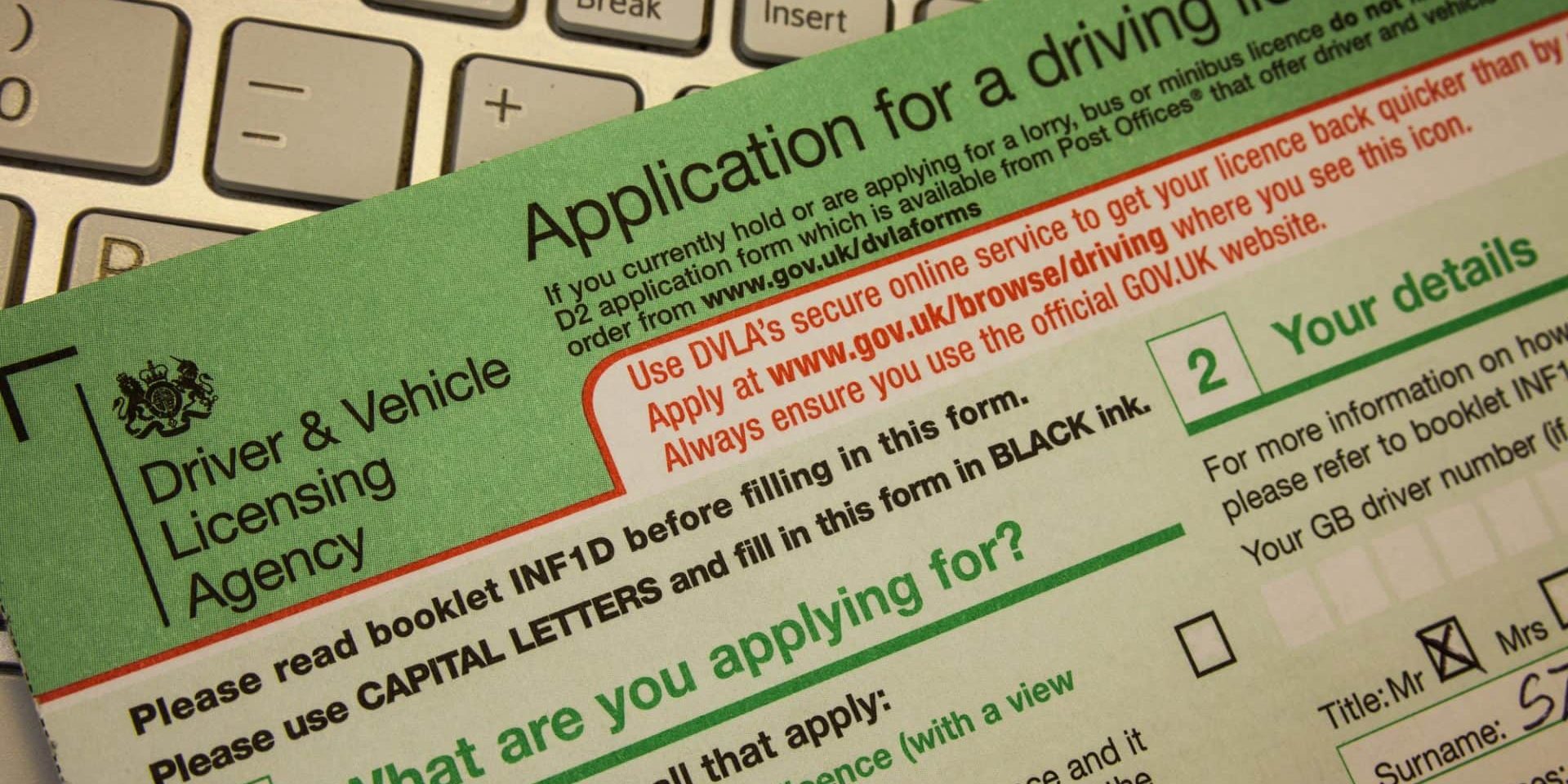
The DVLA will send you a D46P application form approximately 90 days before your 70th birthday. This is your reminder that your licence needs renewing, and it includes instructions for completing the process either online or by post.
Unlike a standard licence renewal, which happens every 10 years and costs £14 online, renewing at 70 and every three years thereafter is completely free. There is no charge whether you apply online or by post. The three-year renewal cycle continues for as long as you hold a licence, so you will go through this process again at 73, 76, 79, and so on.
The online process is the fastest option. You can apply through the GOV.UK website, and licences renewed online are typically issued within five days. You will need your National Insurance number, your current address details, and, if you need to update your photo, a valid UK passport. If you do not have a valid passport or do not need to change your photo, you can still apply online and the DVLA will send you a form to attach a photograph and return by post.
If you prefer to apply by post, you can complete the D46P form and return it to the DVLA. Processing by post typically takes around three weeks, though it can take longer if your medical or personal details need to be checked.
The Health Declaration Is The Most Important Part
The renewal form includes a health declaration that every applicant must complete. This is not a medical examination. It is a self-assessment in which you confirm whether you have any medical conditions that could affect your ability to drive safely.
By law, you are required to tell the DVLA about any medical condition or disability that could impair your driving. This obligation applies to all drivers, not just those over 70, but the three-year renewal cycle provides a regular checkpoint at which the question is formally asked. The legal duty to notify the DVLA applies at any time, not just at renewal. If you develop a relevant condition between renewals, you are required to report it as soon as you become aware of it.
The list of conditions that must be reported is extensive. It includes epilepsy, diabetes treated with insulin, heart conditions, stroke or transient ischaemic attack, sleep apnoea, neurological conditions such as Parkinson’s disease and multiple sclerosis, mental health conditions, alcohol or drug dependency, and any condition that affects your eyesight beyond what can be corrected with glasses or contact lenses. Dementia and cognitive impairment must also be reported, as must any condition that affects your ability to control a vehicle safely.
The DVLA provides an interactive tool on GOV.UK where you can check whether a specific condition needs to be reported. If in doubt, it is always better to report a condition than to risk driving without the DVLA’s knowledge, as failing to notify the DVLA of a relevant condition is a criminal offence that can carry a fine of up to £1,000 and, in the event of an accident, could invalidate your insurance.
What Happens If You Report A Medical Condition
Reporting a condition does not automatically mean you will lose your licence. The DVLA assesses each case individually, and the majority of people who report a medical condition are allowed to continue driving. In some cases, the DVLA may issue a shorter-duration licence, typically one, two, or three years, with a review at each renewal to ensure the condition remains stable.
In other cases, the DVLA may request further information from your GP or consultant, or may ask you to undergo an independent medical assessment or driving assessment. This process can take time, and drivers who are waiting for a decision may be issued with a temporary licence or advised on whether they can continue driving while the assessment is completed.
However, the system does result in a significant number of licences being revoked each year. Between 2022 and 2025, 32,944 car drivers lost or were refused licences for failing to meet eyesight standards alone. Drivers aged 70 to 79 accounted for the largest share, with 10,794 revocations in that age group. On average, around 8,000 drivers each year are told they can no longer drive because of poor eyesight. Since 2014, nearly 650,000 drivers across all age groups have lost their licences on medical grounds, with conditions such as alcohol dependency, epilepsy and dementia among the most common causes.
These numbers underline the importance of the health declaration process. The system exists to identify drivers whose conditions have progressed to the point where driving is no longer safe, and while losing a licence is a significant and often distressing event, as we explored in our piece on the emotional impact of giving up driving, the consequences of continuing to drive with an unreported condition can be far worse.
The Eyesight Standard You Must Meet
The current eyesight requirement for driving in the UK is straightforward. You must be able to read a car number plate from a distance of 20 metres, with glasses or contact lenses if you normally wear them. You must also meet a minimum standard of visual acuity and have an adequate field of vision.
There is no formal eyesight test administered as part of the licence renewal process. The requirement is self-declared. You confirm on the renewal form that you meet the eyesight standard, and the DVLA takes you at your word. This is the element of the system that the Government’s current consultation is proposing to change. Under the proposed reform, drivers aged 70 and over would be required to undergo a mandatory eyesight test at each three-year renewal, replacing self-declaration with an independently verified result.
Until that change is implemented, the responsibility sits with the individual driver. If you are unsure whether your eyesight meets the standard, the simplest check is to go outside and attempt to read a number plate at 20 metres. If you cannot, you should visit an optician before driving again. Regular eye tests, at least every two years and more frequently if advised by your optician, are strongly recommended for all drivers over 70 regardless of whether you believe your vision is adequate.
Can You Drive While Waiting For Your New Licence?
Yes, in most cases. If you have submitted your renewal application and are waiting for your new licence to arrive, you can continue driving as long as you meet all of the following conditions: you applied before your licence expired or within one year of its expiry, you are not currently disqualified from driving, your licence has not been revoked for medical reasons, and you have no medical condition that would prevent you from driving safely.
This provision is important because it prevents a gap in legal driving ability during the processing period. If your licence expired recently and you have submitted your renewal, you are not driving illegally while you wait. However, if your licence expired more than a year ago and you have not renewed, this provision does not apply and you must not drive until your new licence is issued.
It is worth keeping a copy of your renewal application or confirmation email as evidence that you have applied, in case you are stopped by police during the processing period.
What About Insurance?
A common concern among drivers renewing at 70 is whether their car insurance remains valid during and after the renewal. The answer is that your insurance should remain valid as long as you hold a valid licence or have a pending renewal application that entitles you to continue driving. However, you must inform your insurance company of any medical conditions that you have reported to the DVLA, as failing to do so could invalidate your policy.
Some insurers may adjust premiums or terms based on age or medical conditions, but it is illegal for an insurer to refuse cover solely on the basis of age. If you find that your current insurer has significantly increased your premium at renewal, it is worth shopping around, as pricing varies considerably between providers for older drivers.
The Bigger Picture
The number of older drivers on UK roads is growing steadily. As we reported in our coverage of the latest SMMT Motorparc data, 6.3 million licence holders are now aged 70 or over, with 160,521 aged 90 or above, more than double the figure recorded in 2012. One in seven licences in the UK is held by someone over 70, and that proportion is expected to reach one in six before the end of the decade.
The vast majority of these drivers are safe, experienced, and fully capable of continuing behind the wheel. Research consistently shows that older drivers are among the lowest-risk groups on the road in terms of accident rates per licence holder, partly because many self-regulate by avoiding motorways, night driving, or unfamiliar routes as they age. The renewal process at 70 is not designed to push older drivers off the road. It is designed to identify the minority whose health has deteriorated to the point where driving is no longer safe, and to give them and their families a framework for managing that transition.
Understanding the process, completing the health declaration honestly, keeping your eyesight checked, and reporting any new conditions promptly are the responsibilities that come with the privilege of continuing to drive beyond 70. For the overwhelming majority of older drivers, the renewal will be a quick, free, and straightforward process that results in a fresh three-year licence and no disruption to their independence.
Sources
GOV.UK: Renew your driving licence if you’re 70 or over
GOV.UK: Medical conditions, disabilities and driving
GOV.UK: Check if a health condition affects your driving
GOV.UK: Introducing mandatory eyesight testing for older drivers – consultation

Leave a Comment
More in News

How to Clear a Musty Car AC Smell Before It Costs a £300 Repair

14 Percent of Keyless Car Owners Faced a Relay Theft Attempt, DVLA Data Shows

I travelled down the Champs-Élysées and around the Arc de Triomphe in a self-driving car

Every New Car Buyer Could Lose EV Discounts as Manufacturer Fines Drop by £3,000

What the Government’s Zero VAT Cut on Home Power Means for Every Electric Driver
Trending on Motoring Chronicle
What Labour’s New Highways Bill Means for Every Driver Who Could Soon Pay Tolls on New Roads

Every UK Driver Risks a £1,000 Fine Over These Common Winter Driving Myths

Maserati 200S on show at LARUSMIANI Automotive Gallery during Milan Design Week 2025 [Photo Gallery]

Dawn of a new era: the Vision V provides a glimpse of a new segment of luxury limousines