
There Are 42.5 Million Vehicles On UK Roads. Nearly Half The Cars Are Over A Decade Old


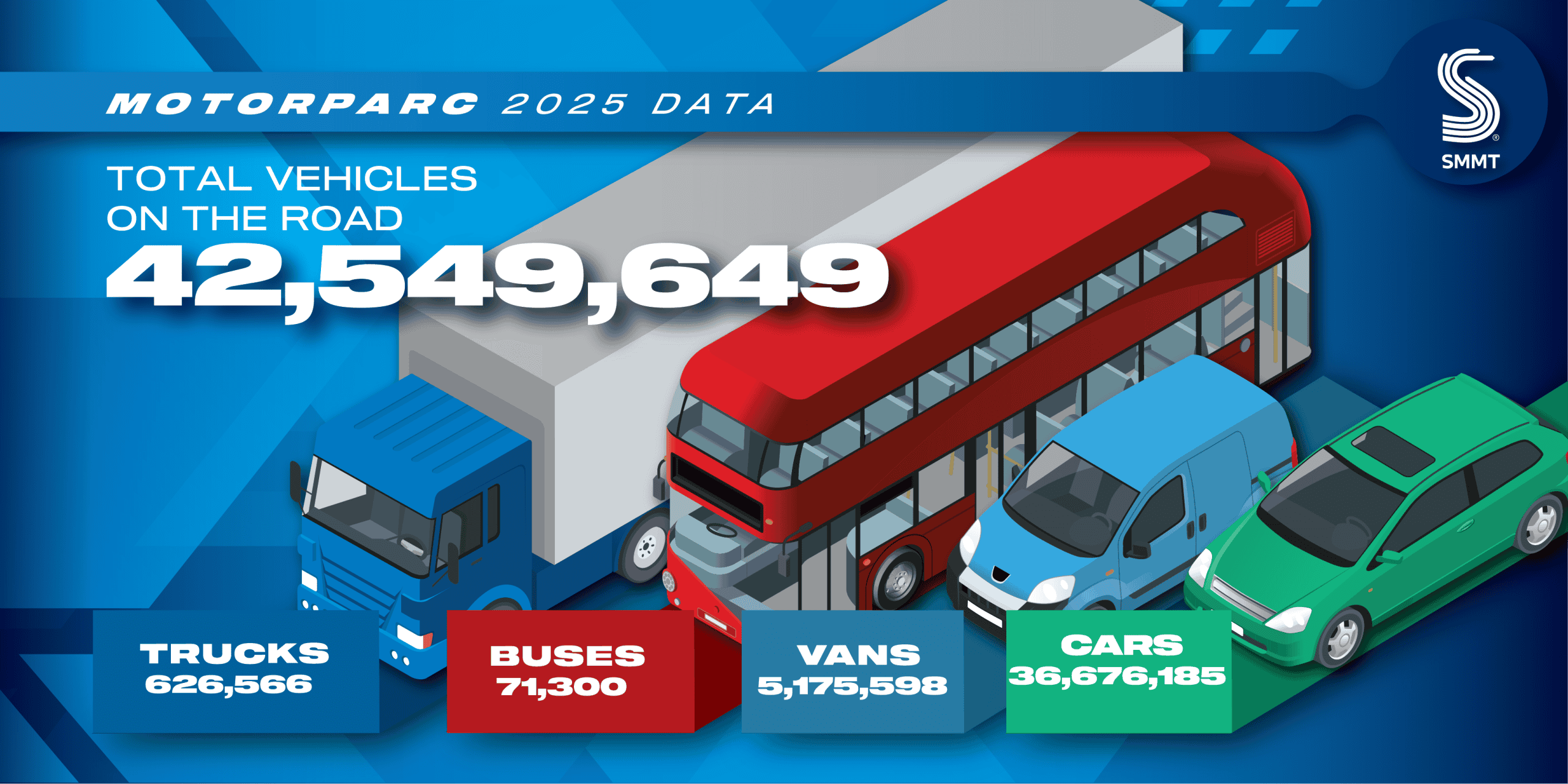
Britain’s roads have never been busier. New data from the Society of Motor Manufacturers and Traders reveals that the total number of vehicles in use in the UK reached 42,549,649 in 2025, a 1.4 per cent increase on the previous year and a new record. The car parc alone grew by more than half a million units to 36,676,185, marking the fourth consecutive year of growth and the second largest volume increase since 2016.
The numbers tell two stories simultaneously. The first is encouraging: electric vehicle uptake is accelerating, emissions are falling, and the mix of cars on the road is gradually shifting toward cleaner technology. The second is less comfortable: UK drivers are holding onto their cars for longer than ever before, the average car is now nearly a decade old, and the pace of fleet renewal is slowing at precisely the point where it needs to be accelerating.
Mike Hawes, SMMT Chief Executive, said: “Britain’s vehicle parc is growing with record numbers of newer zero emission vehicles on our roads driving environmental, economic and safety benefits. This is grounds for celebration but the pace has to quicken if ambition is to match demand with the average age of vehicles on our roads actually rising. A holistic review of the UK’s ZEV transition is essential, therefore, to ensure that every business and consumer can make the switch so that we can deliver net zero by 2050.”
The Fleet Is Getting Older
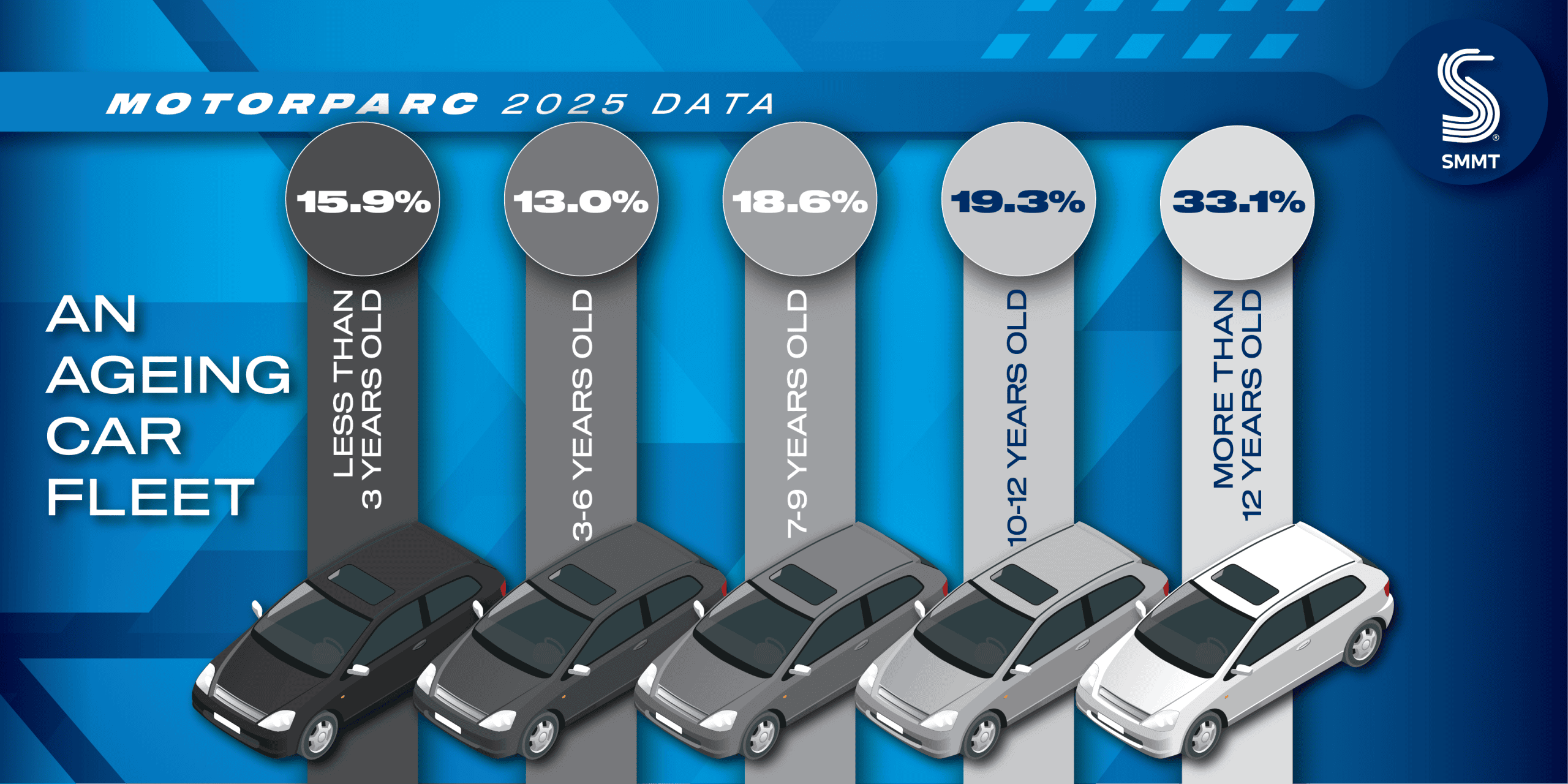
The headline that should concern the industry and policymakers alike is the age of the cars on UK roads. A record 45.7 per cent of all cars in use have now been in service for more than 10 years, up from 43.4 per cent in 2024. The average age of a car on British roads has risen to 9.7 years, up from 9.5 in 2024 and a new record high.
That trend is being driven by cost-of-living pressures and economic uncertainty. New car prices have risen significantly in recent years, and even the used market has seen sustained price inflation. For millions of UK drivers, keeping an older car on the road is not a lifestyle choice. It is a financial necessity. The result is a fleet that is ageing faster than it is being renewed, with older, typically less efficient and higher-emitting vehicles remaining in circulation for longer.
The environmental and safety implications are significant. Older cars generally produce higher emissions, lack the latest active safety technology, and are less fuel-efficient than their modern replacements. Every year that a 15-year-old diesel remains on the road instead of being replaced by a newer petrol, hybrid or electric alternative is a year of higher emissions, higher fuel costs for the owner, and a missed opportunity to improve air quality.
Electric Vehicles Are Growing Fast From A Small Base
The EV numbers in the data are genuinely positive. There are now 1,797,809 battery electric cars on UK roads, a 34.7 per cent increase on 2024. That means nearly five per cent of all cars in the UK are now fully electric. One in 22 vehicles of all types is zero emission, and one in nine is electrified in some form when plug-in hybrids, conventional hybrids and fuel cell vehicles are included, taking the total electrified fleet to 4.6 million.
The growth has been driven by a combination of unprecedented manufacturer discounting, government incentives, and an expanding range of models available at more accessible price points. The new car market grew by 3.5 per cent in 2025, and a significant proportion of that growth came from electric and electrified models.
However, there is a detail in the data that reveals how unevenly EV adoption is distributed. More than half of all zero emission cars, 55.4 per cent, are registered to companies rather than private individuals. That means the majority of BEVs on UK roads are company cars, fleet vehicles, or business-registered units. Private buyers still represent the minority of EV adopters, which suggests that the Benefit in Kind tax advantages for company car drivers remain a far more powerful incentive than anything currently available to retail customers.
Until private buyers adopt EVs at a rate that matches company registrations, the transition will remain heavily dependent on fleet purchasing decisions and corporate tax policy. If either of those incentives were to change, the growth rate could slow significantly.
Electric Vans Pass 100,000 For The First Time
The commercial vehicle data shows a similar growth trajectory. There are now 113,256 battery electric vans on UK roads, a 34.6 per cent increase and the first time the figure has exceeded 100,000. That represents 2.2 per cent of the total van fleet of 5,175,598, which itself hit a record high.
For businesses operating urban delivery fleets, the economics of electric vans are increasingly favourable, particularly in cities with clean air zones where older diesel vans face daily charges. The running cost advantage of an electric van over diesel in stop-start urban driving is substantial, and the growing availability of models from manufacturers including Ford, Mercedes, Volkswagen and Stellantis brands is giving fleet operators more choice than ever.
Zero emission trucks doubled to 1,056 units, though that still represents less than 0.2 per cent of the 626,566 heavy goods vehicles in use. Long-haul trucking remains one of the hardest sectors to electrify, with battery weight, charging infrastructure and duty cycles all presenting challenges that do not apply to cars or vans.
Zero Emission Buses Vary Wildly By Region
The bus data reveals a stark regional divide in electric public transport. London leads by a significant margin, with 23.9 per cent of its bus fleet now zero emission. Scotland sits second at 9.7 per cent. At the other end of the scale, passengers in the West Midlands are least likely to travel on an electric bus, with just 0.8 per cent of the fleet running on battery or hydrogen power.
The overall bus and coach fleet grew for the first time since 2021, rising 0.2 per cent to 71,300 units. That remains a third lower than the sector’s peak of 103,817 in 2007, but the new bus market reached its highest level since 2008 last year, with 2,523 zero emission buses entering service. The average age of buses fell slightly to 13.1 years from 13.4, suggesting that operators are beginning to invest in fleet renewal after years of underinvestment.
What Britain Is Actually Driving
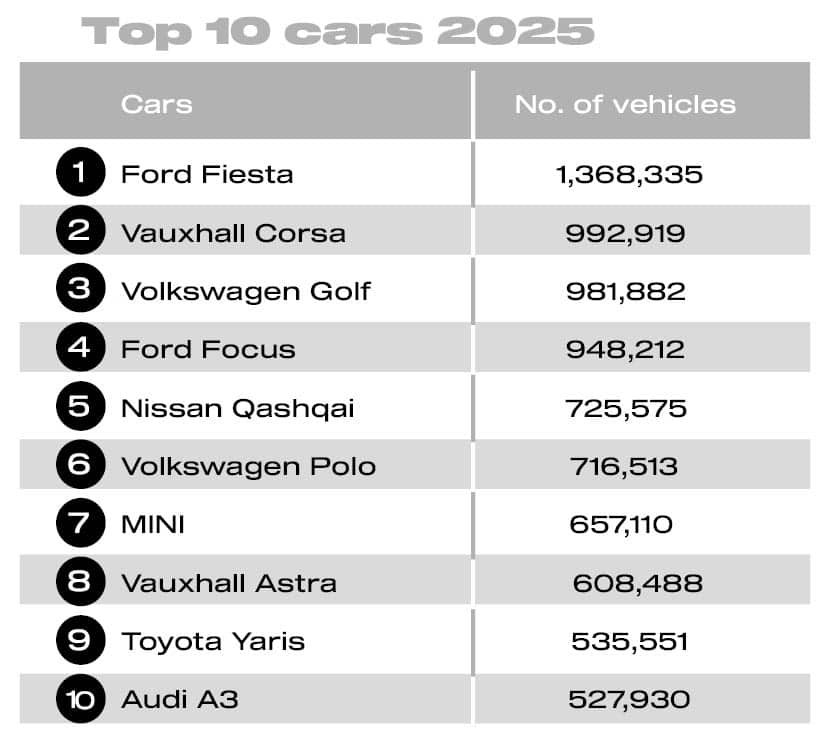
The data on what cars are most common on UK roads provides a snapshot of the nation’s driving habits that no new car sales chart can match. The Ford Fiesta remains the most common car on British roads despite being discontinued, with nearly 1.4 million still in daily use, accounting for 3.7 per cent of the entire car parc. The Vauxhall Corsa, Volkswagen Golf, Ford Focus and Nissan Qashqai complete the top five, and together these five models account for 13.7 per cent of all cars on the road.
Superminis remain the most popular segment by a wide margin, with 11.9 million on the road. Lower medium cars follow at 9.5 million, and dual purpose vehicles, the category that includes crossovers and SUVs, sit third at 6.7 million. Together, these three segments account for 77 per cent of the entire car parc.
German-built cars dominate the fleet, representing 29.2 per cent of all cars in use. British-built cars account for 14 per cent, followed by Spanish at 10.2 per cent, French at 6.5 per cent and Japanese at 6.1 per cent. Chinese-assembled cars, a category that includes some Western brands manufactured in China, now account for 2.2 per cent of the fleet, a figure that is likely to grow as more Chinese-built EVs enter the UK market.
The picture is different for trucks, where British-built vehicles lead at 28 per cent of HGVs in use, followed by German at 21.3 per cent, Italian at 14.7 per cent, Dutch at 12.2 per cent and Swedish at 10.6 per cent.
Colour, Gender And Gearbox Trends
The less consequential but equally revealing data points in the SMMT report paint a picture of British driving preferences that extends well beyond powertrain choices.
More than half of all cars on UK roads come in just three colours. Black is the most popular at 20.3 per cent, followed by grey and blue, with the three together accounting for 55.5 per cent of the fleet. At the other end of the spectrum, pink is the rarest colour, with just 24,594 cars in use, representing 0.1 per cent of the parc.
The gender split of car ownership is gradually shifting. Among cars where the gender of the registered keeper is identified, excluding company cars and unspecified registrations, 40.8 per cent are now registered to women, up from 39.7 per cent in 2014. One in 10 cars overall, 10.4 per cent, is registered to a company.
Automatic transmissions are gaining ground rapidly. The number of automatic cars on UK roads rose by 50.5 per cent in 2025 to 10.5 million. Manual cars still outnumber them significantly, with 21.2 million in use following a 39.8 per cent uplift, but the direction of travel is clear. As EVs, which are exclusively automatic, continue to grow their share of the parc, and as new petrol and diesel models increasingly default to automatic gearboxes, the manual transmission is on a long-term trajectory toward minority status.
The Bigger Picture
The SMMT Motorparc data confirms what most drivers already sense intuitively: there are more cars on the road than ever, those cars are getting older, and while electric vehicles are growing rapidly, they still represent a small fraction of the total fleet. The transition is happening, but it is happening unevenly, with company cars leading the charge and private buyers lagging behind, with London’s buses going electric while the West Midlands waits, and with nearly half the car parc now over a decade old while new car prices continue to climb.
The challenge for the industry and for government is not just increasing the rate at which new EVs enter the fleet. It is also addressing the growing number of older vehicles that remain in use because their owners cannot afford to replace them. Until the economics of fleet renewal work for private buyers as well as they do for company car drivers, the average age of UK cars will continue to rise, and the environmental and safety benefits of newer, cleaner vehicles will take longer to materialise across the fleet as a whole.
Sources

Leave a Comment
More in News

How to Remove Moisture From Inside Your Headlight Before It Costs You £500

What Red and Amber Warning Lights Actually Mean (and Which Fail an MOT)

How to De-Ice Your Windscreen Fast Without Cracking It (and Staying Legal)

New Cars Face Euro 7 Rules From 29 November With a £264 Price Rise
What the Traffic Penalty Tribunal’s 33 Percent Success Rate Means for Every Driver
Trending on Motoring Chronicle

BMW Recalls 27,720 Cars Over a Driveshaft Flaw That Can Cause Rollaway

How to Find the Most Reliable EV Charging Stations as Failures Hit a Record Low
Mazda CX-5 review: New, improved bestseller needs a full hybrid boost

How to Drive Through Flood Water (and What to Do If It Stalls)
