Why Maine EV Buyers Have Until September 30 to Claim an Extra $1,000
- Low-income Maine drivers can get up to $8,000 toward a new electric vehicle and $4,000 toward a used one, but a $1,000 bonus inside that total disappears after September 30.
- The federal $7,500 EV tax credit ended for good on September 30, 2025, leaving state and utility programs as the main incentive left for most buyers nationwide.
- Qualifying requires income verification, an all-electric vehicle under strict price and mileage caps, and an approved home charger installed within 90 days of purchase.
A three-week window on Maine’s richest EV rebate
Maine runs one of the most generous state EV rebate programs left in the country, and part of it is about to shrink. Efficiency Maine, the quasi-state agency that administers the state’s electric vehicle incentives, currently offers low-income residents up to $8,000 toward a new all-electric vehicle or $4,000 toward a used one. Moderate-income residents can claim $6,000 new or $3,000 used. Every one of those figures includes a $1,000 bonus rebate that expires September 30, 2026. After that date, the same buyers drop back to the base rebate amounts, a difference that can be the gap between affording a used EV and not.
The rebate is not automatic. Buyers must complete income verification with Efficiency Maine before shopping, then purchase an approved off-peak charger through the agency alongside the vehicle. Efficiency Maine says to allow five business days for eligibility notification, which means anyone hoping to lock in the bonus needs to start the paperwork now rather than waiting until the final week of September.
Who qualifies and what the vehicle has to look like
Low-income eligibility requires a household member enrolled in MaineCare, HEAP, SNAP or TANF, plus an income verification letter from Efficiency Maine. Moderate-income buyers qualify with an adjusted gross income under $70,000 for individual filers or $100,000 for joint filers. Every applicant needs a valid Maine driver’s license, and the rebate is capped at one per person or two per household in any 36-month period.
The vehicle rules are specific. Only all-electric, battery-powered vehicles qualify; plug-in hybrids and regular hybrids are excluded entirely. New vehicles must appear on Efficiency Maine’s approved list and carry a sticker price no higher than $80,000 for pickup trucks and commercial vans or $55,000 for other new models. Used vehicles cannot cost more than $50,000, must be model year 2020 or newer, and cannot show more than 72,000 miles on the odometer. Buyers must purchase the car outright rather than lease it, and it has to be titled in the rebate recipient’s name.
The charger requirement that trips up buyers
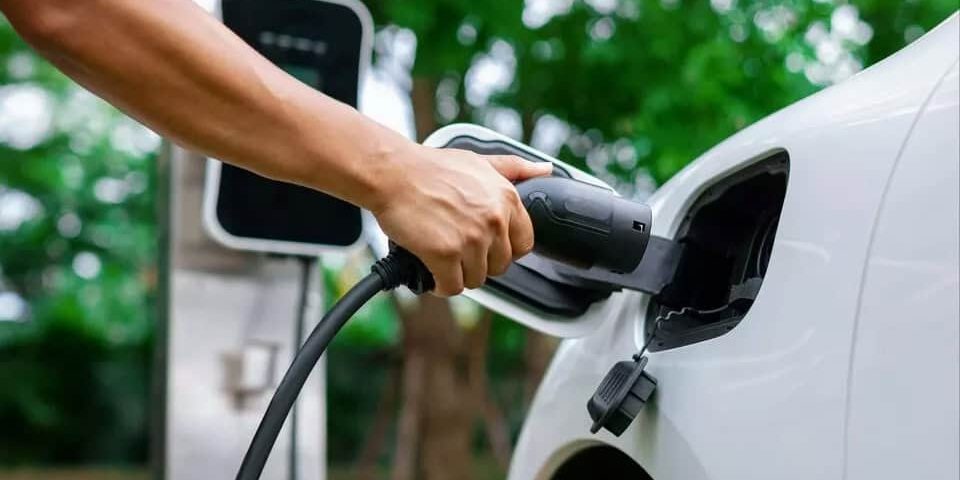
The rebate is bundled with a mandatory off-peak charger purchase, and this is where the program catches people off guard. Buyers must order the charger through Efficiency Maine before visiting the dealership, then install it at home and connect it to the internet within 90 days of taking delivery of the vehicle. Installation typically runs about $1,000 before hardware costs, according to Efficiency Maine, and the location has to allow regular home parking rather than street parking alone. Owners then need to avoid charging between 5 p.m. and 9 p.m. on weekdays and keep the vehicle registered in Maine for at least 36 months, or risk losing the rebate.
Buyers working with a participating dealer bring their income verification letter and charger order confirmation to the lot and complete a rebate claim form at the point of sale, so the discount applies immediately rather than arriving as a reimbursement later. Buyers ordering directly from a manufacturer, an option limited to Tesla, Rivian, Polestar and Slate, instead submit a claim form within 60 days of purchase and wait up to six weeks for processing.
Why the timing counts beyond Maine
The stakes are higher than in past years: the rules around federal EV incentives have changed sharply. The $7,500 federal credit for new electric vehicles and the $4,000 credit for used EVs both ended for good on September 30, 2025, after the One Big Beautiful Bill Act eliminated the clean-vehicle credit program. Buyers who missed that deadline lost access to what had been the single biggest EV discount available anywhere in the country, and no replacement federal purchase credit exists.
What is left is a patchwork of state and utility programs that vary sharply by location, funding level and income rules. California, New York, Colorado, Massachusetts, Oregon and Washington all still run their own rebate or tax exemption programs, some worth up to $7,500 depending on income and vehicle price, but availability depends on continued state funding that can run out mid-year. A separate federal home-charger tax credit, worth 30 percent of installation costs up to $1,000, remains available only through June 30, 2026, and only for installations in specific eligible census tracts. Buyers of new, US-assembled vehicles can also deduct up to $10,000 a year in loan interest through 2028 under a separate federal provision, though that deduction phases out above certain income levels and applies to any qualifying new vehicle, not just EVs. Maine’s program is unusual nationally for stacking a high-dollar rebate with a mandatory charger purchase, which lowers the total cost of home charging at the same time it lowers the price of the vehicle itself.
Efficiency Maine’s broader EV Accelerator program, which this low- and moderate-income track sits inside, has offered rebates ranging from $1,000 to $7,500 for standard buyers from the start, with a separate track for used vehicles capped at $2,500 for qualifying low-income residents outside this current bonus period. Thousands of Mainers now drive an electric vehicle purchased with help from the program, according to the agency, making Maine one of the few rural, cold-climate states with a rebate program aggressive enough to compete with EV incentives offered in larger coastal states.
What to do before the deadline
Cold-climate states like Maine have historically lagged EV adoption over range concerns in winter and a thinner public charging network than California or the Pacific Northwest. A rebate this large narrows the up-front cost gap between an electric vehicle and a comparable gas model, and Maine drivers who make the switch typically report much lower fuel and maintenance costs over time: electricity in Maine runs cheaper per mile than gasoline, and electric drivetrains carry fewer moving parts that need service. Those long-run savings do not show up on the sticker price, which is part of why the state pairs the rebate with a home charger requirement. Without a reliable, affordable way to charge overnight, the fuel savings that make an EV worthwhile in the first place become harder to capture.
Anyone in Maine who thinks they might qualify should start the income verification process immediately rather than waiting for a specific car to shop for. The verification takes up to five business days on its own, and the charger order and dealer paperwork add more time on top of that. Buyers should also check the eligible vehicle list on Efficiency Maine’s website before falling for a specific model. Not every EV for sale in the state qualifies for the program.
Efficiency Maine’s terms note that the program and its incentive amounts are subject to change without notice beyond the announced bonus expiration, so drivers close to qualifying should treat September 30 as a hard deadline rather than a soft target. Program funding for the base rebate has continued into prior years, but the extra $1,000 has consistently been the part cut first when the agency adjusts its budget.
Sources:

Leave a Comment
More in News

Why a Grinding Noise From Your Wheel Could Cost You £250 and Fail Your MOT
What a £10 Per Kilogram Car Tax Could Cost Drivers if Treasury Adopts It
What the Frozen £40,000 Car Tax Threshold Means for Almost a Million UK Drivers
DfT Asks Whether Fake Number Plates and Untaxed Cars Should Mean Points and Seizure

Every Driver Faces Higher Crash Risk After Clocks Go Back as AA Claims Jump 8%
Trending on Motoring Chronicle
Councils Banked Over £80 Million in Bus Lane Fines as Camera Penalties Surge

Why The Average Car Repair Bill Just Hit £3,699 Even As Premiums Hold

The new Flying Spur: the most powerful Bentley four-door ever [Photo Gallery]
Hot Hatch Goes Watt Hatch: VW Reveals 226PS Electric ID. Polo GTI From €39,000