What DVSA Data Reveals About the Postcodes With the Worst Driving Test Pass Rates
- The UK driving test pass rate is 48.7 percent, but DVSA data shows it ranges from as low as 33 percent at the hardest centres to 67 percent at the easiest.
- Busy city centres in London and the West Midlands cluster at the bottom of the table, while small town and rural centres dominate the top.
- Each failed test costs £62 on a weekday or £75 in the evening or at weekends, so choosing a realistic centre can save learners a genuine amount of money.
Where you sit your test can matter as much as how well you have learned to drive
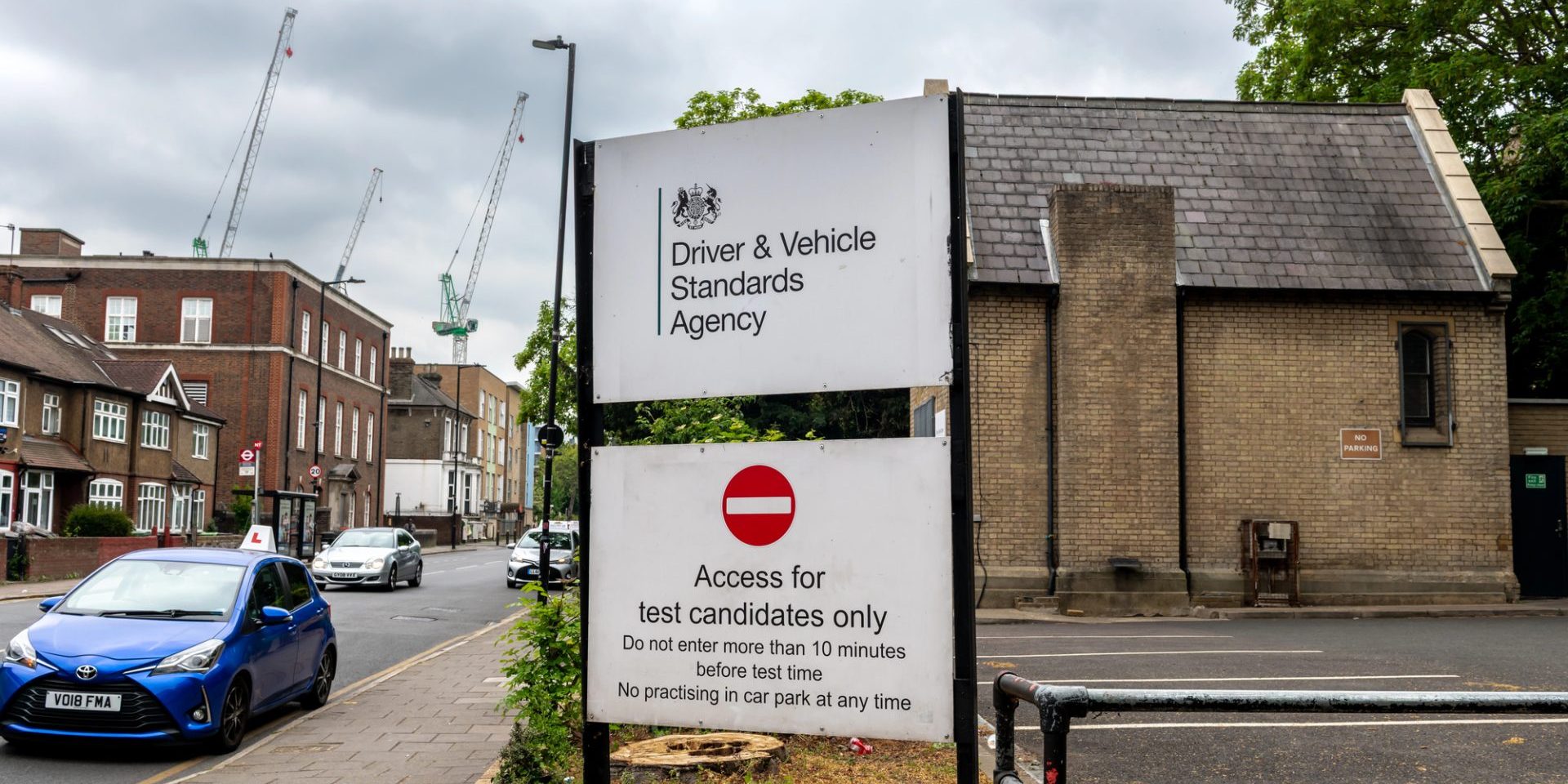
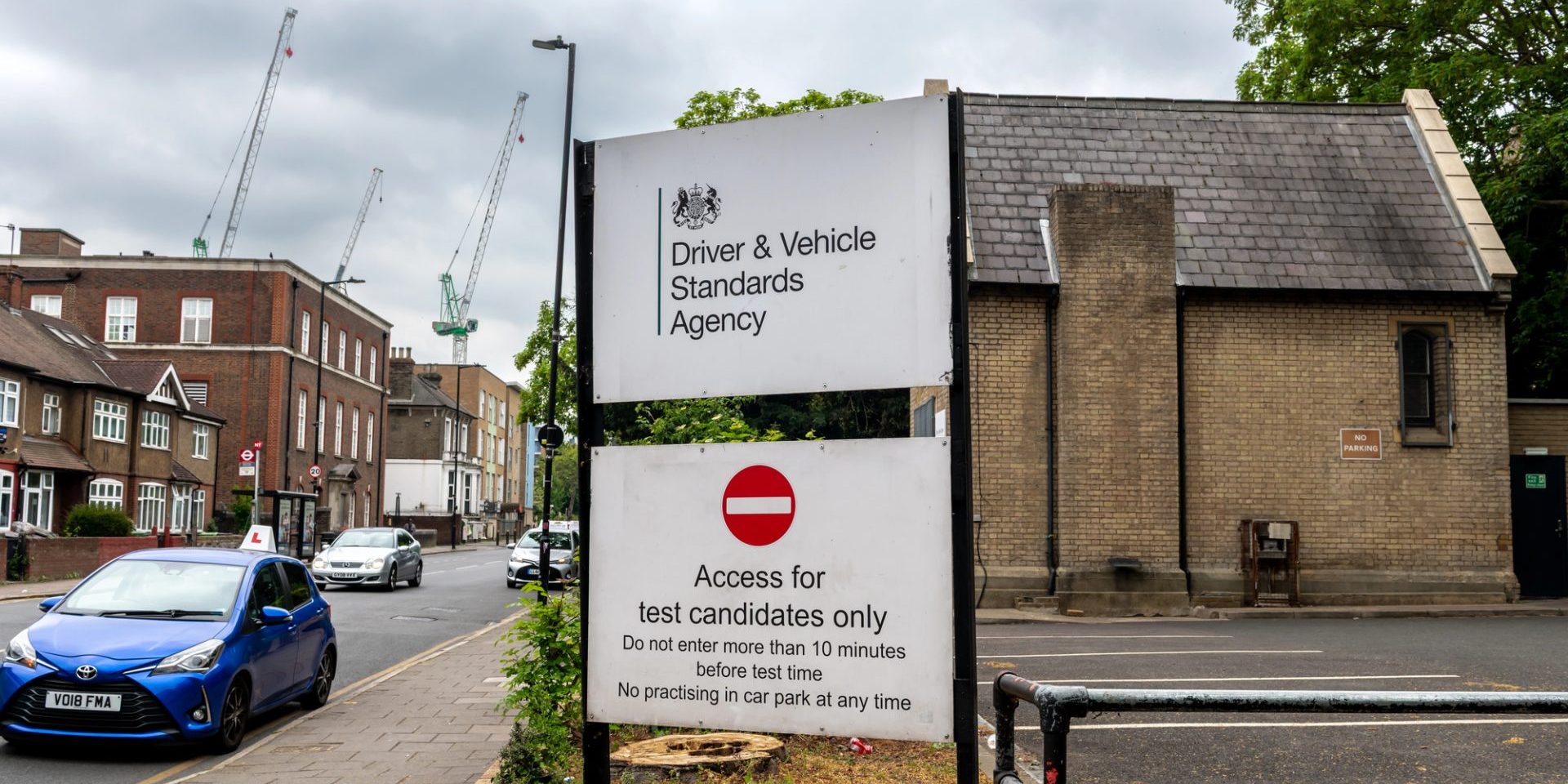
Check your nearest DVSA test centre’s pass rate before you book, and if a centre a short drive further away has a meaningfully higher rate, it is worth the extra travel. The gap between UK test centres is not a rounding error. Official DVSA figures for the 2024-25 testing year, covering 26.6 million tests across 321 car test centres, put the national pass rate at 48.7 percent and the first-time pass rate at 48.9 percent. Behind that average, individual centres range from a low of 33 percent to a high of 67 percent, a spread of more than 30 percentage points depending entirely on which building a learner walks into.
Wolverhampton sits at the bottom of the national table on 33 percent, with Featherstone on 34 percent and Wednesbury on 36 percent close behind. Chingford and Belvedere in London and Gateshead in the North East also sit in the high 30s. At the other end, Dorchester leads the country on 67 percent, with Kendal’s Oxenholme Road centre on 65 percent and Chichester, Bangor, Melton Mowbray and Newtown all around 64 percent. A learner at the hardest centre in the country currently has roughly half the chance of passing as one at the easiest.
Why the gap exists, according to DVSA’s own explanation
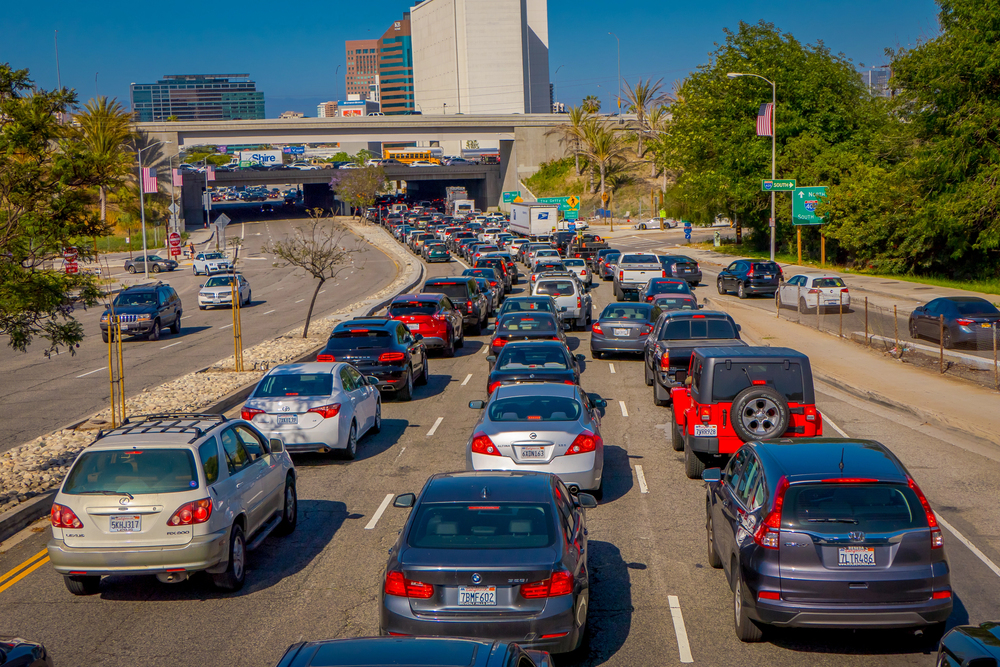
The DVSA marks every test to the same national standard regardless of where it takes place, so the difference between a 33 percent centre and a 67 percent centre is not down to stricter or more lenient examiners. It comes down to the test routes themselves. Centres in busy cities send candidates through heavy traffic, multi-lane roundabouts, bus lanes, cyclists and tight on-street parking in the space of forty minutes. Centres in smaller towns and rural areas tend to run quieter roads with fewer decision points to get wrong, which is reflected directly in how many candidates come away with a pass.
The pattern holds up across the full DVSA dataset. The lowest performing centres are overwhelmingly concentrated in London and the West Midlands, both dense urban areas with complicated road layouts. The highest performing centres are spread across smaller towns in the South West, Wales and rural Scotland, where the driving environment simply throws up fewer hazards per mile. A candidate is not being judged more harshly in Wolverhampton than in Dorchester. They are being tested on a harder set of roads.
What a failed test actually costs, and why the numbers matter
A practical driving test booked through gov.uk costs £62 on a weekday or £75 in the evening or at a weekend, and that fee is lost every time a candidate fails and has to rebook. Add in the cost of extra driving lessons to prepare for a retest, typically £30 to £40 an hour, and a learner at a low pass rate centre who fails multiple times can easily spend several hundred pounds more than someone who passed first time at an easier centre nearby. For families already covering the cost of lessons, insurance and a first car, the test centre a learner is booked into has a direct effect on the total bill for getting on the road.
It is worth being clear about what the headline pass rate actually measures. It counts every test taken at a centre, including retakes by candidates who have already failed once or several times, so it reflects the overall difficulty of the route as much as it reflects any single candidate’s chances. The first-time pass rate, which strips out retakes, tells a similar story but with an even wider spread between centres, running from roughly 31 percent at the hardest centres up to around 68 percent at the easiest.
How the booking system connects to the numbers
Pass rate is only half the story for anyone booking a test right now, as waiting times vary almost as sharply between centres as pass rates do. A learner willing to travel to a centre with a shorter wait and a better pass rate can end up on the road months earlier than someone who books the nearest available slot without checking either figure. The DVSA releases booking availability through the same gov.uk service used to book the test itself, and independent tools built from the DVSA’s open data let learners compare wait times alongside pass rates for every centre within a chosen radius, rather than guessing based on which centre happens to come up first in a search.
Instructors who teach across multiple centres in the same region are often the best source of up to date, practical advice on which nearby centre suits a particular learner, as they see the actual routes and examiner patterns rather than just the published statistics. Many will recommend a specific centre based on where a learner has done most of their lessons, on the basis that route familiarity built up over months of driving lessons will do more for a candidate’s chances than switching to an unfamiliar centre purely as its headline number is a few points higher.
The edge case worth knowing before you switch centres
Chasing the highest pass rate in the country is not automatically the right move. A quieter rural test route prepares a new driver less well for the traffic, roundabouts and hazards they will actually face once they are driving unsupervised in a town or city, which counts for safety in the months after passing. Instructors generally advise that lesson quality, hours of practice and familiarity with the local roads make a bigger difference to a candidate’s real chances than a handful of percentage points on a centre’s headline rate. Travelling a long distance purely to chase a better number, on roads the learner has never driven, can also work against them if it means less time practising on routes similar to the ones they will be tested on.
The sensible approach is to compare pass rates for every centre within a reasonable travelling distance, not just the nearest one, and weigh a meaningfully higher rate against the practicality of getting there and the chance to practise on similar roads beforehand. A five or ten point difference in pass rate between two centres a similar distance away is worth factoring into the decision. A dramatically higher rate two hours away, on roads a learner has never seen, usually is not. Test centre and booking details for every part of the country are published on gov.uk, and pass rate data broken down by centre is drawn directly from the DVSA’s own quarterly statistical releases.
The gap between the hardest and easiest centres in the country is unlikely to close any time soon, because it comes down to the fixed geography of each area rather than anything DVSA policy can change overnight. What has changed is how easy it now is for a learner to find out where their own centre sits on that scale before they book, rather than after they have already failed once or twice and started wondering why. A few minutes spent comparing the options nearby, weighed against realistic travel and lesson plans, is a cheap way to tilt the odds back in favour of a candidate who has already put in the hours behind the wheel.
Sources:

Leave a Comment
More in News

Does a Failed MOT Devalue a Car? The Part of the Record Buyers Should Actually Read

What an AdBlue Warning Light Really Means Before Your Diesel Refuses to Restart

How Bus Lane Cameras Earned Councils £37.7 Million by Fining UK Drivers This Year
Every New Car Buyer Could Get Bigger Discounts as Britain Misses Its EV Target

Drivers Using Rapid EV Chargers Pay 79p a kWh, Up 4 Percent, Zapmap Shows
Trending on Motoring Chronicle

New Gordon Murray S1 Revealed as 690PS V12 Manual Supercar, Limited to 64 Cars

Zenvo Aurora Tur Hypercar Targets 1,850bhp and 260mph From a V12 Hybrid

Volkswagen Recalls 57,851 Atlas SUVs Over Backup Cameras That Go Dark in Reverse
How Ohio’s New Catalytic Converter Law Aims to Stop a $115 Million Crime Wave