
Volkswagen Just Revealed A £25,000 Electric Car With 280 Miles Of Range And A Bigger Boot Than A Golf


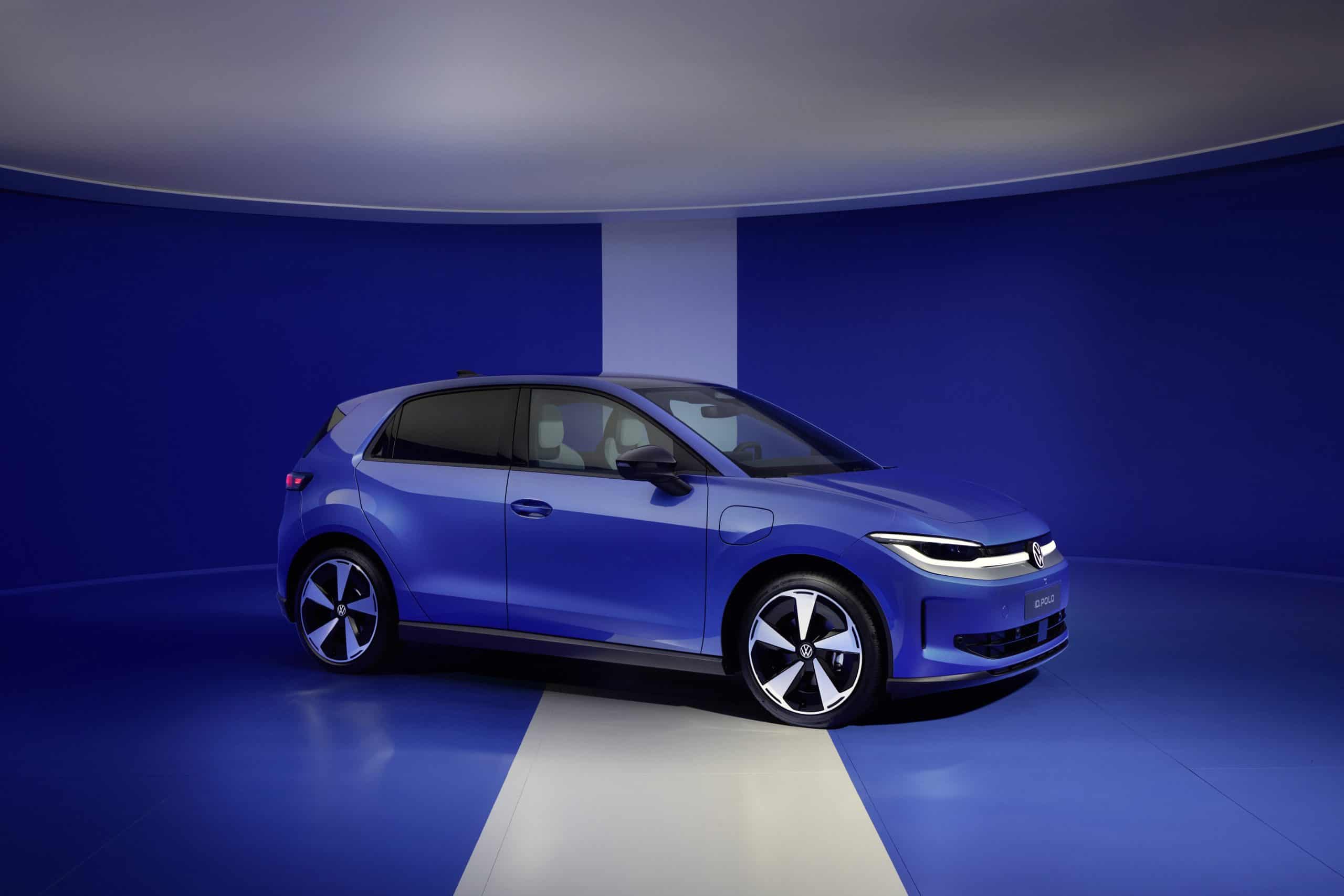
Volkswagen has taken the wraps off the ID. Polo, the all-electric successor to one of the most successful cars in automotive history. The Polo has sold over 20 million units across its lifetime, and the electric version arriving to replace it comes with a starting price of €24,995 in Germany, which puts it on course for a UK price in the region of £25,000 when local specifications are confirmed. Pre-orders have opened in Germany today, with UK pricing and availability expected to follow shortly.
The headline figures are immediately compelling. The range-topping version with a 52 kWh battery delivers up to 282 miles on the WLTP cycle. The boot is 25 per cent larger than the petrol Polo it replaces, at 441 litres, which is actually more luggage space than you get in many cars from the class above. DC fast charging is standard across the range, not an optional extra. And vehicle-to-load capability, allowing the car to power external devices at up to 3.6 kW, comes fitted to every model.
For anyone who has been waiting for an affordable electric car that does not ask you to compromise on range, practicality, or technology, the ID. Polo is Volkswagen’s answer.
Three Power Levels, Two Battery Sizes
The ID. Polo will be offered with three powertrain options, all front-wheel drive, built on the new MEB+ platform that has been designed specifically to make electric vehicles more space-efficient.
The entry-level version produces 85 kW (116 PS) and the mid-range 99 kW (135 PS). Both use a 37 kWh lithium iron phosphate (LFP) battery, which is cheaper to produce and more durable through repeated charging cycles than the nickel-based chemistries used in most current EVs. This smaller battery delivers up to 204 miles of range and charges from 10 to 80 per cent in around 23 minutes at a DC fast charger.
The range-topping model produces 155 kW (211 PS) and uses a larger 52 kWh nickel-manganese-cobalt (NMC) battery. This version pushes the range to 282 miles and charges from 10 to 80 per cent in approximately 24 minutes. For a car of this size and price, those charging speeds are genuinely competitive with vehicles costing twice as much.
The choice of LFP chemistry for the base models is a deliberate decision. LFP batteries tolerate being charged to 100 per cent without the same degradation concerns as NMC cells, which means owners can regularly fill the battery completely without worrying about long-term capacity loss. For a car that will be used as a daily driver and charged overnight at home, this is a practical advantage that goes beyond the specification sheet.
Bigger Inside Than It Has Any Right To Be
The ID. Polo measures 4,053 mm long, 1,816 mm wide, and 1,530 mm high, with a wheelbase of 2,600 mm. Those numbers place it firmly in the supermini class externally, but the interior tells a different story.
Because the MEB+ platform was designed from the ground up for electric power, with the battery sitting flat beneath the floor and no transmission tunnel intruding into the cabin, the ID. Polo offers significantly more usable space than its combustion-engined predecessor. The boot has grown from 351 litres to 441 litres, a 25 per cent increase that puts it ahead of many compact hatchbacks from the segment above. Fold the rear seats and that figure rises to 1,240 litres, compared to 1,125 in the outgoing petrol Polo.
Volkswagen has pitched the car as a genuine five-seater rather than a four-plus-one, with enough rear legroom to accommodate adults comfortably on longer journeys. For families, this transforms the Polo from a second car or city runabout into a credible only car, capable of handling the school run, the weekly shop, and a holiday with luggage for four.
An Interior That Brings Back Physical Buttons
The cockpit features a 10-inch digital instrument cluster positioned directly in the driver’s line of sight and a 13-inch central touchscreen running Volkswagen’s latest Innovision infotainment system. Crucially, Volkswagen has also fitted physical buttons and clearly accessible controls, a direct response to the widespread criticism of the touch-sensitive sliders and capacitive surfaces that plagued earlier ID. models.
The interior follows Volkswagen’s new Pure Positive design language, which prioritises clean lines and intuitive ergonomics over visual complexity. Standard equipment includes LED headlights with main-beam control, a multi-function steering wheel, automatic air conditioning, and the digital cockpit displays. Apple CarPlay and Android Auto connectivity come from the Life trim upwards, along with voice control and wireless phone charging.
A retro display option brings a touch of nostalgia to the digital instruments, recreating the look and feel of the original Golf Mk1 facelift dashboard in digital form. It is a small detail, but one that speaks to the emotional connection Volkswagen is trying to build between its heritage and its electric future.
Features That Do Not Belong In A Car This Cheap
The optional equipment list reads like it was borrowed from a car two segments higher. A Harman Kardon sound system with 425 watts, 10 speakers, a centre channel, and a subwoofer is available. A panoramic glass roof can be specified. And in what Volkswagen describes as a luxury-class feature in a compact-class car, the front seats can be optioned with a pneumatic massage function across three programmes, with 12-way electric adjustment and a driver’s memory function.
The assist systems are equally ambitious. Connected Travel Assist, available as an option, provides assisted longitudinal and lateral guidance and can react to traffic lights automatically, a first in this class. Standard safety equipment includes Side Assist, Lane Assist with Emergency Assist, and one-pedal driving that allows the car to be slowed and stopped using the accelerator pedal alone.
An upgraded version of Volkswagen’s ID. Light system, a light strip across the dashboard that provides visual cues for navigation, charging status, and hazard warnings, now extends into the front doors for the first time. One of its new functions is warning occupants of approaching road users before they open the door, which serves a similar purpose to the Dutch Reach technique now recommended in the Highway Code.
Vehicle-To-Load As Standard
Every ID. Polo comes with vehicle-to-load (V2L) capability, allowing the car to supply up to 3.6 kW of power to external devices. A 230-volt socket inside the car provides direct power, and a separate adapter enables charging through the car’s main charging port.
At 3.6 kW, the ID. Polo can charge an e-bike in under an hour, run power tools at a worksite, or keep a camping setup running overnight. For a car aimed at younger buyers and families who may use their vehicle for everything from commuting to weekend adventures, having a mobile power source built into the base specification adds genuine versatility at no extra cost.
What It Costs And When It Arrives
In Germany, the ID. Polo Life with the 155 kW motor and 52 kWh battery is available to order now at €33,795. The base version at €24,995 and the lower-powered variants will follow in the summer.
UK pricing, specification, and availability have not yet been confirmed, but Volkswagen has indicated that details will follow shortly. Based on the German pricing and typical UK market adjustments, the entry-level ID. Polo is likely to arrive around the £25,000 mark, with the mid-range and top-spec versions scaling up accordingly. At that price, it would undercut the current Volkswagen ID.3 by a significant margin and sit within reach of the government’s previous plug-in car grant thresholds, though that scheme has since closed.
For context, the outgoing petrol Polo starts at around £18,000 in the UK. The premium for going electric is therefore in the region of £7,000, but the running cost savings on fuel, VED, and potentially insurance for younger drivers could close that gap within a few years of ownership.
Thomas Schafer, CEO of the Volkswagen Passenger Cars brand, framed the ID. Polo as a democratisation of electric mobility. “The ID. Polo brings a Volkswagen bestseller into the electric age,” he said. “With the ID. Polo, we are making electric mobility accessible to many more people: with clear and timeless design, intuitive operation, strong quality and technologies from higher segments. A genuine Volkswagen just like our customers expect from us.”
Twenty million Polos have been sold since the nameplate was introduced. The ID. Polo is Volkswagen’s bet that the next twenty million will be electric.
Sources

Leave a Comment
More in News

How to Remove Moisture From Inside Your Headlight Before It Costs You £500
What Red and Amber Warning Lights Actually Mean (and Which Fail an MOT)

How to De-Ice Your Windscreen Fast Without Cracking It (and Staying Legal)

New Cars Face Euro 7 Rules From 29 November With a £264 Price Rise
What the Traffic Penalty Tribunal’s 33 Percent Success Rate Means for Every Driver
Trending on Motoring Chronicle

Every Used Car Buyer Risks a £1,000 DVLA Fine Over a Hidden Write-Off Category

Six Million Illegal Tyres Are on UK Roads and Each One Risks a £2,500 Fine

Clean Air Zones Will Charge Drivers Until 2031, Four Years Later Than Promised
£625 Million of Detected Motor Fraud Costs Honest Drivers, ABI Figures Show
