What Does ‘Eco’ Mean on a Car?

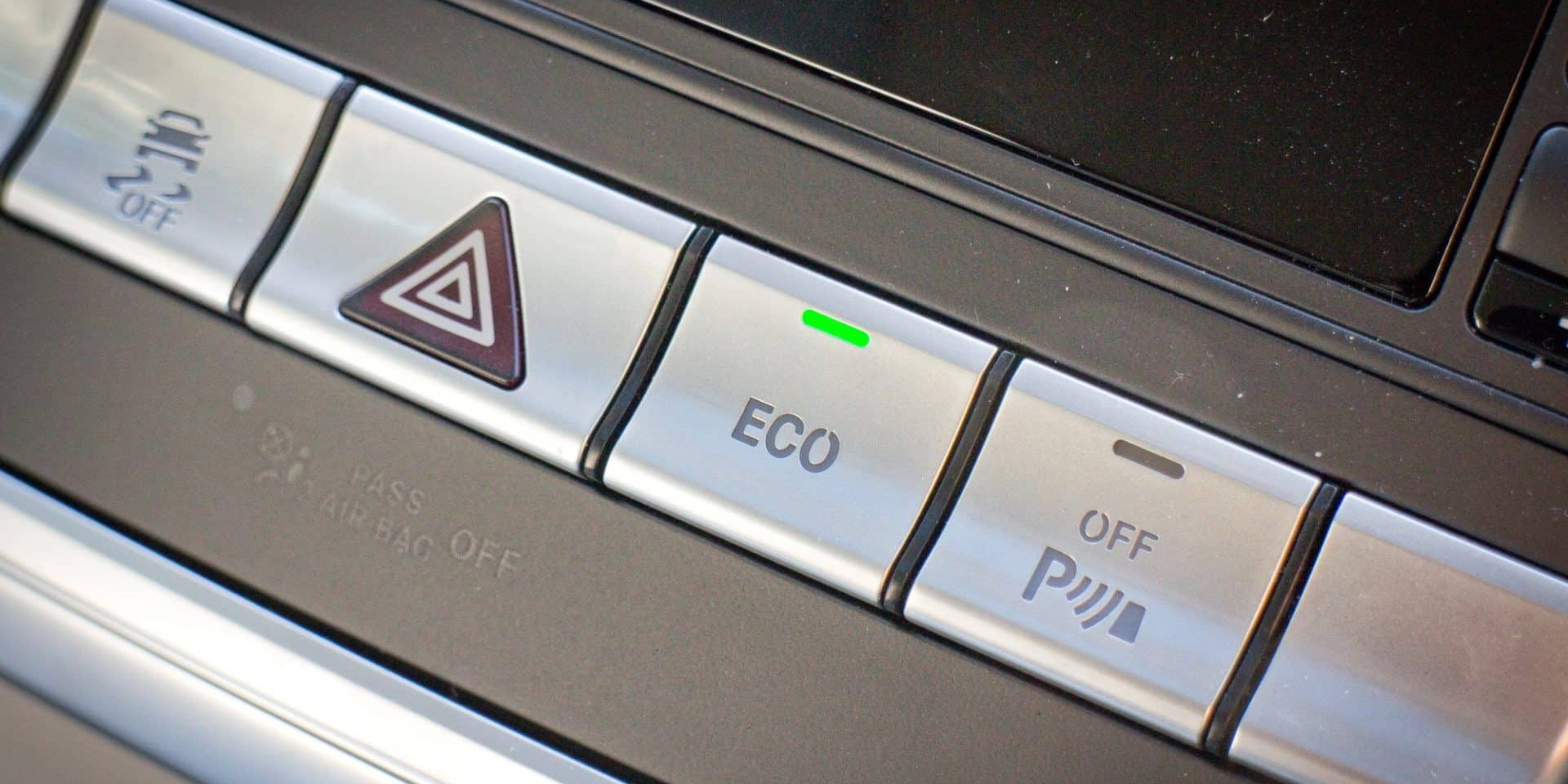
Eco on a car is a selectable drive mode that adjusts the engine’s throttle response, the transmission’s shift timing, and in many vehicles the climate control system to prioritize fuel economy over performance. When Eco mode is active, the accelerator pedal becomes less responsive, the transmission shifts into higher gears earlier to keep engine RPM low, and the air conditioning compressor reduces its output or cycles off at idle. The result is a softer, more deliberate driving feel that uses less fuel at the cost of slower acceleration. Consumer Reports testing found that Eco mode delivers real-world savings of approximately 2 to 3 mpg on the highway, with little to no measurable benefit in stop-and-go city driving.
What Eco Mode Changes Under the Hood
Throttle Response
The most noticeable change when Eco mode is switched on is the way the accelerator pedal feels. In Normal or Sport mode, the engine responds quickly to pedal input. Small movements produce immediate increases in power. In Eco mode, the engine control unit (ECU) remaps the relationship between pedal position and throttle opening. Pressing the pedal the same distance as you would in Normal mode produces a smaller throttle opening, which delivers less power and slower acceleration.
This is not a reduction in the engine’s maximum capability. Full power is still available if the driver pushes the pedal all the way to the floor. Eco mode changes the rate at which power is delivered in the first 50 to 75 percent of pedal travel, making it harder to accelerate aggressively by accident. The effect is most noticeable from a standstill and during mid-range passing maneuvers, where the car feels noticeably lazier than it does in Normal mode.
Transmission Shift Points
In an automatic or CVT-equipped vehicle, Eco mode changes when the transmission shifts gears. In Normal mode, the transmission holds each gear until the engine reaches a point in the RPM range where both power delivery and efficiency are balanced. In Eco mode, the transmission shifts to the next higher gear earlier, keeping the engine at a lower RPM for any given road speed.
Lower RPM means less fuel is consumed per minute of operation. It also means less power is available at any given moment, which is why Eco mode feels sluggish during acceleration. The tradeoff is straightforward: the transmission sacrifices responsiveness to keep the engine in its most fuel-efficient operating range. On highways at a steady cruise, the difference between Eco and Normal shift timing is minimal, as both modes settle into the highest gear at similar RPM. The savings come during the acceleration phases between stops, during on-ramp merges, and during any driving that involves repeated speed changes.
Climate Control Adjustments
On many vehicles, Eco mode reduces the output of the air conditioning system. The AC compressor is one of the largest parasitic loads on a car engine. Running the compressor at full capacity can reduce fuel economy by 5 to 15 percent depending on the vehicle, the outside temperature, and the system’s design. In Eco mode, the system reduces compressor output, raises the target cabin temperature slightly, or cycles the compressor off entirely when the vehicle is stopped at a light.
Some vehicles also reduce the power delivered to the blower fan motor, which means less air volume moves through the cabin even when the system is running. In mild weather, these adjustments are barely noticeable. On a hot summer day, the cabin takes longer to cool down and the air from the vents feels less cold than it does in Normal mode. Drivers who find the reduced AC uncomfortable can usually override the climate settings independently while leaving the throttle and transmission in Eco calibration.
Auto Start-Stop Behavior
On vehicles equipped with an auto start-stop system, Eco mode can change how aggressively the system shuts down the engine at idle. In Normal mode, the engine might restart at the slightest pedal movement or steering input. In Eco mode, the system holds the engine off longer and restarts it later, keeping the engine shut down during longer stops at traffic lights and in queues. The fuel savings from start-stop are small on a per-stop basis but accumulate over thousands of stops in urban commuting. Whether turning off the engine at traffic lights makes a real difference to your annual fuel bill depends on how much city driving you do and how long the average stop lasts.
The Eco Indicator Light vs. Eco Mode
Some vehicles display an “Eco” indicator light on the dashboard that is separate from the Eco drive mode button. This indicator is a real-time coaching tool. It illuminates when the driver’s current behavior, including throttle position, speed, and acceleration rate, falls within an efficient operating range. It turns off when the driver accelerates hard or brakes suddenly. The indicator does not change anything about how the car operates. It is purely informational, showing the driver when they are driving efficiently and when they are not.
Honda’s Eco Assist system combines both concepts. It uses a green glow behind the speedometer that brightens when the driver is operating efficiently and dims when they are not, along with a selectable ECON button that actively adjusts throttle and transmission mapping. Toyota, Hyundai, Kia, Nissan, and most European manufacturers use a simple button or menu-selectable Eco drive mode that actively changes the vehicle’s behavior. The distinction matters when reading the owner’s manual or discussing the feature at a service appointment: the indicator is passive feedback, the mode is an active system change.
How Much Fuel Does Eco Mode Actually Save
Highway Driving
Eco mode produces its most measurable savings on the highway. Consumer Reports testing found fuel economy improvements of approximately 2 to 3 mpg during steady-speed highway cruising. On a vehicle that normally achieves 30 mpg on the highway, that improvement translates to a 7 to 10 percent reduction in fuel consumption. Over the course of a year for a driver covering 12,000 highway miles (19,300 km), the savings add up to roughly 25 to 40 gallons (95 to 150 liters), which at $3.50 per gallon ($0.92 per liter) or approximately £1.45 per liter in the UK works out to $90 to $140 (£70 to £110) annually.
City Driving
In city driving, the savings from Eco mode are harder to measure and in some tests nonexistent. Consumer Reports found no statistically significant fuel economy benefit from Eco mode in urban stop-and-go conditions. The reason is that city driving involves frequent hard braking and acceleration cycles that override the gentler throttle mapping. Traffic conditions, red light timing, and elevation changes have a larger effect on fuel consumption than the drive mode setting. The transmission shifts earlier in Eco mode, but the driver still needs to accelerate back to traffic speed after each stop, and the total energy required to do so is roughly the same regardless of how gently the car reaches that speed.
The Driver Matters More Than the Mode
The largest variable in fuel economy is not the drive mode. It is the driver. A driver who accelerates gently, maintains steady highway speeds, and anticipates stops will achieve better fuel economy in Normal mode than an aggressive driver will achieve in Eco mode. Eco mode is most useful as a behavioral tool. It makes it harder to waste fuel by accident, which helps drivers who tend toward aggressive inputs without realizing it. For drivers who already accelerate smoothly and coast toward red lights, switching to Eco mode produces minimal additional savings on top of what their habits already deliver.
When to Turn Eco Mode Off
Highway Merging and Overtaking
Eco mode reduces throttle response and delays downshifts. In situations that require quick acceleration, such as merging onto a motorway from a short on-ramp or overtaking a slower vehicle on a two-lane road, the delayed response can create a dangerous gap between the driver’s input and the car’s reaction. Switching to Normal or Sport mode before these maneuvers restores the full throttle map and gives the transmission permission to downshift aggressively for maximum acceleration.
Towing and Heavy Loads
When towing a trailer, carrying a full load of passengers, or driving up steep gradients, the engine needs access to its full power range. Eco mode’s early upshifts and reduced throttle response force the engine to work harder at lower RPM, which can actually increase fuel consumption under heavy load as the engine struggles to maintain speed. Most manufacturers recommend switching to Normal or a dedicated Tow mode when the vehicle is loaded.
Extreme Heat
If the outside temperature is above 35°C (95°F) and the cabin needs to cool down quickly, the reduced AC output in Eco mode will leave the interior uncomfortably hot for an extended period. Running the AC at full capacity in Normal mode cools the cabin faster, and once the target temperature is reached, switching back to Eco mode allows the system to maintain that temperature with less energy.
Cold Engine Warm-Up
Some drivers leave Eco mode on at all times, including during cold starts. In cold conditions, the engine and transmission need to reach operating temperature to function efficiently. Eco mode’s reduced RPM and early shifting can extend the warm-up period. Driving in Normal mode for the first few minutes allows the engine to reach operating temperature faster, at which point switching to Eco mode becomes beneficial. The oil, coolant, and transmission fluid all need to be at the right level and condition for any drive mode to function as intended, which is why a quick monthly fluid check catches problems before they affect performance or economy.
Eco Mode on Electric and Hybrid Vehicles
Eco mode on battery electric vehicles (BEVs) and hybrids works on the same principle of limiting energy output, but the mechanisms are different. On a BEV, Eco mode limits the power delivered by the electric motor, reduces the energy consumed by the climate control system (cabin heating is a major range drain on EVs in winter), and in some vehicles increases the intensity of regenerative braking to recover more energy during deceleration.
On a hybrid, Eco mode biases the powertrain toward electric-only operation for longer, keeps the petrol engine off during low-speed driving where it would run inefficiently, and limits the combined power output. Toyota’s hybrid Eco mode, for example, restricts the petrol engine from starting during gentle acceleration that the electric motor can handle alone. The savings on hybrids and EVs can be more pronounced than on conventional petrol vehicles as the system has more variables to optimize. EVs also benefit from having fewer wear items and no oil changes, which means the total cost of ownership equation shifts further in favor of efficiency-focused driving.
‘Eco’ Mode Frequently Asked Questions
Is it bad to drive in Eco mode all the time?
No. Eco mode does not harm the engine or the transmission. It adjusts software parameters, not hardware. The engine, gearbox, and all mechanical components operate within their designed limits in every drive mode. The only downside to permanent Eco mode is reduced performance when you need it, such as during highway merging or overtaking. Drivers who stay in Eco mode full-time should be prepared to press the accelerator fully to the floor in situations that require quick acceleration, which overrides the Eco throttle map and delivers full power.
Does Eco mode save money on petrol?
On the highway, yes. Real-world savings of 2 to 3 mpg translate to roughly $90 to $140 (£70 to £110) per year for an average driver covering 12,000 highway miles. In the city, the savings are negligible. The biggest factor in fuel cost is driving behavior, not the position of the drive mode selector.
What does the green Eco light on the dashboard mean?
On most vehicles, the green Eco indicator is a passive coaching tool that lights up when the driver’s current acceleration, speed, and braking pattern fall within an efficient range. It does not change how the car operates. It simply provides feedback to encourage smoother driving. It is separate from the selectable Eco drive mode, which actively changes the throttle map, transmission timing, and climate control output.
Does Eco mode affect the air conditioning?
On many vehicles, yes. Eco mode reduces compressor output, raises the target cabin temperature, or cycles the compressor off at idle. The effect varies by manufacturer. Some vehicles allow the driver to override the climate settings independently while leaving the rest of the Eco calibration active. If the cabin is too warm in Eco mode, adjusting the AC manually or switching to Normal mode for a few minutes to cool down is a common workaround.
Sources

Leave a Comment
More in News

What a Coolant Warning Light Means Before It Costs You a £1,000 Repair
Progressive’s Profit Fell 3 Percent Even as It Added 1.4 Million Car Insurance Policies

NHTSA Picks 23 Vehicles for 2027 Crash Tests and Adds a New Pedestrian Safety Score

GAP Insurance Paid Back Just 6 Percent of What Drivers Paid, FCA Figures Show

A £4,300 Vauxhall Made Hagerty’s List of Classic Cars Worth Watching in 2026
Trending on Motoring Chronicle
Why Britain’s Record Used Car Boom Is Creating a Facebook Marketplace VIN Fraud Crisis

Models of the Marque – The 2000s: the Rolls-Royce Phantom VII [Photo Gallery]

BMW iX3 review: Long range family-sized EV is classy game-changer

How Thieves Unlock Your Car From the Street Using Your Key Fob While It Sits Indoors