The Most Annoying Motorway Driving Habits (And Which Ones Are Actually Illegal)
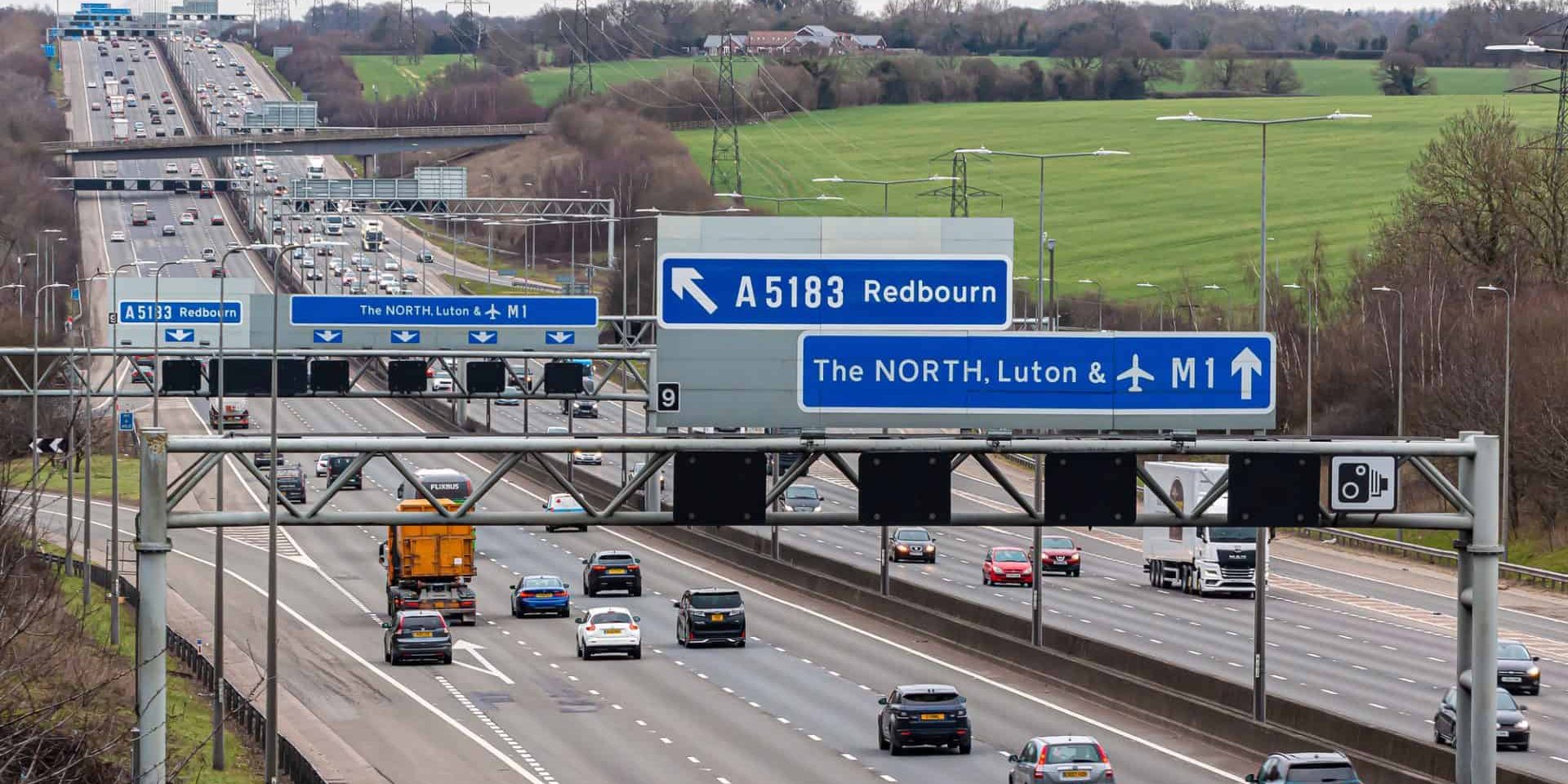
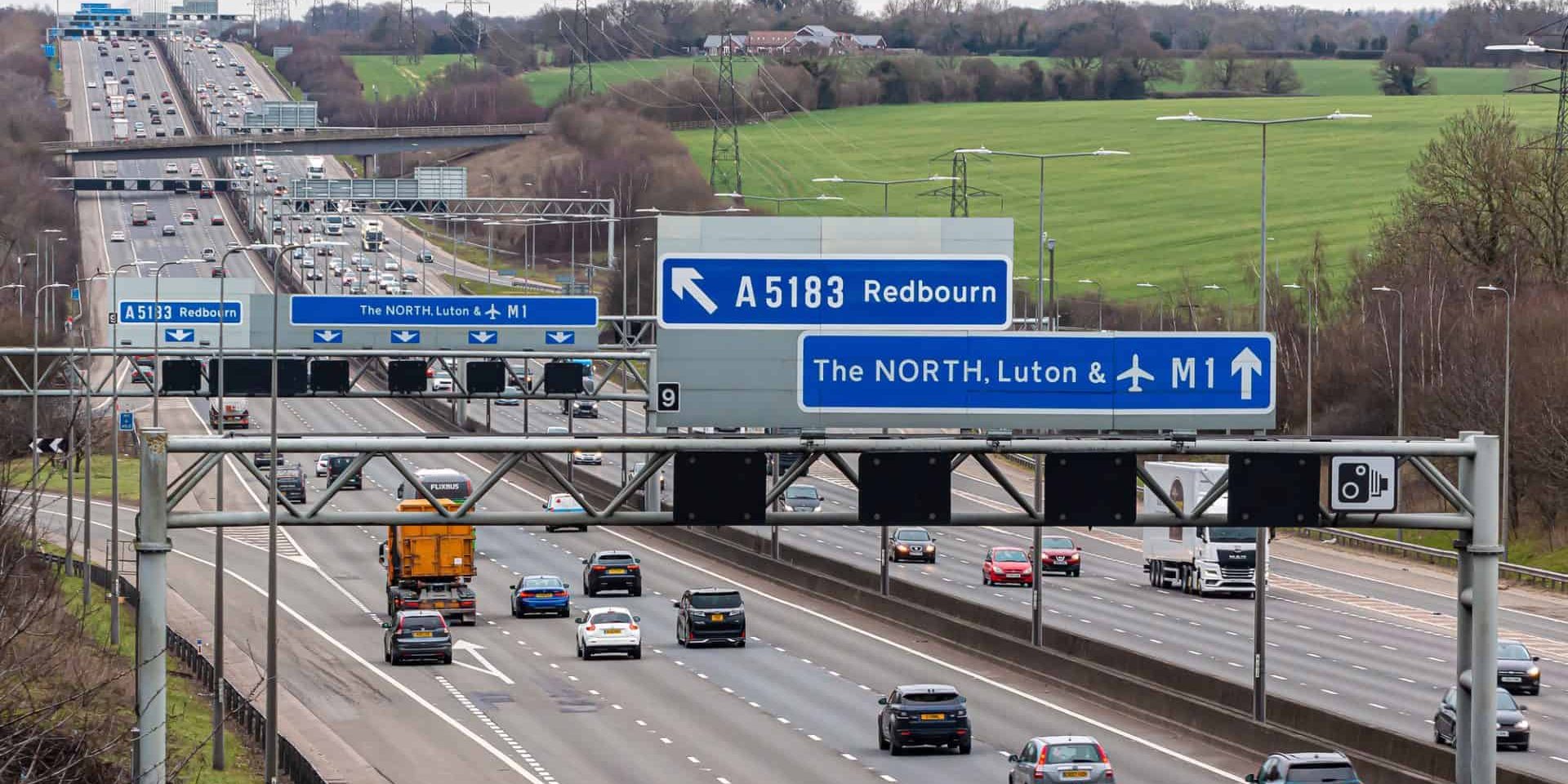
Lane-hogging, tailgating, and failing to indicate consistently rank as the most frustrating motorway habits reported by UK drivers. National Highways data shows that tailgating alone contributes to an average of 147 people killed or seriously injured on England’s motorways each year. Some of these habits carry fixed penalties of £100 and three points, while others are not offences at all…
Is Middle-Lane Hogging Actually Illegal?
What the Highway Code says
Yes, lane-hogging is a criminal offence. Highway Code Rule 264 states that drivers should always drive in the left lane when the road ahead is clear. If you are overtaking a slower vehicle, you should return to the left lane once you have passed it. Sitting in the middle or outside lane of a motorway with an empty left lane beside you is classified as careless driving.
The fixed penalty has been in place from 2013, when the government introduced on-the-spot fines of £100 and three penalty points for lane-hogging and tailgating. Before that change, the only option for police was to pursue a court prosecution for careless driving, which was rarely done for something as subjective as lane positioning. The fixed penalty gave officers a practical enforcement tool for the first time.
In more serious or persistent cases, lane-hogging can still be taken to court under the full careless driving charge. Court-imposed fines are uncapped and can be accompanied by higher points totals, driving bans, or mandatory driver retraining courses. A lane-hogger who causes a collision by forcing other traffic into dangerous overtaking manoeuvres faces the possibility of a dangerous driving charge, which carries a maximum of two years’ imprisonment.
Why drivers do it
Most lane-hoggers are not being deliberately obstructive. They are either unaware of the rule, uncomfortable with the process of changing lanes, or operating on the mistaken belief that the left lane is reserved for slow vehicles and heavy goods traffic. Some drivers treat the middle lane as their default position on the basis that they will need to overtake again soon and see no point in moving left temporarily.
The problem compounds itself. When the middle lane is blocked by a driver cruising at 60 or 65 mph, faster traffic that would normally use the middle lane for overtaking is pushed into the outside lane. A three-lane motorway is reduced to two usable lanes, then one, as congestion builds behind the obstruction. The inside lane sits empty while the other two carry all the traffic. The congestion that results from this single behaviour is disproportionate to its apparent triviality.
Motorway driving is not covered in the standard UK driving test. Learner drivers are not permitted on motorways with a supervising driver unless accompanied by an approved driving instructor in a dual-control car, a rule that changed in 2018. Many newly qualified drivers enter motorways for the first time with no formal training in lane discipline, merging, or high-speed gap management. The Pass Plus scheme covers motorway driving but take-up is voluntary and relatively low.
How Dangerous Is Tailgating at Motorway Speeds?
The physics of stopping at 70 mph
At 70 mph, a vehicle covers 31 metres every second. The Highway Code’s published stopping distance at that speed is 96 metres, which includes a thinking distance of 21 metres and a braking distance of 75 metres. A driver following one car length behind at 70 mph has approximately 0.15 seconds before contact if the vehicle ahead brakes hard. That is less time than it takes to blink.
The two-second rule exists as a minimum safe following distance in dry conditions. The Highway Code’s Rule 126 recommends at least doubling that gap in wet weather and allowing up to 10 times the normal distance on icy roads. In practice, most drivers on busy motorways follow at well under two seconds. Research by National Highways found that roughly 10 million UK drivers admitted to following too closely at times, and 2.4 million said they deliberately close the gap to pressure slower drivers into moving.
The concertina effect amplifies the danger far beyond the two vehicles directly involved. When a tailgating driver brakes sharply, the driver behind them brakes harder, the next harder still, and the wave of braking intensifies as it moves backward through the traffic. A gentle tap on the brakes by the lead vehicle can become a full emergency stop six or eight cars back, or a multi-vehicle collision when one driver in the chain reacts a fraction too late. The crash often occurs hundreds of metres behind the original braking event, and the driver who triggered it never sees the result.
Penalties and enforcement
Tailgating carries the same fixed penalty as lane-hogging: £100 and three points. National Highways runs periodic awareness campaigns with the slogan “Don’t be a Space Invader,” supported by overhead message signs displaying “Keep your distance” on managed motorway sections. Enforcement is typically carried out by unmarked police vehicles and by motorway cameras that can identify vehicles following too closely.
National Highways data covering 2016 to 2023 (excluding pandemic years) shows that “following too closely” is a contributory factor in approximately 8 percent of all fatal and serious injuries on England’s motorways and major A-roads. That equates to an average of 147 people killed or seriously injured annually from a behaviour that most tailgaters consider a minor inconvenience to the driver ahead rather than a genuine safety risk.
Advanced driver training courses, including those offered by IAM RoadSmart and the Royal Society for the Prevention of Accidents (RoSPA), teach the technique of measuring following distance by picking a fixed point on the roadside (a sign, bridge, or post) and counting the time gap between the car ahead passing it and your own vehicle reaching the same point. Two full seconds in dry weather, four in rain, and a greater margin at night or in poor visibility. This takes the guesswork out of what “a safe distance” actually looks like at different speeds.
Is Undertaking Legal in the UK?
When passing on the left is acceptable
The Highway Code discourages overtaking on the left but does not prohibit it in all circumstances. In congested conditions where traffic is queuing or slow-moving, the left lane often moves faster than the lanes to the right. Passing vehicles on the inside in this situation is normal traffic flow and is not treated as an offence. The Highway Code’s Rule 268 acknowledges this by allowing drivers to stay in their lane when traffic is moving slowly in queues, even if it means passing vehicles in the lane to the right.
The behaviour becomes problematic when a driver deliberately pulls into the left lane at speed, passes a slower vehicle, and pulls back out again. This weaving pattern is what most drivers and police officers understand as “undertaking,” and it can be treated as careless driving if it creates a hazard. The distinction between acceptable inside-lane passing in heavy traffic and dangerous undertaking in free-flowing conditions is a judgment call made by the observing officer.
The irony is that undertaking is almost always caused by lane-hogging. A driver sitting in the middle lane at 60 mph with an empty left lane forces every vehicle behind them to choose between sitting in the queue, moving to the outside lane to overtake, or passing on the left. The last option is the most direct but carries the highest risk, as the lane-hogger is unlikely to check their left mirror before drifting back to the inside lane. Stability control systems can help recover a sudden swerve, but they cannot prevent the collision that results from a driver changing lanes without looking.
What Is Zip Merging and Why Do Most Drivers Get It Wrong?
The rule most drivers have never read
Highway Code Rule 134 states that when traffic is moving slowly in queues and a lane is closing ahead, drivers should merge in turn at the point of closure. This is zip merging: vehicles from both lanes alternate one-for-one at the merge point, like the teeth of a zip coming together. It is the most efficient way to handle a lane closure and keeps traffic moving through the maximum available road space for the longest possible distance.
A survey of 22,000 UK drivers by Auto Express found that 70 percent were unaware of the Highway Code’s merge-in-turn guidance. Most believed that the correct and polite approach was to merge as early as possible, moving out of the closing lane the moment they saw the first warning sign. Drivers who continued in the closing lane up to the merge point were perceived as queue-jumpers, and the reaction from those already queued in the open lane was often to close the gap and block them from entering.
This early-merge behaviour creates a longer queue that extends further back along the motorway, often blocking upstream junctions and slip roads. If all drivers used both lanes to the merge point and alternated turns, the queue length would be roughly halved. National Highways has erected “Use both lanes” and “Merge in turn” signs at many roadworks zones to counter the instinct to merge early, but driver resistance to the practice remains strong.
Why it feels wrong but works better
The emotional reaction to zip merging is understandable. A driver who has been sitting in a slow queue for ten minutes watches vehicles stream past in the empty lane beside them, apparently jumping the queue, and it feels deeply unfair. The instinct to block those vehicles is a natural response to perceived injustice. But the perception is wrong. The late-merging driver is following the Highway Code exactly as written, and the early-merging driver is the one creating the longer queue.
Traffic flow research consistently shows that zip merging reduces queue length by up to 40 percent compared with early merging. It also reduces speed differentials between merging and queuing vehicles, which lowers the risk of shunt collisions. The system works best when both lanes move at roughly the same speed and vehicles merge at low speed in an orderly alternating pattern. It breaks down when one driver blocks the merging lane or when a merging driver tries to force in at speed rather than matching the pace of the queue.
Countries where zip merging is legally mandated, including Germany and parts of the United States, have lower rates of congestion at lane-closure zones than the UK. The resistance in Britain is cultural rather than practical. Drivers who understand the system and merge correctly at the closure point are doing what the Highway Code asks. The frustration of other drivers, real as it feels, is directed at the wrong target.
Can You Be Fined for Rubbernecking?
The cost of slowing down to look
Rubbernecking, slowing to look at an incident on the opposite carriageway, is one of the most common causes of phantom congestion on motorways. A tailback builds with no visible cause on your side of the road, and after crawling for 20 or 30 minutes, you reach the front to find the incident is across the central reservation. Every driver ahead of you slowed to look, the braking wave rippled backward, and thousands of drivers lost time to collective curiosity.
Slowing down alone is not an offence. The behaviour becomes criminal when a driver takes their hands off the wheel to film or photograph the scene using a mobile phone. From 2022, the law on mobile phone use while driving was strengthened: holding a phone for any purpose while driving, including filming, is an offence carrying a £200 fine and six penalty points. For new drivers within their first two years of holding a licence, six points means automatic disqualification. For bus and lorry drivers, the fine rises to £2,500.
National Highways uses CCTV and police patrols to monitor incident sites, and footage of drivers filming on their phones is routinely used for prosecutions. The risk extends beyond the fine. A driver whose attention is on their phone screen rather than the road ahead is closing on stationary or slow-moving traffic at the front of the queue. Low-speed shunt collisions at the head of rubbernecking queues are common, and the insurance claim records the cause as driver distraction, which affects premiums for years afterward.
Does the Highway Code Require You to Indicate?
The difference between “should” and “must”
The Highway Code uses specific language to distinguish between legal requirements and advisory guidance. Rules that use the word “must” or “must not” reflect a legal obligation backed by statute. Rules that use “should” or “should not” are advisory: following them is strongly recommended, but failing to do so is not an offence in itself.
Signalling falls into the “should” category. The Highway Code states that drivers should signal to warn and inform other road users of their intended actions. It does not say they must. This means that failing to indicate a lane change on a motorway is not, on its own, a criminal offence. There is no specific fine or penalty for forgetting to signal.
That does not make it consequence-free. If a failure to signal contributes to a collision or creates a dangerous situation, it becomes evidence of careless driving. A driver who changes lanes without indicating and causes another vehicle to brake sharply or swerve can be charged with careless driving on the basis of the signalling failure combined with the result. Police officers can also use a repeated failure to indicate as grounds for a roadside stop, using the interaction to check for other issues such as vehicle condition, documentation, or driver impairment.
Why it infuriates other drivers
Failing to indicate is consistently ranked among the top five most annoying driving behaviours in UK surveys, alongside tailgating and lane-hogging. The frustration comes from the asymmetry of information: the driver changing lanes knows their own intention, but every other driver around them does not. A signal takes less than a second to activate and gives surrounding traffic the information needed to anticipate the manoeuvre and adjust their speed or position.
The most common high-risk scenario is at motorway junctions. A driver in the left lane approaches a slip road exit without signalling. The driver behind cannot tell whether the car ahead intends to exit or continue on the motorway, and must hold back rather than commit to an overtake that could put them alongside a vehicle about to move left. Multiply that hesitation across a busy junction and the result is a chain of unnecessary braking and slowed traffic flow, all from one driver’s failure to move a stalk half an inch.
The same problem occurs at roundabouts, where indicating on exit tells following drivers that a gap is about to open. A driver who does not signal their exit forces every waiting vehicle to hold position until the car has visibly committed to its lane. Smooth driving habits improve both safety and fuel efficiency, and signalling is one of the simplest habits that costs nothing and benefits everyone around you.
Driving Habit FAQs
Is lane-hogging illegal in the UK?
Yes. Police can issue an on-the-spot fixed penalty of £100 and three penalty points for middle-lane hogging. It falls under careless driving. Highway Code Rule 264 states that drivers should keep to the left lane unless overtaking. In more serious or repeated cases, the offence can be taken to court where fines and points can increase.
Is tailgating illegal on UK motorways?
Yes. Tailgating carries a £100 fixed penalty and three points. National Highways data shows that following too closely contributes to an average of 147 people being killed or seriously injured on England’s motorways and major A-roads each year. The Highway Code recommends a minimum two-second gap to the vehicle in front in dry conditions, doubling to four seconds in wet weather.
Is it illegal to not indicate on a motorway?
Not directly. The Highway Code uses the word “should” rather than “must” when referring to signalling, which means failing to indicate is not a specific offence. It can be used as evidence of careless driving if it contributes to a dangerous situation or collision.
Is undertaking illegal in the UK?
Not in all circumstances. In congested traffic where the left lane is moving faster than lanes to the right, passing on the inside is acceptable. Deliberately undertaking at speed by weaving into a gap in the left lane to pass a slower vehicle and then pulling back out can be treated as careless or dangerous driving.
What is zip merging and is it legal?
Zip merging is the practice of using both lanes right up to the point of a lane closure, then merging one car at a time in alternating turns. It is legal and is actively recommended by Highway Code Rule 134. A survey of 22,000 UK drivers found that 70 percent were unaware of this rule and believed merging early was the correct approach.
Sources

Leave a Comment
More in News

Are There Warning Signs Before a Cam Belt Breaks? Usually One, and It Is Not the Belt

Fife and Dundee Cars Fail 38.6% of First Attempt MOTs, Nearly Double Sutton’s 20.3%

How to Tell If Rust Will Fail Your MOT (and What a Repair Costs)

Why Your Car Clicks But Won’t Start (and What to Do)
Diesel Drivers Pay £31 More Per Tank Than a Year Ago, DESNZ Data Shows
Trending on Motoring Chronicle

Kia K4 review: Spacious family hatchback cuts a dash

Honda Recalls 98,892 Vehicles Over a Seat Sensor That Can Trigger Airbags Without Warning
What a Global Oil Flashpoint Means for the Price of Diesel in Britain

US Vehicle Thefts Fall 23% as GM Makes Anti-Theft Tech Standard for Eight Years