
How Does Tire Pressure Affect Fuel Economy?
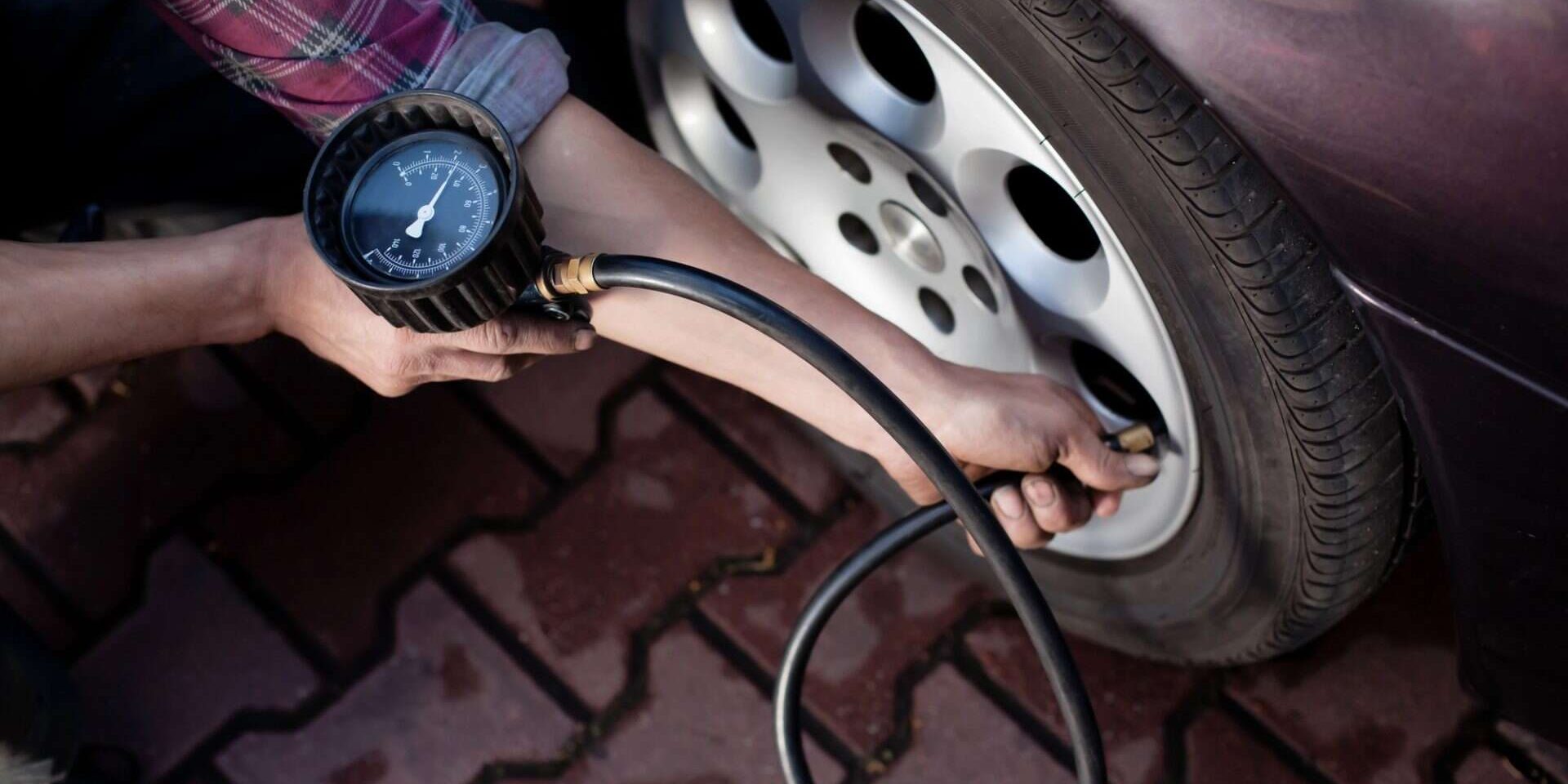
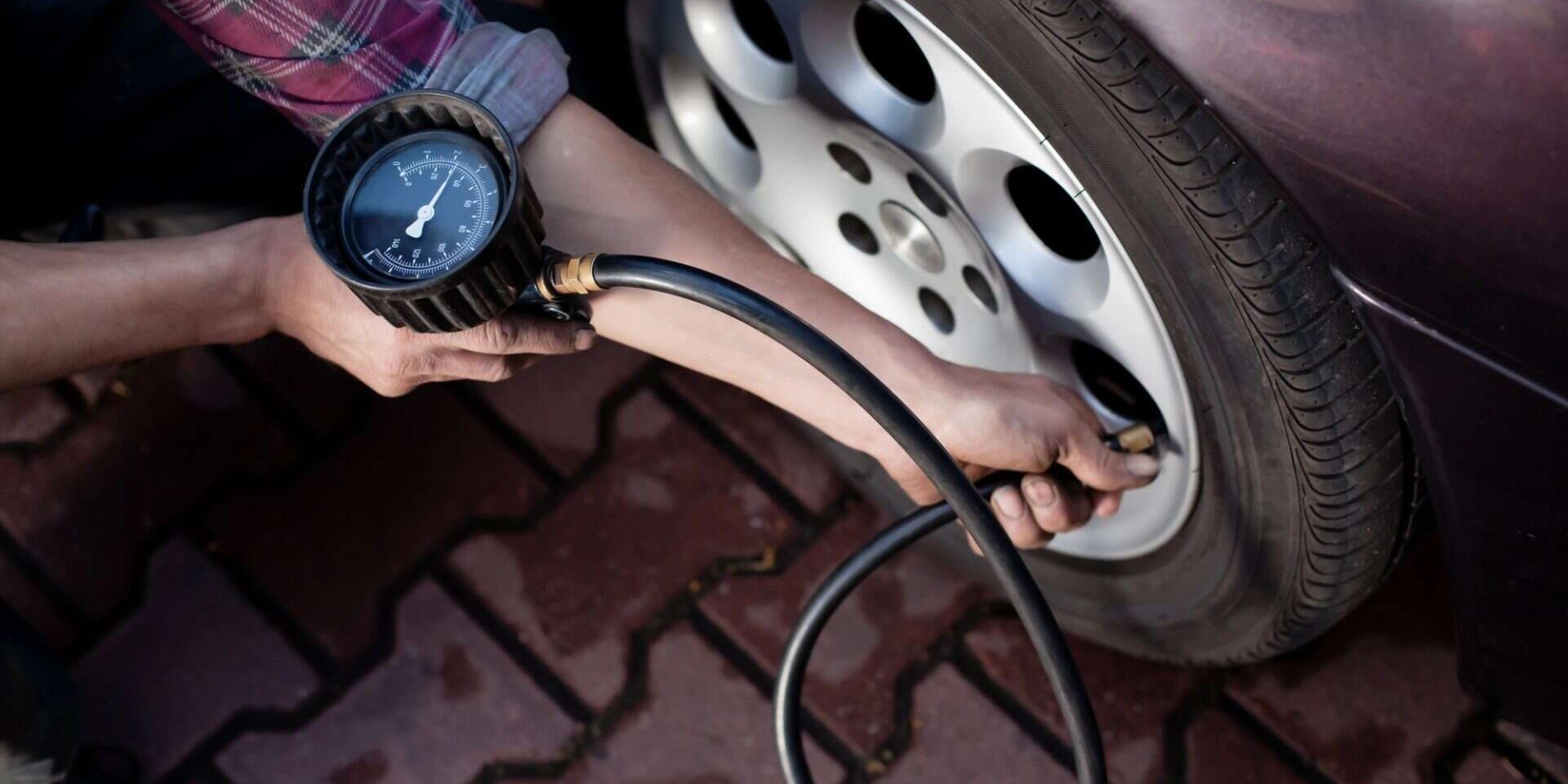
Tire pressure directly affects fuel economy through rolling resistance. Every 1 PSI drop below the recommended pressure across all four tires reduces fuel economy by approximately 0.2 percent, and tires that are 10 PSI underinflated waste around 3 percent of every tank. Keeping tires at the correct PSI is the simplest, free, and most immediate way to improve your fuel economy.
What Is Rolling Resistance and How Does It Waste Fuel?
Rolling resistance is the force your engine must overcome to keep your tires moving along the road surface. When a tire rolls, it flexes and deforms at the contact patch, the flat area where rubber meets road. This constant flexing generates heat and absorbs energy. The more a tire deforms, the more energy it consumes, and the harder your engine has to work to maintain speed.
An underinflated tire deforms more than a properly inflated one. The contact patch spreads wider, the sidewalls flex deeper, and the tire runs hotter. All of this extra deformation converts fuel energy into wasted heat rather than forward motion. Research from the National Highway Traffic Safety Administration (NHTSA) confirms that rolling resistance accounts for approximately 15 to 20 percent of total fuel consumption in a typical passenger car at steady motorway speeds, and up to 30 percent in urban stop-and-go driving where acceleration from rest is frequent.
Tire manufacturers invest heavily in reducing rolling resistance. Continental, Michelin, and Bridgestone all publish rolling resistance ratings for their tire ranges, and the EU tire label system grades every tire from A (lowest resistance, best economy) to E (highest resistance, worst economy). The difference between an A-rated and an E-rated tire can be as much as 7.5 percent in fuel consumption at the same pressure, according to the European Tire and Rim Technical Organisation (ETRTO).
How Much Fuel Does Low Tire Pressure Actually Waste?
The US Department of Energy provides the most widely cited figure: fuel economy decreases by approximately 0.2 percent for every 1 PSI drop in the average pressure of all four tires. That sounds small, but tire pressure loss is cumulative and continuous.
A typical tire loses 1 to 2 PSI per month through natural permeation, where air molecules slowly pass through the rubber compound. If you check your tires every three months rather than monthly, all four could easily be 4 to 6 PSI below the recommended figure. At 6 PSI low across all four, you are losing roughly 1.2 percent of your fuel economy. Over 12,000 miles of annual driving in a vehicle averaging 30 mpg, that is roughly 5 extra gallons (19 litres) of fuel wasted, purely from air that has seeped out of your tires.
The cost accelerates when the pressure drops further. At 10 PSI underinflated, fuel economy drops by around 3 percent. At 15 PSI low, which is common on vehicles whose tires have not been checked in six months, the loss can reach 5 percent or more. At current fuel prices, that translates to $100 to $200 (£80 to £160) per year in unnecessary fuel spending for an average driver.
Does Temperature Change Your Tire Pressure?
Yes, and significantly. Tire pressure is not static. It rises and falls with ambient temperature. For every 10°F (5.5°C) change in outside temperature, tire pressure shifts by approximately 1 PSI. In practical terms, this means a tire inflated to 32 PSI on a warm autumn day at 20°C (68°F) will read around 28 to 29 PSI on a cold winter morning at 0°C (32°F), even with no air loss at all.
This seasonal swing is one of the main reasons fuel economy drops in winter. The RAC Foundation notes that drivers who set their pressures in summer and do not recheck them in winter are almost certainly driving on underinflated tires for months. The fuel economy penalty from pressure loss stacks on top of other winter factors like denser cold air, thicker oil, and longer warm-up times.
The reverse is also true. On a hot summer day, tires that were set to 32 PSI in cool conditions can read 35 to 36 PSI after a long motorway drive. This is normal. Tire manufacturers account for this warm-up effect when setting recommended pressures. Always check and adjust pressure when the tires are cold, meaning the vehicle has been parked for at least three hours or has driven less than a mile at low speed.
Where Do You Find the Correct PSI for Your Car?
The recommended tire pressure for your vehicle is printed on a sticker inside the driver’s door jamb. On some vehicles, it appears inside the fuel filler flap or in the glove box. It is always listed in your owner’s manual.
This is the number you need, not the number moulded into the tire sidewall. The sidewall figure (often 44 PSI or 51 PSI on passenger car tires) is the maximum pressure the tire can safely hold, not the ideal operating pressure for your vehicle. Running your tires at the maximum sidewall pressure will overinflate them for most cars, reducing grip and causing the centre of the tread to wear prematurely.
Many vehicles list two sets of pressures: one for normal load and one for full load (passengers and luggage). If you regularly carry heavy items or drive with a full car, use the higher figure. For everyday driving with one or two occupants, the standard figure is correct.
If your vehicle has different-sized tires front and rear, the recommended pressures will differ for each axle. Check both figures and set each pair accordingly. Running the same pressure front and rear on a car that specifies different pressures compromises both handling and economy.
Can You Overinflate Tires to Save More Fuel?
No. A persistent myth suggests that inflating tires above the recommended pressure improves fuel economy. While overinflation does reduce rolling resistance slightly, it comes with trade-offs that outweigh any fuel saving.
An overinflated tire has a smaller contact patch, which means less rubber gripping the road. Braking distances increase, cornering grip decreases, and the vehicle becomes more sensitive to bumps and surface irregularities. In wet conditions, the reduced contact area increases the risk of aquaplaning. Tire safety organisations including TyreSafe and the Rubber Manufacturers Association strongly advise against exceeding the vehicle manufacturer’s recommended pressure.
Overinflation also wears the centre of the tread faster than the edges, meaning you will need to replace the tire sooner. The cost of premature tire replacement far exceeds any marginal fuel saving from running a few PSI high. The manufacturer’s recommended pressure is calculated to optimise the balance between fuel economy, tire life, grip, and ride comfort. Stick with it.
Does Your TPMS Warning Light Mean Your Pressure Is Fine?
Not necessarily. Tire Pressure Monitoring Systems (TPMS) became mandatory on all new cars sold in the United States from 2007 and in the European Union from 2014. These systems alert you when a tire drops significantly below its recommended pressure, typically 25 percent below the placard value.
The problem is that 25 percent is a long way below optimal. On a tire with a recommended pressure of 32 PSI, the TPMS warning will not illuminate until the pressure falls to 24 PSI. By that point, the tire is severely underinflated, fuel economy has already suffered a meaningful hit, and tire wear has been accelerating for weeks or months.
Think of TPMS as a safety net, not a maintenance tool. It catches dangerous pressure loss from punctures and sudden leaks, but it does not maintain optimal pressure for fuel economy. You still need to check pressures manually with a gauge at least once a month. A basic digital tire gauge costs under $10 (£8) and fits in your glove box. It is one of the most cost-effective tools any driver can own.
Is Nitrogen Better Than Air for Fuel Economy?
The difference is minimal. Some tire shops offer nitrogen inflation instead of regular compressed air, often for a premium. The claim is that nitrogen molecules are larger than oxygen molecules, so nitrogen leaks out more slowly, keeping pressures stable for longer.
This is technically true. Nitrogen permeates through rubber approximately 30 to 40 percent more slowly than oxygen. In practice, the difference is smaller than it sounds. A tire filled with compressed air (which is already 78 percent nitrogen) loses 1 to 2 PSI per month. A tire filled with pure nitrogen loses roughly 1 to 1.5 PSI per month. The real-world difference is marginal, and it does not eliminate the need for regular pressure checks.
Consumer Reports conducted a year-long study comparing nitrogen and air-filled tires and found that nitrogen-filled tires maintained pressure better, but the difference was not large enough to justify the cost for most drivers. If nitrogen is available for free when you buy new tires, there is no downside to using it. If it costs extra, your money is better spent on a good tire gauge and a monthly checking habit.
Can You Choose Tires That Improve Fuel Economy?
Yes, and the savings are significant. When it comes time to replace your tires, rolling resistance should be part of your decision. The EU tire label, which is also adopted in the UK, rates every tire for fuel efficiency on an A to E scale. Choosing an A-rated tire over a C-rated tire can improve fuel economy by 3 to 4 percent, which over the life of the tire saves far more than the price difference between the two.
Low rolling resistance tires achieve their efficiency through compound design, tread pattern, and construction. Silica-based tread compounds, used extensively by Michelin and Continental in their eco-focused ranges, reduce internal energy loss during flexing. Optimised tread patterns minimise unnecessary deformation. Lighter carcass construction reduces the rotating mass the engine has to spin.
The trade-off historically was wet grip, but modern low-resistance compounds have closed that gap significantly. Many A-rated fuel economy tires also achieve A or B ratings for wet grip. Checking your tread depth regularly ensures that the grip and economy benefits of your chosen tire last throughout its lifespan.
In the US, the National Highway Traffic Safety Administration (NHTSA) operates the Uniform Tire Quality Grading (UTQG) system, which rates tires for treadwear, traction, and temperature resistance. While UTQG does not include a direct rolling resistance grade, high treadwear ratings often correlate with harder compounds that can have lower rolling resistance. Cross-referencing UTQG data with manufacturer rolling resistance specifications gives you the fullest picture when shopping.
Does Low Tire Pressure Make Other Fuel Problems Worse?
Yes. Tire pressure does not operate in isolation. Its effect on fuel economy compounds with other factors, meaning a combination of small issues creates a disproportionately large fuel penalty.
If your tires are 5 PSI low (roughly 1 percent fuel loss), you are carrying 50 kg of unnecessary weight in the boot (another 1 percent), and you are cruising at 80 mph instead of 70 (another 10 to 15 percent), the combined effect is not simply additive. Each factor forces the engine to work harder, and the fuel penalty from each one is amplified by the others. This is why drivers who address all the small things, pressure, weight, speed, and smooth acceleration, often see improvements of 20 to 30 percent rather than the 3 to 5 percent they expect from any single fix.
The good news is that the reverse is also true. Fixing tire pressure, clearing out unnecessary weight, and moderating speed each reinforces the other. A well-inflated tire rolls more easily, which means less fuel wasted during acceleration, which means less aggressive throttle input needed, which means less fuel burned at speed. Each improvement makes the next one more effective.
How Long Does a Tire Pressure Check Actually Take?
Under two minutes. The biggest barrier to correct tire pressure is not cost or difficulty. It is habit. Checking takes under two minutes at any petrol station air pump or with a home gauge, and adjusting takes another minute. The fuel savings start immediately on your next journey.
Build the habit by linking it to something you already do. Check your pressures every time you fill up, or on the first of every month, or every time you wash your car. The specific trigger does not matter as long as it gets you checking consistently. Over a year, those two-minute checks will save you far more in fuel than the time they cost.
If you want to go further, keep a small log in your phone of the pressures you read each month. Any tire that consistently loses pressure faster than the others has a slow leak, a damaged valve stem, or a corroded rim seal. Catching that early saves the tire, saves fuel, and prevents the inconvenience of a flat at the worst possible moment. If a tire is losing pressure and you suspect a problem, knowing how to handle a flat safely gives you confidence on the road while you arrange a repair.
Tire Pressure FAQs
What trick gives the best gas mileage?
The single easiest trick for better gas mileage is checking your tire pressure once a month and keeping all four tires at the manufacturer’s recommended PSI. This costs nothing, takes two minutes at any petrol station, and can improve fuel economy by up to 3 percent instantly. Combined with smooth acceleration and steady motorway speeds, proper tire pressure is the foundation of good fuel economy.
Does driving at 60 save fuel?
Yes. Most vehicles are most fuel-efficient between 55 and 65 mph. At 60 mph, aerodynamic drag is significantly lower than at 70 or 80 mph, and your engine operates in a more efficient RPM range. Combining a steady 60 mph with correctly inflated tires gives you the best possible motorway fuel economy.
How much fuel does low tire pressure waste?
For every 1 PSI that all four tires are below the recommended pressure, fuel economy drops by roughly 0.2 percent. If your tires are 5 PSI low across the board, that is a 1 percent loss. At 10 PSI under, you lose around 3 percent. Over a year of average driving, that adds up to 2 to 4 extra fill-ups worth of wasted fuel.
Should I inflate my tires above the recommended pressure to save fuel?
No. Overinflating tires reduces the contact patch with the road, which decreases grip and increases braking distances. It also causes the centre of the tread to wear faster, shortening tire life. The manufacturer’s recommended pressure is the optimal balance between fuel economy, safety, tire wear, and ride comfort. Stick with the number on the door jamb sticker.
How often should I check tire pressure for best fuel economy?
Check tire pressure at least once a month and before any long journey. Tires naturally lose 1 to 2 PSI per month through the rubber, and temperature changes can cause additional fluctuations. Checking when the tires are cold, before driving or after sitting for three or more hours, gives the most accurate reading.
Sources
- US Department of Energy Fuel Economy and Tire Pressure Data
- National Highway Traffic Safety Administration (NHTSA) Tire Safety Research
- RAC Foundation Motoring Research
- Continental Tyres Rolling Resistance Technical Data
- Michelin Tire Technology and Fuel Efficiency Research
- TyreSafe Tire Pressure and Safety Guidance

Leave a Comment
More in News

2027 Kia Sorento Hybrid Gets New X-Line Trim, Starts at $39,090

BMW F 450 RR Supersport Motorcycle Arrives in US from $7,815

One in 12 UK Sellers Would Hide a Costly Fault (and How to Spot One)

2027 Mazda CX-30 Expands to 21 Models With New Homura Plus Grade

What a Tyre Sealant Kit Actually Does (and How Far You Can Drive)
Trending on Motoring Chronicle

Why Your Car’s Backup Camera Gets Blurry Over Time (And How to Fix It)

Mount Vernon’s New School Zone Speed Cameras Fine Drivers $50 After a Boy’s 2019 Death
Full-Coverage Car Insurance Rates Are Set to Climb in 32 States This Year
Every New Car Sold in Britain Now Has a Speed Limiter That Resets Itself Every Journey
