
How to Tow a Caravan Legally in the UK Without Breaking Your Licence
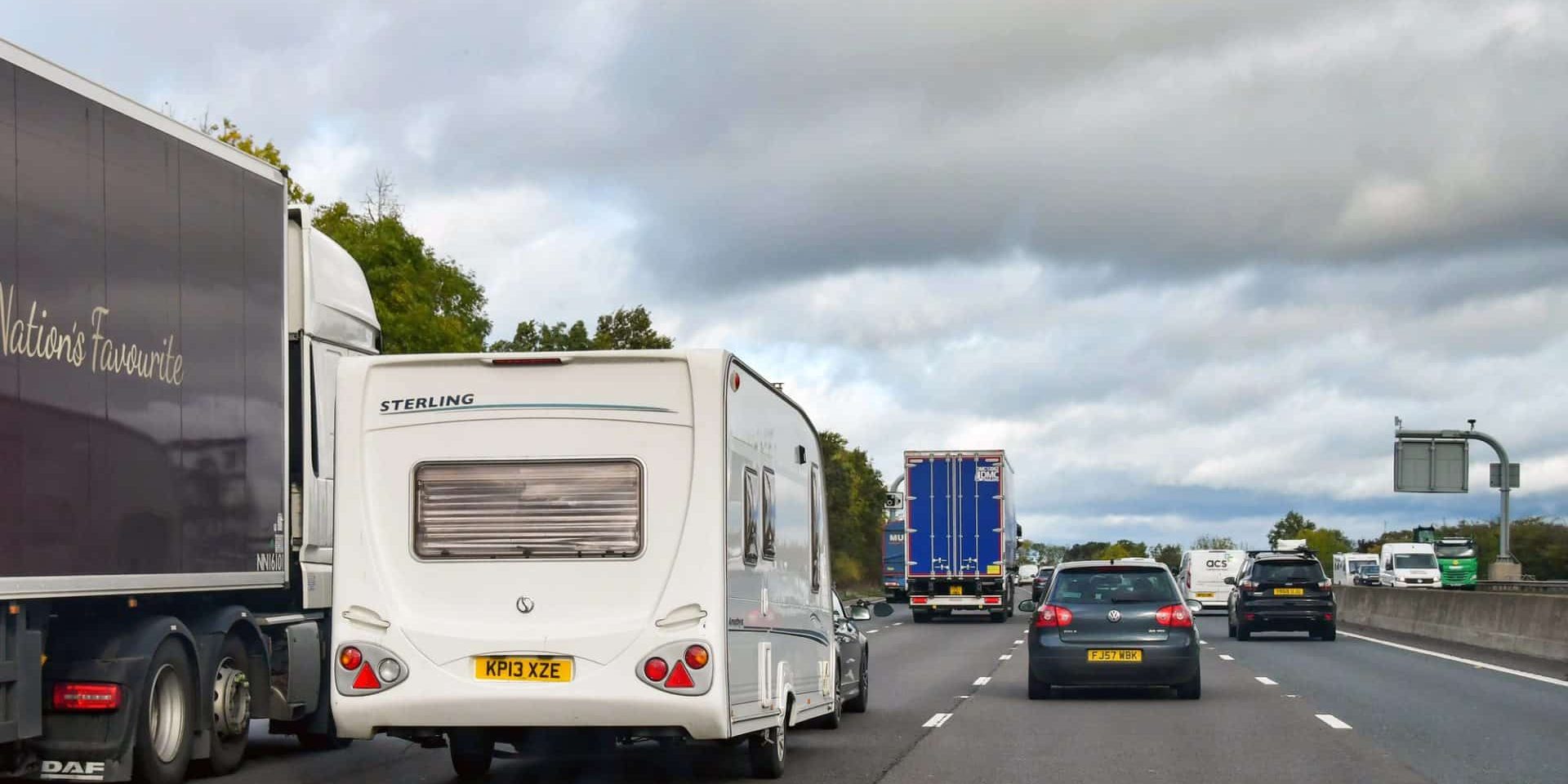
- Most drivers who passed their test after 1 January 1997 need category B+E to tow anything over 750kg, and B+E on its own is capped at a trailer of 3,500kg with a combined car-and-trailer mass of 7,000kg.
- Towing drops the speed limit by 10mph on faster roads: 60mph on a motorway or dual carriageway instead of 70mph, and 50mph on a single carriageway instead of 60mph.
- Drivers who passed their test before 1 January 1997 usually kept a much higher towing entitlement automatically, without sitting any extra test.
Check Your Licence Category Before You Check Your Mirrors
The short answer: what you are legally allowed to tow comes down to two things, when you passed your driving test and the combined mass of your car and caravan. A standard category B licence gained after 1 January 1997 lets you tow a small trailer, but anything heavier needs category B+E, which caps the trailer at 3,500kg and the car-plus-trailer total at 7,000kg. Go over either figure and you need a further test, no matter how confident you feel behind the wheel.
This trips up more caravan owners than any other part of the rules. The mass that counts is not the caravan’s dry mass printed on the specification sheet. It is the Maximum Authorised Mass, or MAM, the heaviest the caravan is ever allowed to be once loaded with water, gas, luggage and everything else you pack for a trip.
Which Licence Category You Actually Need
If you passed your test on or after 1 January 1997, your standard category B licence covers towing a trailer up to 750kg, or a heavier trailer as long as the combined MAM of car and trailer stays under 3,500kg. Beyond that, you need category B+E, which raises the trailer limit to 3,500kg and the combined total to 7,000kg. A trailer heavier still needs category C1+E, which requires a further practical test and comes with its own medical standard.
If you passed your test before 1 January 1997, the rules work in your favour. Most drivers in this group automatically kept a much wider towing entitlement under grandfather rights, without needing to pass the newer B+E test at all, and in many cases can tow combinations up to 8,250kg MAM under an older C1+E-equivalent entitlement. Check the back of your physical licence or your entitlement online. Older paper licences and early photocard licences can carry different category codes depending on exactly when they were issued.
The Mass Limits That Decide What You Can Tow
Three numbers matter when you are working out what you can legally tow: the car’s kerb mass, the caravan’s MAM, and the car’s towing capacity as set by the manufacturer. A rough industry guideline used by caravan dealers is that a loaded caravan should not exceed 85% of the towing car’s kerb mass for a stable, comfortable tow, though this is a handling recommendation rather than a legal limit; the legal limit is whichever is lower out of your licence’s mass cap and the car manufacturer’s stated towing capacity.
Check the caravan’s loaded mass as you would actually travel, not empty, before your first long trip. Many caravan dealers, recycling centres and haulage yards run a public mass-check point for exactly this reason, and a loaded check takes a few minutes and typically costs a small fee. Guessing the loaded mass, or relying on the manufacturer’s advertised MTPLM figure without checking your own packing habits against it, is how drivers end up over their licence limit without realising it until a police check on the roadside.
The Speed Limits Are Not the Same as Driving Solo
Towing anything cuts your speed limit on faster roads by 10mph. On a motorway, the limit drops from 70mph to 60mph. On a dual carriageway, it also drops to 60mph. On a single carriageway, where a car alone is limited to 60mph, a car towing a caravan is limited to 50mph. In a built-up area with street lighting, the 30mph limit stays the same whether you are towing or not.
These lower limits exist for a plain reason: a caravan changes how the whole combination handles: braking distances lengthen, side winds and the wash from passing lorries have more effect, and a caravan that starts to snake or sway at higher speed is far harder to bring back under control than a car on its own. Sticking to the towing limit, even on an empty motorway where 70mph feels perfectly safe, is one of the simplest ways to avoid the kind of swaying incident that causes most caravan-related breakdowns and crashes.
Edge Cases: Older Licences, Motorhomes and Extra Tests
A motorhome is treated differently from a car towing a caravan. The whole vehicle, not a car-and-trailer combination, is what gets measured against your licence category. A standard category B licence covers a motorhome up to 3,500kg MAM on its own, with no trailer involved; anything heavier needs C1 rather than B+E.
If you are close to a mass limit, or planning to buy a bigger caravan than the one you currently tow, book a proper trailer test rather than guessing you will be fine. The test itself covers reversing, hitching, unhitching and manoeuvring a loaded trailer, skills that matter as much on a wet campsite pitch as they do on the motorway, and passing it removes any doubt about what you are legally covered to tow.
Getting the Hitch and Mirrors Right Before You Set Off
Legal cover is only half the job. A correctly matched car and caravan can still tow badly if the load is not packed evenly across the axle and the tow ball. Both the car maker and the caravan maker set their own nose load limit, the downward force the caravan’s coupling puts on the tow ball, and keeping the load spread evenly front to back inside the caravan helps avoid the unstable handling and uneven tyre wear that comes from getting it wrong. A cheap nose load gauge, sold by most caravan accessory shops, checks the figure in seconds and is worth using every time you load the caravan differently from usual.
Extended towing mirrors are a separate legal requirement, not just good practice, whenever a caravan or horsebox blocks the view a car’s standard door mirrors would normally give. Driving without them when your rear visibility is obstructed carries a fine of up to £1,000 (about $1,340) and 3 penalty points on your licence, the same category of penalty as other careless driving offences, and clip-on extended mirrors cost a fraction of that fine.
Insurance and Breakdown Cover Are a Separate Question
A licence that legally lets you tow a caravan does not automatically mean your existing car insurance covers you while you are towing it. Most standard car policies extend a basic level of third-party cover to a caravan being towed behind an insured car, but that basic extension rarely covers damage to the caravan itself, its contents, or a full write-off. A dedicated caravan insurance policy, bought separately from the car policy, is what actually protects the caravan, and it is worth checking the exact wording of both policies before a first long trip rather than assuming one automatically covers what the other leaves out.
Breakdown cover works the same way. Standard car breakdown cover frequently excludes a caravan entirely, or covers only the car and leaves the caravan itself stranded at the roadside with no help arranged for it. Specialist breakdown providers that cover caravans and motorhomes exist for exactly this gap, and checking your policy documents for the word “trailer” or “caravan” before you need it is far easier than finding out the gap exists while parked on the hard shoulder.
Sources

Leave a Comment
More in News

How to Remove Moisture From Inside Your Headlight Before It Costs You £500
What Red and Amber Warning Lights Actually Mean (and Which Fail an MOT)

How to De-Ice Your Windscreen Fast Without Cracking It (and Staying Legal)

New Cars Face Euro 7 Rules From 29 November With a £264 Price Rise
What the Traffic Penalty Tribunal’s 33 Percent Success Rate Means for Every Driver
Trending on Motoring Chronicle
Top Marks: 2026 Hyundai Palisade Earns IIHS Top Safety Pick+ Under Tougher New Test Rules

DENZA Z9 GT Priced From £95,000 as Chinese Premium Brand Launches in the UK

2026 Nissan LEAF named a 2026 Car and Driver Editors’ Choice winner

2026 Nissan Armada, Nissan LEAF named Cars.com Best of 2026 Awards winners
