The Grip Gap: A Diagnostic Guide to Tyre Health


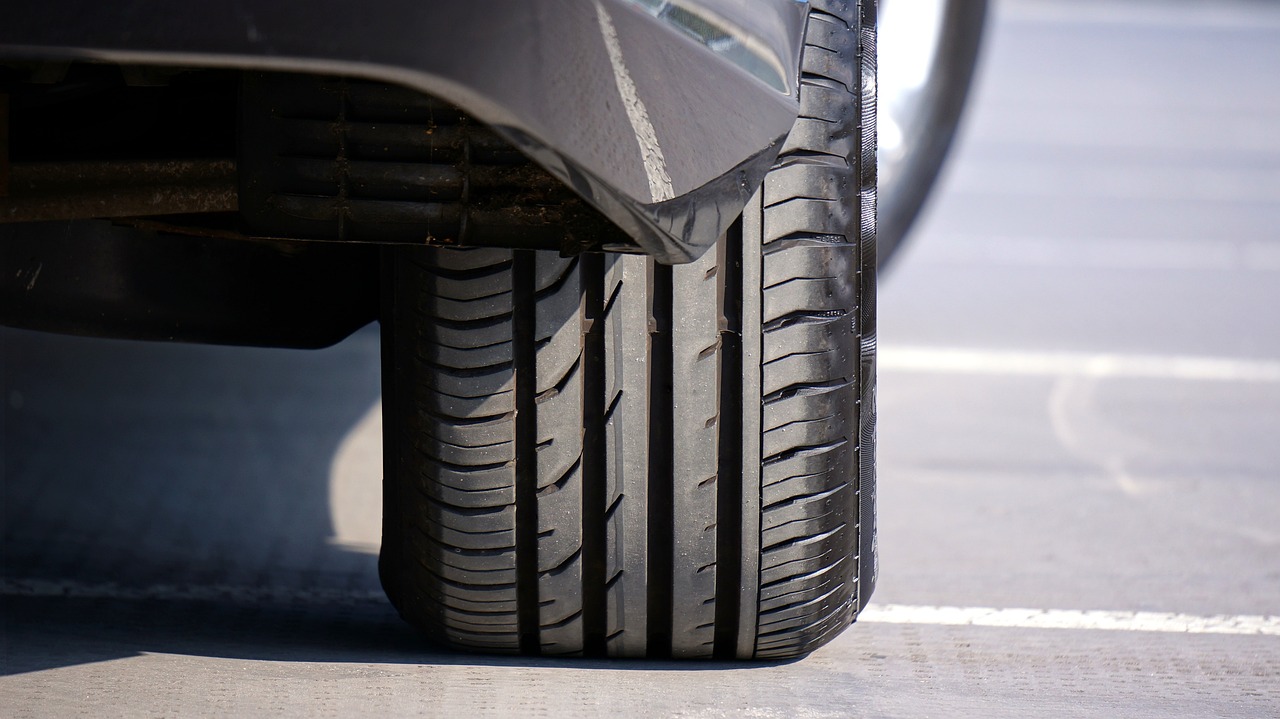
This guide provides a comprehensive overview of tyre safety by comparing the legal and recommended maintenance standards in the United Kingdom and the United States. It explains how drivers can use common coins or built-in tread wear indicators to monitor rubber depth and ensure sufficient grip for wet weather…
How Tread Depth Controls Water Evacuation at Speed

Tread grooves function as high-speed water pumps, channelling several litres per second away from the contact patch at motorway speeds. At 8mm of depth, the grooves have sufficient volume and wall height to maintain this evacuation rate even through standing water, keeping rubber in direct contact with the road surface. As depth shrinks toward the 1.6mm legal minimum, groove volume falls dramatically, the pumping capacity fails under wet conditions, and a thin film of water lifts the tyre off the tarmac in a fraction of a second. Aquaplaning requires no warning and no gradual onset: one moment the tyre has grip, and the next it has none.
The Extra Stopping Distance a Worn Tyre Adds in the Wet

At 50mph on a wet road, the difference in stopping distance between a tyre at 3mm and one at the 1.6mm legal limit is approximately 11.9 metres. Spread across the width of a road, that distance represents the length of three standard cars. A tyre at 3mm can complete a full stop from 50mph before a 1.6mm tyre has finished losing speed, which means the vehicle behind the legal-limit tyre is still travelling at something close to full speed when the safer car has already stopped. The figure is not a worst-case scenario calculated under laboratory conditions: it represents measured braking performance under conditions drivers encounter on ordinary roads.
The Legal and Safe Tread Limits Compared: UK and US

The United Kingdom sets its legal tread floor at 1.6mm across the central three-quarters of the tyre, enforced by a maximum £2,500 fine and three penalty points per tyre, with unlimited fines and bans possible for multiple offences. The United States applies a broadly similar minimum of 2/32″ in most states, roughly equivalent to 1.6mm, with a quarter and penny providing the quick-check equivalent of the UK’s 20p test. Both countries set a safe target well above the legal floor: 3mm in the UK and 4/32″ in the US, the depth at which water evacuation begins to drop significantly. The legal limit defines the point of illegality, not the point of safety, and treating it as a replacement target leaves considerable risk on the table.
How to Check Tread Depth with a Coin

The UK 20p coin provides an immediate depth check without tools. Inserted into the main tread groove, a legal tyre will fully conceal the outer band of the coin. If any part of the band remains visible, the tyre is at or below 1.6mm and must be replaced. In the United States, a quarter inserted head-down reads approximately 4/32″ when Washington’s head disappears into the groove, indicating the tyre has reached the safe-replacement window. A penny used in the same way marks 2/32″, the legal minimum. The test takes seconds, requires no equipment, and can be performed at any fuel stop. Checking all four tyres at each fill takes under two minutes and eliminates the most common reason drivers are caught on worn rubber.
Why Checking Only the Centre Groove Misses the Real Risk

Measuring tread depth at the centre groove alone generates a reliable-looking number that frequently disguises the true state of the tyre. Alignment errors, inflation faults, and driving style all cause wear to concentrate on the edges rather than the centre, meaning a tyre can show 4mm at the middle measurement point while sitting below 2mm at the inner or outer shoulder. The outer edge handles cornering loads and lateral grip, so a bald shoulder is a direct reduction in the tyre’s ability to hold the car through bends, even when the centre appears healthy. Three measurements per tyre across the inner edge, centre, and outer edge produce an accurate picture of the full contact patch and take less than thirty seconds to complete.
What Uneven Tread Wear Is Telling You About Your Car

Wear pattern is one of the most direct diagnostic tools available without specialist equipment. Both-edges wear with a raised centre dome indicates chronic under-inflation: the sidewalls bulge, the centre lifts off the road, and the shoulders carry the entire contact load. Centre-only wear with healthy edges points to over-inflation, where excess pressure forces the tyre to ride on its crown. A single worn edge is the signature of a misalignment fault, with the wheel dragging laterally through corners and scrubbing rubber from one shoulder. Cupped or scalloped tread distributed in a wavy pattern across the surface indicates a failing shock absorber or worn suspension component that is allowing the wheel to bounce rather than maintain consistent road contact.
Why Tyre Wear Accelerates Sharply Below 4mm

New tyres begin life at approximately 8mm and shed rubber at a broadly consistent rate through the first half of their usable depth. The first 4mm of wear typically accounts for around 25,000 miles of driving life, giving regular checks a comfortable margin. Below 4mm, the rate of rubber loss accelerates because thinner compound has less structural rigidity, generating more heat per revolution and wearing faster as a result. The final 2.4mm from 4mm down to the 1.6mm legal limit can vanish in as little as 10,000 miles, meaning a tyre that appeared to have months of life at a spring check can fail a roadside inspection by autumn. Inspection frequency should increase as tyres pass the 4mm mark.
How to Read a Tyre Sidewall for Age and Safety Status

Every tyre carries its production date in the final four digits of the DOT code moulded into the sidewall. The first two digits represent the week and the second two the year, so a code ending in 2219 indicates manufacture in week 22 of 2019. Continental and several other major manufacturers specify a maximum service life of ten years from the production date regardless of tread depth, as the rubber compound hardens and develops micro-cracking with age even when the tyre has been lightly used. The tread wear indicators moulded into the main grooves at 1.6mm provide a visual confirmation of legal wear-out, but they should not be used as a replacement target: they mark the legal floor, not the safe threshold. A tyre reaching the indicators has already lost the majority of its wet-weather performance.
The Window Between Safe and Legal: Where to Replace

Water evacuation efficiency and wear rate cross each other at approximately 3mm of tread depth, and that intersection defines the optimal replacement window. Above 3mm, the grooves still pump water effectively and wear is still progressing at a manageable rate. Below 3mm, aquaplaning risk rises steeply while the remaining rubber disappears faster than the mileage rate above that depth would suggest. Replacing at 3mm captures the period when a tyre can still be safely used on dry roads while avoiding the sharply deteriorating wet performance of the final millimetre. Financially, it also avoids the additional rim and suspension risk that comes with running tyres to the legal limit on damaged or uneven road surfaces.
A Step-by-Step Guide to Replacing Tyres Correctly

Triggering a replacement check at 3mm rather than 1.6mm gives a driver time to compare prices, schedule an appointment, and replace axle pairs rather than single tyres, which both maintains handling balance and often reduces the per-unit cost through volume pricing. Replacing a single tyre on a driven axle introduces a measurable grip imbalance under braking and acceleration, so tyres are best replaced in pairs across the same axle. On a rear-wheel-drive vehicle, the better tyres should always be fitted to the rear to control oversteer under hard braking. The sequence shown here applies to any vehicle: check depth, confirm damage or age flags, then replace axle-by-axle with matching compounds where possible.
The Difference Between the Legal Limit and the Safe Limit

The 1.6mm legal limit represents the absolute floor at which a tyre can be legally operated. By that depth, water evacuation capacity has fallen so far that the tyre’s wet-weather grip is a fraction of what a new tyre produces, and the risk of aquaplaning in standing water is substantially elevated. The 3mm safe minimum is the physics-backed threshold where water evacuation begins to drop off the performance curve, and the point at which every major safety organisation recommends replacement. Treating the legal limit as a target means routinely driving on rubber that meets the letter of the law but provides significantly reduced protection. Replacing at 3mm keeps a driver in the safe operating window throughout the tyre’s working life.

Leave a Comment
More in News

How to Free a Frozen Handbrake (and What a New Cable Costs)

What Winter Tyres Actually Do for UK Drivers (and Whether You Need Them)

Renewing Car Insurance on the Day Cover Ends Costs Drivers £331 More, MoneySupermarket Shows

Every Driver Faces £500 Seatbelt Fines as AI Cameras Flag 19,145 Possible Offences

How to Remove Moisture From Inside Your Headlight Before It Costs You £500
Trending on Motoring Chronicle

How the ZEV Mandate Is Already Changing What Cars Are Available and at What Price

Why The King’s Speech Left UK Drivers Sharing Roads With Britain’s Illegal E-Scooters

How a Deer Strike This Autumn Could Cost UK Drivers £2,713 in Repairs
What the Government’s £1 Road Tax Holiday Means for Hauliers and Drivers