
How to Check Tyre Pressure Correctly (and Find the Right Number)
- Check tyre pressure when the tyres are cold, using a gauge on each valve, and match the reading to the figure in your handbook or on the driver’s door sticker, never the maximum moulded on the sidewall.
- Add air in short bursts and recheck, test all four tyres and the spare, and repeat at least monthly and before long trips.
- A Michelin and Kwik Fit inspection of more than 500 cars found 27.56 per cent had at least one dangerously underinflated tyre and 12.01 per cent had at least one very dangerous one.
How to Check Tyre Pressure Correctly and Find the Right Number for Your Car
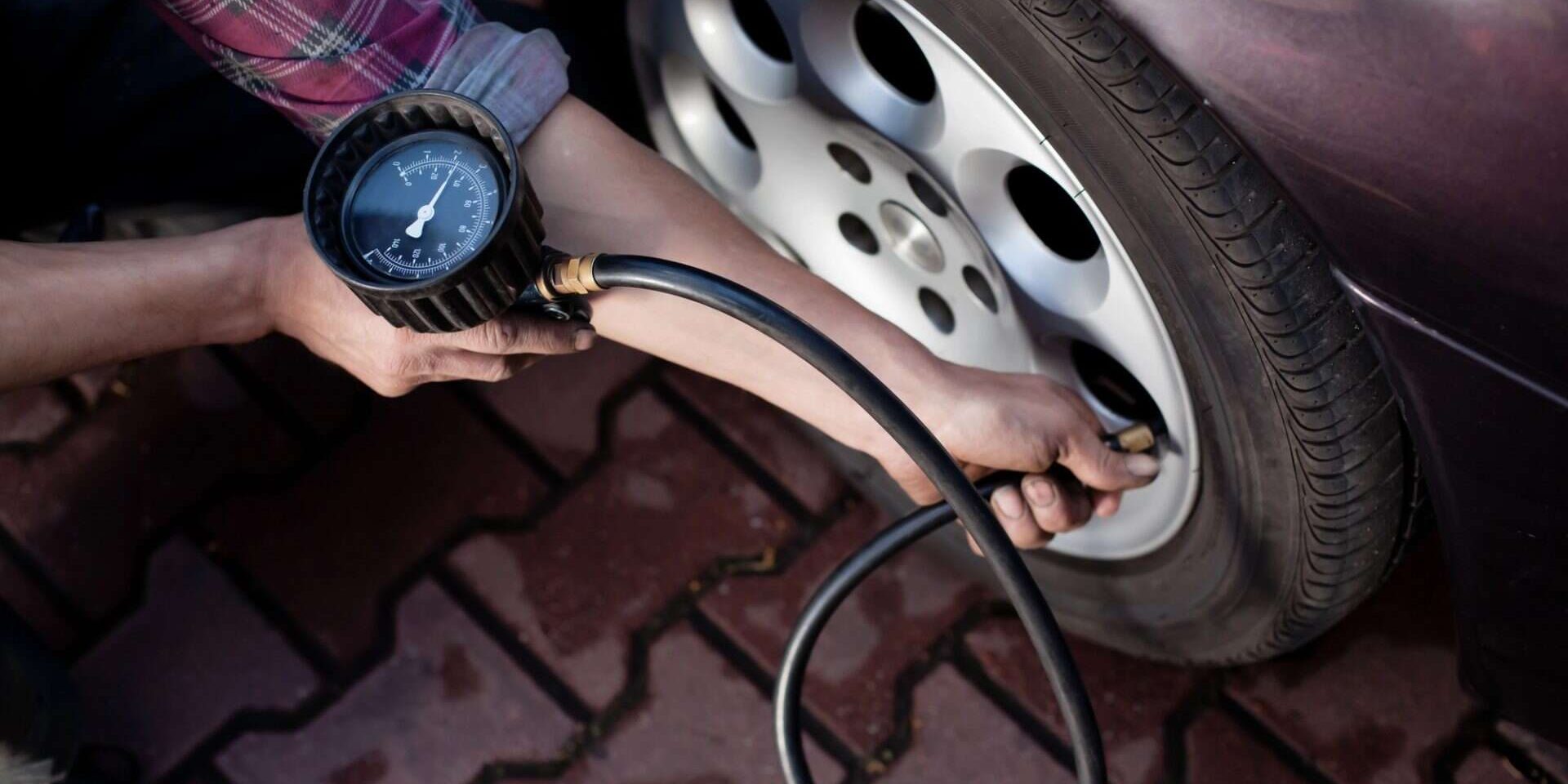
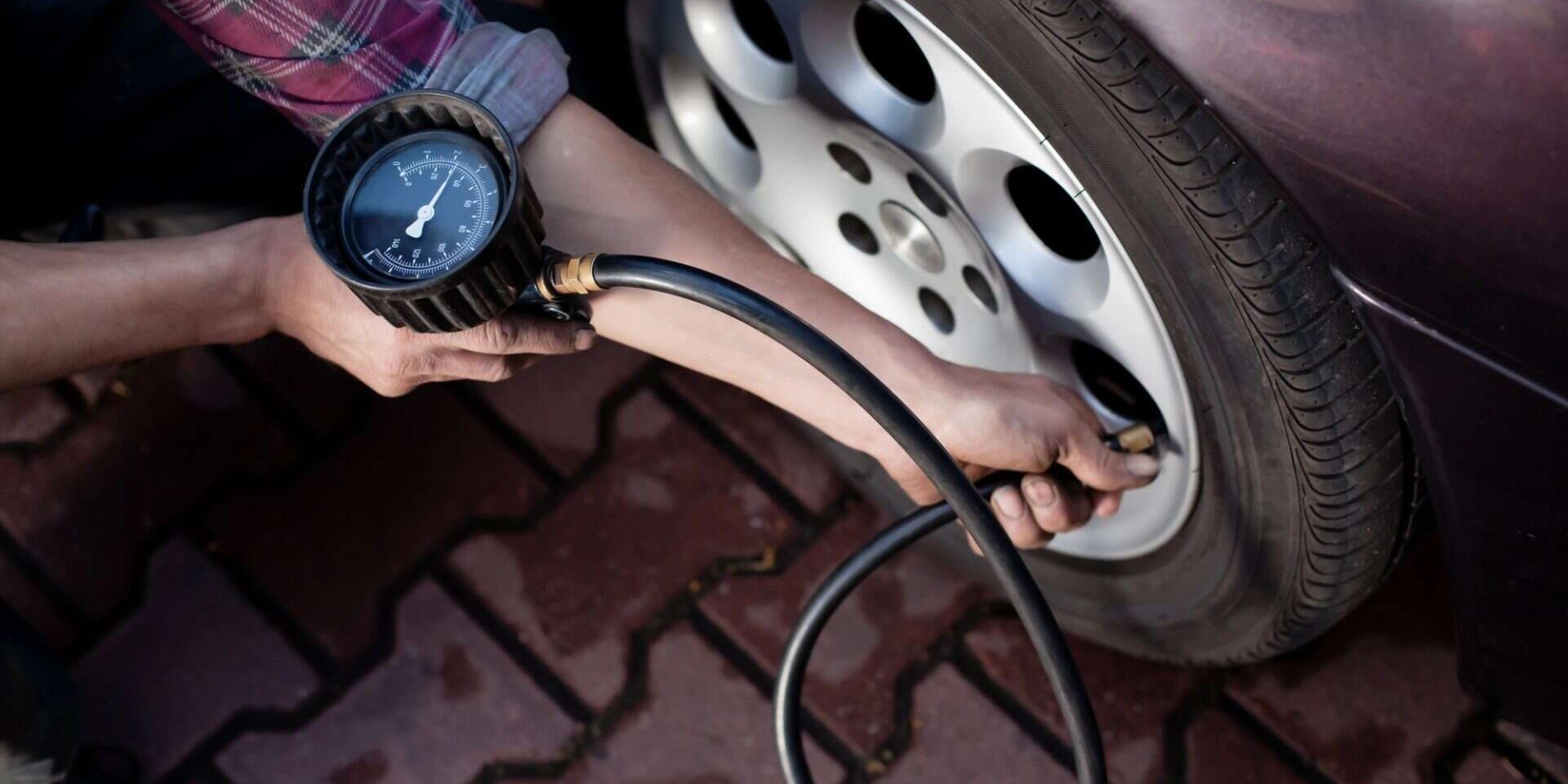
Check your tyre pressure when the tyres are cold. Press a gauge onto each valve until the hiss stops, then compare the reading with the figure in your handbook or on the sticker in the driver’s door opening. Ignore the number moulded into the tyre wall, which is the maximum the tyre can take rather than the pressure your car needs. Add air in short bursts, recheck after each one, and test all four tyres plus the spare. With a digital gauge the job takes about two minutes, according to Tyre Reviews, and it is worth repeating at least monthly.
Most drivers skip it until a warning light comes on or a tyre looks flat, and by then the damage to fuel economy, grip and tyre wear has been building for weeks. The sections below cover where the right figure lives, how to take an accurate reading, what low pressure costs you, how often to check, and the edge cases that catch people out, including cold mornings, heavy loads and the spare.
Where to Find the Right Pressure for Your Car
The correct figures come from the vehicle maker, not the tyre maker. Look for a sticker on the edge or pillar of the driver’s door, inside the fuel flap, or in the handbook. One UK parts guide says most vehicles list different pressures for the front and rear tyres, and some give a higher figure for a full load or for sustained motorway driving. If your car lists two sets of numbers, use the set that matches how you will be driving that day.
The figure moulded into the sidewall is a ceiling for the tyre, not a target for your car. Pumping a tyre up to that number is a mistake, as it moves the tyre away from the pressure the manufacturer specified for your vehicle. Pressures are printed in psi, bar or both, and many forecourt machines can switch between the two, so check which unit the machine is set to before you add any air. One bar is about 14.5 psi.
How to Take an Accurate Reading Step by Step
Start with cold tyres. The parts guide defines cold as before you drive, or after the car has been parked for at least three hours. Even a short drive warms the tyres and pushes the reading up, and guides disagree on by how much, with figures between 3 psi and 6 psi quoted. A warm reading can hide a tyre that is truly low. If you have to drive to a forecourt air machine, expect a reading higher than your cold figure, and do not let air out to bring it down to the handbook number. Take the car home, let it cool and check again.
Park on level ground, apply the handbrake and unscrew the valve cap from the first tyre. Press the gauge squarely onto the valve and hold it for two to three seconds until the hissing stops. Read the figure and compare it with the number for that axle. Repeat on the other three tyres and the spare.
If a tyre is low, add air in short bursts and recheck after each one, as it is easy to overshoot. If it is high, press the bleed button on the gauge or the pin in the valve to release a little air, then check again. Refit every valve cap straight away. The parts guide says the caps keep dirt out of the valve and add a small extra seal against slow leaks.
The gauge itself counts. The parts guide says digital gauges are typically accurate to within 1 psi, while cheaper analogue versions can be out by 2 psi to 3 psi. It also says forecourt gauges are often inaccurate after heavy use, so compare the machine against your own gauge before trusting it.
What Low Pressure Costs You in Fuel and Safety
Michelin and Kwik Fit inspected more than 500 vehicles in Tesco car parks around the UK and found 27.56 per cent had at least one dangerously underinflated tyre, while 12.01 per cent had at least one very dangerous tyre. Michelin classes a tyre as dangerously underinflated when it sits between 7 psi and 14 psi below the manufacturer’s recommendation, and very dangerous at 14 psi or more. The release is undated, so treat the percentages as a snapshot rather than a current figure, but the thresholds make a useful yardstick for your own check.
Fuel is the cost drivers notice first. Running a car with tyres 7 psi under the recommendation cuts fuel economy by about one mile per gallon, according to the same release. Michelin estimated that underinflated tyres could cost drivers in a city the size of Manchester more than £2 million ($2.6 million) a year in unnecessary fuel.
Safety is the bigger cost. Jamie McWhir, technical manager for Michelin in the UK, said: “Driving around on underinflated tyres costs money and it can cost lives.” Roger Griggs, communications director at Kwik Fit, said: “Checking tyre pressure is as important as checking tread depth, as tyres at the wrong pressure will compromise handling, grip and braking.” Tyre Reviews lists poor handling, unpredictable behaviour, lower grip, premature wear and even tyre failure among the risks of an underinflated tyre.
How Often to Check and What the Law Says
Advice on frequency varies a little. Griggs said: “we urge motorists to check their air pressure, tyre condition and tread depth every fortnight.” Tyre Reviews also suggests every couple of weeks, while the parts guide calls monthly the minimum and adds checks before long trips, when carrying heavy loads, or if the handling changes. A workable routine is a monthly check at the very least, a fortnightly check through autumn and winter, and a check before every long trip.
The law is written mainly around the condition of the tyre. Torbay Council’s road safety notice says car tyres must have at least 1.6mm of tread in a continuous band across the central three quarters of the tread width and around the entire circumference, and that the driver is responsible for keeping tyres legal and roadworthy. It gives the penalty for an illegal tyre as a fine of up to £2,500 ($3,300) and three penalty points per tyre. The notice dates from 2014, so check the current penalty on gov.uk before relying on the figure. Our guide to the UK tyre tread limit shows how to check yours.
A dashboard pressure light is no replacement for a gauge check, as it only comes on after pressure has already dropped. Our guide to what the tyre pressure warning light actually means explains how to reset it once the pressures are right.
Edge Cases: Cold Snaps, Heavy Loads and the Spare
Cold weather lowers pressure. The parts guide says pressure falls by about 1 psi for every 10 degrees Celsius drop in temperature, so a tyre set in summer can read a couple of psi low by midwinter. Check more often as autumn turns to winter, and always check cold.
Load changes the target. Look in the handbook or on the door sticker for the figures that apply when the car is full of passengers or luggage, and set them before a holiday trip rather than after you notice the car feels loose on the road.
The spare needs the same attention. The parts guide says to check it monthly with the other four, and notes that temporary space saver spares typically need a much higher pressure, about 60 psi, than the main tyres. The right figure is in the handbook, so look it up rather than copying the pressure from your road tyres.
Do not judge pressure by eye. The parts guide warns that modern radial tyres can look properly inflated when they are well under pressure. Use the same stop to look for cracks, bulges or embedded objects in the sidewalls and for uneven tread wear. If one tyre keeps losing air between checks, read our guide on whether a slow puncture is repairable and what it costs.
A Two Minute Routine You Can Repeat Every Month
Keep a digital gauge in the glovebox, pick a date that is easy to remember, such as the first Sunday of the month, and check before you drive. Note the four pressures in your phone, along with the handbook figures for normal and full loads. After a few months the notes show which tyre loses air fastest, and that is the one to watch or have inspected.
Pair the check with a quick look at the tread and sidewalls. Richard Pryce, a Roads Policing Unit Inspector at Devon and Cornwall Police, said in the Torbay notice that most tyre suppliers will offer a free check for drivers, so book one if anything looks wrong.
Sources:

Leave a Comment
More in News

BYD Dolphin-G review: UK’s first plug-in hybrid supermini is a winning package
What a Sudden Heavy Steering Wheel Actually Means for Your Car’s Safety

What a Rate Rising to 9 Percent Means for Every Electric Company Car Driver
Why Your Car Battery Dies in Cold Weather and the Fix That Works

Councils Rejected 81 Percent of Pothole Damage Claims From UK Drivers Last Year
Trending on Motoring Chronicle
Why Gas Prices Have Climbed 16 Cents in a Week to Hit $4.43 a Gallon
Your Driver’s License Is Now in Apple Wallet in 14 States, With Six More Signed Up

Ohio Bill Would Force Uber and Lyft to Recheck Drivers Every 6 Months

Why Battery Health Now Decides What a Used Electric Car Is Worth
