How California’s New Move Over Law Covers Every Car With Hazard Lights


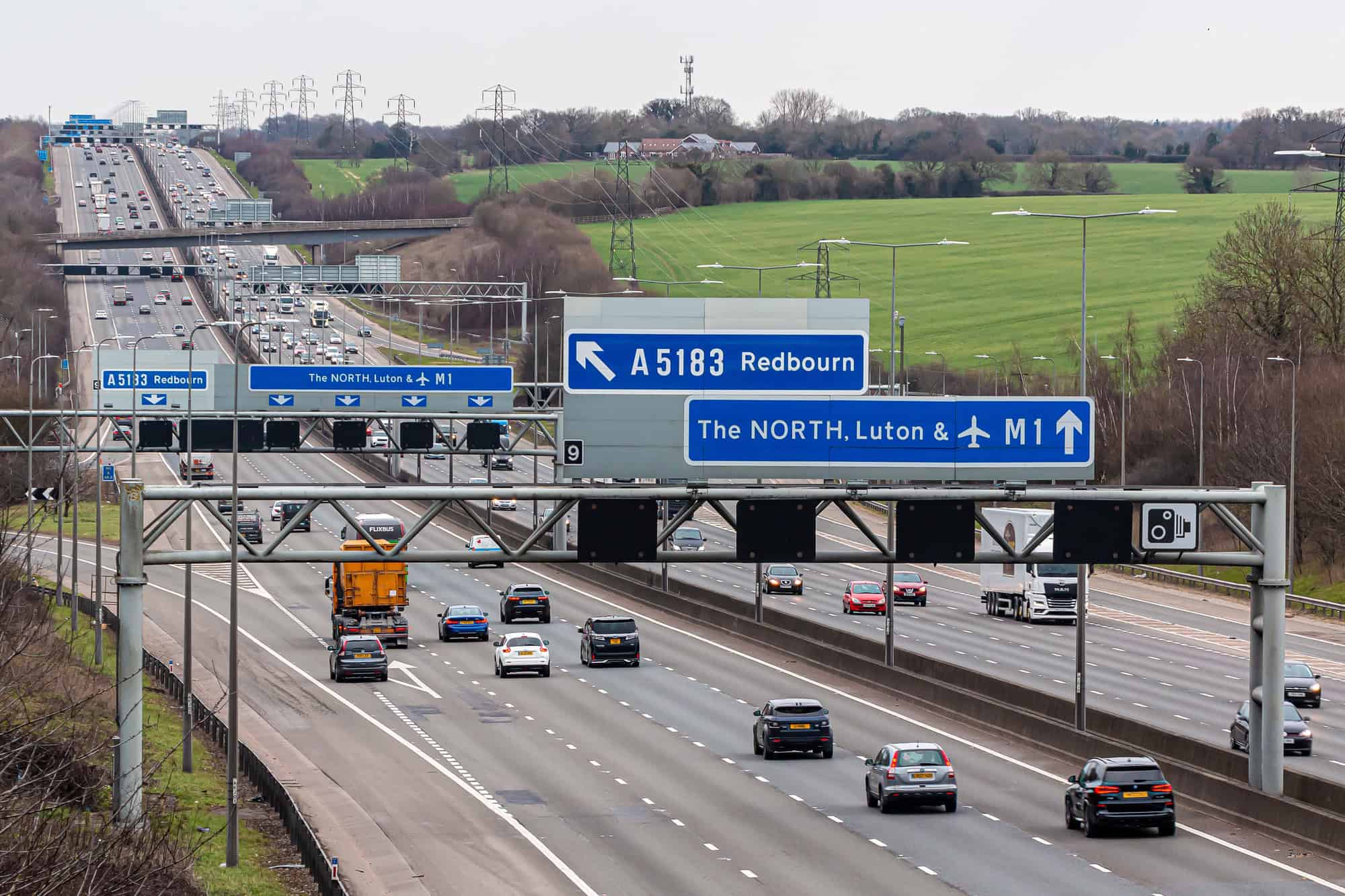
California drivers who blow past a stranded motorist without changing lanes or slowing down can now be ticketed the same way they would for speeding past a police car or a tow truck. Assembly Bill 390, in force statewide as of January 1, extends the state’s “slow down, move over” protections beyond emergency vehicles and highway crews to cover any vehicle stopped with its hazard lights flashing or another warning device in place.
Governor Gavin Newsom signed AB 390 in the summer of 2025, and Assembly Transportation Committee Chair Lori Wilson, the bill’s author, called it “a commonsense update that reflects the real dangers people face when pulled over or stranded.” The law brings California in line with at least 24 other states that had already broadened similar move-over protections to cover everyday drivers, not just first responders.
What Changed and What Counts as a Warning Device
Before AB 390, California’s move-over law only protected people working directly on the roadway: police officers, tow truck operators, Caltrans crews and other official personnel with flashing lights or cones marking their position. A driver who broke down on the shoulder with nothing more than a hazard light blinking had no special legal protection at all beyond the state’s general careless driving statute.
AB 390 erases that distinction. Any stationary vehicle displaying hazard lights, flares, reflective triangles or road cones now triggers the same legal obligation drivers already owe to a parked police cruiser. That covers a stranded motorist waiting for a tow, a delivery driver stopped briefly with flashers on, a utility crew working from an unmarked truck, and a roadside assistance vehicle helping a driver change a tire.
What Drivers Are Required to Do
The law sets out two clear options, and drivers must pick whichever applies to the road they are on. On a multi-lane highway, a driver approaching a stopped vehicle in an outer lane must move into a lane at least one over, away from the stopped vehicle, if it is safe to do so. If traffic makes changing lanes impossible, a driver must instead slow to a safe, reasonable speed while passing. On a single-lane road where changing lanes is not an option at all, slowing down and giving the stopped vehicle as much room as possible is the only requirement.
Fines for violating AB 390 run from $200 to $300, depending on whether the citation comes from a local police department or the California Highway Patrol, and a violation also adds one point to the driver’s license. That point can affect insurance premiums and, for drivers who accumulate multiple points within a short window, can trigger a suspension review under the state’s separate point system.
Why California Pushed the Change Now
The numbers behind AB 390 make the case for the law more directly than any political argument could. Between 2013 and 2023, California saw a 60 percent increase in deaths involving people standing outside disabled vehicles, and the state ranked second nationally for this category of fatality. Over that decade, California recorded roughly 500 of the nearly 3,500 such deaths nationwide, and the state held the unwelcome distinction of ranking first in the country for these deaths in five separate years. Fatalities peaked at 71 in 2021 alone.
Those numbers cover everyone from stranded drivers changing a flat tire on the shoulder to Caltrans workers who were already supposed to be protected under the old law but were struck anyway by drivers who did not move over in time. AB 390 does not replace the older protections for emergency and highway workers; it layers a broader protection for ordinary motorists on top of the existing law, updating outdated legal references along the way so that contract-operated highway maintenance vehicles are unambiguously covered too.
How This Fits Into a Bigger Package of Road Safety Bills
AB 390 was one piece of Wilson’s broader “Transportation Safety Package” moving through Sacramento at the same time. A companion bill, AB 435, requires that every passenger under age 16 wear a seat belt, closing a gap in California’s existing seat belt law that had left older children in a legal gray area depending on their seating position. Both bills cleared the Assembly and relevant Senate committees together, reflecting a legislative push to treat everyday road safety gaps as urgent rather than waiting for a single high-profile incident to force action.
California is not alone in this shift. State legislatures across the country have spent the past several years widening move-over laws that originally covered only law enforcement, then expanded to tow trucks and utility vehicles, and are now, in a growing number of states, expanding again to cover any stopped vehicle. Advocates for the change argue that from a driver’s perspective approaching a stopped car at highway speed, there is no meaningful difference between a police cruiser’s lights and a stranger’s hazard flashers: both signal a person standing outside a vehicle inches from moving traffic.
Every state in the country has some form of move-over law on the books, but the details vary widely enough that a driver crossing state lines can find the rules changing under them. Some states still limit the requirement to marked emergency vehicles. Others, like California under AB 390, now extend it to any disabled vehicle. A handful of states also vary the required lane change distance, or drop the requirement entirely on roads with only one travel lane in each direction, which is part of why California wrote AB 390 to spell out exactly what happens when a driver has no second lane available.
How Enforcement Is Likely to Work in Practice
AB 390 does not create a new category of automated camera enforcement. Citations depend on an officer directly observing a driver fail to move over or slow down, the same enforcement model California already uses for its existing move-over protections covering police and Caltrans vehicles. That means the practical effect of the law will depend heavily on how much attention the California Highway Patrol and local departments choose to put into it in the first year, much as earlier expansions of the state’s distracted driving and seat belt laws saw citation numbers climb gradually as officers built the new offense into routine traffic stops.
Legal experts who track California traffic law expect insurance companies to treat an AB 390 citation the same way they treat other moving violations, so a ticket can still influence premium calculations. The fine itself, at $200 to $300, sits in the same range as many existing infractions.
What to Do If You Break Down in California
For drivers who find themselves stopped on the shoulder, AB 390 does not remove the need for basic roadside safety habits. Highway safety officials still recommend pulling as far onto the shoulder or breakdown lane as possible, turning on hazard lights immediately, and staying inside the vehicle with a seat belt fastened when it is safe to do so. Being struck while standing outside a car remains one of the most common causes of roadside fatalities, regardless of what the surrounding traffic is legally required to do.
Drivers who need to exit the vehicle, to change a tire or wait for a tow truck, are safest doing so from the side away from traffic whenever the shoulder allows it. AB 390 changes the legal obligation owed by passing traffic, but it does not change the physics of a vehicle traveling at highway speed only a few feet away. Combining the new legal protection with those older, simpler habits gives stranded drivers the best chance of a routine breakdown staying routine.
Roadside assistance clubs and insurers that offer towing coverage generally advise calling for help before attempting a roadside repair on a busy highway shoulder. The time spent standing outside a vehicle carries more real-world risk than waiting a few extra minutes for a tow truck to arrive. AB 390 lowers that risk for everyone who breaks down in California going forward, but it works best alongside those older habits rather than in place of them.
Sources:

Leave a Comment
More in News

How to Remove Moisture From Inside Your Headlight Before It Costs You £500
What Red and Amber Warning Lights Actually Mean (and Which Fail an MOT)

How to De-Ice Your Windscreen Fast Without Cracking It (and Staying Legal)

New Cars Face Euro 7 Rules From 29 November With a £264 Price Rise
What the Traffic Penalty Tribunal’s 33 Percent Success Rate Means for Every Driver
Trending on Motoring Chronicle

Lamborghini Miura: Born Incomparable

Lamborghini at the forefront of elegance and speed on Lake Como

Wheel Bearing Noise: How Long Can You Really Keep Driving?
Fuel Theft Jumps 62 Percent as Forecourt Drive Offs Push Up Prices Everyone Pays