DVSA Rolls Out MOT Photos Nationwide After 1,809 Cases of Fraud
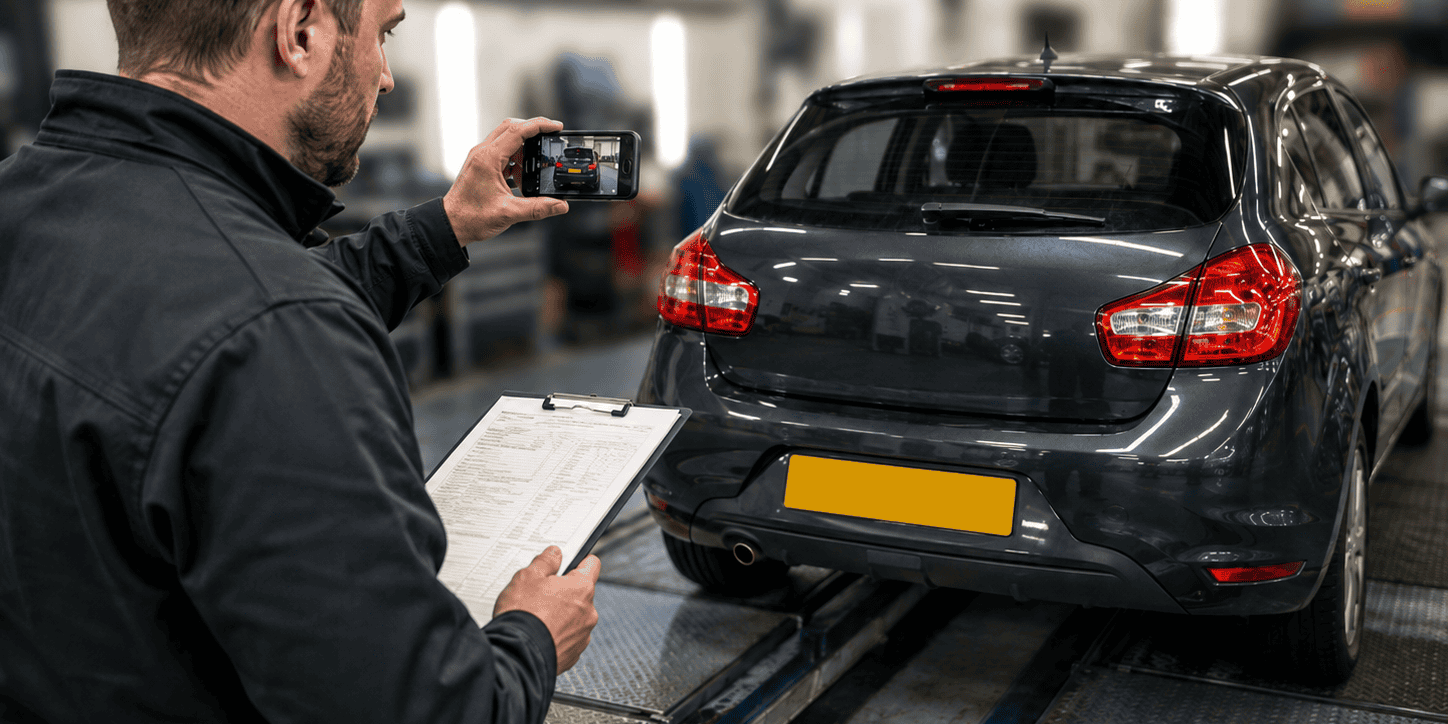
- DVSA began a national rollout of photo evidence at MOT tests on 3 August 2026, giving an extra 2,500 garages across Great Britain access to the feature.
- The agency uncovered 1,809 fraudulent MOTs in 2024, nearly double the 976 found the year before, and photos are its answer to so-called ghost tests, where a certificate is issued for a car that was never tested.
- Trial garages uploaded more than 60,000 images with a 92 percent success rate and no meaningful effect on test times, but DVSA says uploading a photo is not yet compulsory for every tester.
What DVSA’s Photo Rule Means the Next Time Your Car Is Tested
A fake MOT certificate is one of the easiest ways to end up driving an unsafe car without knowing it. DVSA calls this a ghost test: a certificate issued for a vehicle that never went near a test lane, usually sold on by a dishonest tester for cash. To close that gap, DVSA has started rolling out a system that makes testers photograph a car at the point of test and upload the image straight to its own system, rather than to the tester’s own phone. The rollout began on 3 August 2026 and follows two rounds of trials that DVSA says worked well enough to expand nationwide.
How the Photo System Works
A tester uses a smartphone, tablet or another compatible device to photograph the vehicle in the test bay. The image uploads directly to the MOT testing service and is not saved to the device’s own camera roll or gallery, which DVSA says protects both the driver’s privacy and the integrity of the record. The photo becomes part of the permanent test record attached to that vehicle, giving DVSA a way to confirm a car was physically present when a certificate was issued. Garages that already have access can use the feature for every test that comes through the door, and DVSA plans to extend access to the rest of the country’s roughly 23,000 MOT test stations in stages rather than all at once.
DVSA settled on this staged approach after running two separate trials rather than moving straight to a full national requirement. The first trial involved 170 testers across 62 garages, who submitted more than 13,000 photos between them as DVSA checked whether the upload process worked reliably outside a controlled test environment. A second, larger trial followed, bringing the combined total across both phases to more than 300 garages and over 60,000 images before DVSA judged the technology ready for a wider rollout. That staged, tested approach is part of why the feature is reaching test stations gradually through August, September and beyond, rather than being switched on everywhere on a single date.
The Fraud Problem Behind the Rollout
DVSA recorded 1,809 fraudulent MOTs in 2024, up from 976 the year before, a rise the agency links to ghost testing and other forms of certificate abuse. A fraudulent MOT does not just cheat the system on paper. It can put a car with worn brakes, bald tyres or a corroded structure back on the road with a certificate that says it passed a full check, and the driver or the next buyer often has no way of knowing. This pipeline has already reported on DVSA’s own roadside enforcement figures, which show detection work falling even as the fraud numbers climbed, and on the record number of ghost-MOT prosecutions DVSA brought over the past year. The photo system is designed to make that kind of fraud harder to pull off at the point of test, rather than relying only on catching it afterwards. A ghost test typically works on a simple gap: there is nothing in the current record to prove, one way or the other, whether a car ever entered the test lane; a tester dishonest enough to sell a pass can currently do so with comparatively little risk of the fraud being spotted before something goes wrong on the road. A photo record does not stop a dishonest tester acting alone from finding another way around the system, but it closes off the simplest version of the fraud and gives DVSA investigators a concrete piece of evidence to check against a vehicle’s known appearance, condition and location history when a certificate looks suspicious.
Why Uploading a Photo Is Not Yet Compulsory
DVSA has confirmed that photo uploads are not a mandatory part of every test while the rollout continues. Testers at garages with access are being encouraged to start using the feature and build it into their normal routine before it becomes a formal requirement, which DVSA has signalled will follow once national coverage is in place. Across the two trial phases, more than 300 garages uploaded over 60,000 images to the MOT testing service with a 92 percent success rate, and testers reported little change to how long a test or retest took. Almost nine in ten testers involved in the trial said the feature was easy to use, which DVSA has cited as a reason for pushing ahead with the wider rollout rather than running further trials first.
The gap between garages that have the feature and garages that do not is the practical reality for drivers over the coming months. A car tested at one of the 2,500 garages added in August will have a photo attached to its record; a car tested at a garage further down the rollout schedule will not, and the difference comes down purely to when that garage was brought on board, not anything about the car or the test itself. DVSA has not published a firm date for full national coverage or for the point at which photo uploads switch from encouraged to required, and garages are being added in phases rather than against a fixed public timetable, so drivers cannot currently check in advance whether a specific test centre has access before booking.
What to Ask at Your Next MOT
DVSA’s own figures put the number of MOT test stations in Great Britain at close to 23,000, run by a mix of independent garages, franchise dealers and fast-fit chains, so a phased rollout by its nature means a long stretch where some drivers get the extra protection and others do not. That unevenness is not unusual for a technology rollout of this size, but it does mean drivers cannot rely on the photo system alone to judge whether a garage is trustworthy for at least the next year or more.
Drivers cannot yet demand a photo at every garage, as the system has not reached every test station. Once it has, a vehicle’s test record held by DVSA should include an image confirming it was present for the test, which buyers of used cars can treat as an extra layer of reassurance alongside the existing MOT history check. If you use a garage that already has the feature, it is worth asking whether your car was photographed as part of the test; a garage that avoids the question or cannot explain why it has not adopted the system yet is not necessarily doing anything wrong, but it is a fair reason to check the rest of its paperwork carefully, especially if a test result ever looks inconsistent with the car’s actual condition. Keeping a simple MOT history alongside the certificate itself, and checking it against the vehicle’s mileage and known condition each year, remains the most reliable check available to any driver right now, whichever type of garage they use and whether or not that garage has photo evidence switched on yet.
Sources
DVSA, “National rollout of Photos at Test”, Matters of Testing blog, gov.uk, published August 2026: mattersoftesting.blog.gov.uk
DVSA, “Photos of Vehicles at MOT: sharing the results from our first trial with garages”, Matters of Testing blog, gov.uk: mattersoftesting.blog.gov.uk

Leave a Comment
More in News
How to Restore Cloudy Headlights Before They Fail Your MOT

What Your Engine Management Light Actually Means (and Whether You Can Keep Driving)
Drivers With 6 Penalty Points Pay 58 Percent More for Car Insurance, Confused.com Finds
RAC Data Shows 5.6 Million Drivers Will Hit the Roads This Half Term Weekend
Why Learners Paid Up to £500 for a £62 Driving Test Before DVSA’s Crackdown
Trending on Motoring Chronicle
What Does ‘Eco’ Mean on a Car?

Driving in the dark: two thirds of motorists admit they have never changed a headlight bulb

Britain’s Most Stolen Car Has Changed and Only 13 Percent Are Ever Recovered
Lamborghini Showcases the Ultimate in Italian Artistry During 74th Annual Pebble Beach Concours d’Elegance