
What DfT’s Proposed 2 Percent Meter Rule Means for Every New Public EV Charger
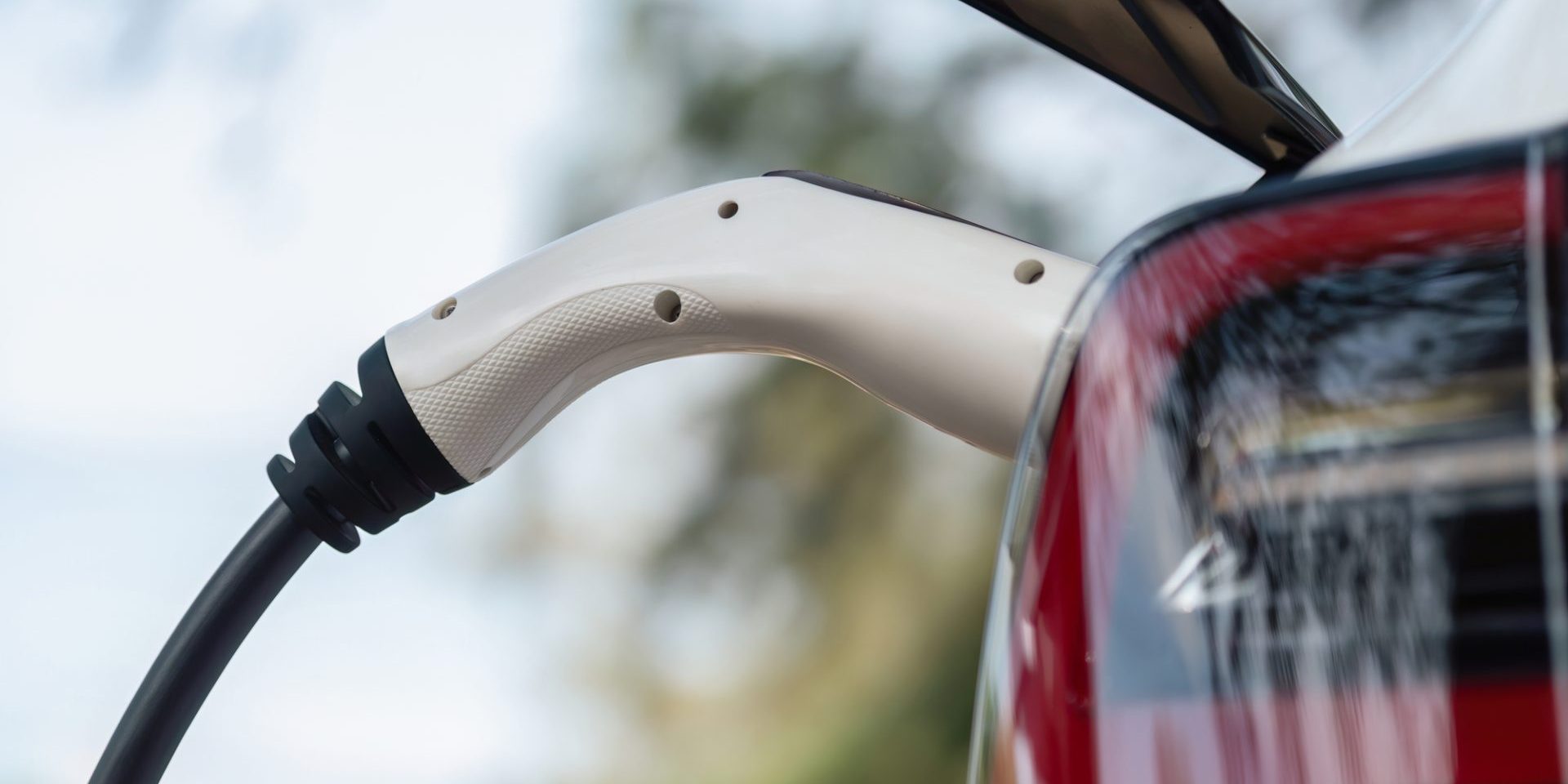

- The Department for Transport proposes that every public electric car charge point sold or installed in Great Britain carries a meter that meets the Measuring Instruments Regulations 2016, plus a cyber security standard and tamper protection.
- The meter would have to reach Class B, which DfT describes as measuring electricity to within 2% accuracy, and chargers already in the ground would not be retrofitted.
- This is a consultation with no start date and no new law yet, and responses close at 11:59pm on 20 December 2026.
The Meter Behind the Price You Pay at the Charger
The Department for Transport (DfT) wants every public electric vehicle charge point sold or installed in Great Britain to carry an electricity meter that complies with the Measuring Instruments Regulations 2016, at a minimum of Class B. DfT says a Class B device has been tested and verified as able to measure the electricity passing through it to within 2% accuracy. The consultation opened on 29 October 2026 and takes responses until 11:59pm on 20 December 2026, a window of 52 days.
Nothing in it is law. DfT proposes, drivers and companies respond, and no commencement date exists for any of the four measures on the table. The other three sit beside the meter: compliance with the cyber security standard ETSI 303 645, a possible alternative route through the European standard EN 18031, and physical protections against tampering with the casing.
The meter is the part a driver can price. Every public charger must already show its total price in pence per kilowatt hour, and the meter is the instrument that turns the kilowatt hours that pass through the connector into the number on the bill, at rapid units and slow ones alike. Our report on what drivers pay at rapid chargers tracks the price per unit. Take a 50 kWh charge at an illustrative 80p per kWh: 50 kWh at 80p is 4,000p, or £40.00. A reading within 2% of the true figure can differ from it by up to 1 kWh on that charge, which is 80p at that price. That is arithmetic on a round number, not a finding about any operator or any network, and the 80p is not a price any company publishes. It shows the scale of what the accuracy limit controls: pence per session, multiplied across every session at every public charger in Great Britain.
What the Rules Already Say at Today’s Charger
The Public Charge Point Regulations 2023 (SI 2023/1168) already govern what a driver sees at a public charger. They were made on 2 November 2023, came into force on 24 November 2023, extend to England and Wales, Scotland and Northern Ireland, and show on legislation.gov.uk in their original form with no amendments applied. The Secretary of State enforces them.
Regulation 11 covers the price. An operator must show the total price of a charge in pence per kilowatt hour, on the unit itself or on a separate device that a driver can use without holding a contract with the operator, and the price cannot rise after charging begins. Regulation 4 applies this rule to all operators, micro businesses included. Regulations 5 to 10 apply to operators that are not micro businesses.
Those regulations require contactless payment at new public charge points of 8 kilowatts or above and at rapid units, payment through third party roaming providers, and a rapid network that is reliable on average for 99% of the time in each calendar year, with the result published on the operator’s website. They also require a staffed telephone helpline, free of charge and open 24 hours a day every day of the year, with its number prominently displayed on or near the charge point, and open data on location, connector type, payment methods and price in pence per kilowatt hour, free to the public in a machine readable format.
None of those headings covers meter accuracy or cyber security. The meter duty sits in the Measuring Instruments Regulations 2016, which legislation.gov.uk lists as current at 11 November 2026. DfT says they bind public charge points used for trade, meaning units that sell electricity by measured quantity, and that group covers most public chargers today. The proposal adds a duty on manufacturers to put a compliant meter in all of them. For a driver at a charger today, the practical gain would be a compliant meter in every unit instead of most of them, not a tighter accuracy limit.
What the Meter Rule Means for Your Bill
DfT gives two reasons for the meter rule. The first is accuracy: a compliant meter, it says, supports the interests of both consumers and charge point operators. The second is fraud. Public charge points are at risk of meter tampering for fraud, and DfT says requiring the meters protects businesses by reducing that risk. No figure for how often tampering happens appears in the consultation.
Cost is the open question. DfT has put a number on the yearly direct cost to businesses, drawing on its analysis for the Electric Vehicles (Smart Charge Points) Regulations 2021 and the proposed Energy Smart Appliance Regulations, talks with industry and its own research, yet the consultation prints no figure. The department asks manufacturers how much it costs them to fit Class B meters compared with meters that do not meet the regulations, and asks operators how much compliance changes the purchase cost. Whether any of that reaches the per kilowatt hour price a driver sees is not stated.
Two further changes sit outside this consultation. The Department for Business and Trade (DBT) will amend the Measuring Instruments Regulations by the end of 2027 so that the energy meters inside charge points and other energy smart appliances can have a remote display. DBT will also launch a call for evidence later this year on the EU’s targeted technical amendment to its measuring instruments directive (Directive 2026/706), which brings in requirements for DC active electrical energy meters. DfT says it will review implementation timelines for the metering requirements to line up with both.
Tamper Seals, Sensors and Cyber Standards in Plain Terms
ETSI 303 645 is a cyber security standard for internet connected devices that covers authentication, secure updates and vulnerability remediation. Makers of domestic and small non domestic chargers already have to build to it under the Electric Vehicles (Smart Charge Points) Regulations 2021. Public charge points currently face no specific cyber security requirement, and DfT says many devices are likely to have some protection already, given rules in other markets such as the European Union. The proposal would put the standard on anyone who sells or installs public charge points in Great Britain, mainly manufacturers, importers and distributors.
EN 18031 is the European route. Under the EU’s Radio Equipment Directive a common way to comply is through EN 18031, and DfT says the EU Cyber Resilience Act, which comes into force at the end of 2027, will replace those requirements. DfT found the two standards overlap significantly and is considering treating EN 18031 as equivalent, so a maker already compliant would not need to meet ETSI 303 645 as well. The aim is to let one charger be sold across Great Britain, Northern Ireland and the EU.
The physical protections go further than the standard. DfT is considering requiring public charge points to be built or configured to give an adequate level of protection against physical damage, to carry a tamper seal or sticker that breaks if someone tries to reach the non serviceable parts inside the casing, to fit a tamper sensor on or within the casing that detects a breach, and to notify the end user of any attempt to get at the internal components. DfT points to the unit’s position: public charge points face similar risks to domestic ones, potentially made worse by sitting in public places.
What Happens Next and How to Respond
The new rules would reach sold and installed public charge points only. DfT says it will not require retrofitting, and when a device reaches the end of its life and is decommissioned, its replacement will need to comply. The department asks for the average life of a charge point and for views on how long it would take to implement the requirements for new public units, as physical changes can take longer to work through product development cycles.
DfT has not chosen how to police the rules. One option is self assessment by the company against the test specification ETSI TS 103 701, with a regulator, still to be chosen by DfT, carrying out spot checks. The other is certification by an accredited third party test and certification house. A second phase could put further cyber security duties on charge point operators and e-mobility service providers, which would follow a framework for cyber security best practice. Separately, the Network and Information Systems Regulations 2018 will cover public charging organisations controlling 300 megawatts or more of electrical load across their network, subject to the Cyber Security and Resilience Bill passing through Parliament.
Anyone can respond. The easiest route is the online form on the consultation page at GOV.UK, which lets you save and continue. Responses by post go to the OZEV cyber security team at the Department for Transport, 33 Horseferry Road, London SW1P 4DR. Say whether you reply as an individual or for an organisation. Only responses received before 11:59pm on 20 December 2026 are accepted. The metering questions ask whether all public charge points should carry at least a Class B meter and what the costs and benefits would be.
If the proposals go ahead, DfT will develop the enforcement approach after the closing date and review implementation timelines. No charger has to change on the strength of this consultation.
DfT has other charging consultations open. One proposes that landlords give tenants asking for a charger a written answer, with 28 calendar days as the example deadline.
A second proposes working chargers in covered car parks and reviews the £3,600 average connection cost cap per charge point.
Want more car content? Add us as a preferred source on Google to your favourites list for the best automotive news and analysis on the internet.
If you enjoyed this article, be sure to follow us on Microsoft Start.
Sources
- Department for Transport: Public electric vehicle charge points: cyber security
- Department for Transport: Cyber security for public electric vehicle charge points
- legislation.gov.uk: The Public Charge Point Regulations 2023
- legislation.gov.uk: The Measuring Instruments Regulations 2016
Reviewed by Preetam Gadekar

Leave a Comment
More in News

Most New Cars Will Need Euro 7 From 29 November 2027, DfT Decides
Older Drivers Pay £480 for Car Insurance, Still £65 Below Those in Their Fifties
MG4 EV Urban Special Edition Costs $33,990 Drive-Away, Limited to 750 Cars

SA Plans Ban on Mailed Parking Fines After 31,373 Camera Car Expiations
Hyundai Recalls 1,619 Elexio EVs Over Sudden Braking, Fix Expected February
Trending on Motoring Chronicle

Why Right Now Is the Best Time in History to Buy an Electric Car in Britain

Volvo Updates XC40, EX40 and EC40 with New Safety Tech and Google Gemini

McMurtry Speirling PURE Track Car Debuts in the US With 1,000bhp for $1.3 Million

Dacia Striker Crossover Arrives With Prices Starting Under £25,000
