
Every New Covered Car Park Could Need EV Chargers as DfT Reviews £3,600 Cap

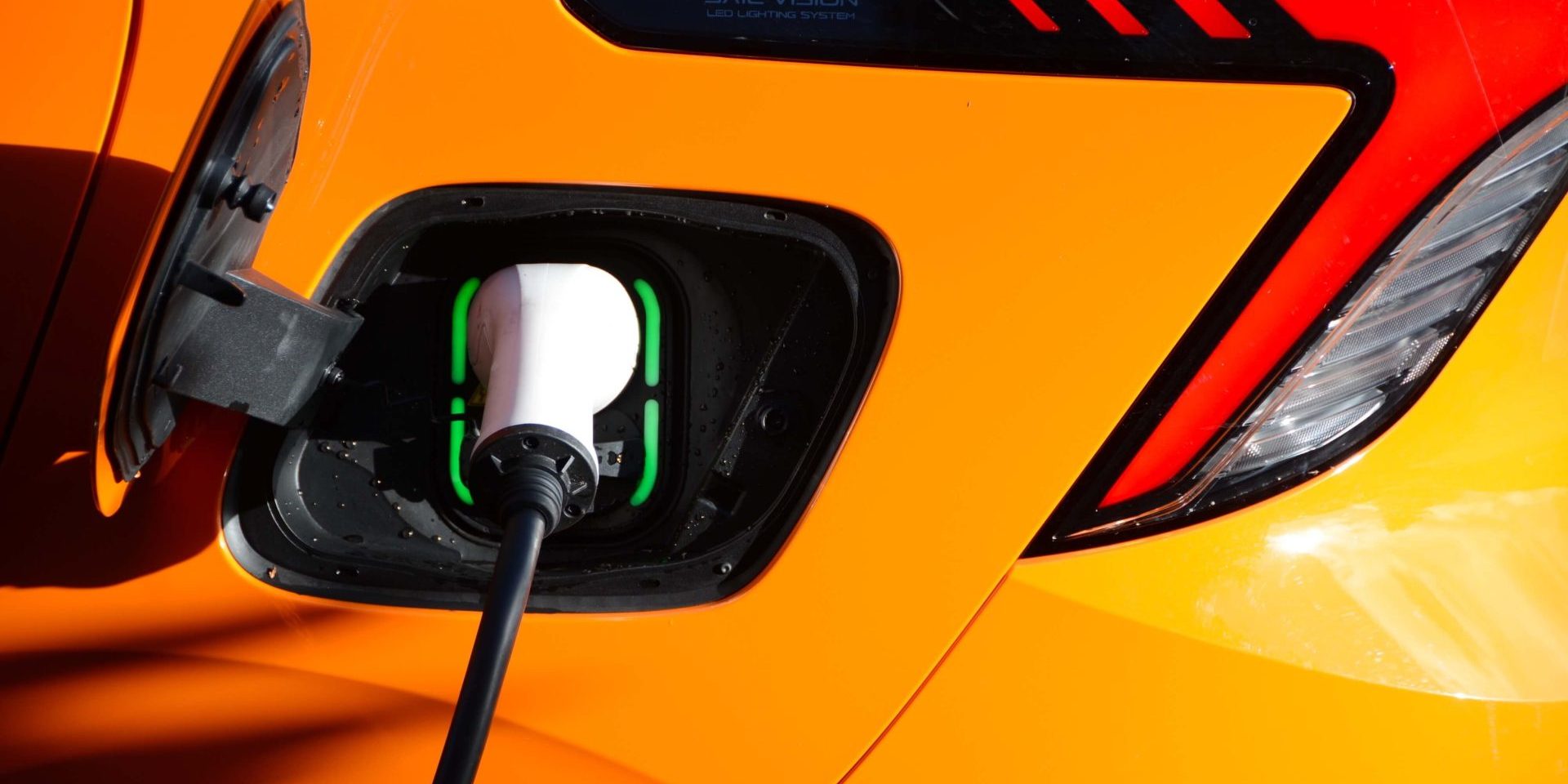
- The Department for Transport (DfT) and the Ministry of Housing, Communities and Local Government propose that new covered car parks in England, and those undergoing major renovation, must have working EV charge points, not just empty cable routes.
- The same consultation reviews the £3,600 average connection cost cap per charge point, set in 2021, and asks whether it should rise each year with inflation.
- Responses close at 11:59pm on 16 December 2026, and nothing in the consultation is law yet.
Your Next Car Park Space Could Come With a Charger Attached
A driver with no driveway depends on the chargers in the car parks they use. Covered car parks serving shopping centres, offices and blocks of flats fall under building rules that today require cable routes there, not working charge points. DfT and the housing ministry now ask whether that exemption should end.
The consultation opened on 21 October 2026 and applies to England only. It proposes making charge points compulsory in new covered car parks, enclosed and open-sided, and in those undergoing major renovation. DfT says this would give covered car parks the same requirements as every other building under Part S of the building regulations. The opening line of the document sets out the aim: “The government wants to ensure that everyone, no matter where they live, can confidently make the switch to an electric vehicle (EV).”
Anyone planning around this needs the status. It is a consultation. The consultation sets no start date, publishes no draft regulations and leaves the rules in force today unchanged. DfT must also publish a post-implementation review of how Part S has worked, and it will appear after the consultation closes. Drivers who park on the street have a separate route through EV charger planning for street parkers.
What Part S Requires Today
Part S arrived through statutory instrument SI 2021/1392, made on 13 December 2021. Regulation 1(2) brought them into force on 15 June 2022, and legislation.gov.uk records no known outstanding effects on the text. The regulations extend to England and Wales but apply to buildings and building work in England.
In most circumstances Part S requires charge points in new buildings and in buildings undergoing major renovation. Covered car parks are the carve-out. Car parks that are enclosed or open-sided sit outside the charge point requirements, an exemption DfT says it built into Part S at introduction so that research into fire safety at those sites could continue. Where parking spaces sit in a covered car park, the building owner must install cable routes instead of charge points.
A driver parking in a covered car park built under these rules finds cable routes and no charger in the bay. The rules also reach only new buildings and major renovations, so a multi-storey that opened years ago sits outside them whatever DfT decides.
What DfT Proposes for Covered Car Parks
The consultation document lists three measures: extend the charge point requirement to covered car parks, review the £3,600 cap in light of price rises after 2021, and make wider changes to Part S depending on the responses.
DfT gives three reasons for the covered car park change. DfT has heard that owners and managers of buildings can be slow to fit chargers in covered car parks. Stakeholders also say the exemption for new and heavily refurbished sites puts obstacles in the way of retrofitting existing car parks and slows delivery. And industry feedback says that where no co-ordinated project exists, drivers more often improvise, for example with a trailing cable plugged into an ordinary 3-pin socket.
The consultation asks six questions on covered car parks, with separate agree or disagree questions on enclosed and on open-sided car parks.
The wider package is a list of technical fixes raised in industry engagement. It includes minimum standards for charge points under Part S, such as effective load management and protective earth and neutral (PEN) fault protection on every unit, along with changes to wiring standards and voltage drop. DfT also wants to simplify Part S, especially the definitions of major renovation and cable route. On vehicle to everything (V2X) technology, which lets a car feed spare battery energy back to a home or the grid, DfT judges a mandate premature. It asks instead which wiring and supply upgrades new buildings need so owners can fit V2X-capable units over the coming 5 to 10 years.
The landing page for the consultation also seeks views on charging access for tenants and leaseholders in England. That strand has its own proposal, set out in the 28 day answer plan for tenants, and it is not part of the Part S changes described here.
The £3,600 Cap and Why DfT Is Reviewing It
The cap decides how many bays in a building get a working charge point. Under the regulations, a maximum number of charge points must be installed in a building. That duty runs until the average connection cost per charge point passes £3,600. Once the average is breached, every remaining space that has no charge point needs only a cable route.
The practical effect shows up in buildings where the grid connection is expensive. In a building with cheap connections the average stays under £3,600 and every required space gets a charger. In a building where each connection costs more, the average crosses the threshold sooner, and the remaining spaces receive ducting only. A higher cap lets the same building install more working charge points before the exemption applies, which follows from how the mechanism works. DfT has not proposed a new figure.
The figure was set in the regulations made on 13 December 2021, and the consultation closes five years later. DfT says it is considering whether the limit is correct given inflation and wider cost changes after 2021. Five questions follow. They ask whether the cap has affected installations, whether it should be updated, what a reasonable amount is and why, whether it should rise each year in line with inflation as measured by the consumer prices index (CPI), and which other inflation measure would suit.
For a driver the question is blunt: the cap sets how many bays in a new building get a working charger on day one, and how many get only a cable route for a later fit-out. Charging away from home carries its own price, set out in what relying on public charging costs.
The Fire Safety Question
DfT gives fire safety research as the reason for the exemption. Its position in the document is: “Available research suggests EVs are less likely to experience fires than internal combustion engine (ICE) vehicles”. The department adds that research has suggested no indication that charging electric vehicles in parking garages would raise the probability of a fire occurring. It is also commissioning further research, which will take account of advice from expert bodies including the Building Safety Regulator.
The Office for Zero Emission Vehicles (OZEV) published the interim guidance on covered car park fire safety on 11 July 2023 and updated it on 8 February 2024. It runs to 96 pages and addresses operators, designers, risk assessors and owners of car parks, and covers both retrofits and new designs. OZEV sets out the limits of its own document in one line: “This guidance does not replace existing safety regulations or the need to comply with them.” For existing premises the legal duty sits with the Regulatory Reform (Fire Safety) Order 2005, and the guidance expects a fire risk assessment by a competent person before any charge points go in.
The numbers inside the guidance are mixed, and it says so. Thatcham Research data for 2018 to 2020 puts fire claims per car per year at 0.001 percent for electric cars, 0.003 percent for plug-in hybrids and range-extended electric vehicles, 0.007 percent for petrol and 0.011 percent for diesel. Diesel runs at eleven times the electric rate and petrol seven times. Norway’s rescue database counted 110 fires in passenger electric cars from 2016 to 2021 against 4,026 in combustion cars. London tells a different story: the London Fire Brigade attended 811 car fires in 2021, and 56 of them, 6.9 percent, involved a vehicle with an electric drive, a count that includes hybrids, while 2 percent of London’s vehicles were ultra-low emission in the first half of 2021. The guidance notes that the data is not co-ordinated, that the oldest electric cars are only about 12 years old and that fire risk rises as cars age. Arson accounted for 46.5 percent of car fires in England from 2010 to March 2021.
For an operator, the guidance turns into a checklist. Chargers should be Mode 3 or Mode 4 types, which have a built-in interface to monitor faults, and Mode 1 units should not be used. The guidance wants chargers placed so that a fire at one leaves an escape route open, and within the hose reach firefighters recommend. The guidance calls for a fire detection and alarm system to BS 5839-1:2017, and says the ability to isolate power to the chargers should sit near a firefighting entrance or beside the fire alarm panel. Automatic sprinklers should limit the spread of a fire to neighbouring cars and the building, but the guidance expects the water to miss the battery that is burning, so the fire in the EV itself will likely continue. Installers should be registered with a Competent Person Scheme.
DfT asks for views on this guidance as well, including its effect on the rollout of charging. The guidance has interim status and is subject to change should new evidence emerge.
How to Have Your Say
Anyone can respond, driver or company. The easiest route is the online response form on the consultation page, which lets you save an answer and return later. The alternatives are an email to [email protected] or a letter to the Charging infrastructure deployment team, Great Minster House, 33 Horseferry Road, London, SW1P 4DR. Emails and letters should answer the consultation questions and say whether the writer speaks as an individual or for an organisation.
An email earns an acknowledgement. If none arrives within 15 minutes, check the junk folder, then write to the same address with “missing receipt” in the subject line. DfT accepts only responses received before 11:59pm on 16 December 2026.
Two cautions from the document: responses, personal information included, can be published or disclosed under the Freedom of Information Act 2000 and the Environmental Information Regulations 2004, and DfT says artificial intelligence could be used to analyse responses, with names and contact details removed first. The department asks respondents not to include personal information unless a question requests it.
After the deadline DfT will post the government response, together with a digest of what respondents said, on the consultation’s homepage, and paper copies will be available on request. The post-implementation review follows the close of the consultation. The document invites further comments and evidence, so a driver’s own experience of finding, or not finding, a working charger in a multi-storey has a place in a response.
Reviewed by Preetam Gadekar
Sources
- Department for Transport and MHCLG: Building regulations: amendments relating to EV charging infrastructure
- legislation.gov.uk: The Building Regulations etc. (Amendment) (England) (No. 2) Regulations 2021
- Office for Zero Emission Vehicles: Covered car parks: fire safety guidance for electric vehicles
Want more car content? Add us as a preferred source on Google to your favourites list for the best automotive news and analysis on the internet.
If you enjoyed this article, be sure to follow us on Microsoft Start.

Leave a Comment
More in News

Competition Regulator Tells OZEV Its £190 Million Motorway Charging Plan Needs More Evidence

What Idling to Warm Your Car Can Cost Every Driver, From £20 to £80

Mitsubishi Pajero Gets 20 Locally Developed Accessories at December Launch

Geely Monjaro and Emgrand L Hybrids Tour Australia From 9 November

Warming an Electric Car on the Cable Costs Pence, Off It Costs Miles
Trending on Motoring Chronicle
What the July Motability Tax Changes Mean for the 860,000 Disabled Drivers on the Scheme

Indiana Teens Can Now Get Their Driver’s License the Day They Turn 16

Derby Council Issued 34,346 Moving Traffic Fines, Up 67 Percent, Costing Up to £70

No Driveway, No Problem. The Government Will Now Pay Up To £500 To Help You Charge An EV At Home
