Every Street Parker Skips EV Charger Planning From 21 October With a Council Channel

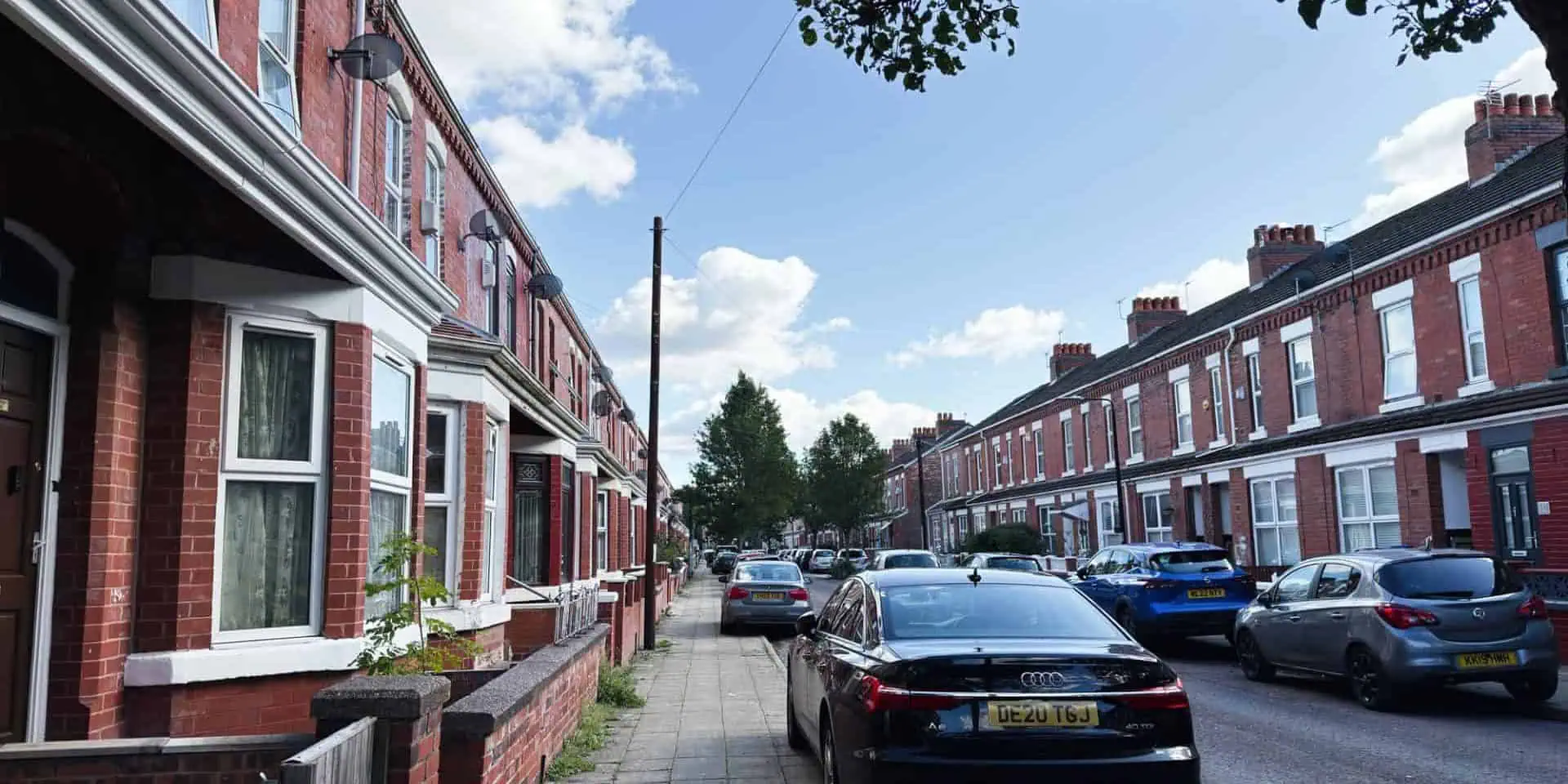
- A charger on the front wall and a cable across the pavement need no planning application in England from 21 October 2026, under Statutory Instrument 2026/1056.
- The cable has to cross through a channel that the highway authority installed or authorised, and the rights stop at conservation areas, listed building grounds and scheduled monuments.
- The charger unit can sit no higher than 1.6 metres, a wall on the pavement edge allows 0.2 metres of protrusion and 1.5 metres of footway left, and a transition year runs to 20 October 2027.
The Planning Form Is Gone, but the Council Still Holds the Key
A householder in England with no driveway can now fix a charger to the front wall and run a cable to a car at the kerb without a planning application. The Town and Country Planning (General Permitted Development) (England) (Amendment) (No. 2) Order 2026 came into force on 21 October, nine days ago, after Matthew Pennycook, Minister of State at the Ministry of Housing, Communities and Local Government, signed it on 25 September.
One condition decides whether any of it works. While the charger is in use, the cable has to cross the footway by an authorised cross-pavement solution. The Order defines that as a pavement-embedded cable channel that lets a cable cross a footway from a home to a parked vehicle, installed by the relevant highway authority, on its behalf or with its authorisation. A cable lying across the paving slabs does not meet the definition, and a channel a householder cuts into the pavement without the authority’s authorisation does not either.
For a street parker the first call goes to the council that looks after the road, and the electrician comes second. The Order gives a highway authority the right to install a channel without a planning application. It does not oblige any authority to install one, and it sets no timetable.
What Changed on 21 October
Before the Order, the planning rights for a wall mounted charger covered only an area lawfully used for off-street parking. That is why the rule helped households with a driveway and left everyone else with a full planning application. Article 4 rewrites Class D of Part 2 of Schedule 2 to the 2015 General Permitted Development Order so that it covers two places: an area lawfully used for off-street parking, and any other area within the curtilage of a dwellinghouse or block of flats. The second route is the new one, and it reaches the front wall of a terraced house.
Article 5 gives the same treatment to Class E, the rights for an upstand with a charger unit mounted on it. Article 7 adds a new Class F to Part 9, which lets a highway authority, or anyone acting with its authorisation, install, alter or replace the channel itself.
The Department for Transport frames the result in money. It says drivers save up to £300 on installation and that home charging without a driveway can run for as little as 2p per mile. Simon Lightwood MP, Buses and Local Transport Minister, said: “We’re saving drivers up to £300 off the cost of installing home charging by cutting unnecessary red tape.” The department also puts the saving for a household that can plug in at domestic electricity prices at up to £1,750 on running costs. Those are DfT figures, and the Order itself contains no costings. Its Explanatory Note says no full impact assessment was produced as no, or no significant, impact is foreseen on the private, voluntary or public sector.
The Measurements That Decide Whether Your Wall Qualifies
The Order is specific, and a tape measure settles most cases. Start with the charger unit. The Order defines it as a dedicated charging point for electric vehicles, including its casing, and it excludes a standard domestic plug and socket. Under the new paragraph D.1(1)(aa) the charger unit cannot be installed more than 1.6 metres above ground level.
Next, the wall. If the charger unit goes on a wall that immediately adjoins a highway, which describes most terraced fronts that open straight onto the pavement, two further limits apply. The charger unit cannot protrude more than 0.2 metres from the external wall. And there has to be at least 1.5 metres of footway between the outermost projection of the charger unit and the edge of the carriageway.
Take an example. A pavement 1.7 metres wide from wall to carriageway edge loses 0.2 metres to a fully protruding charger unit and keeps exactly 1.5 metres, which passes. A pavement 1.6 metres wide keeps 1.4 metres with the same unit, which fails. The widths are an illustration, not a survey of any street. Measure your own pavement before you buy anything.
Two older limits carry over for every charger under Class D. The charger unit and its casing cannot exceed 0.2 cubic metres, and the work is not permitted on a site designated as a scheduled monument or within the curtilage of a listed building. Those limits come from the planning order as revised on legislation.gov.uk, and the new Order leaves them in place.
Then the count. For the new route, paragraph (b) of Class D, development is not permitted if it would put more than one charger in the curtilage of a dwellinghouse or block of flats. One home, one charger. A household that already has a charger unit in its curtilage should check that a second one does not breach the limit.
An upstand under Class E follows a similar pattern. The height limit from the surface used for parking is 1.6 metres in any location other than a non-domestic area lawfully used for off-street parking, where the limit is 2.7 metres. Class E carries the same crossing condition as Class D.
Who Pays and Who Fits the Channel
The Order says nothing about who pays for the channel. It names who can install it: the highway authority, a contractor acting on its behalf, or a person it has authorised. Whether a council charges for the channel, absorbs the cost or recovers it is a decision for each authority, and none has been named in the Order or in the DfT release.
Vicky Edmonds, CEO of EVA England, said: “This might look like a small planning change, but for someone without a driveway, it could make the difference between being able to afford an electric car and ruling one out altogether.” She added that EVA England research found 60 percent of petrol and diesel drivers without off-street parking would never look at an electric car. On delivery she was direct: “It’s now up to local authorities and landlords to make these solutions easier to access in practice.”
A household without a home charger pays the 20 percent tax at public chargers on every top up. A channel on your street is the route to the lower home rate, and only the highway authority can supply it.
Class F also attaches two conditions to the channel. When it is no longer needed as a cross-pavement solution, it has to be removed as soon as reasonably practicable. The pavement it sat in then has to be reinstated, as soon as reasonably practicable, to its condition before the work. A channel is a fixture of the street, and it can come out again.
Where the Rule Stops
The Order amends the planning rules for England. Drivers in Scotland, Wales and Northern Ireland are outside it.
Within England the exclusions are firm. The charger itself cannot go on a scheduled monument site or within the curtilage of a listed building. The new route in Class D does not apply within a conservation area, and neither does the equivalent route for an upstand in Class E. The channel itself has its own list under Class F: it cannot be installed within a site designated as a scheduled monument, within the curtilage of a listed building or within a conservation area. A street in a conservation area still needs a full planning application, the gap Motoring Chronicle covered in its report on EV charging rules in conservation areas before commencement. The exclusion applies to the new route only. A household with lawful off-street parking in a conservation area keeps the older rights for that parking area.
Flats are covered. A block of flats is defined as a building with at least two flats, and the charger unit can go on its wall. Permission from planners is one gate. Tenants and leaseholders face a second gate in the landlord or freeholder who owns the wall. The DfT consultation says tenants and leaseholders often struggle to win landlord or freeholder approval for a charge point. The consultation covers charge points at a resident’s off-street parking space, so it does not settle a wall charger on a street frontage. It proposes clearer guidance for landlords, and the government is also considering mandatory requirements that would make it harder to refuse a renter’s application. Both are proposals. Nothing in them binds a landlord today.
The transitional rule protects work already allowed. Where development was permitted under Class D or Class E before 21 October 2026 and is no longer permitted under the new text, a developer can still carry it out until the end of 20 October 2027. That is one year after commencement.
What to Do This Week
Measure first. Check the height of the planned charger against 1.6 metres, the protrusion against 0.2 metres, and the pavement from your wall to the carriageway edge against 1.5 metres once the charger unit is added. If the pavement fails, no amount of paperwork fixes it.
Check the map second. Look up whether the address sits in a conservation area, within a listed building’s curtilage or on a scheduled monument site. Ask the council if the map is unclear. A conservation area ends the new permitted route, and a listed building’s curtilage or a scheduled monument site rules out both the charger and the channel.
Then write to the highway authority. Ask whether it has installed or authorised a cross-pavement channel on your street, whether it has a scheme or an approved installer, who pays and how long it takes. Get the answer in writing. The Order sets no deadline, so a slow reply breaks no rule. Do not order a charger and expect to trail the cable across the pavement. That fails the condition in paragraph D.2(2).
Renters, leaseholders and flat dwellers should look at money as well. The government offers charge point grants of up to £500 to people living in flats, those in rented accommodation and residential landlords, and from 2022 to date the grants have supported 26,504 sockets for people in flats and rented accommodation, with a further 5,564 through landlord grants. The £500 EV charger grant rules decide who qualifies, so read them before you buy. The consultation does not say whether the grant covers the pavement channel, so ask before assuming.
DfT puts September 2026 electric car sales up 36 percent on a year, with nearly 100,000 sold in one month, and says the Electric Car Grant has helped more than 190,000 drivers save up to £3,750 on a new electric car.
Two DfT consultations close on 16 December 2026: one on expanding charging access for tenants and leaseholders, the other on amending the building regulations so that new and refurbished covered car parks get charge points. A tenant or leaseholder with a landlord problem has a reason to answer the first before the deadline.
Want more car content? Add us as a preferred source on Google to your favourites list for the best automotive news and analysis on the internet.
If you enjoyed this article, be sure to follow us on Microsoft Start.

Leave a Comment
More in News

NHTSA Opens Defect Petition on Camshaft Claims in 54,787 Ford 7.3L Trucks and Vans

2027 Fiat Topolino Adds Open-Air Roof and Free Street-Legal Kit From $13,995

Washington Requires Free Work Zone Course for First Licenses Under 25 From Nov. 1

How to Check a Used Car for Hidden Finance (and Whether You Keep It)

Bentley Torcal EV Battery Must Withstand Two Hour Fire Test and Over 100mph Projectile
Trending on Motoring Chronicle

Timeless elegance and speed: a glimpse into the design process of the Bugatti Tourbillon [Photo Gallery]

Rolls-Royce Phantom Arabesque: World’s first laser-engraved bonnet honours Middle East’s architectural heritage

How to Drive Through Flood Water (and What to Do If It Stalls)

The ‘Few Off’ Lamborghini Fenomeno: a ‘Design Manifesto’ and the most powerful V12 ever [Photo Gallery]