AI Roadside Cameras Now Spot Phones and Seatbelts from a Mile Away
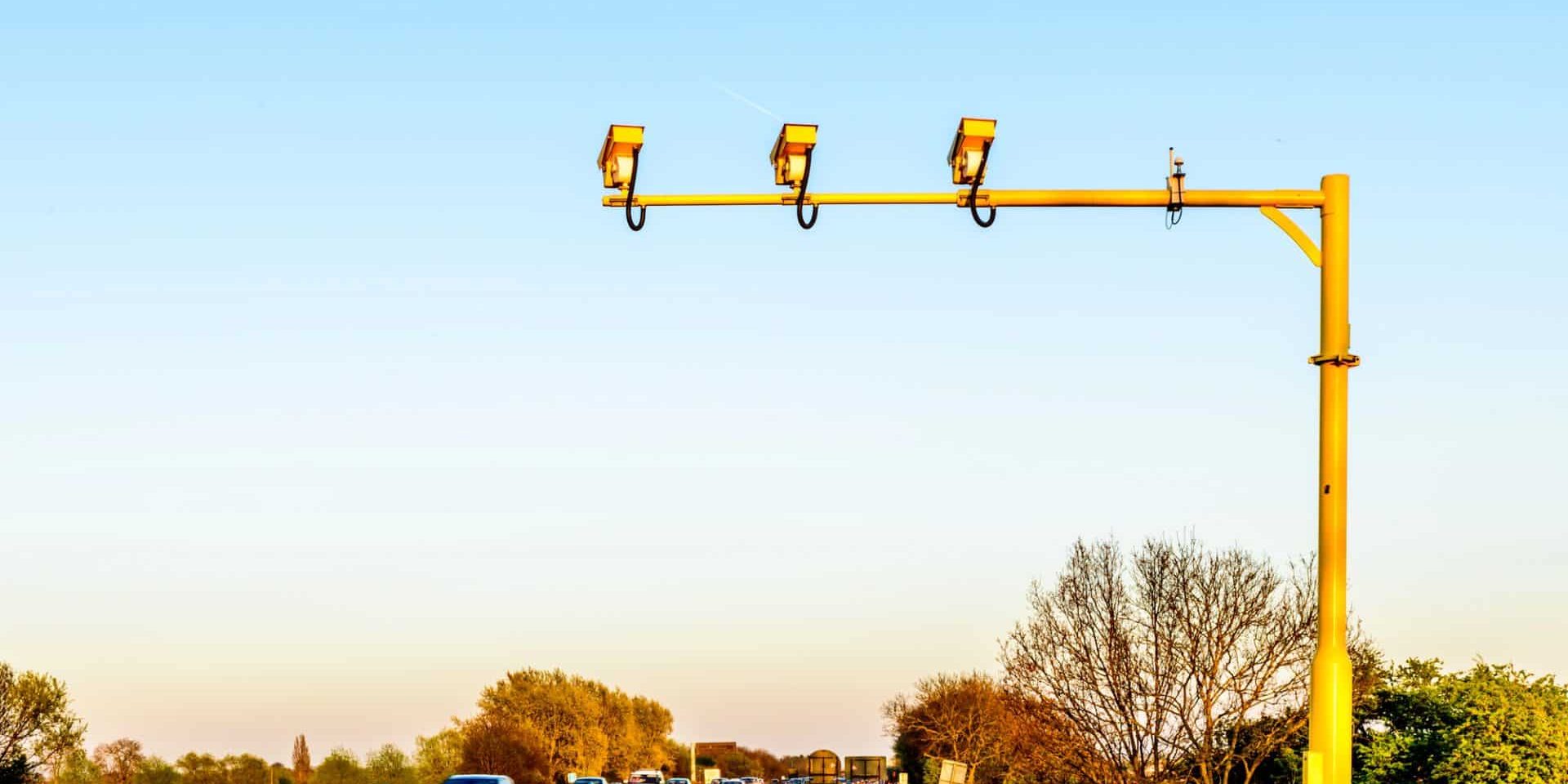
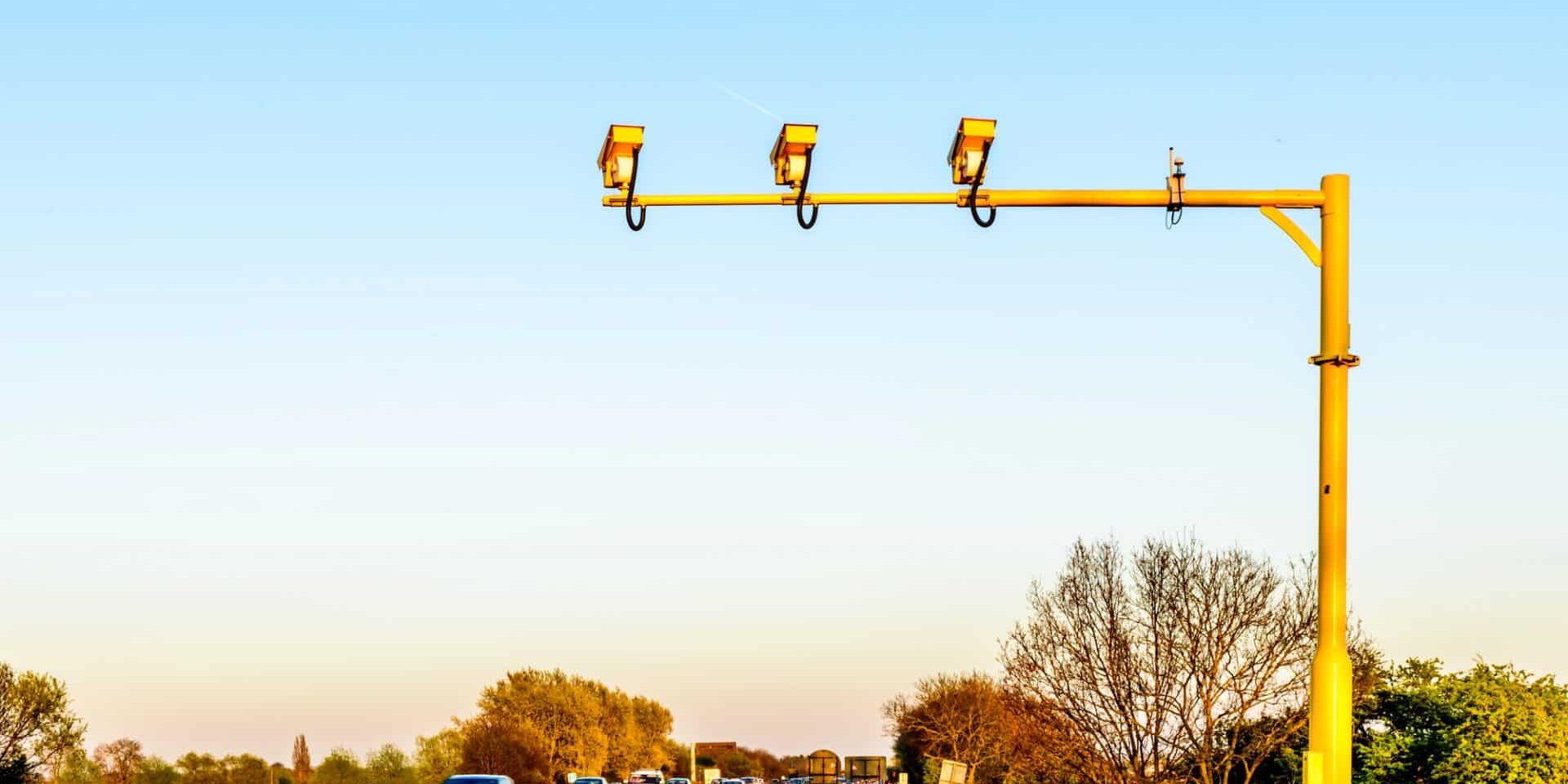
The roadside camera watching for your speed has just learned two new tricks. It now scans the driver’s hands for a mobile phone and the torso for a seatbelt, all from up to a mile away, in any light, at any speed. A new generation of AI-powered enforcement cameras has begun a UK live trial in Plymouth, and the technology is expected to roll out to police forces across England and Wales over the next 18 months. For drivers who think they can still glance at a text at the lights or slip the belt off for a quick stretch, the cameras are about to make those habits genuinely expensive.
What The New Cameras Actually Do
The Plymouth trial is being run by Devon and Cornwall Police using a system developed by enforcement tech firm Jenoptik. The same company supplies a sizeable share of the UK’s existing speed camera estate. The new unit, marketed under the name Sentio, combines 4D radar, AI-driven image analysis, infrared illumination and an ultra-high-definition camera capable of capturing both front-facing and overhead views.
Where a traditional Gatso or Truvelo camera produces a single frame showing the front of the car and a speed reading, the Sentio system produces a stack of images and a software-generated decision. It examines the position of the driver’s hands, checks for the diagonal strap of a seatbelt across the driver’s and front passenger’s chests, and uses head-tracking to flag drivers staring downward at a device. The system runs day and night because it is illuminated by infrared, which the human eye cannot see.
The most consequential capability is the range. Jenoptik says the camera can capture the necessary detail of a driver from over a mile away. That is not a focal length comparable to a paparazzo zoom. It is a wide-aperture engineered optic combined with AI reconstruction. The effect is that drivers cannot reliably see the camera in time to put down a phone or click in a belt before it has already photographed them.
Why The Trial Is Happening Now
The Plymouth pilot is the UK arm of a Jenoptik programme that began in Australia in 2019. New South Wales now generates more than 200,000 phone-use fines a year from camera enforcement, with no in-person police time involved. Trial data from Australia and Belgium showed phone use among drivers falling by between 40 and 80 percent in the first year of enforcement.
The case for bringing the system to British roads has been building for several years. Department for Transport figures show that 17 people were killed and 387 seriously injured in 2023 in collisions where a driver using a mobile phone was a contributory factor. Around one in five UK drivers admit to having used a handheld phone at the wheel in the past year, according to RAC Report on Motoring data. National Highways’ own assessment in 2024 concluded that human-driven roadside enforcement of phone use was catching only a tiny fraction of offences, with most cases reliant on dashcam footage submitted by other drivers.
The Department for Transport approved the Plymouth trial under existing primary legislation, which means no new Act of Parliament was required. Section 23 of the Road Traffic Act 1988 already gives the police camera evidence powers for moving traffic offences. The Sentio cameras are positioned and operated under the same legal framework as existing fixed and average-speed cameras, with images reviewed by a human Casualty Reduction Officer before any fixed penalty notice is issued.
What The Penalties Are
The fines themselves have not changed. They are simply about to be enforced much more efficiently. Holding a mobile phone while driving, even to dial a number, view a notification, take a photograph or scroll a music app, attracts a fixed penalty of £200 and six penalty points under regulations brought in by the previous government in March 2022. The phrase “holding” is interpreted broadly. Touching a mounted phone to swipe a satnav route is illegal, even when the phone is in a cradle on the dashboard. The only legal use of a handheld device while driving is to make a 999 call when it is unsafe or impractical to stop.
The seatbelt penalty currently sits at £100 with no points, but is set to change. The Department for Transport’s Road Safety Strategy consultation, which closed on 11 May 2026, proposed making failure to wear a seatbelt an endorsable offence carrying three penalty points and a £100 fixed penalty. If brought forward, the change would put seatbelt enforcement on the same footing as speeding for the first time. The Government has yet to confirm a date for the change, but ministers have signalled that they intend to legislate before the end of 2026.
For new drivers, the consequences are sharp. Under the Road Traffic (New Drivers) Act 1995, any driver who accumulates six penalty points within two years of passing their test automatically loses their licence and must retake both the theory and practical tests. A single phone-use detection by a Sentio camera is enough to wipe out a new driver. If the seatbelt change passes, two unbelted journeys could do the same.
How Accurate Is The AI
The most pressing question for drivers is how often the cameras get it wrong. Jenoptik’s own published figures from Australian deployments claim a detection accuracy above 99 percent before human review, which then catches almost all remaining false positives. The trial protocol in Plymouth requires every image flagged by the AI to be reviewed by a Casualty Reduction Officer before a Notice of Intended Prosecution is issued, so no fine is generated automatically on the basis of AI alone.
That review step is also where common defences are filtered. A passenger’s phone resting on the centre console is not an offence by the driver. A hands-free phone genuinely cradled with no driver interaction is not an offence. A diagonal scarf or shoulder strap that resembles a seatbelt has produced false alerts in early-generation systems, but the Sentio’s resolution and AI training data are designed to distinguish strap geometries. Image review remains the firewall.
For drivers, the practical implication is that the legal threshold has not changed but the chance of being caught has risen sharply. The RAC’s road safety spokesman has said the system represents “the most significant practical change in moving traffic enforcement since the Gatso was introduced in 1992”. Pre-trial polling by Brake found that 73 percent of drivers support AI enforcement of phone use, while only 21 percent support it for seatbelt offences.
What To Do If You Receive A Notice
A Sentio camera ticket will arrive in the same form as a speeding ticket. The registered keeper will receive a Notice of Intended Prosecution within 14 days, with photographs attached and a request to identify the driver. Failing to identify the driver within 28 days is itself an offence under section 172 of the Road Traffic Act 1988, carrying six penalty points and a £1,000 fine.
If you believe you were not the driver, you must name whoever was. If you believe the photograph is mistaken, request the full image set with the response form, including the wide-angle and overhead frames. The full set will show whether the AI flagged a phone, a hand on the wheel, or a passenger’s device. If the evidence does not support the alleged offence, return the form challenging the notice with a written explanation. The Casualty Reduction Officer can then withdraw the notice without it ever progressing to court.
If the evidence is sound and you accept the offence, the conditional offer of a fixed penalty is the cheapest outcome. For first-time phone-use offences only, you may be offered a driver awareness course in place of the fine and points, but availability of the course varies between police forces and is not guaranteed. For seatbelt offences, no course is currently available, and the conditional offer is the only diversion from a court summons.
What Happens Next
The Plymouth trial is scheduled to run for 12 months with three fixed camera positions and one transportable unit. If the trial meets its compliance targets, similar units are expected to deploy on the highways managed by Sussex Police, Avon and Somerset Police, and Greater Manchester Police later this year. The Welsh Government has separately signalled interest in the technology for the A55 and M4 corridors.
The Department for Transport has also confirmed that the next generation of police vehicle dash cams will incorporate the same AI detection capabilities, with rollout expected in around 5,000 patrol cars from April 2027. By 2028, AI camera enforcement of phone and seatbelt use is likely to be the default rather than the exception. For drivers, the simplest defence against any of this is also the cheapest one. Put the phone out of reach. Click the belt before moving. The new cameras are watching from a mile away, in the dark, every day.
Sources:
- Jenoptik pilots distracted driving solution in UK (Safety21)
- Jenoptik delivers new Distracted Driving System in Plymouth (Highways News)
- AI detection trial in Plymouth for mobile and seatbelt offences (UKROEd)
- Transport Secretary declares zero tolerance for phone use behind the wheel (GOV.UK)
- Mobile phone driving laws (RAC)

Leave a Comment
More in News

Autotrader Shows Used Petrol Cars Cost £14,625 as 17 Months of Price Rises End

Catalytic Converter Thefts Are Rising Again and Could Cost Every Van Owner over £1,000

Every Electric Car Now Costs £46 More to Insure than Petrol, MoneySuperMarket Finds

Leicestershire Council Took £900,127 in Parking Penalties as Notices Issued Rise 9.3 Percent

How the DVLA’s Digital Driving Licence Will Work for Every UK Driver in 2026
Trending on Motoring Chronicle

How Long Does a Timing Belt Last? The Age Limit Most Drivers Miss

Electric Car Repairs Now Cost UK Drivers 19 Percent More Than Petrol Cars

First ‘Ombré’ Sedan revealed by Bentley

The Top 10 Most Iconic Lamborghinis Of All Time