
How to Check if Your Jeep Wagoneer’s Roof Rack Is Part of a 97,000-Vehicle Recall
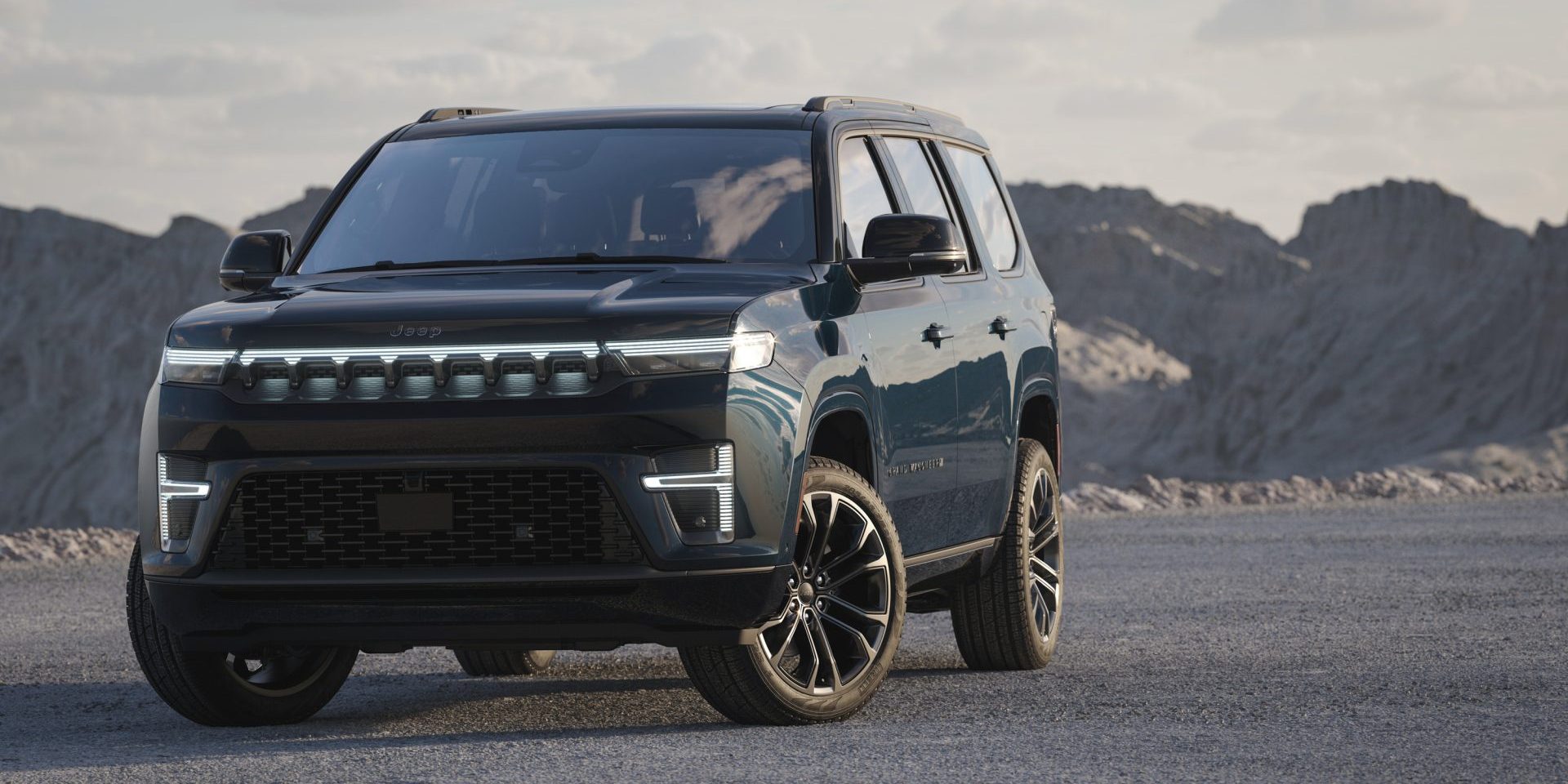

- Stellantis is recalling nearly 100,000 Jeep Wagoneer and Grand Wagoneer SUVs after finding roof rack crossbars that can separate from the vehicle while driving.
- The pivot bolts holding each crossbar in place were not always tightened enough at the factory, and a loose bolt can let the whole crossbar come off at highway speed.
- Dealers will replace the pivot bolts for free, but interim notification letters are not going out until October, so owners who tow, ski, or carry cargo on the roof should check now rather than wait for the mail.
The Part of Your SUV You Never Inspect Is the One That Can Come Loose
Stellantis North America is recalling nearly 100,000 Jeep Wagoneer and Grand Wagoneer SUVs over roof rack crossbars that can detach while the vehicle is moving. The recall covers 2022 through 2026 Grand Wagoneer, 2023 through 2026 Grand Wagoneer L, 2022 through 2025 Wagoneer, and 2023 through 2025 Wagoneer L models, with the standard Wagoneer accounting for the largest single share at 54,249 vehicles and the Grand Wagoneer adding another 22,144 on top of that.
Stellantis says it has not confirmed any injuries tied to the defect, but it has already logged at least 15 warranty claims describing the exact failure mode NHTSA’s filing warns about: a crossbar that comes apart at its pivot joint and separates from the roof.
How a Roof Rack Ends Up as a Road Hazard
The roof rack crossbars on these Wagoneer models pivot to fold flat when not in use and lock into position when a driver needs to carry cargo, a ski box, or a roof-mounted bike rack. That pivot depends on bolts torqued to a specific spec at the factory. Stellantis found that spec was not always met, and a crossbar with an under-tightened pivot bolt can work itself looser with vibration and road use until the bolt fails outright.
Once a crossbar separates, it does not just fall to the pavement in the owner’s driveway. At highway speed, a crossbar that comes off the roof becomes a projectile for every vehicle behind it, which is why NHTSA classifies this as a road hazard for other drivers rather than only a risk to the Wagoneer’s own occupants. Stellantis says owners can notice a rattling noise or a visibly missing bolt before a crossbar fully lets go, giving an attentive owner a chance to catch the problem early.
A second, related filing covers separate Mopar-branded roof rack accessory kits sold across six different part numbers, produced between November 2020 and July 2026, that share the same supplier and the same underlying pivot bolt problem. Both the vehicle-level and accessory-level recalls trace back to the same parts source: Minth, a plastic trim and components supplier for the Wagoneer line.
A Slow-Moving Investigation Behind a Fast-Growing Recall
Stellantis opened its internal investigation into the crossbar issue on June 25, 2026, after warranty claims began accumulating with receipt dates stretching back to May of that year. Engineering and manufacturing teams spent the following two months reviewing production records and design changes before settling on a root cause and the affected build range, which spans suspect production dates from February 24, 2021, to October 30, 2025, nearly five years of vehicles built with the same part.
That timeline is not unusual for a component-level defect that does not show up in crash testing or pre-delivery inspection. A pivot bolt torqued slightly under spec can hold for years of normal driving before vibration and thermal cycling finally work it loose, which is part of why the failure surfaced through warranty claims rather than a crash report.
When the Letter Arrives, and What Happens Before Then
Minth notified Stellantis dealers of the recall on September 17, 2026, and vehicle identification numbers became searchable on NHTSA’s site the same day. Interim customer notification letters, telling owners about the defect ahead of an actual repair date, are expected in October 2026. A second letter, scheduling the free pivot-bolt replacement, will follow once dealers have the parts and instructions in hand, though Stellantis has not given a firm date for that stage.
That gap between the interim letter and the actual repair mirrors what Volkswagen owners are experiencing with an unrelated steering bolt recall the same week: automakers increasingly separate the “we found a problem” notice from the “come get it fixed” notice once a recall’s supply chain takes weeks or months to line up parts for tens of thousands of vehicles.
Why Roof Rack Recalls Are More Common Than Drivers Realize
Roof racks and crossbars sit outside the parts most drivers think of first for a safety recall, a list that tends to run to airbags, brakes, or engines. But NHTSA’s recall archive includes a steady stream of roof rack, crossbar, and roof rail campaigns across nearly every major automaker: these parts sit exposed to years of wind load, vibration, and temperature swings that a bolt buried inside the engine bay never experiences to the same degree. A pivot joint that flexes every time a crossbar folds down is also a joint that wears differently than a fixed bolt, which is part of why Stellantis needed two months of engineering review to isolate a root cause rather than a single visible defect.
The financial stakes for Stellantis extend beyond the repair bill for 76,000-plus pivot bolts. A detached crossbar that strikes another vehicle or a pedestrian exposes the automaker to liability well beyond the cost of the part itself, which is a large part of why NHTSA treats a component that can become airborne at highway speed as seriously as it treats a brake or steering defect, even though a roof rack sounds far less dramatic on paper.
Where the Wagoneer Fits in Stellantis’s Lineup
The Wagoneer and Grand Wagoneer are Jeep’s answer to full-size, body-on-frame luxury SUVs like the Chevrolet Tahoe and Cadillac Escalade, priced from the high $60,000s into six figures for top trims. Stellantis has struggled to move as many of them as it hoped: sales figures for the first half of 2026 show just over 30,000 Wagoneer and Grand Wagoneer deliveries in the United States, against more than 82,000 for the heavy-duty Ram line built at a separate plant in that same window.
That sales gap is worth noting: a recall touching close to 100,000 vehicles, built across five model years, lands on a lineup that has not been selling in equivalent volume in that same window. Most of the vehicles covered by this recall are already on the road rather than sitting on dealer lots, which means Stellantis is relying on owners to respond to notification letters and VIN lookups rather than catching the bulk of the affected population before it ever reaches a driveway.
What To Do
Owners of a 2022-2026 Grand Wagoneer, 2023-2026 Grand Wagoneer L, 2022-2025 Wagoneer, or 2023-2025 Wagoneer L can check their vehicle identification number at nhtsa.gov/recalls now, rather than waiting for October’s interim letter. Chrysler’s recall number for this campaign is 81D, and owners can call 1-800-853-1403 to confirm eligibility or ask about scheduling once parts are available.
In the meantime, a visual check takes a few minutes: look at the roof rack crossbar pivot points for a missing or visibly loose bolt, and listen for new rattling from the roof while driving. Owners who use the roof rack to carry cargo, ski equipment, or a roof box should treat that inspection as a pre-trip habit until the dealer confirms new pivot bolts are installed.
Sources:

Leave a Comment
More in News

What Your Airbag Warning Light Actually Means (and Is It Safe to Drive?)
Why the Average Car Repair Bill Just Hit $838
Volkswagen Recalls 208,724 SUVs Over Steering Bolts That Can Snap
Hyundai Recalls Ioniq 9 Over the Same Seat Defect That Killed a Toddler
How to Jump Start a Car Safely (and Avoid Damaging the Electronics)
Trending on Motoring Chronicle
How to Draw a Lamborghini: Step-by-Step Guide for Realistic Results

The 10 Least Reliable Used Cars In The UK Have An Average Repair Bill Of £2,051. Five Of Them Are Land Rovers

2026 Nissan Armada, Nissan LEAF named Cars.com Best of 2026 Awards winners
First ‘Ombré’ Sedan revealed by Bentley
