How Short Is a Short Trip? Ford and Kia Give Different Answers

A short trip has no single distance. Ford puts the line below 2 miles, Kia says under 5 miles or under 10 in freezing weather, and Mazda and Volvo give no distance at all. Our reading is that each figure stands in for an engine that never finishes warming up, and each maker picks its own. The figure that counts is the one in your own car’s handbook.
Key takeaways:
- Ford lists regular trips below 2 miles as a reason to change oil sooner, and Kia’s UK handbooks set the line at under 5 miles, or under 10 in freezing weather.
- Mazda’s Europe handbook and Volvo’s UK handbook name the problem and give no distance.
- Ford, Kia and Mazda each tie the rule to repeated use, and that word separates a pattern from one cold trip.
What Two Makers Count as Short
Ford and Kia both put a number on a short trip in their UK material, and both file it with the conditions that bring an oil change forward.
Ford Draws the Line Below Two Miles
Ford’s UK service page lists regular short journeys below 2 miles as one of three factors that can shorten the time between oil changes. The other two are frequent low-speed city-centre driving below 30 mph and high engine load, such as a fully loaded car, a trailer or frequent hill climbs.
Fords fitted with the Intelligent Oil-Life Monitor have a printed maximum interval and a monitor that can call for the change earlier. The monitor watches the engine oil and puts a message in the instrument cluster when the oil needs changing. Ford says the rate at which oil life is depleted depends on driving conditions, so the oil can need changing before the published maximum interval.
Once the message appears, the oil must be changed within 1,000 miles or 1 month, whichever comes first. Ford says intervals vary by model and engine and sit in the service portfolio supplied with the car. The page puts no figure on engine wear from short trips. It says the oil is used up sooner, and the monitor decides when.
Kia Says Five Miles, or Ten in Freezing Weather
Kia’s UK handbooks open their list of severe conditions with repeated driving of less than 5 miles in normal temperature, or less than 10 miles in freezing temperature. A car used that way follows the severe maintenance schedule instead of the normal one.
The list holds twelve conditions, and short trips are the first. The others include extensive idling, heavy traffic, towing and heavy dust, and any one of them moves the oil interval. On the 1.6 litre petrol engine in the UK handbook we read, the severe schedule is every 5,000 miles or 6 months, against 10,000 miles or 12 months on the normal one: half in both. We did not read Kia’s diesel tables.
Kia gives no reason for either figure and does not call 5 or 10 miles a warm-up distance. The two numbers do show the line moving with the weather: a 7 mile trip sits outside Kia’s line in normal temperature and inside it in freezing weather.
Why the Numbers Disagree
Four handbooks give two distances and two descriptions with no distance. They share a subject: an engine used in short bursts.
A Number Standing In for Warm-Up
Mazda’s Europe handbook for the CX-5, a 2019 edition, lists “Driving for long period in cold temperatures or driving regularly at short distance only” among the conditions that call for more frequent oil and filter changes, and defines no distance. Volvo’s 2023 UK handbook for the XC60 says of its petrol particle filter: “If you drive your car for short distances at low speed or in cold climates where the engine does not reach normal operating temperature, it can lead to problems that eventually can cause a malfunction and trigger a warning message.” It gives no distance either.
The reading is ours: the figures and phrases work as stand-ins for an engine that rarely reaches full operating temperature, and each maker picks its own. Of the four, only Volvo names operating temperature, and it does so for the emissions filter, not the oil. Ford, Kia and Mazda give no reason for their wording.
None of the four gives a warm-up distance. Kia’s two figures show temperature moving the line, and Volvo ties the problem to low speed, so a single warm-up distance for every car would be hard to defend.
Other makers’ pages held no usable short-trip definition or were not read, so nothing here describes every maker. The handbook of the car in the drive holds the only figure that applies to it.
Repeated Is the Word That Counts
Kia says repeated, Ford says regular and Mazda says regularly. A single cold trip to the shops sits outside those words, and a school run every weekday sits inside them.
No handbook read gives a count. None says how many short trips make a pattern, or what share of a month’s driving must be short before the severe schedule applies. Ford leaves that call to the oil-life monitor.
Ford calls its printed figures maximum service intervals, so on a Ford used this way the book’s number is the longest the oil should go, and the usual advice is oil changes sooner for short trips.
What Short Trips Do Beyond the Oil
On cars with a particulate filter, Ford’s and Volvo’s handbooks raise a second problem and give much the same advice.
The Filter Is the Part the Handbooks Worry About
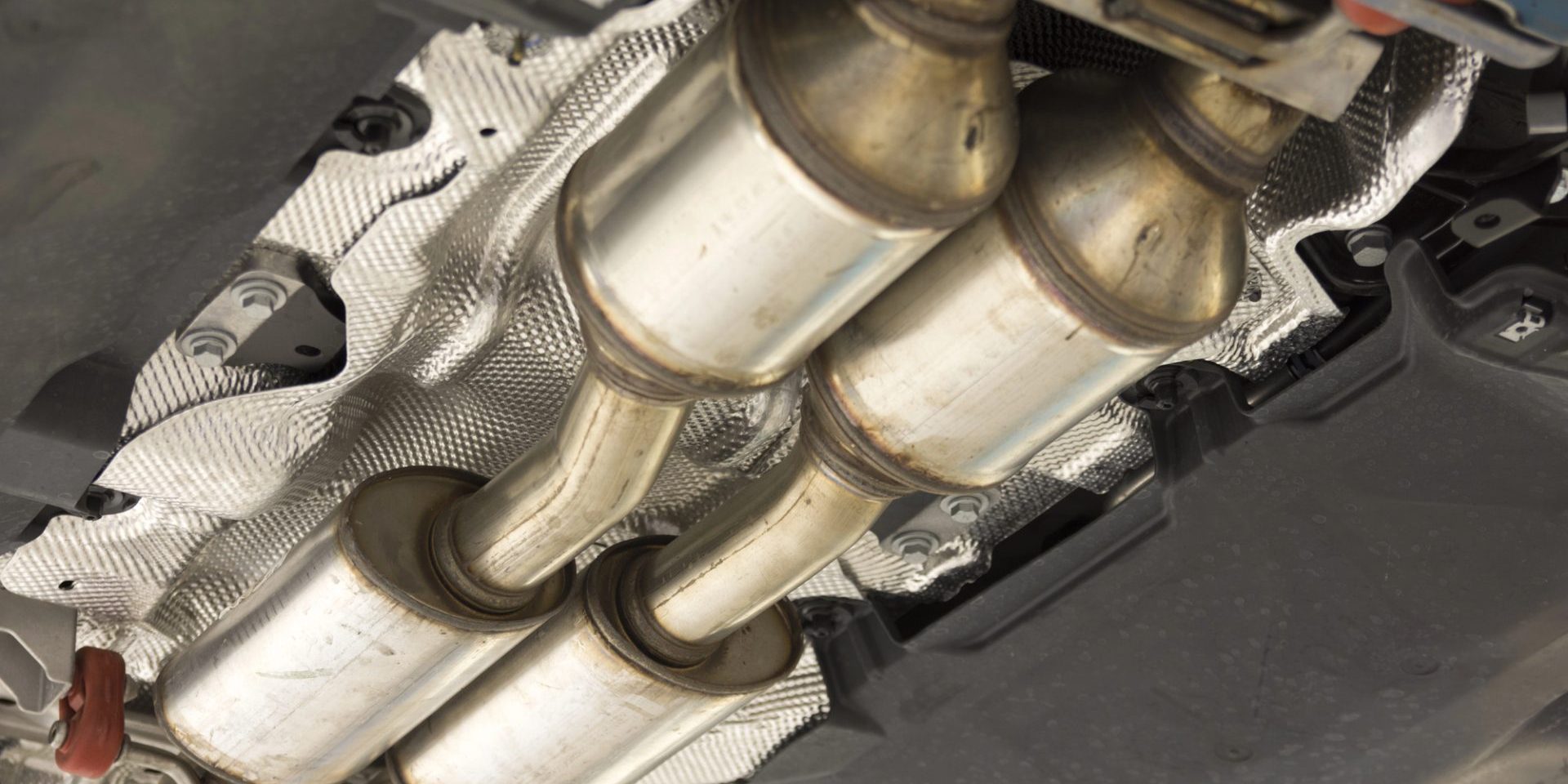
A particulate filter traps soot and burns it off in a process called regeneration. Ford’s 2012 Focus handbook covers a diesel particulate filter and tells drivers who only make short trips, or whose trips are full of stopping and starting, to make occasional runs at constant speed, preferably on a main road or motorway, for up to 20 minutes. A diesel filter that never gets the chance ends as a dashboard light, and what a DPF warning light means comes down to soot that needs a sustained run at higher engine speed to clear.
Ford’s 2019 Fiesta handbook covers a petrol car with a particulate filter of its own. It says the engine control system could actively raise exhaust temperature for a car generally driven short distances at low speed, and it recommends occasional runs of a minimum of 20 minutes including highway conditions, with engine speed held between 1,500 and 4,000 rpm. If the filter nears saturation a warning lamp or message appears, and Ford says ignoring it could cause damage the warranty does not cover.
Volvo gives the same direction for its petrol filter: a driver who mostly uses city traffic should regularly drive at higher speeds so the emissions system can regenerate. Volvo gives no drive time of its own. On diesels, repeated low-speed trips are among the common causes of DPF problems. These are three handbooks, not a rule for every car, and makers revise such texts with each edition.
What to Do With Your Own Handbook
Look in the maintenance section for a list of conditions or a severe-use schedule, as in Kia’s, and for an oil-life monitor message, as in Ford’s. If the schedule has a severe column and the driving matches it, follow that column.
Where the handbook gives a shorter oil interval for short trips, that is the interval to follow. Kia’s higher figure in freezing weather is the cold side of severe service, and cold-weather short trips and severe service get a section of their own in the winter habits list. The same habit means short trips can undercharge batteries too.
On a car with a particulate filter, the longer run now and then is the remedy the handbooks give. Idling is no remedy: Ford says leaving the engine running at a standstill raises fuel use and causes unnecessary wear, and idling to warm the car on a public road can draw a council warning and then a fine.
The makers disagree on how short is short, so the handbook of the car in the drive holds the figure to follow. Ford’s 2 miles, Kia’s 5 or 10 and the silence from Mazda and Volvo are four answers to one question. Two points hold across all four: repetition is what counts, and a longer run now and then is the remedy where a particulate filter is fitted. Nothing the handbooks say puts a number on engine wear.
Want more car content? Add us as a preferred source on Google to your favourites list for the best automotive news and analysis on the internet.
If you enjoyed this article, be sure to follow us on Microsoft Start.
Reviewed by Preetam Gadekar

Leave a Comment
More in News

Ford Filed 83 Recalls Covering 14.2 Million Vehicles in 2026 So Far
Start Rescue Warns Cold Snaps Can Cut Tyre Pressure 4psi and Stretch Stopping 25 Percent

Suzuki Black Car Friday Sale Cuts 10% Off RRP Until 30 November

Pacific, Washington School Zone Cameras Fine $200 to $290 After 30 Days

Stellantis Prices Rose 9.2% and Ford 6.5% in a Year While GM Slipped
Trending on Motoring Chronicle

How to Drive Into London This Summer Without Getting Hit by a £30 Bill

How to Avoid Losing Your Deposit When a Used Car Dealer Goes Under

Valhalla: The ultimate driver’s supercar in final validation testing phase [Photo Gallery]

The new 911 Cup – stronger performance for the successful one-make model [Photo Gallery]