The Lamborghini From The Opening Scene Of The Italian Job Was Never Destroyed. It Just Won A Concours In Rome


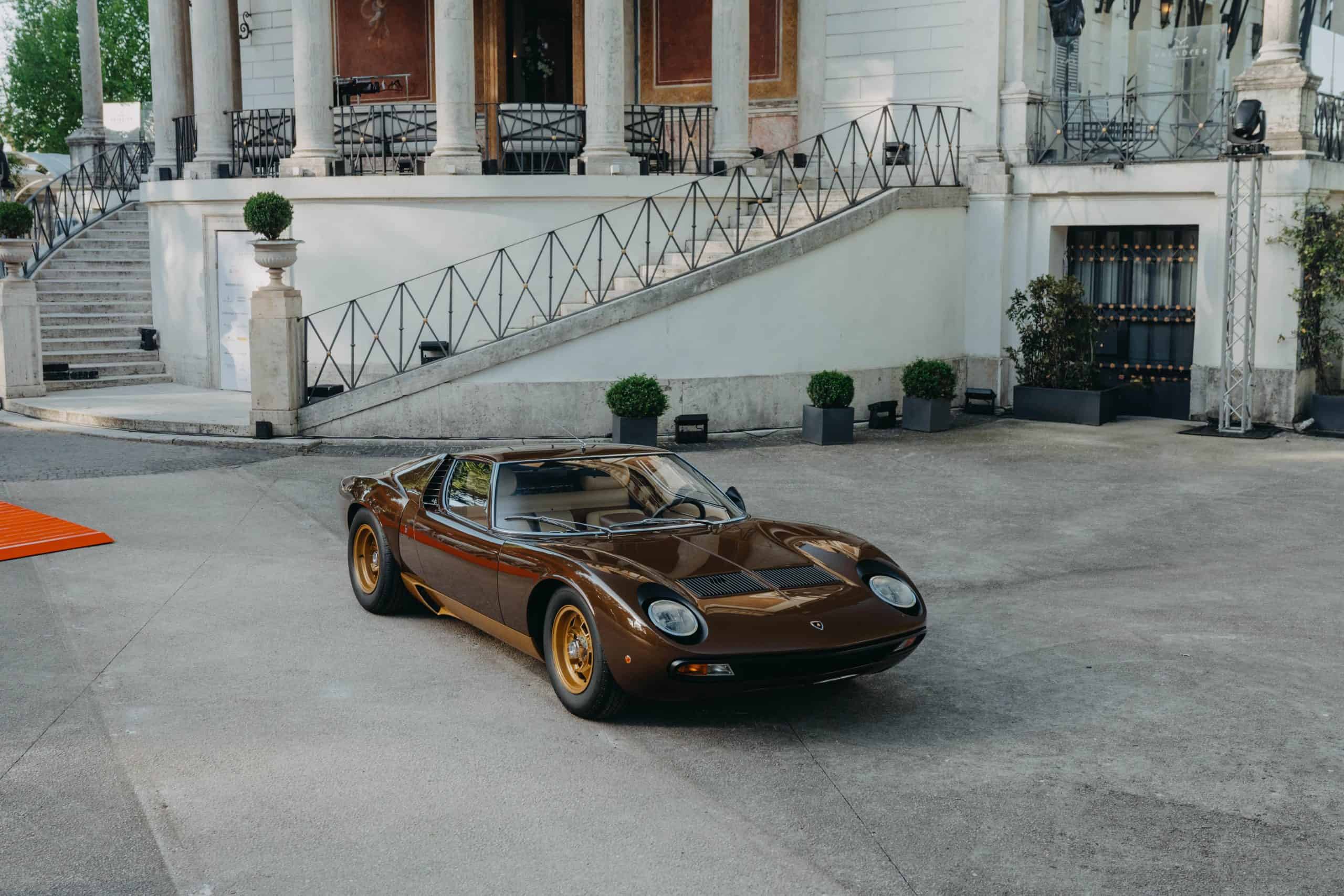
If you have seen the 1969 film The Italian Job, you remember the opening. A Lamborghini Miura P400 glides through an Alpine tunnel, the engine note reverberating off the walls, before the scene takes a violent turn. For decades, the assumption was that the car was destroyed during filming. It was not. And last weekend, that very car was awarded first place in its class at the inaugural Anantara Concorso Roma, more than half a century after it first appeared on screen.
The Miura P400 that opened The Italian Job had originally been sold before filming in a specific configuration that was later adapted for cinematic needs. Black seats were fitted to preserve the originals, while the fixed white headrests were retained. After production wrapped, the car disappeared from public view. Its fate became one of those automotive myths that enthusiasts argued about for years, most assuming it had been written off during the shoot or scrapped shortly afterwards.
That mystery was finally resolved in 2019, when Lamborghini Polo Storico, the brand’s heritage department, confirmed the car’s identity on the 50th anniversary of the film. Polo Storico subsequently restored and certified the Miura, confirming its provenance and returning it to a condition befitting its place in automotive and cinematic history.
At the Rome concours, held between April 16 and 19 against the backdrop of some of the city’s most recognisable architecture, the Miura was entered in Class XIV, dedicated to sports grand tourers of the era. It took first place in its class and received a special award, La vettura di Cinecittà, recognising vehicles with a strong connection to the world of cinema. For a car that most people assumed no longer existed, it was a fitting moment.
The Miura Turns 60
The timing of the concours win carries added weight. The Miura celebrates its 60th anniversary this year, six decades since Lamborghini introduced what is widely regarded as the first true supercar. When the Miura appeared in 1966, it redefined what a road car could look like and how it could perform. The mid-mounted V12, the Marcello Gandini design, the sense of theatre in every angle of the bodywork. Everything that followed in the supercar world, from the Countach to the modern hypercar era, traces a line back to the Miura.
That the model is still commanding attention at international concours events 60 years on says something about the car’s enduring place in the culture. It is not simply a collectors’ piece. It remains one of the most visually striking and emotionally charged cars ever built.
A Three-Year Restoration That Went Down To The Paint Colour
Alongside the Italian Job car, Lamborghini used the Rome event to present its latest completed restoration, a 1972 Miura SV. This is the final evolution of the Miura line, and the example on display had arrived at Polo Storico’s facility in Sant’Agata Bolognese at the end of 2023 in a configuration that no longer matched its original specification.
What followed was three years of work that began not in the workshop but in the archives. Every stage of the restoration was preceded by historical and documentary research starting from the car’s original production sheet, which confirmed its factory specification down to the smallest detail.
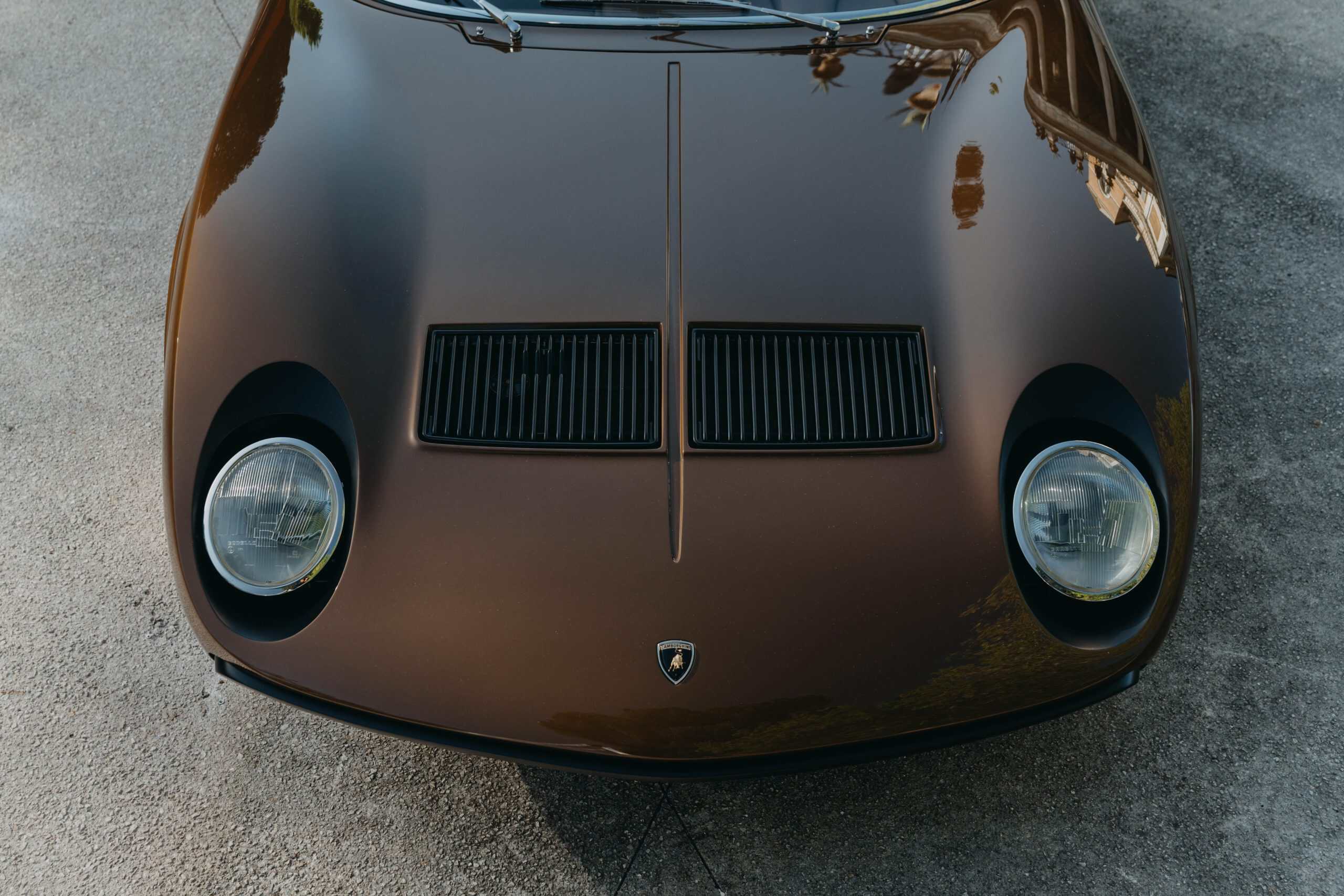
The exterior was returned to its correct configuration piece by piece. The grilles on the front fenders were restored to the original pattern. The fins above the door handles were refitted with their correct rounded edges. The rear louvres were rebuilt to comply with the regulations of the period. The octagonal centre-lock wheel hubs were restored, and the correct exhaust tips were installed, a style known as “Bob-type” after Lamborghini’s legendary test driver Bob Wallace, who helped develop the Miura during its original production run.
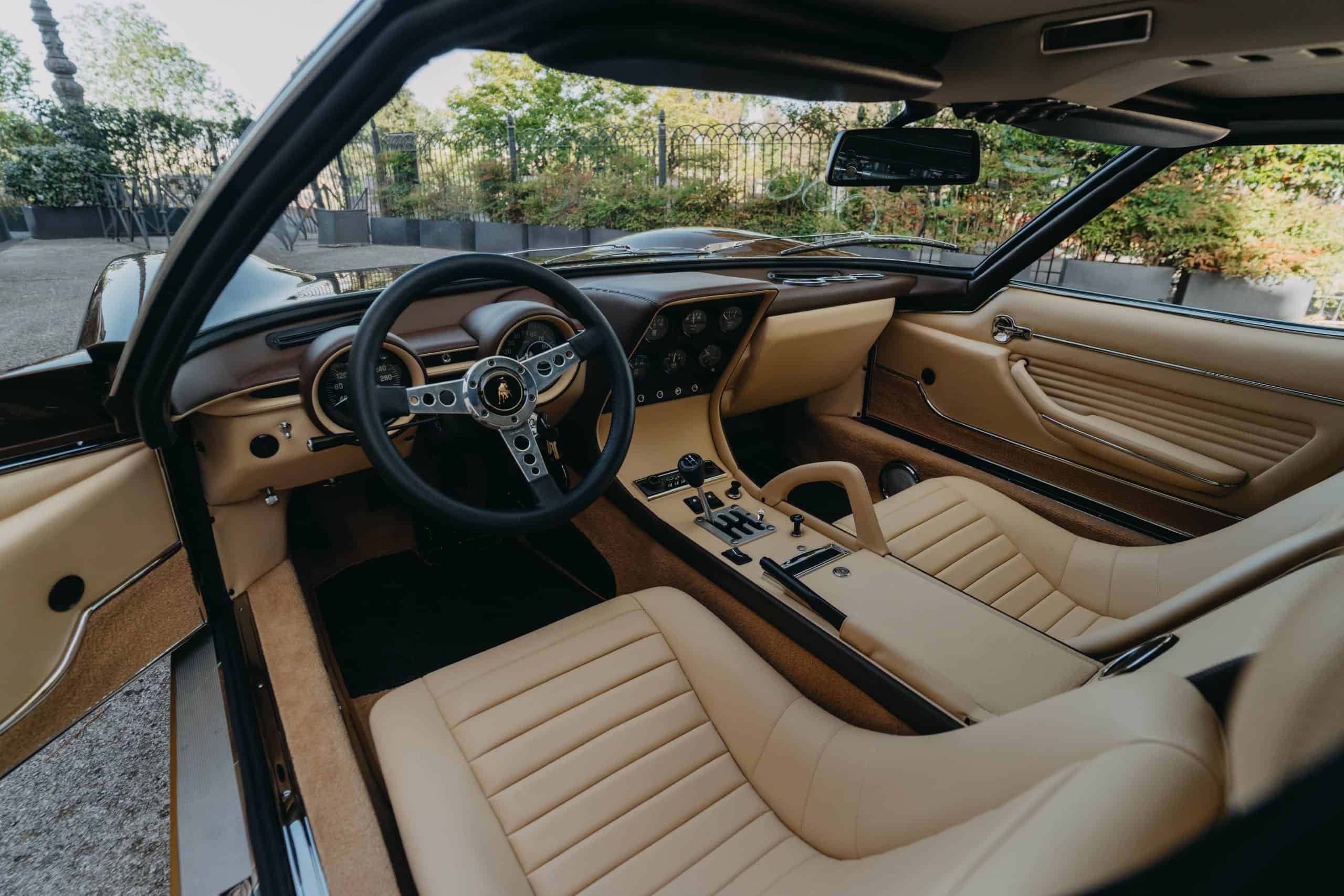
Inside the cabin, the restoration reinstated the air conditioning preparation, refitted the hazard lights, installed a more compact steering wheel in line with the original specification, and fitted the extended handbrake lever. Every component was cross-referenced against the production records to confirm it matched what left the factory in 1972.
The paintwork required its own dedicated research. The car was restored to a shade called Luci del Bosco, a brown tone paired with Senape, a mustard colour, for the interior. Identifying the correct chromatic specification proved more complex than it sounds. The shade evolved over time and across different Lamborghini models during this period, meaning the team had to establish exactly which version of the colour corresponded to this car’s year of production. The result is a colour combination that most people outside the Lamborghini heritage world will never have encountered, and one that looks unlike anything in a modern showroom.
Giuliano Cassataro, Head of After Sales at Automobili Lamborghini, said: “Our participation at the Anantara Concorso Roma represents an important opportunity to enhance the brand’s historical heritage and the work carried out every day to preserve its authenticity. We are proud to have completed a restoration that returns this Miura SV to its original identity and its value over time, according to historical standards that only Lamborghini Polo Storico, as the official custodian of the brand’s heritage, is able to guarantee.”
Two Countach 25th Anniversary Models Joined The Field
The Lamborghini presence in Rome extended beyond the two Miuras. Two 1989 Countach 25th Anniversary models were entered by their respective owners in Class XV, reserved for sports cars of the 1980s and 1990s. The Countach remains one of the most recognisable shapes in automotive history, and the 25th Anniversary edition, the final iteration of the model before production ended, has become increasingly sought after by collectors.
The Rome concours, staged across several of the city’s landmark locations including Casina Valdier, brought together collectors and enthusiasts from around the world for four days of displays, judging and celebration of automotive heritage. For Lamborghini, an event held in Italy, featuring three of its most iconic models from the 1960s, 1970s and 1980s, and culminating in a class win for the car that opened one of the most famous driving scenes in cinema, was about as good as a brand heritage outing gets.
The Miura that Matt Bonney drove into that Alpine tunnel in 1969 was never destroyed. It survived the film, survived the decades of obscurity that followed, and last weekend it stood in Rome under the Italian sun, a class winner at 57 years old. Not bad for a car most people thought was scrap.

Leave a Comment
More in News
Teenage Drivers in London Now Pay £2,928 for Car Insurance, Quotezone Reveals

What Your Tyre Pressure Warning Light Actually Means (and How to Reset It)
How to Fix a Windscreen Chip Before It Fails Your MOT

Millions of Older Drivers Could Now Pay Doctors £62.50 for a DVLA Medical Letter

What Every UK Driver Needs to Know Now the Digital Driving Licence Is Live
Trending on Motoring Chronicle
What the Growing Charging Gap Means for Drivers Switching to Electric Outside London

Hyundai Palisade Hybrid Calligraphy Black Ink Edition Arrives From $59,280

BMW Recalls 29,119 Vehicles Over a Starter Relay Fire Risk
Annapolis Speed Cameras Will Run 24/7 Starting September 8 With Fines Up to $425