The £10 Fix Most Drivers Have Never Heard Of That Could Transform Your Car’s Air Quality This Spring
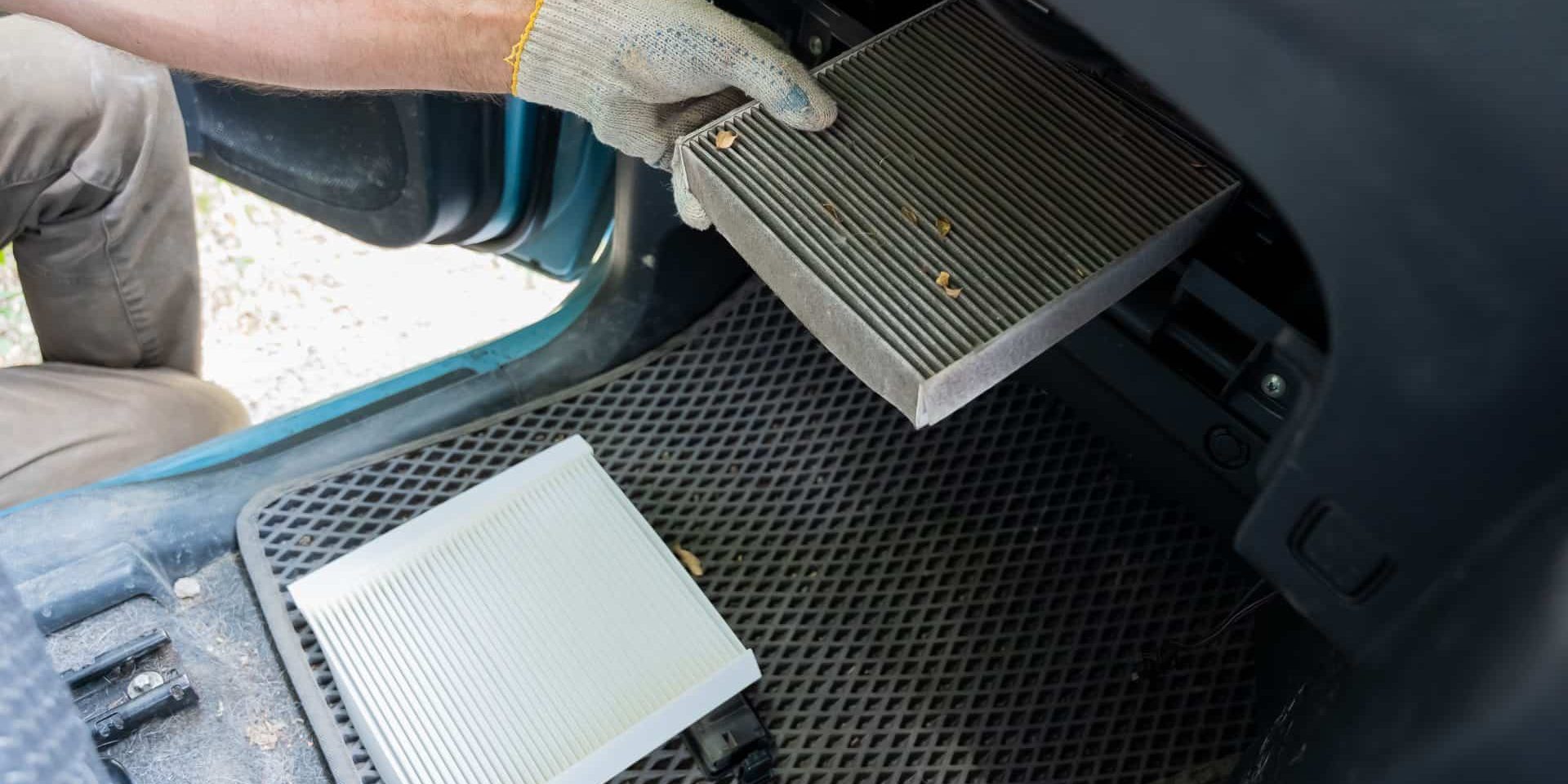
There is a component in your car that filters out pollen, dust and pollutants before they reach the cabin. It costs around £10, takes roughly ten minutes to replace, requires little more than a screwdriver, and more than a third of UK drivers have no idea it exists.
The cabin air filter sits behind the glovebox or under the dashboard on the passenger side, tucked behind a small trim panel near the footwell. Its job is straightforward. Every breath of outside air that enters the cabin through the ventilation system passes through this filter first. When it is clean, it traps pollen, fine dust, exhaust particulates and other airborne pollutants before they circulate inside the car. When it is blocked, it does the opposite. It restricts airflow, forces the ventilation system to work harder, and allows the very particles it was designed to catch to pass through into the cabin.
New research reveals that 42 per cent of UK motorists are completely unaware their vehicle has a cabin air filter. A further 35 per cent have never checked or replaced theirs, despite the recommended replacement interval being at least once a year, or more frequently for drivers who regularly travel in high-pollution or high-pollen areas.
For a country where nearly half of all drivers, 49 per cent, suffer from hay fever, that is a significant blind spot.
Why It Is Especially Relevant Right Now
Spring is peak pollen season in the UK. Grass pollen typically begins rising in late April and peaks through May and June, with tree pollen already active across much of the country. For the millions of drivers who experience hay fever symptoms, the inside of the car should be one of the few places where exposure can be controlled. A functioning cabin air filter, combined with closed windows and the ventilation set to recirculate, creates a relatively clean air environment inside the vehicle.
A blocked or saturated filter undermines all of that. Pollen that would normally be trapped passes into the cabin and circulates every time the fan runs. For hay fever sufferers, that means sneezing, itchy eyes, a runny nose and reduced concentration, all while driving. The symptoms are not just uncomfortable. They are a genuine safety concern. A sneezing fit at 70mph on a motorway is not something any driver wants to experience.
The Knock-On Effects Go Beyond Allergies
The research found that the consequences of a neglected cabin air filter extend well beyond allergy symptoms. More than half of drivers surveyed, 57 per cent, reported fogging windows that are slow to clear. Nearly a third, 32 per cent, have noticed unpleasant odours from the ventilation system. And 21 per cent have experienced weak air conditioning performance.
All three are directly linked to a restricted or contaminated filter. When the filter is blocked, airflow through the ventilation system drops. That means the demister takes longer to clear the windscreen, the air conditioning cannot pull enough air through the evaporator to cool the cabin efficiently, and moisture trapped in the blocked filter creates the damp, musty smell that many drivers assume is just a feature of an older car.
Weak air conditioning performance also has a knock-on effect on fuel consumption. When the system has to work harder to push air through a clogged filter, it draws more energy, which in a petrol or diesel car means marginally higher fuel use and in an electric vehicle means a small but measurable reduction in range. Over thousands of miles, a £10 filter that is changed once a year pays for itself several times over.
How To Check And Replace The Cabin Air Filter
For a component that has such a noticeable effect on cabin comfort, the cabin air filter is remarkably easy to access and replace. In most cars, it is located behind the glovebox. Dropping the glovebox down, which usually involves releasing a retaining clip or two, reveals the filter housing. The old filter slides out, the new one slides in, and the glovebox goes back into place. The whole process takes around ten minutes and requires no specialist knowledge.
In some vehicles, the filter is located under the dashboard on the passenger side behind a small trim panel near the footwell. A screwdriver and occasionally a socket set may be needed to remove the panel, but the replacement process is equally straightforward. The vehicle handbook will confirm the filter location, and compatible filters for virtually any make and model are available from motor factors, car parts retailers and online for as little as £10.
Despite the simplicity, more than half of drivers surveyed, 54 per cent, said they would lack the confidence to do it themselves. For those drivers, any independent garage or dealer will replace a cabin air filter during a routine service or as a standalone job, typically for a modest labour charge on top of the part cost. It is worth asking whether the filter was included in your last service, as not all service schedules include it as a standard item.
Younger Drivers Are More Likely To Have Changed Theirs
The research found a notable generational divide in awareness and action. Nearly a quarter of Millennial drivers, 24 per cent, had checked or replaced their cabin air filter within the last six months. Among Baby Boomers, that figure drops to just nine per cent, with 44 per cent of that age group having never changed the part at all.
The gap likely reflects a combination of factors. Younger drivers tend to be more engaged with online maintenance guides, video tutorials and forums where cabin air filter replacement is one of the most commonly recommended DIY tasks. Older drivers who have relied on dealer servicing for decades may simply never have been told about the filter or had it flagged during a service visit.
Abir Tewari, Director of Commercial Operations for Parts and Accessories, said: “Cabin air filters are a good example of how small, often overlooked parts can have a noticeable impact on everyday driving. While many motorists understand what these filters do, few feel confident taking action or realising the consequences of leaving them unchanged. As we head into spring, we encourage drivers to check and replace their cabin air filter to improve comfort in the vehicle.”
A Ten-Minute Job That Is Worth Doing Today
The cabin air filter is one of those rare car maintenance tasks where the effort is minimal, the cost is negligible, and the difference is immediately noticeable. A fresh filter means cleaner air in the cabin, a faster-clearing windscreen, a better-smelling ventilation system, and air conditioning that works the way it should. For hay fever sufferers heading into the worst months of the pollen season, it could be the difference between a comfortable drive and a miserable one.
If you have never checked yours, now is the time. Open the glovebox, look for the filter housing, and see what condition it is in. If it is grey, clogged with debris, or has a visible layer of dust and pollen, it needs replacing. A new one costs less than a couple of coffees, takes less time to fit than it does to queue for them, and makes every journey between now and autumn noticeably more pleasant.

Leave a Comment
More in News

How to Clear a Musty Car AC Smell Before It Costs a £300 Repair

14 Percent of Keyless Car Owners Faced a Relay Theft Attempt, DVLA Data Shows

I travelled down the Champs-Élysées and around the Arc de Triomphe in a self-driving car

Every New Car Buyer Could Lose EV Discounts as Manufacturer Fines Drop by £3,000

What the Government’s Zero VAT Cut on Home Power Means for Every Electric Driver
Trending on Motoring Chronicle

Why Portland Now Charges $2 for Every Uber and Lyft Ride

Lamborghini Temerario delivers on numbers at its dynamic launch [Photo Gallery]

Four Porsche 963 and three Porsche 911 GT3 R tackle the 24 Hours of Le Mans [Photo Gallery]

Why Two-Thirds of Drivers Oppose More 20mph Limits and Where They Are Going in Next