
Some Insurers Have Raised Car Insurance Prices By Nearly 12 Percent This Year
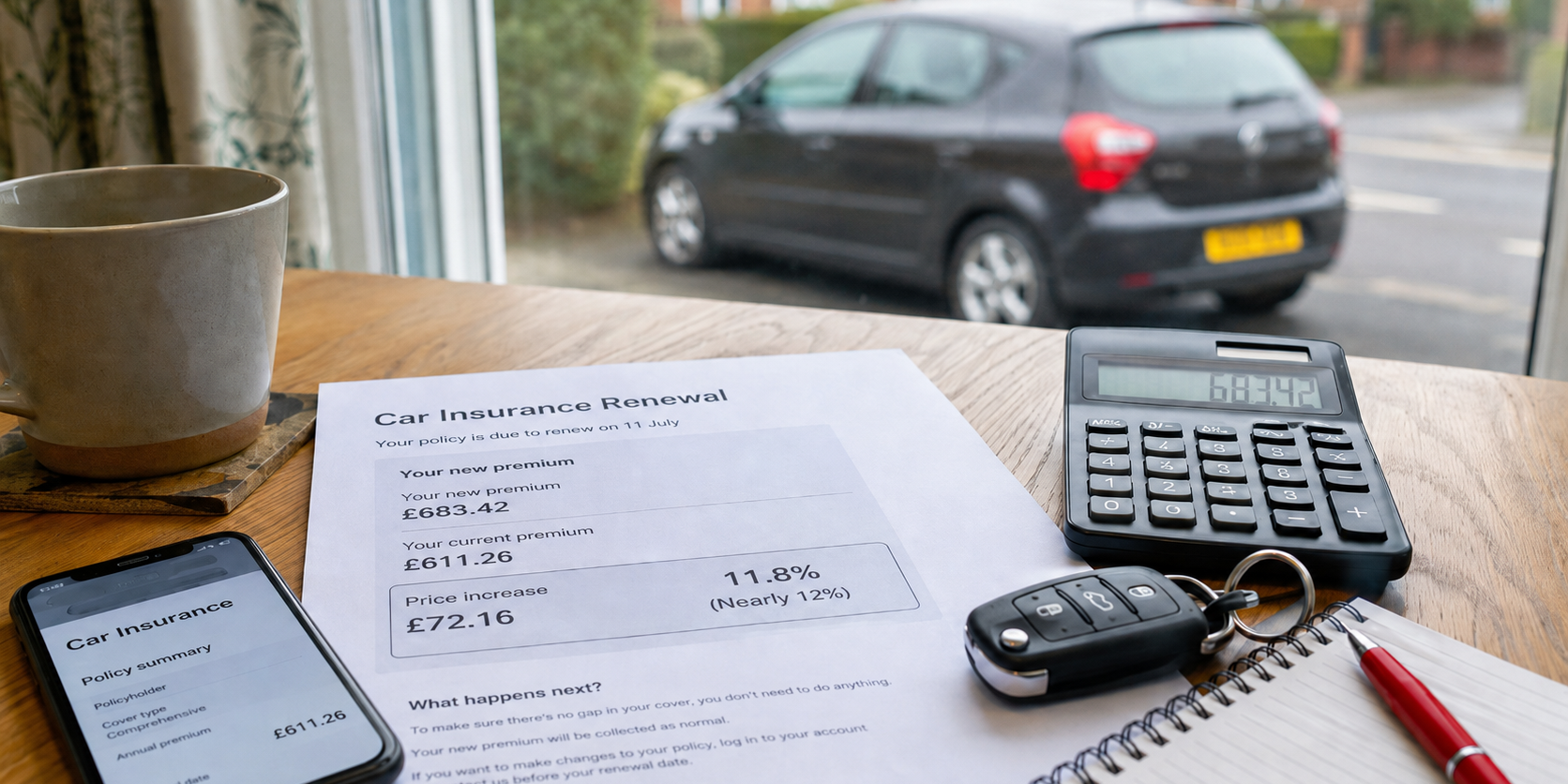
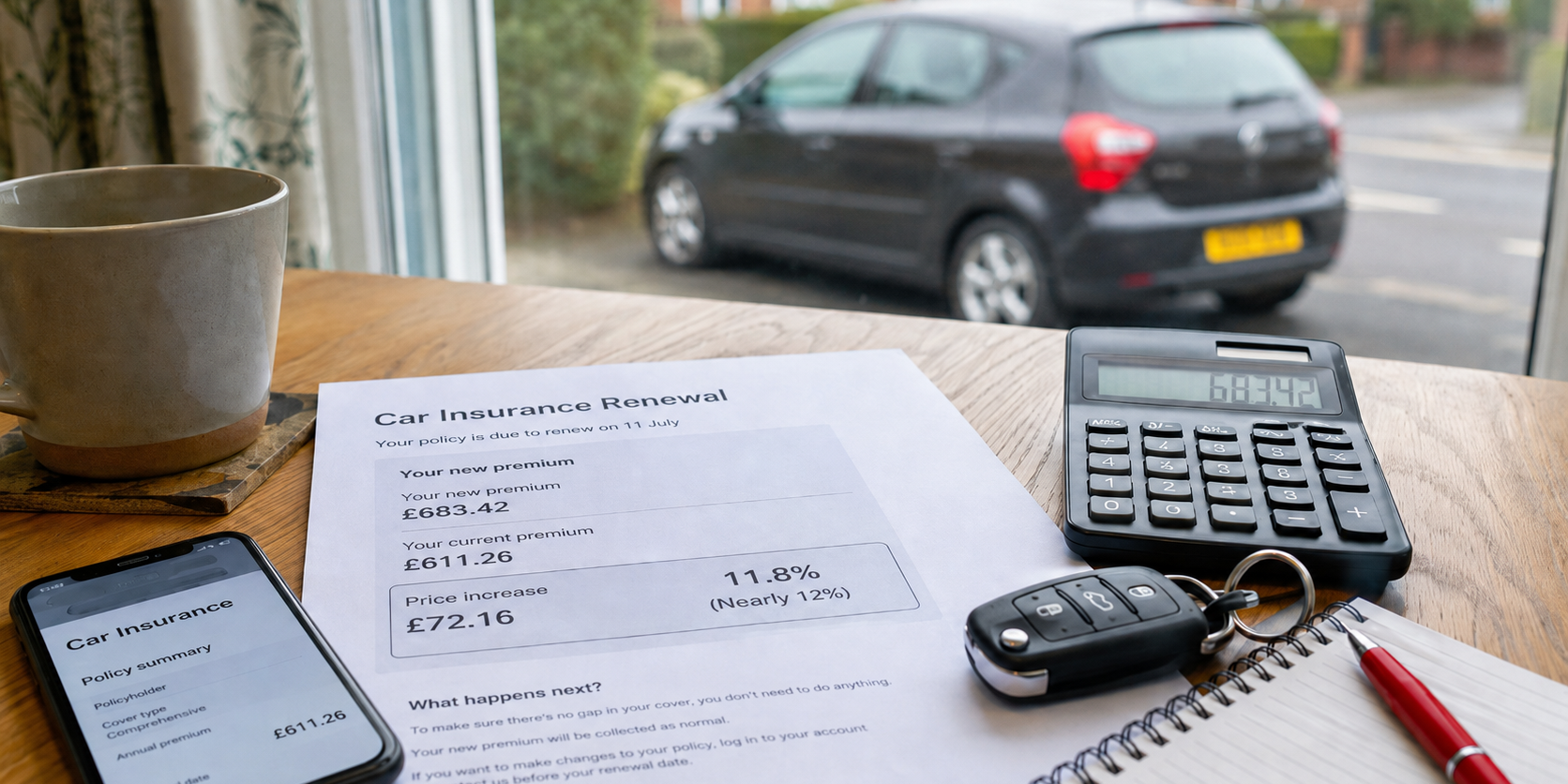
Motor insurance premiums rose for the second quarter in a row between April and June 2026, according to data from analytics firm Defaqto, a shift that runs against the story most drivers have been told this year. Quoted prices climbed 2.1% in Q2, on top of a 1.4% rise in Q1, taking the year-to-date increase to 3.6%. That marks the end of two years of falling premiums and the start of what Defaqto calls a harder pricing phase.
Two data sets, two different stories
The Association of British Insurers reported that the average premium actually paid by drivers held at £560 in Q1 2026, up just £1 on the previous quarter. That figure covers policies people have already bought, many of them renewals locked in before prices moved. Defaqto’s index tracks something different: the prices insurers are quoting right now to new customers shopping around. And those quotes are climbing fast.
The gap between the two numbers is the story. Anyone who bought or renewed a policy months ago is still looking at last year’s pricing. Anyone shopping today is walking into a market that has hardened for two straight quarters, with the sharpest single monthly jump, 1.8%, landing in April.
Some drivers are paying 12% more, others 3% less
Behind the average, Defaqto’s data shows a wide split between individual insurers. Price movements at large motor insurers in Q2 ranged from a cut of 2.7% to a rise of 11.9%. Over 12 months, the range widened further, from a 4% fall to a 13% rise. Several major insurers pushed premiums up by more than 3% in a single quarter.
That divergence means two drivers with near-identical cars, postcodes and driving records could see completely different renewal letters this year depending on which insurer they happen to be with. A driver who has not shopped around while the market was falling has no way of knowing whether their insurer sits at the 11.9% end of that range or the minus 2.7% end.
Low-mileage drivers are being squeezed hardest
Defaqto’s breakdown by annual mileage shows prices have risen most sharply for the lowest-mileage drivers, the group insurers have traditionally treated as lower risk. Premiums for higher-mileage drivers have levelled off or fallen over the same period. Francis Luery, product manager at Defaqto, said insurers are making “more granular pricing decisions rather than simply applying market-wide increases,” refining who they see as profitable rather than raising every premium by the same amount.
That segmentation cuts against the assumption that driving less automatically means paying less. A retired driver doing 3,000 miles a year, or a second-car owner who mostly works from home, is now in the group facing the steepest quoted increases, even as headline coverage says premiums are “stable”.
Why the market has turned
The ABI’s own claims data helps explain the pressure. Insurers paid out £2.9 billion in motor claims in Q1 2026, with £1.9 billion of that going on vehicle repairs, up 3% on the previous quarter. The average accidental damage claim reached £3,699, up 8% in a single quarter, as the growing complexity of modern cars, more sensors, more cameras, more calibration work, pushes up the cost of even minor repairs. Theft claims add to the bill: the average payout for theft of or from a vehicle hit £11.8k in the most recent full-year comparison the ABI has published, driven largely by keyless relay theft, which the ABI says now accounts for around 70% of stolen vehicles.
Stephen Kennedy, director at Defaqto, said the correction looks “controlled” rather than a return to the sharp inflation of 2022 and 2023, when premiums spiked on the back of surging repair and parts costs. But he was clear that the direction has changed: “Insurers are again applying upward pressure where they need to, particularly as they seek to protect margin and respond to underlying cost dynamics.”
How this compares with the last two years
Put this in context. Quoted motor premiums are still 17.1% below where they stood two years ago, and 0.8% below where they stood a year ago, so this is not a return to the sharp inflation drivers faced in 2022 and 2023, when premiums spiked well above pre-pandemic levels. Compared with prices before Covid, the market now sits 11.4% higher. At the end of 2025, prices were running 11.4% below the year before. That gap has narrowed to less than 1% in the space of two quarters, a fast reversal that most drivers will not have noticed, as it shows up first in quotes rather than renewal letters.
The scale of the theft problem sits underneath a lot of this. Insurers settled 669,000 motor claims in the second quarter of last year, 5% more than the first three months, and theft claims were a large part of the increase in payout costs. A new criminal offence targeting the sale and possession of signal jammers and relay devices came into force this year, something Thatcham Research welcomed as a step toward tackling the problem at its source rather than only through insurance pricing. Until enforcement catches up with the scale of the crime, insurers say the cost will keep showing up in quotes.
How to Fight Back
Do not assume a quiet renewal letter means your insurer is one of the ones cutting prices. Get a fresh set of quotes at least three weeks before your renewal date using two or three comparison sites, as panels differ and no single site covers every insurer. Compare the renewal quote against the best new-customer price for identical cover, then call your existing insurer and ask them to match it. Insurers would rather cut a price than lose a customer to a rival.
If your annual mileage has dropped, tell your insurer directly rather than assuming it will lower your premium automatically. Ask specifically whether a lower declared mileage or a telematics policy would reduce your quote. Defaqto’s data suggests lower-mileage drivers are the ones facing the steepest rises, and insurers do not always flag cheaper options unprompted.
Fit Thatcham-approved security if you drive a car that sits on the list of the most frequently stolen models on UK roads. An S5 or S7 tracker can qualify you for an insurer discount and cuts the chance of a total loss claim pushing your premium up at the next renewal. Report any change in circumstances, a new alarm, a change of address, a car kept in a locked garage overnight instead of on the street, as these small details can shift your quote more than shopping around alone ever will.
If you believe your renewal price has jumped well beyond the market movement described here, ask your insurer in writing for the reason behind the increase. Firms must be able to explain a pricing decision if asked, and a written request creates a record you can escalate to the Financial Ombudsman Service if the explanation does not add up.
Keep a note of the quotes you gather and the date you gathered them, as prices can move within weeks in a market moving this fast. A quote that looked competitive a month ago could no longer be the best one available by the time your renewal actually falls due, so run the comparison again close to the date rather than relying on an older search.
For more on your rights when an insurer’s pricing or claims decision does not add up, and the steps that can help you escalate a dispute, see our coverage of how to win a motor insurance complaint.
Sources:
- Defaqto, “Motor Premiums on the Rise, Says Defaqto” (9 July 2026): https://insurance-edge.net/2026/07/09/motor-premiums-on-the-rise-says-defaqto/
- ABI, “Motor premiums remain stable, but cost of repairs still high” (30 April 2026): https://www.abi.org.uk/news/news-articles/2026/4/motor-premiumsremainstablebutcost-ofrepairsstill-high/
- ABI, “Motor premiums fall – but repair and theft costs keep revving up claims” (13 August 2025): https://www.abi.org.uk/news/news-articles/2025/7/motor-premiums-fall—but-repair-and-theft-costs-keep-revving-up-claims/

Leave a Comment
More in News

How DVSA Data Reveals Which Driving Test Centres Give You the Best Odds
Every UK Driver Faces Two More Fuel Duty Rises Worth 4p by March 2027
Newcastle Drivers Paid £3.7 Million in Parking Enforcement as Council Income Jumps 23 Percent

Coventry Drivers Paid £5.4 Million in Parking Charges as Council Surplus Jumps 80 Percent
What Your Rights Actually Are When a Garage Overcharges or Botches a Repair
Trending on Motoring Chronicle

Why More States Are Ending Hands-Free Grace Periods as Summer Fines Reach $450

Police Recover 95 Percent of Tracker-Fitted Stolen Cars While Most Others Are Never Found

Every Diesel Driver Pays a Record £110 a Tank, RAC Says, With Duty Rising
The 10 Least Reliable Used Cars In The UK Have An Average Repair Bill Of £2,051. Five Of Them Are Land Rovers
