
Redesigned 2027 Hyundai Elantra Is 3.4 Inches Longer, Hybrid Targets 53 MPG
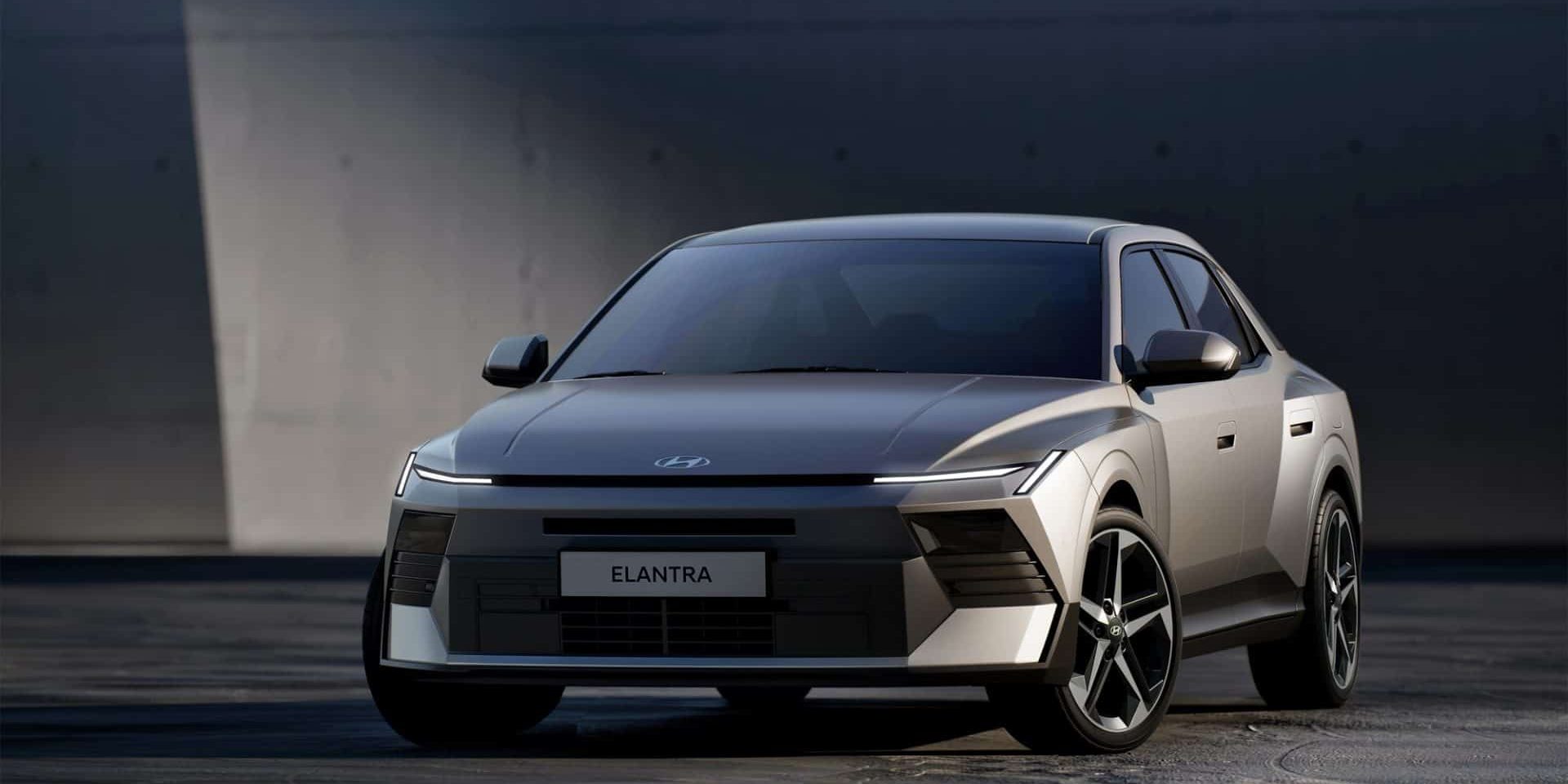
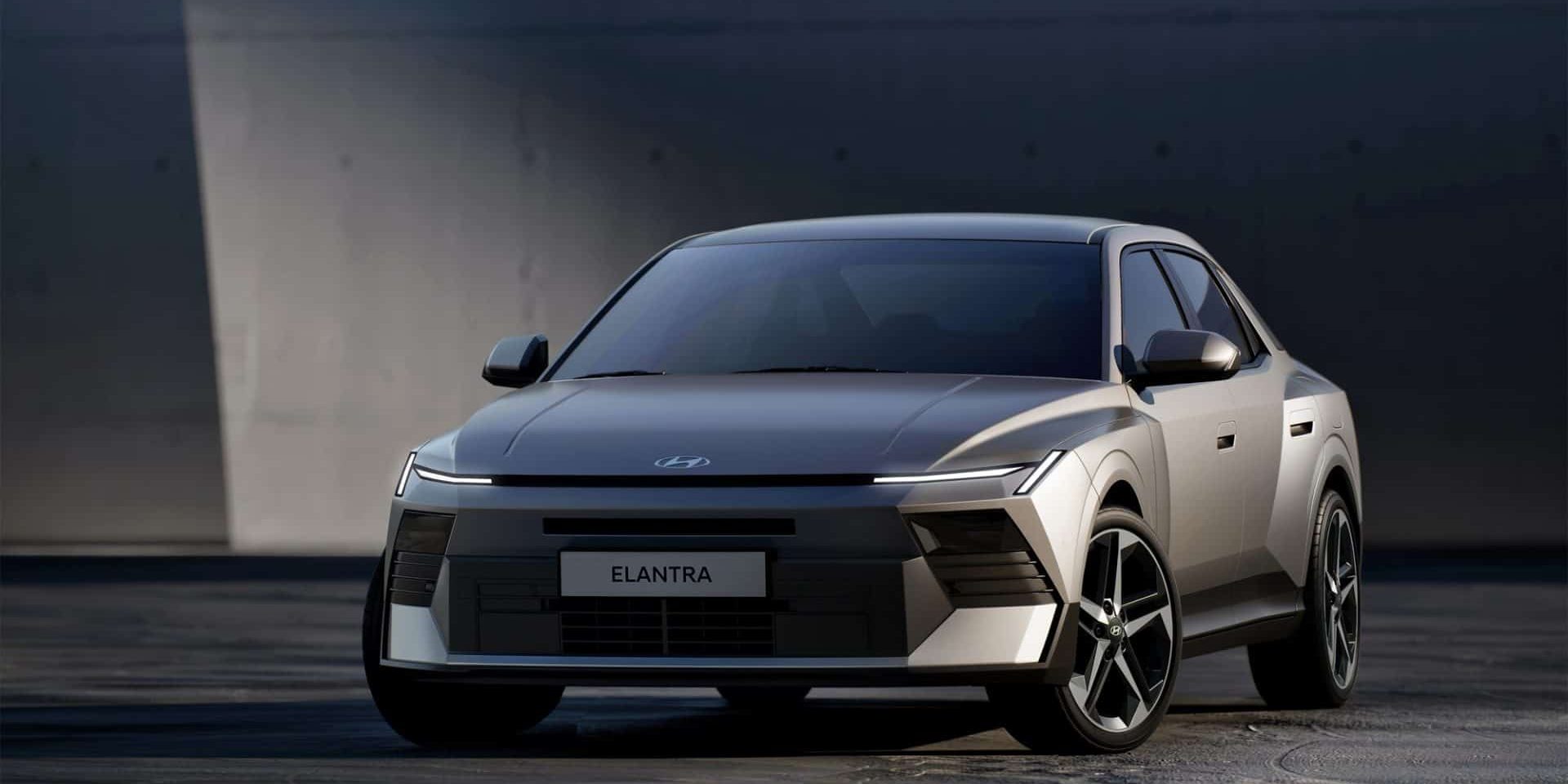
- The all-new 2027 Hyundai Elantra and 2028 Elantra Hybrid debuted at the Los Angeles Auto Show on Nov. 19 with 3.4 inches more length and 39.1 inches of rear legroom.
- Hyundai targets up to 53 mpg combined and 155 horsepower for the hybrid, against up to 35 mpg and an estimated 147 horsepower for the gas model.
- Price, on-sale date and EPA fuel economy ratings are still unannounced, so rivals’ current sticker prices are the yardstick for shoppers.
A Roomier Elantra Arrives With a 53 MPG Target and No Price Tag
Hyundai Motor America unveiled the eighth-generation Elantra on Nov. 19, 2026 at AutoMobility LA, part of the Los Angeles Auto Show. The gas car carries the 2027 model year and the hybrid carries 2028. Hyundai says U.S. on-sale timing, pricing, final EPA fuel economy ratings, full color availability and definitive trim specifications will be announced closer to launch.
That leaves a compact sedan shopper with a lot of specification and no sticker. Every mpg figure in the announcement is a Hyundai target from its own testing. The EPA has not certified any of them, and the final numbers can differ.
Hyundai calls the Elantra the brand’s all-time cumulative sales leader in the United States and worldwide, and its executives describe it as the car that brings new buyers into the brand. “For many customers, ELANTRA is their first experience with the Hyundai brand, and that makes this vehicle especially important to us,” said José Muñoz, president and CEO of Hyundai Motor Company. “The all-new ELANTRA demonstrates that an attainable sedan does not have to compromise on design, technology or everyday usability. We want that first Hyundai experience to be one that builds trust and keeps customers with our brand for years to come.”
Randy Parker, president and CEO of Hyundai Motor North America, tied the car to price. “Customers have been very clear about what they want: great design, technology, safety and efficiency, all at a price that makes sense,” said Parker. “The all-new ELANTRA delivers on that formula. It gives customers more of what they value while remaining an attainable entry point into the Hyundai brand, and that’s exactly the kind of product we want to bring to the U.S. market.”
Longer, Wider and Roomier: What the Extra Inches Buy
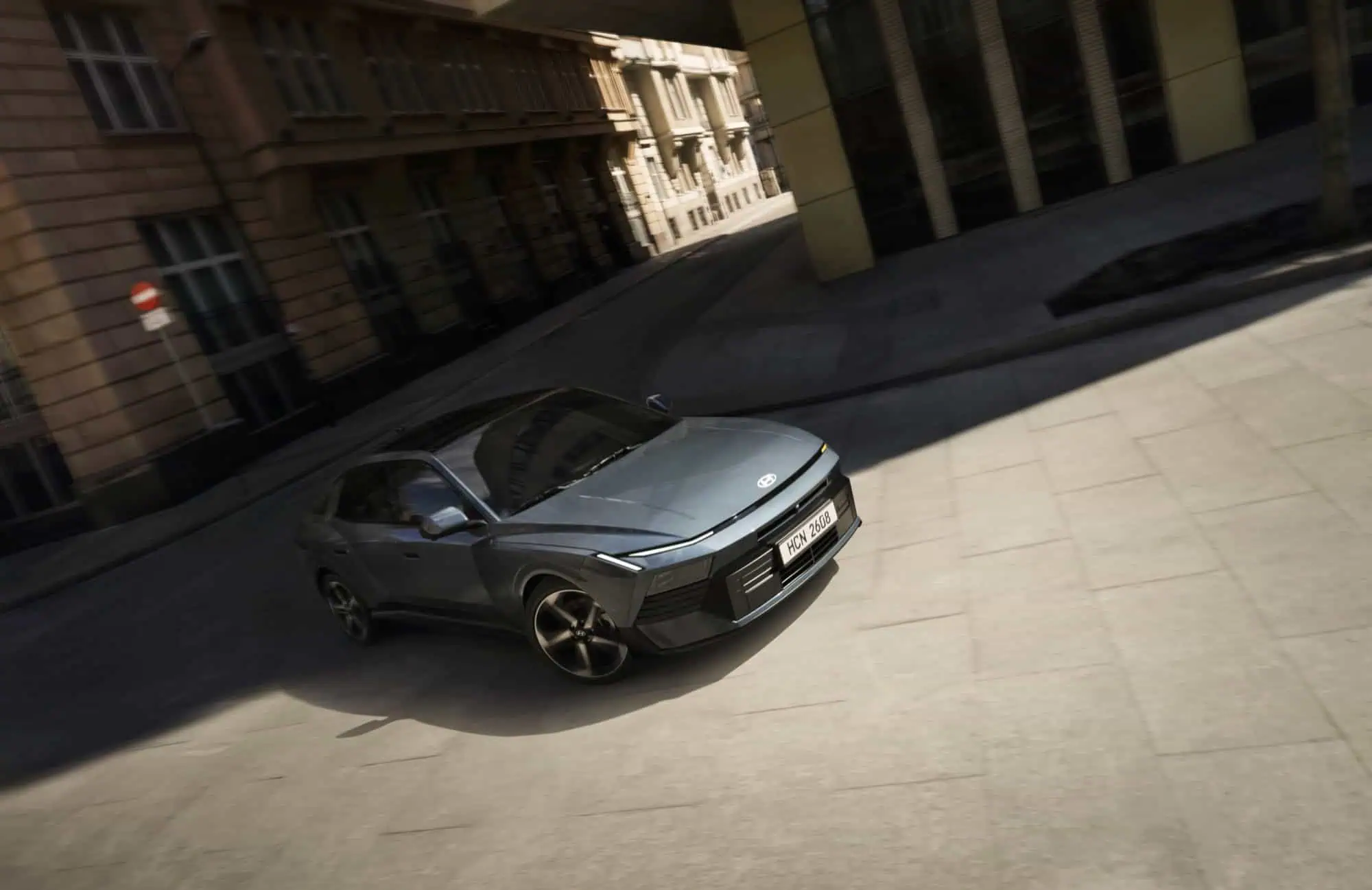
The car runs 188.8 inches nose to tail and 73.0 inches across, standing 56.1 inches high (56.3 for the hybrid) on a 108.3-inch wheelbase. Hyundai lists the growth against the previous generation as 3.4 inches in length, 1.2 inches in width and 1.2 inches in wheelbase, which puts the old car at 185.4 inches long, 71.8 inches wide and on a 107.1-inch wheelbase. The gas model is 0.4 inches taller. Both powertrains post a 0.26 drag coefficient.
The styling carries the company’s Art of Steel design language into the compact sedan class. “There is an inherent beauty in a sedan because its proportions are honest, intuitive and functional,” said SangYup Lee, an executive vice president who runs the Hyundai and Genesis Global Design Center. “With the all-new ELANTRA, we returned to that essence, then pushed it forward. Wide muscular fenders, a long hood and refined three-box proportions give ELANTRA a confident, athletic presence that challenges the conventions of the compact sedan.” New colors are Graphene Green, Kodiak Blue, Quantum Metal and Volcanic Red.
The back seat gets the most attention. Rear legroom reaches 39.1 inches, rear headroom 37.7 inches and rear shoulder room 56.5 inches. Hyundai calls that the top rear-seat space among U.S. compact sedans, a claim it bases on published rear-seat dimensions of those cars as of November 2026. Slimmer front seat frames free up room behind them. Hyundai says the second row fits adults and both front-facing and rear-facing child seats, and it adds second-row air vents and two standard 27-watt rear USB-C ports. A 60/40 split-folding rear seatback is available, and it is listed from the SEL Sport trim up.
Olabisi Boyle, senior vice president of product planning and mobility strategy at Hyundai Motor North America, tied the space to the price pitch. “In a market defined by affordability, the most radical thing you can do is put great effort into building a desirable car that people can afford,” said Boyle. “The all-new ELANTRA is that car: the design makes you want to look back at it after you park, it gives mid-size space in a compact sedan, and it has ICE and hybrid options to match what you choose to drive.”
The Hybrid Targets 53 MPG, and Targets Are Not EPA Ratings
The gas Elantra uses a 2.0-liter Atkinson-cycle four-cylinder that Hyundai estimates at 147 horsepower and 132 lb.-ft. of torque, with Hyundai’s Intelligent Variable Transmission (IVT) with Shiftronic, front-wheel drive and a torsion-beam rear axle. The 35 mpg combined target applies to cars on 16-inch wheels, which means the base SE. Hyundai gives no figure for the 18-inch SEL Sport or Limited.
The hybrid pairs a 1.6-liter four-cylinder with a six-speed dual-clutch transmission and puts out 155 horsepower combined, up 16 horsepower (11.5 percent) from the 139 horsepower of the previous hybrid. The electric motor grows from 32 kilowatts to 45 and the battery from 1.32 to 1.49 kilowatt-hours. Steering-wheel paddles set the regenerative braking level, and the strongest setting brings the car to a full stop for one-pedal driving. The hybrid also gets a multi-link rear suspension in place of the gas car’s torsion beam.
The target gap between the two is 18 mpg, or 51 percent. Take 12,000 miles of driving in a year as a round example: at 35 mpg that is about 343 gallons, at 53 mpg about 226, a difference of more than 116 gallons. The gas car’s extra output is small, with the hybrid ahead by 8 horsepower, so the hybrid gives up no power on paper.
Hyundai also names a feature called Stay Mode for the hybrid. Climate control, audio, lighting, charge ports and select convenience functions run from the hybrid battery with the engine off while the car sits in Park. Hyundai says it lasts up to 30 minutes and calls it exclusive in the class. The fine print puts operation at 20 to 30 minutes on a fully charged battery, and it varies with battery charge, outside temperature and climate control use. The car cannot be driven while Stay Mode is active.

Big Screen, Voice Assistant and the Buttons Hyundai Kept
Every Elantra gets Pleos Connect, Hyundai’s new Android Automotive OS infotainment system, centered on a standard 12.9-inch Full HD display. Higher trims add a 9.9-inch slim information display. The system supports wireless Apple CarPlay and Android Auto, Bluelink, SiriusXM, Wi-Fi and over-the-air updates that arrive without a dealership visit. Gleo AI, a cloud-connected voice assistant built on a large language model, handles select vehicle controls and supported web queries by conversation. Hyundai lists it as available, with features that vary by trim and market.
Frequently used controls stay physical. Audio and climate keep their buttons and knobs under Hyundai’s “Eyes on the Road, Hands on the Wheel” approach, an easy detail to check on a test drive.
Two front USB-C ports share up to 100 watts, and two rear ports each supply 27 watts. The SmartSense suite offers forward collision-avoidance assist that detects pedestrians, cyclists, junction turns and direct oncoming traffic, blind-spot collision warning, rear cross-traffic collision-avoidance assist, lane keeping assist, safe exit warning, smart cruise control with stop and go, driver attention warning, high beam assist, rear occupant alert, a driver monitoring system and parking distance warning. Hyundai says a stiffer body and more ultra-high-strength steel support better collision performance, but it has announced no crash-test rating, so the safety result is unknown until NHTSA and IIHS publish theirs.
Three Trims for Gas, Three for Hybrid
The 2027 Elantra comes in SE, SEL Sport and Limited. The SE has 16-inch alloy wheels, the 12.9-inch display, smart cruise control with stop and go and a proximity key. The SEL Sport adds 18-inch gloss-black wheels, paddle shifters, dual-zone climate control, heated front seats, the 9.9-inch information display and a wireless phone charger. The Limited adds a power moonroof, H-Tex seating surfaces, a power driver’s seat with memory, heated and ventilated front seats, Digital Key 2 Premium, dual wireless chargers, a 12-speaker Bang & Olufsen audio system and Lane Following Assist 2.
The 2028 Elantra Hybrid starts at the SE Blue, which has 17-inch wheels, dual-zone climate control and Stay Mode as standard. The SEL Sport Hybrid and Limited Hybrid then follow the same upgrade ladder as the gas car. Hyundai says trim structure and packaging remain subject to change, and the launch photos show cars photographed in South Korea and in Fountain Valley, California.
What Rivals Cost Today and What to Do Before the Price Lands
With no Elantra price, the benchmark is what rivals charge now. Honda lists the 2027 Civic LX sedan at $24,995 MSRP, or $26,290 with the $1,295 destination charge, and rates it 32 mpg city, 41 highway and 36 combined. The Civic Sport sedan starts at $26,995 and the Civic Sport Hybrid sedan at $29,695 ($30,990 with destination), with an EPA rating of 49 mpg combined. Mazda prices the 2027 Mazda3 2.5 S sedan at $24,750, the 2.5 S Select Sport at $25,740 and the 2.5 S Preferred at $27,490, all before a $1,315 destination charge. Its 2.5-liter engine makes 186 horsepower, 39 more than Hyundai’s gas estimate. Toyota’s 2027 Corolla pricing starts at $23,325 for the LE and $25,175 for the Hybrid LE, which is rated 50 mpg combined, before a $1,295 fee.
Set against those numbers, the hybrid target of 53 mpg sits 4 mpg above the Civic Sport Hybrid’s EPA label and 3 mpg above the Corolla Hybrid’s. Hyundai’s gas target of 35 mpg sits 1 mpg under the Civic LX’s EPA 36. Hyundai’s numbers are targets and the rivals’ numbers are finished labels, so the EPA label will settle what a target cannot. A Civic’s cost of owning over five years runs $41,930 for the 2026 Sport sedan across 75,000 miles, a useful yardstick for the full bill.
Here is what a shopper can do now:
- Ask a dealer when pricing and build slots open, and whether the 2027 gas car and the 2028 hybrid arrive together. Hyundai has given no separate timing for either.
- Keep the current car until MSRP and destination are published. A trade-in decision made on a target mpg and no price is a guess.
- Compare the EPA combined rating and the sticker with the rivals above once both exist, and price the full cost of ownership.
- Check how much stock the rivals on your list have on the lot, which shapes how much room a dealer has to deal today.
- Look for NHTSA and IIHS crash results on the new Elantra before signing.
If a rival becomes the fallback, stock levels count. The days of new car supply differ by brand, with Toyota at 39 and Jeep at 159 in October, and a dealer holding plenty of a model has more room to bargain.
Want more car content? Add us as a preferred source on Google to your favourites list for the best automotive news and analysis on the internet.
If you enjoyed this article, be sure to follow us on Microsoft Start.
Reviewed by Preetam Gadekar

Leave a Comment
More in News
Every Driver Over 70 Self-Certifies Eyesight as DfT Logs 581 Casualties Involving Poor Driver Sight
Skoda Peaq Scores 94 Percent for Crash Protection in Five-Star Euro NCAP Test
Diesel Hits a Record 199.5p and a Fill Costs £29 More Than 2025
Man starts new Volvo without logging in. He has to click ‘not now’ 8 times to get it to start: ‘So thirsty for data…’
Volvo EX60 Wins 2027 Car of the Year With 503 Miles of Quoted Range
Trending on Motoring Chronicle
Every Driver Faces £500 Seatbelt Fines as AI Cameras Flag 19,145 Possible Offences
What the 10 Per Cent Speed Camera Rule Actually Means and Where It Is Now Being Cut

7 Interior Maintenance Habits That Keep Your Car Looking New
Half of Thanksgiving Day Traffic Deaths in 2024 Involved a Drunk Driver
