
Park On The Pavement And You Could Be Fined Up To £130

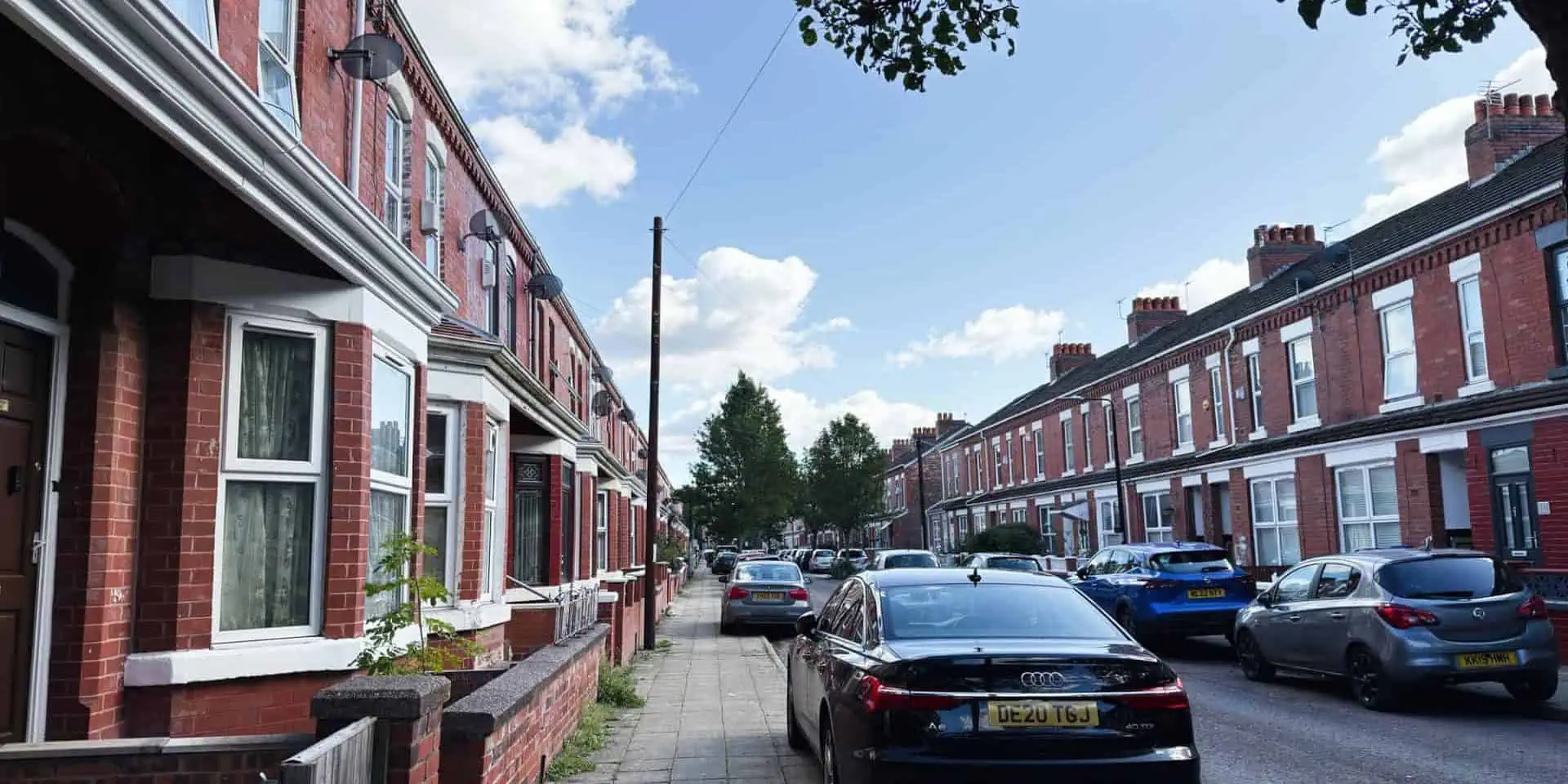
If you have ever left your car with one wheel up on the kerb because the road was narrow or there was nowhere else to put it, you are not alone. Millions of drivers across England do it every day. But a law that quietly received Royal Assent earlier this year is about to change the consequences of that habit for good.
The English Devolution and Community Empowerment Act has handed councils across England the power to fine drivers for parking on the pavement. Until now, that power existed only in London, where it has been enforced since the 1970s under the Traffic Management Act 2004. For the rest of England, pavement parking sat in a grey area. Police could technically act under the obstruction laws, but in practice it was rarely enforced and widely tolerated. That era is ending.
From late 2026, councils outside London will be able to issue Penalty Charge Notices to any vehicle parked on a pavement where it causes unnecessary obstruction. Even one wheel on the kerb is enough. The fines mirror London’s existing structure: a standard PCN of £70, reduced to £35 if paid within 14 days, rising to £130 for serious obstruction in high-tier enforcement zones.
How It Will Be Enforced
This is not a police matter. Enforcement will sit with Civil Enforcement Officers, the same uniformed council staff who currently issue parking tickets for expired meters, yellow line violations and other civil parking offences. They will have the authority to act on pavement parking violations without needing a Traffic Regulation Order for each individual street, which was one of the biggest barriers to enforcement outside London under the old system.
That change in process matters more than the fine itself. Previously, a council that wanted to ban pavement parking on a specific road had to go through a lengthy legal process to create a TRO, consult residents, install signage and then enforce it. Most councils simply did not bother. The new legislation removes that barrier by giving officers the power to act wherever they observe unnecessary obstruction, without needing a road-by-road order in place first.
The government has taken a phased approach. Secondary legislation will be introduced in 2026 to give local transport authorities in Strategic Authority areas the enforcement powers first. In areas without a Strategic Authority, the powers will sit with unitary authorities or county councils. The aim is full coverage across England by the end of 2026.
Where The Lines Are Drawn
The law is not a blanket ban on every vehicle that touches a kerb. Councils will have discretion to create exemptions for specific streets or zones where partial pavement parking is considered necessary. Narrow residential streets where cars cannot pass each other without mounting the pavement are the obvious example. In those cases, councils can designate areas where pavement parking is permitted, provided enough space is left for pedestrians, wheelchairs and pushchairs to pass safely.
That distinction between a total ban and a locally enforced power is important. The government considered and rejected a nationwide prohibition. Instead, it opted for a model that gives councils the tools to act but leaves the decision on where and how aggressively to enforce in local hands. In practice, that means the experience for drivers will vary depending on where they live and how proactively their local authority chooses to use the new powers.
What will not vary is the legal position. Once the powers are in place, parking on the pavement in a way that obstructs pedestrians will be a fineable offence everywhere in England, whether or not your council has started issuing tickets yet.
Most Drivers Actually Want This
An RAC survey of more than 1,700 drivers found that 83% want the government to take action on pavement parking. Two-thirds of those surveyed said they regularly see vehicles parked partially or fully on pavements near where they live, with a third reporting it happens every single day.
Opinion is split on the best approach. Around 42% of drivers support an outright ban on pavement parking across England, while 41% prefer giving councils the power to act on specific roads where it causes problems. The government has landed closer to the second option, which may explain why the policy has attracted relatively little public opposition so far.
There is a gap, though, between supporting the principle and being comfortable with the reality. It is one thing to agree that pavement parking is a problem when you are thinking about blocked wheelchairs and pushchairs. It is another when the £70 penalty notice lands on your own windscreen because you left a wheel on the kerb outside your house on a Tuesday evening. The true test of public support will come once the fines start arriving.
Interestingly, 44% of drivers told the RAC that first-time offenders should receive a written warning letter before any fine is issued. Whether councils adopt that softer approach or go straight to penalties will likely shape how the policy is received in its first year.
Who Is Exempt
Disabled drivers with a valid Blue Badge are not automatically exempt from pavement parking rules, but the government has indicated that enforcement guidance will take accessibility needs into account. Drivers loading or unloading may also have limited protection depending on local rules, as they do with other parking restrictions.
Emergency vehicles are exempt, as they are from most parking restrictions. Beyond that, the exemptions will largely come down to local council decisions about which streets to designate as permitted pavement parking zones.
If you are unsure whether your usual parking spot counts as obstruction, the simplest test is whether a wheelchair or double pushchair could pass comfortably on the remaining pavement. If not, you are likely on the wrong side of the new rules.
What To Do Now
The enforcement rollout will take time. Not every council will begin issuing fines on day one, and many will need to train additional Civil Enforcement Officers, update signage and decide on local exemptions before they start. But the legal power is there, and it is coming.
For drivers, the adjustment is small. If there is space on the road, park on the road. If there is not, find somewhere else. The habit of bumping a wheel onto the pavement because it has always been fine is the exact habit this law is designed to break.
For the estimated 18,260 vehicles on UK roads with no traceable owner, enforcement will be harder. But for the vast majority of drivers, the message from councils is simple: the pavement is for pedestrians, and from late 2026, parking on it will cost you.
Sources:

Leave a Comment
More in News

What an AdBlue Warning Light Really Means Before Your Diesel Refuses to Restart

How Bus Lane Cameras Earned Councils £37.7 Million by Fining UK Drivers This Year
Every New Car Buyer Could Get Bigger Discounts as Britain Misses Its EV Target

Drivers Using Rapid EV Chargers Pay 79p a kWh, Up 4 Percent, Zapmap Shows
How to Tell DVLA You Sold Your Car (and Avoid the Buyer’s Fines)
Trending on Motoring Chronicle
Why DVLA Medical Licence Checks Now Take 11 Weeks and How to Keep Driving While You Wait

Honda Recalls 880,514 SUVs and Trucks in 23 States Over Rear Suspension Rust
How Three Penalty Points This Bank Holiday Could Add £108 to Your Annual Insurance Bill
What Every Driver Towing a Caravan This Bank Holiday Must Know About Fines