
Bugatti Built a One-Off Mistral With Colour-Shifting Paint Inspired By Dragonfly Wings


There is a Bugatti collector somewhere in the world who has spent the best part of a decade building something no one else has: a four-car collection of hypercars, each one inspired by an insect. The latest addition, the W16 Mistral ‘Fly Bug’, takes its cues from the dragonfly and is finished in a bespoke paint that shifts between blue and turquoise depending on the light. It is, by any measure, one of the most striking commissions to leave Bugatti’s Atelier in Molsheim.
The ‘Fly Bug’ joins three earlier creations from the same collector: the Veyron Grand Sport Vitesse ‘Hellbug’, the Chiron ‘Hellbee’ and the Divo ‘Lady Bug’. Each car drew its character from a different creature, and together they form a collection united by a single theme: the beauty and intricacy of the natural world. The fact that this collector has maintained a consistent creative vision across four separate Bugatti models, spanning three generations of the marque’s hypercars, makes the project genuinely unusual in the world of high-end automotive customisation.
A Colour That Changes With Every Angle
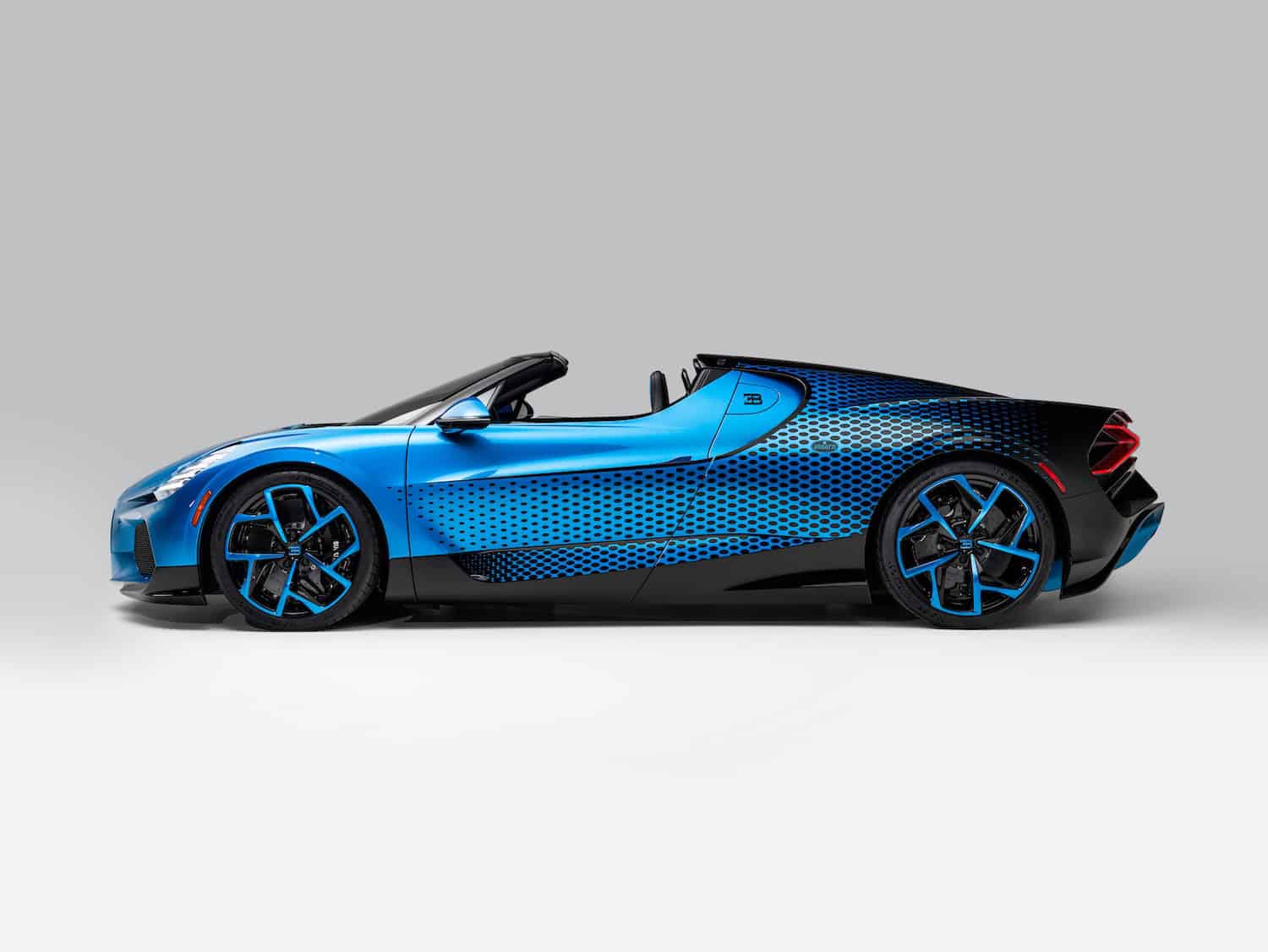
The centrepiece of the ‘Fly Bug’ is its paint. Developed from scratch specifically for this car, the colour is called ‘Dragonfly Blue’ and it behaves the way a dragonfly’s wings do in sunlight. Viewed head-on, it reads as a deep blue. Move around the car and it shifts into turquoise, then back again, depending on where the light catches the bodywork. Bugatti matched the same colour to the wheel rims, a process the marque describes as particularly challenging given the different materials and paint systems involved between body panels and wheels.
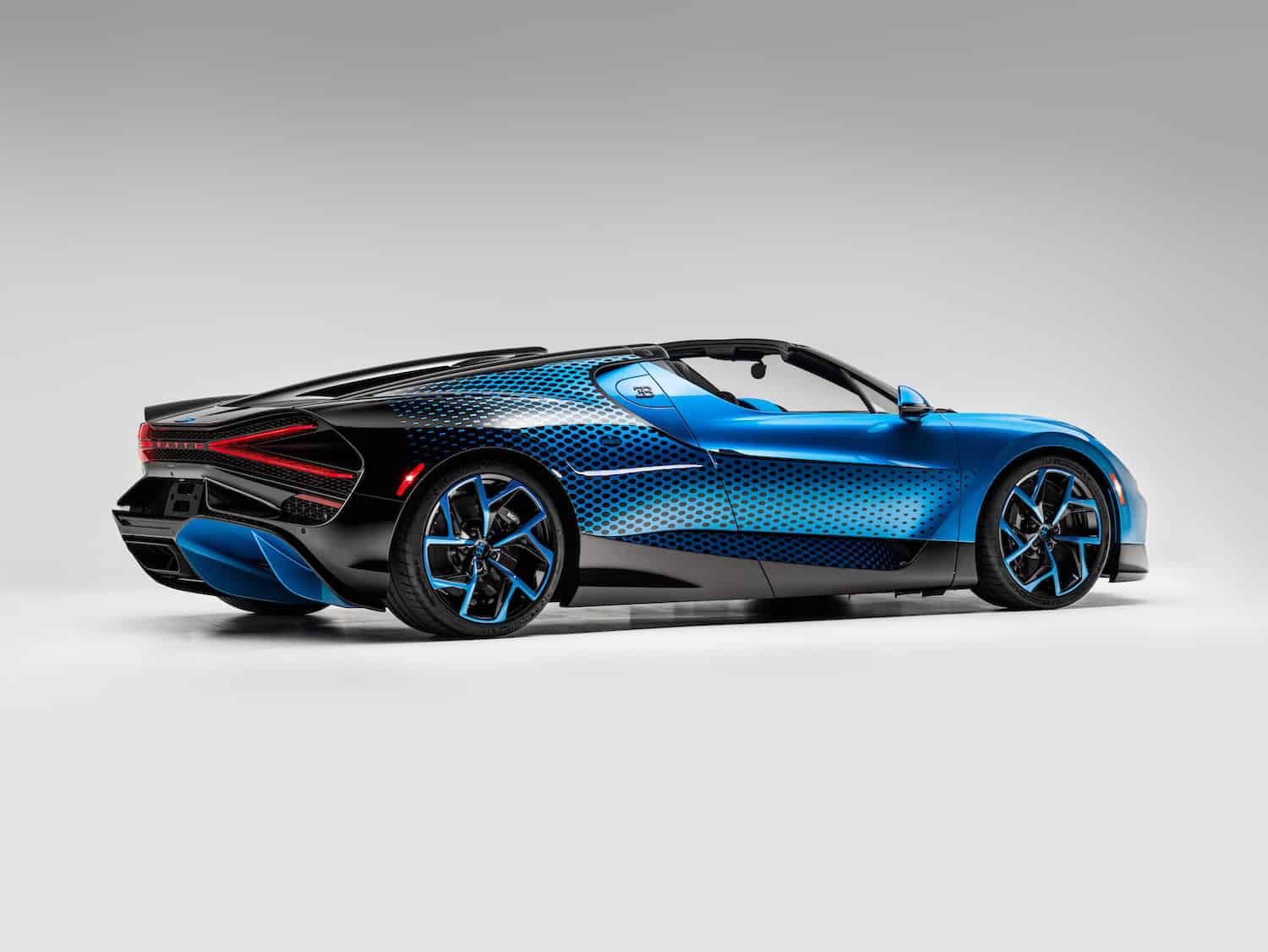
Layered over the paint is an ellipse pattern that spreads across the exterior surfaces. The pattern grows denser toward the rear of the car and fades into the darkness of the air intakes, creating a visual effect that echoes the cellular structure of a dragonfly’s wings. It is a continuation of a motif the collector has carried across the entire collection. The Divo ‘Lady Bug’ featured a geometric diamond pattern composed of around 1,600 precisely arranged shapes flowing across its surfaces. The Chiron ‘Hellbee’ took that concept in a bolder, more graphic direction. For the Mistral, the ellipse pattern represents another evolution of the same idea.
The Macaron: A First for Bugatti
One of the most technically demanding elements of the build was the integration of the Bugatti Macaron into the ellipse pattern on the car’s flank. The Macaron, the iconic oval emblem that has sat on the marque’s horseshoe grilles for over a century, was woven into the painted graphic at the collector’s request. Bugatti confirms this is the first time in the brand’s history that the Macaron has been incorporated into a body graphic in this way.
Getting it right required careful work to find the correct scale and position so that every detail, including the fine ring of dots and precise lettering, could be reproduced faithfully. It is the kind of detail that most people would never notice at a glance, but it speaks to the level of precision that defines Bugatti’s Sur Mesure programme.
An Interior That Pushed the Team Further
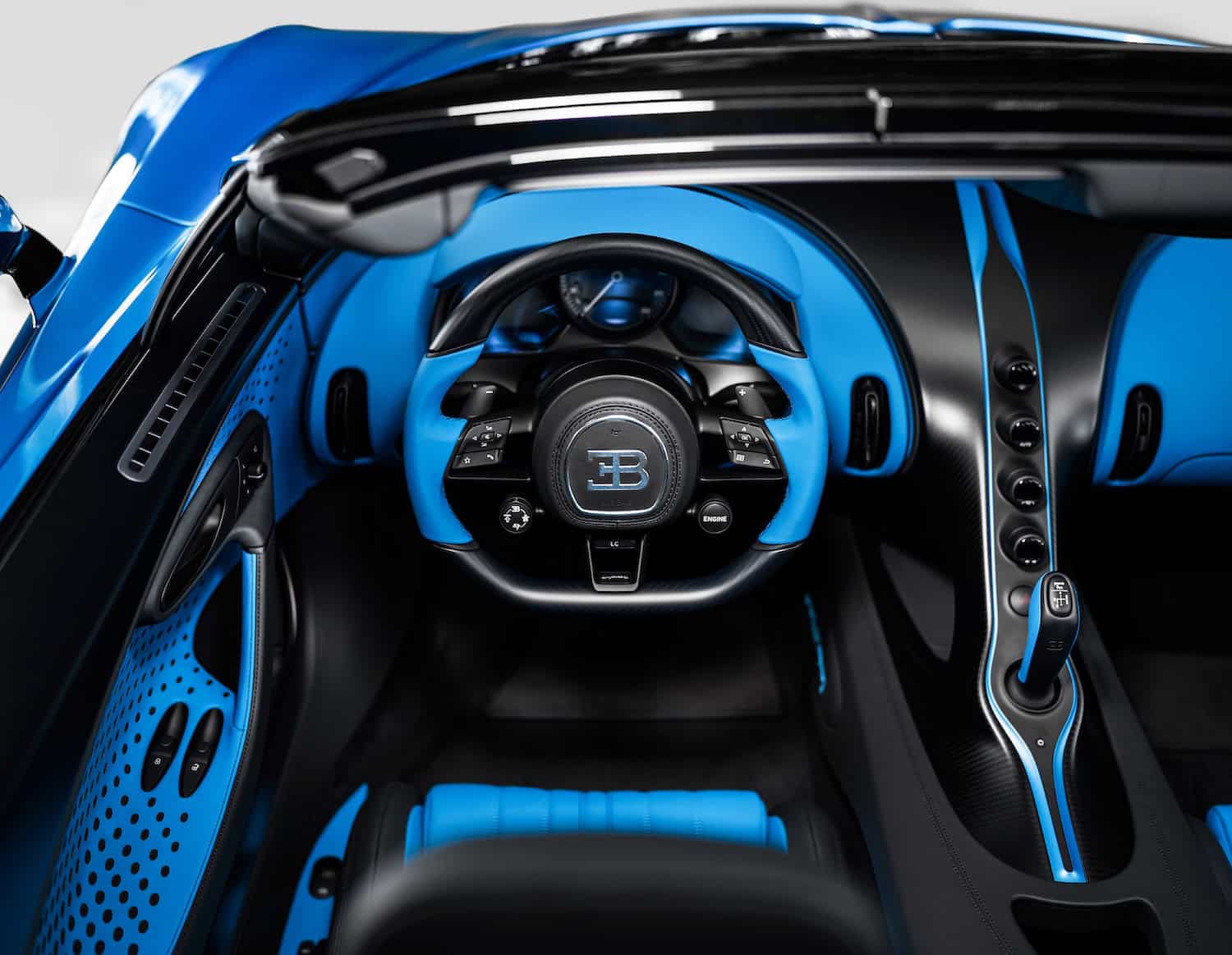
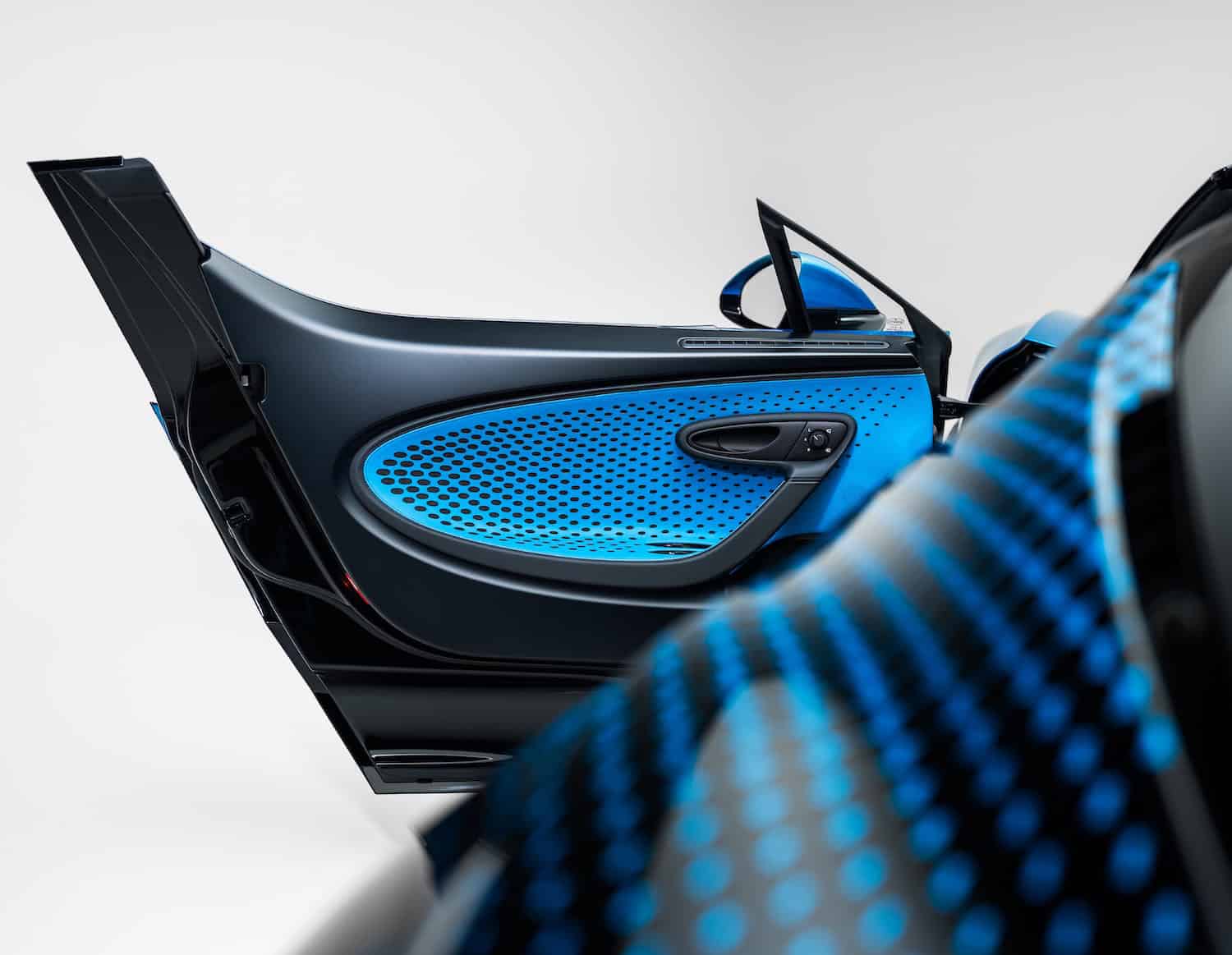
The dragonfly theme does not stop at the paintwork. Inside the cabin, Bugatti’s CMF (Color, Materials, Finish) team in Berlin developed an entirely new multi-layered material: leather laid over Alcantara in a geometric pattern, colour-matched to ‘Dragonfly Blue’ and finished with a specialist technique that gives it a three-dimensional quality.
The ellipse pattern from the exterior is carried across the door panels, adapted to suit the geometry of each interior component. Bugatti notes that this is the first time the brand has applied a graphic pattern across both the door panel face and the armrest area simultaneously, a process that required close collaboration with the engineering team to ensure the material sat perfectly across curved surfaces without any imperfection.
Tucked into the gear selector is Bugatti’s famous ‘Dancing Elephant’, a sculpture that references the legacy of Rembrandt Bugatti, whose animal artworks remain an enduring part of the marque’s heritage. For this particular collector, it also serves as a quiet nod to the natural world that inspired the entire four-car series.
How the Project Came Together
The creative process behind the ‘Fly Bug’ began with a personal exchange between the collector and Frank Heyl, Bugatti’s Head of Design. From there, the project moved to the CMF team in Berlin, where colour and material specialists, graphic designers, visualisers and modellers worked to translate the collector’s vision into a cohesive design direction. The goal was to ensure the fourth car stood as both a unique creation and a natural continuation of the collection that came before it.
From final design sign-off to a finished car, the build took months. Bugatti describes the project as one that tested the customisation team at every turn, with multiple first-time techniques applied across the exterior and interior.
Frank Heyl, Head of Design at Bugatti, said: “With the W16 Mistral ‘Fly Bug’, we have completed something that is genuinely rare: a collection of cars connected by a single creative vision. Each commission has pushed our Design team further, and this one is no exception. A bespoke color developed from scratch, a Macaron integrated into a painted graphic for the first time in our history, and an interior material application we had never attempted before. We are very proud of what the team has achieved here. But none of it would have been possible without the trust our customer has placed in us across all these projects. His passion for our hypercars, and his belief in what Bugatti Sur Mesure can do, is what makes work like this truly worthwhile.”
The Full Collection
For those keeping count, the four cars and their inspirations are:
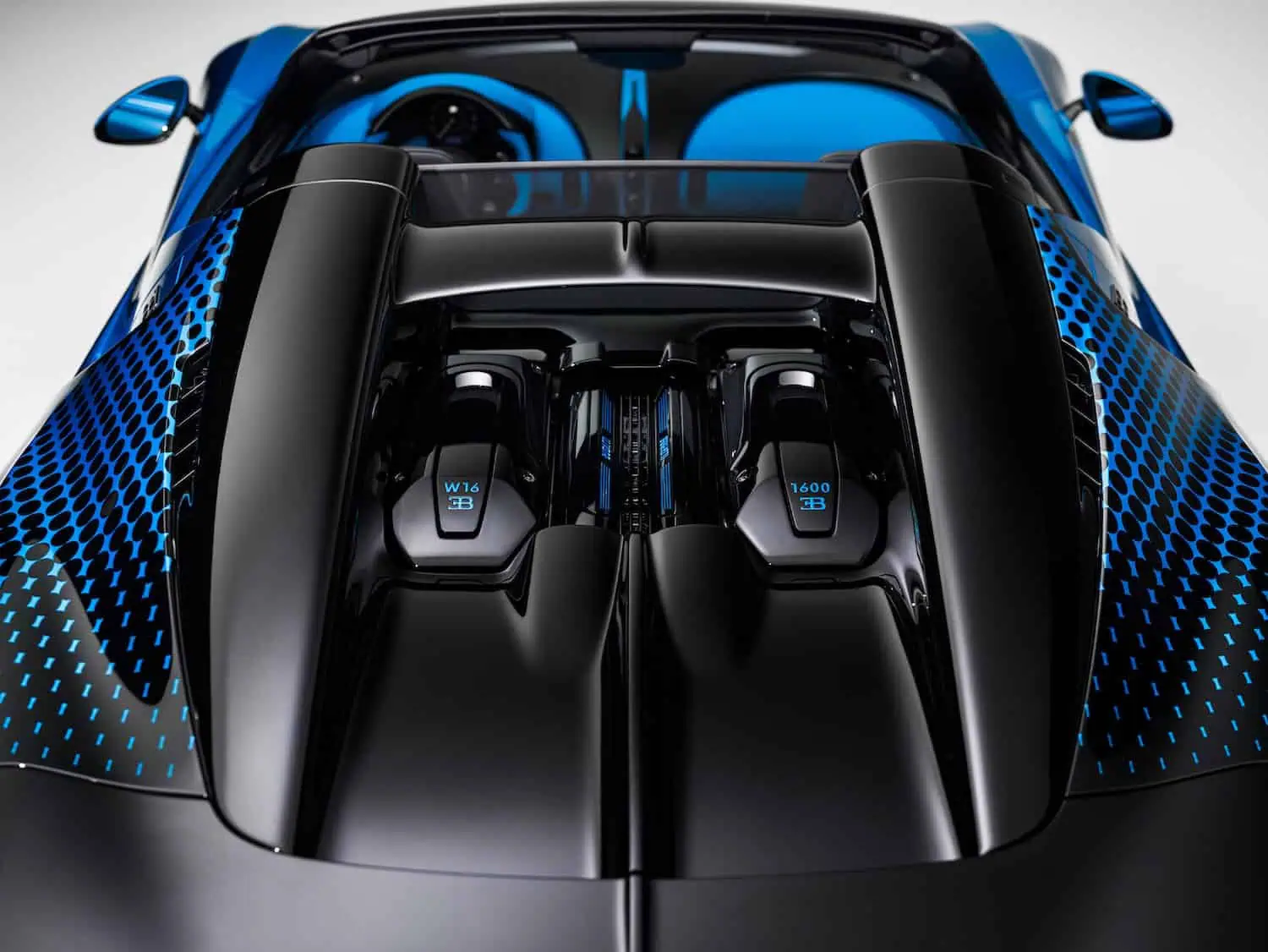
The Veyron Grand Sport Vitesse ‘Hellbug’. The Chiron ‘Hellbee’. The Divo ‘Lady Bug’, with its 1,600-piece geometric diamond pattern. And now the W16 Mistral ‘Fly Bug’, with its colour-shifting ‘Dragonfly Blue’ paint and integrated Macaron.
Each one represents a different chapter of Bugatti’s hypercar lineage, and together they form what is almost certainly the only insect-themed hypercar collection in existence. Whether the collector has a fifth commission in mind remains to be seen, but if the Bugatti Tourbillon is anything to go by, the next canvas could be the most spectacular yet.
The W16 Mistral ‘Fly Bug’ is a reminder that at the very top of the automotive world, cars are not just machines. They are collaborations between a maker and a patron, shaped by trust, time and a shared obsession with getting every last detail right.

Leave a Comment
More in News

How to Free a Frozen Handbrake (and What a New Cable Costs)

What Winter Tyres Actually Do for UK Drivers (and Whether You Need Them)

Renewing Car Insurance on the Day Cover Ends Costs Drivers £331 More, MoneySupermarket Shows

Every Driver Faces £500 Seatbelt Fines as AI Cameras Flag 19,145 Possible Offences

How to Remove Moisture From Inside Your Headlight Before It Costs You £500
Trending on Motoring Chronicle

Double Cab Pickup Owners Now Face a 400 Percent Company Car Tax Rise

HondaJet Elite II Certified by FAA to Become First Production Model Twin-Turbine Very Light Business Jet Available with Emergency Autoland

Your Driver’s License Is Now in Apple Wallet in 14 States, With Six More Signed Up

What to Do When Fines Arrive for a Car You Were Not Driving as Plate Cloning Jumps 41 Percent
