New Audi A6 Allroad Arrives as Plug-In Hybrid for the First Time


The Audi A6 allroad has long been the answer for drivers who want an estate that can leave the tarmac without resorting to a full-size SUV. The fifth-generation car keeps that brief but adds a significant change for the first time: a plug-in hybrid option that allows up to 59 miles of electric-only running before the petrol engine wakes up.
That electric range covers the daily commute for many drivers, meaning the new A6 allroad e-hybrid could spend much of its working week burning no fuel at all, then call on its petrol engine and quattro all-wheel drive for longer trips and rougher ground. It is a meaningful shift for a model that has always been about quiet, all-weather capability rather than headline performance.
A wider, tougher body
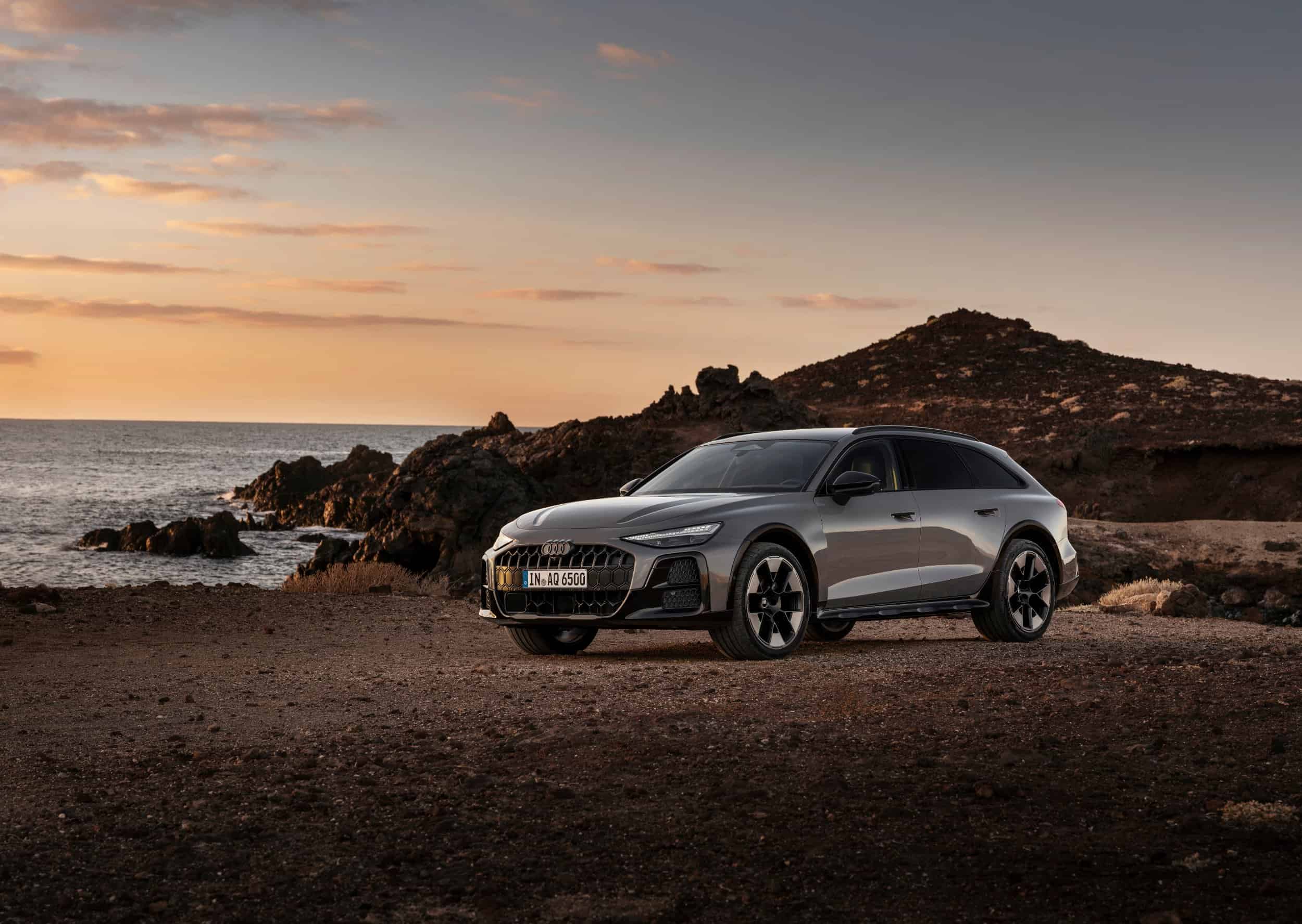
Audi has given the new A6 allroad a wide-body design for the first time. At 5,016mm long and 1,986mm wide, with alloy wheels up to 21 inches across, it has a more planted stance than the standard A6 Avant on which it is based. The body sits 11cm wider than that car, and ground clearance rises by 34mm, giving the allroad the extra height it needs for gravel tracks, flooded lanes and snow without compromising its estate-car practicality.
Standard adaptive air suspension provides a 55mm range of adjustment, dropping the car for stability at speed and raising it for clearance off-road. All-wheel steering is fitted too, turning the rear wheels up to five degrees against the fronts at low speed for easier parking, and up to two degrees in the same direction at higher speeds for stability.
Plug-in hybrid and diesel power
The new e-hybrid pairs a 2.0-litre four-cylinder petrol engine producing 185kW with an electric motor rated at up to 105kW, for a combined 270kW (367PS) and 500Nm of torque. Its 25.9kWh battery (20.7kWh usable) supports up to 59 miles of electric driving on the WLTP cycle, and charges on alternating current at up to 11kW, with a full top-up taking around two and a half hours. Drivers can select pure EV mode, a blended hybrid mode, or set a target charge level to preserve battery for a low-emission zone later in the journey.

For those who still prefer diesel, the 3.0-litre V6 TDI continues with 220kW (299PS) and a strong 580Nm of torque. Audi has added what it calls MHEV plus technology, with a belt alternator starter and a separate powertrain generator that together contribute up to 18kW (24PS), plus an electric-powered compressor for sharper throttle response. The result is a long-distance cruiser that pulls cleanly from low revs whether pulling away, overtaking or settling into a motorway stride.
Every version comes with quattro all-wheel drive as standard, keeping the allroad faithful to its all-conditions remit.
Cabin technology and comfort
Inside, the A6 allroad uses the Audi MMI panoramic display, combining an 11.9-inch virtual cockpit with a 14.5-inch central touchscreen, and the option of a 10.9-inch passenger display. Digital Matrix LED headlights can be personalised through the central screen, with eight daytime running light signatures and tail-light graphics that change in sync. It is a premium, heavily digital cabin, matched to the model’s role as a car designed for big journeys in comfort.
What it means for UK buyers
The allroad has always occupied a useful niche between conventional estates and bulky SUVs, and the move to plug-in hybrid power broadens its appeal further. Company-car drivers in particular stand to gain, since a sub-60-mile electric range and a relatively large battery should place the e-hybrid in a low benefit-in-kind tax band, while private buyers get the flexibility of electric commuting and diesel-style touring range in one car.
Audi says final UK specification will be confirmed at market introduction, and pricing has yet to be announced. Rivals are thin on the ground: the raised, all-wheel-drive estate is a shrinking class, with the Mercedes E-Class All-Terrain among the few direct competitors. That scarcity has always been part of the A6 allroad’s charm, and the addition of a plug-in hybrid gives long-standing fans a reason to look again.
Practicality remains central to the allroad’s appeal. As a wide-bodied estate it keeps a long, square load area behind the rear seats, making it a credible alternative to a mid-size SUV for families who regularly carry bikes, dogs or sports gear but prefer the lower stance and tidier handling of a car. The raised air suspension and quattro traction also make it a capable tow car, while the standard self-levelling means a loaded boot or a trailer does not upset the ride height.
There is heritage at work too. The first A6 allroad arrived in 2000 and created a niche that rivals have struggled to copy, blending Avant practicality with go-anywhere ability. Twenty-five years on, the recipe is the same but the powertrains have moved with the times, swapping pure combustion for electrified petrol and diesel options. For buyers who find modern SUVs too tall or too bulky, the new A6 allroad keeps a quieter, more understated path open, and the plug-in hybrid finally lets it run on electricity around town.

Leave a Comment
More in News

Newcastle Drivers Paid £3.7 Million in Parking Enforcement as Council Income Jumps 23 Percent

Coventry Drivers Paid £5.4 Million in Parking Charges as Council Surplus Jumps 80 Percent

What Your Rights Actually Are When a Garage Overcharges or Botches a Repair

£625 Million of Detected Motor Fraud Costs Honest Drivers, ABI Figures Show

BYD Dolphin-G review: UK’s first plug-in hybrid supermini is a winning package
Trending on Motoring Chronicle
What Saltburn’s New Motorhome Parking Ban Means for Campervan Owners This Summer
Why Is My Fuel Economy Getting Worse?

Every Driver’s Car Insurance Could Rise 3 Percent More Before Christmas, Data Shows

A fifth of car owners wrongly fear the shocking impact of cleaning an EV