
Can You Clean an EGR Valve in Place? Pierburg’s Parts Arm Strongly Advises Against It

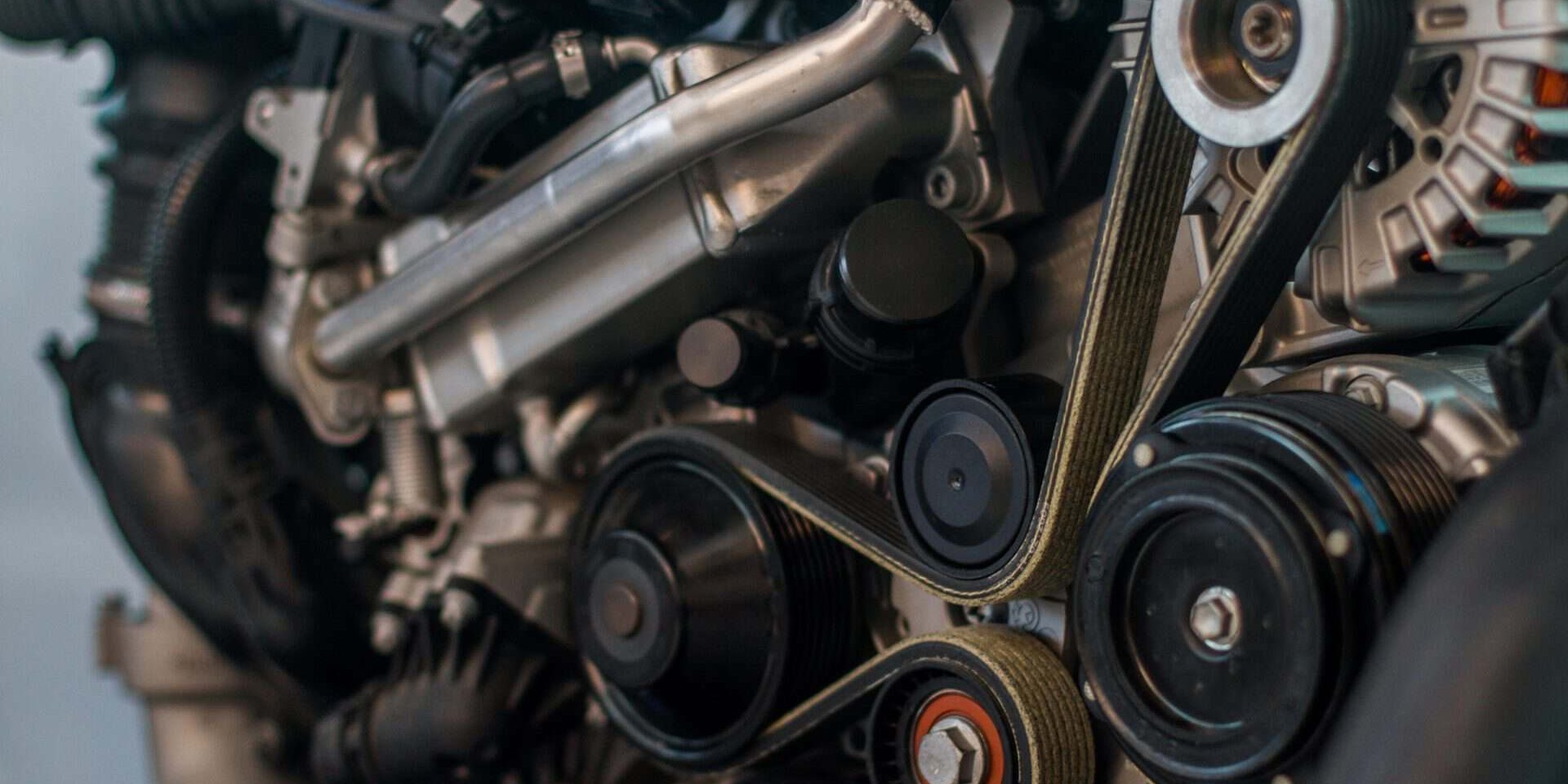
Only in a narrow sense. Wynn’s, which makes in-place cleaners, recommends a fuel-tank treatment for a valve near the exhaust and an intake cleaner for one on the intake side, and says neither works on a valve mounted between the two. The trade answer is harder: MS Motorservice, which sells Pierburg EGR valves to garages, tells workshops to replace a defective valve with a new one.
Key takeaways:
- Wynn’s says neither fuel treatments nor intake cleaners are effective on a valve sited between the exhaust and the intake.
- MS Motorservice, which sells Pierburg EGR valves, strongly advises against cleaning EGR components and says a defective one should be replaced.
- A sooted valve is a symptom, and the cause generally lies outside the valve.
What an In-Place Clean Can Actually Reach
Two Routes In, and One Valve Position Neither Reaches
An exhaust gas recirculation valve meters a share of exhaust gas back into the intake. The inert gas lowers the combustion temperature and with it the nitrogen oxides; Pierburg’s 2009 service information gives the cut on a diesel as 50 per cent. Petrol and diesel engines both use the valve, and diesel exhaust carries more soot.
Where the valve sits decides the rest, and Pierburg gives three positions: at the exhaust manifold, at the intake, or in a heat-resistant pipe joining the two. Wynn’s, which makes the products, recommends a fuel-tank treatment for a valve near the exhaust and an intake cleaner, fed one treatment at a time into a running engine, for a valve on the intake side.
The third position is where the idea runs out: “When located between the exhaust and the intake, neither fuel treatments nor intake cleaners are effective, so the EGR valve must be removed and cleaned manually.” If the engine reacts strangely or revs too high while the cleaner goes in, Wynn’s says stop and take the valve off to clean it by hand. Its page offers no test results for any product.
The Valve Supplier’s Answer Is Not to Clean It
MS Motorservice International, which supplies Pierburg EGR valves to workshops, takes a harder line. Its troubleshooting page for EGR systems names stuck or carbonised valves as the most common EGR fault.
Its instruction to garages, in full: “We strongly advise against cleaning the EGR components! If a component really is already defective, no improvement will be achieved by cleaning it. And if functioning components are treated in this way, they may be damaged as a result of cleaning. A defective component should always be replaced by a new one.”
Its service sheet for electric valves on various 1.5 to 2.5 litre diesels, Renault and Vauxhall among them, repeats the point: “We do not recommend cleaning the EGR valve; when doing so, it might be damaged.” Both hedge: neither says a clean always ruins a valve.
The company’s advice is not uniform. Another Motorservice article, on catalytic converter fragments and welding beads jamming the valve, recommends regular cleaning of the EGR system and catalytic converter, and says that in many cases the valve and the converter have to be replaced. Mercedes-Benz approves a clean for one van engine in a US bulletin, and it starts by taking the valve off.
Why the Valve Got Dirty Is the Question Worth Asking
Valves Do Not Soot Themselves
Pierburg’s 2009 service information puts the argument in one line: “Since EGR valves do not soot themselves, it is essential to search for the causes of soot formation.” The soot arrives with the exhaust gas. Oil in the intake air causes carbon deposits that the valve in the end lacks the force to overcome, so it can no longer open or stays open, and the driver feels jerking, irregular idling or a lack of power.
Motorservice lists where the oil comes from: faulty crankcase ventilation, worn bearings, a clogged turbocharger oil return line, worn valve stem seals or guides, unsuitable engine oil, or too much of it. Faults in the injection system can add exceptionally heavy deposits. The Renault and Vauxhall sheet adds blow-by from worn pistons and cylinders, and oil and filter changes left past the service interval.
That sheet files worn bearings and a clogged oil return line under turbocharger faults, and turbo makers point to turbo faults that trace back to the oil supply. A clean that skips the source leaves it running.
Short Winter Trips, Software and the Fault Code That Points the Wrong Way
Oil is one of five causes the Renault and Vauxhall sheet gives for exceptionally thick deposits. The others are dirty combustion, an engine management fault, the wrong software revision for the engine controller, and frequent short trips, especially in the cold months, when an oil and water emulsion forms and enters the engine vent. The sheet says the causes generally cannot be pinned on the valve itself.
Software is one fix the sheet offers for its family of valves: “In many cases an update for the controller software can remedy problems related to excessive stickiness.” Pierburg’s 2009 remedy list for a coked or stuck valve reads: check the engine controls, check for a software update, avoid frequent short trips, replace the valve. Cleaning is not on it.
A fault code on its own is a weak guide. The same sheet states: “Malfunctions of this kind are, within the OBD, only in part detected and in part incorrectly assigned.” A working valve can be heard switching with the engine stopped, and Motorservice says most electric valves can be driven through the engine tester’s actuator test. Ask for the cause before accepting a quote for a new valve.
Clean, Replace or Leave Alone
When Cleaning Is Off the Table Even for a Car Maker
The one car-maker cleaning procedure found for this article is a Mercedes-Benz technical bulletin filed with the US National Highway Traffic Safety Administration. Others could exist out of public view. Version 9, dated May 2025, covers the OM642 V6 diesel in the 906 and 907 Sprinter van and blames soot between the valve blade and its seat. Step one is to remove the valve.
Off the engine, the valve gets a specified gel cleaner, a soft non-metallic brush and a cold-water rinse, never pressurised, then goes back with a new gasket. The limits are strict: “If the blades are seized, the EGR Valve must be replaced, and therefore, cleaning is not permitted.” An electrical fault in the valve means replacement too, and “The EGR Valve cleaning procedure is NOT valid for OM651 & OM654 equipped Sprinters or Diesel equipped Passenger Cars.”
Inside those limits the bulletin puts cleaning first: a valve with a mechanical fault is cleaned and test driven before Mercedes accepts a replacement under warranty. A repeat complaint after a clean means a new valve, and the technician goes after the cause through a checklist that includes short trips and idling, the wrong oil or an overdue service, fuel quality, and oil in the intake from a worn separator or turbocharger. Left alone, a stuck EGR valve can put the car into limp mode.
The MOT and the Temptation to Blank It Off
Blanking the valve off is the other shortcut. The DVSA’s MOT inspection manual, updated on 27 November 2026, names EGR valves among the emissions parts a tester checks on petrol and diesel vehicles, where they are visible and identifiable.
The manual makes it a Major fail for missing or modified emissions kit on a petrol car first used on or after 1 September 2002 and on a diesel: maker-fitted equipment that is missing, obviously modified or obviously defective. Testers also inspect the engine warning light on petrol cars first used on or after 1 July 2003 and on diesels from 1 July 2008.
The Department for Transport has put forward a proposal to outlaw stripping an EGR valve or other emissions equipment from any vehicle first used on or after 1 January 2001; its consultation, which closed on 6 September 2026, cites fines from £1,000 to an unlimited amount. As of November 2026 it remains a proposal, and the law has not changed.
The in-place cleaner asks least of the owner and reaches least: a valve near the exhaust or on the intake, the two positions Wynn’s names for it. The supplier’s advice asks for a diagnosis and perhaps a new valve. A valve does not soot itself, so until the cause is found, a cleaned valve and a new one both meet the same oil, short trips or software fault that fouled the last one.
Want more car content? Add us as a preferred source on Google to your favourites list for the best automotive news and analysis on the internet.
If you enjoyed this article, be sure to follow us on Microsoft Start.
Reviewed by Preetam Gadekar

Leave a Comment
More in News

Man goes to AutoZone for car battery change. Then the worker says he doesn’t know how: ‘It’s under warranty’

Every PCP Driver Can Hand the Car Back After Paying Half the Total

Tesla FSD Complaints Hit 96 in October, Up From 39 a Year Ago

Car-Mart Buyers Told to Keep Paying After Chapter 11 Filing on Nov. 24

Park Outside Recalls Hit 2.5 Million Vehicles in 2026 (and How to Check)
Trending on Motoring Chronicle

Traffic Penalty Tribunal Data Shows Moving Traffic Appeals Jumped 131 Percent

Why Federal Regulators Are Investigating a $999 Self-Driving Gadget After 3 Deaths

Giving Up Driving Can Feel Like Losing Your Identity. New Research Explains Why So Many Older Drivers Struggle With The Decision

Why Private Parking Firms Have Until December to Follow Their Own New Rules
